High Pressure Hoses for Tunnel Boring Machines and Metro Rail Projects in India
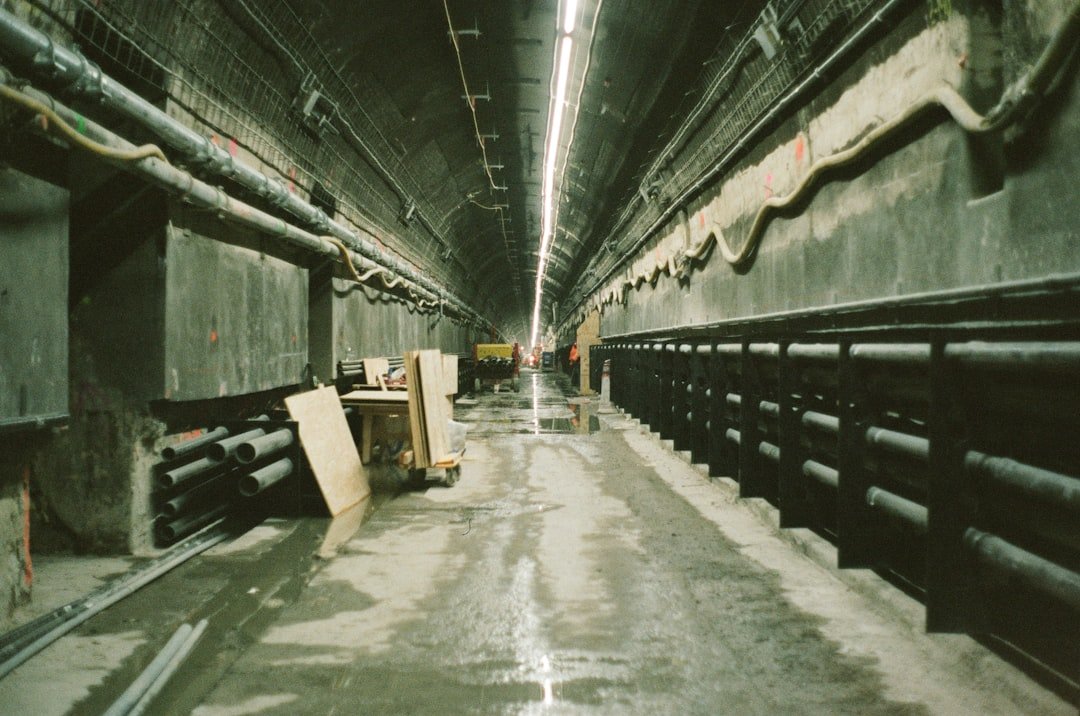
Photo by Bradley Andrews on Unsplash
Metro rail construction in India has moved underground at a pace few countries have matched. Delhi, Mumbai, Chennai, Bengaluru, Kolkata, Pune, Ahmedabad and several smaller cities now have tunnel boring machines (TBMs) driving twin tubes beneath dense neighbourhoods, and the Mumbai to Ahmedabad high-speed rail corridor adds long undersea and mountain tunnels to the list. Every one of these machines depends on hundreds of hose assemblies to move oil, slurry, grout, foam, water and air through a confined, dirty and safety-critical working space. Tunnel boring machine hoses are therefore a daily concern for the contractors and maintenance crews who keep these projects on schedule.
A TBM cannot simply be pulled out for repair. A hose that bursts in the shield 30 metres below a city street stops the drive, contaminates the tunnel and may require hours of confined-space work to replace. This guide explains the main hose circuits on a TBM, the pressures and media involved, the fire-safety and abrasion requirements that apply underground, and how project teams should specify and stock tunnel boring machine hoses for metro and rail tunnelling in India.
What Are Tunnel Boring Machine Hoses?
Tunnel boring machine hoses are the flexible hose assemblies that connect the fixed piping and power units on a TBM and its back-up gantries to the moving components that excavate, support and line the tunnel. Because the shield articulates, the thrust cylinders extend and retract with every ring, the segment erector rotates and the cutterhead drive vibrates continuously, rigid pipe cannot make these final connections. Hose absorbs the movement.
The hoses on a single machine cover a wide range of duties, from very high pressure hydraulic oil to low-pressure but highly abrasive slurry. The main groups are:
- Hydraulic hoses — spiral and braided steel-wire hose for thrust cylinders, articulation cylinders, segment erector, cutterhead drive (on hydraulic machines) and probe drills
- Slurry and muck hoses — large-bore abrasion-resistant rubber hose on slurry TBMs carrying excavated material as a bentonite suspension
- Grout hoses — heavy-duty hose for annular grout injection behind the segment ring, handling cement-based and two-component grouts
- Foam and additive hoses — chemical-resistant hose delivering soil-conditioning foam and polymer to the cutterhead on earth pressure balance (EPB) machines
- Water hoses — cooling water for drives and hydraulic oil, and industrial water for dust suppression and washing
- Compressed air hoses — air for the man-lock and cutterhead intervention chamber, tools and pneumatic controls
Hydraulic Circuits on a TBM: Pressure and Impulse Demands
The hydraulic system is where hose selection matters most. The thrust cylinders that push the machine forward against the last-built ring generate enormous force, and the circuits see repeated load cycles as each ring is built and the machine advances.
Thrust and Articulation Cylinders
Thrust circuits on large metro TBMs commonly operate in the 300 to 350 bar range, with articulation and steering circuits at similar or slightly lower pressures. Each cylinder is fed by hose assemblies that flex on every stroke. Because pressure rises and falls with each advance, this is an impulse duty, and four or six spiral hose is the normal choice. Our guide on when to choose a high impulse spiral hydraulic hose over braided hose explains why spiral reinforcement survives this cycling where braided hose does not.
Segment Erector
The erector picks up precast concrete segments weighing several tonnes and rotates them into position. Its hoses rotate with the erector arm and see both pressure cycling and constant flexing, so bend radius, hose length and routing through the rotary passage must be planned carefully. Hose reels or energy chains are often used to manage the movement.
Cutterhead Drive and Auxiliary Circuits
Many modern TBMs use variable-frequency electric cutterhead drives, but hydraulic drives remain common on smaller and older machines. Auxiliary circuits for the screw conveyor, probe drilling, cutter change equipment and the gripper on hard-rock machines each need hose matched to their pressure. Braided SAE 100 R2 hose is adequate for many of these lower-pressure and steady-pressure lines, and specifying spiral hose everywhere adds cost and weight without benefit.
Slurry, Grout and Foam Lines: Abrasion and Chemical Resistance
The non-hydraulic hoses on a TBM fail for different reasons. Slurry hose is worn through from the inside by sand, gravel and rock chips travelling at speed in the bentonite suspension. A thick natural rubber or abrasion-resistant synthetic tube, often 10 mm or more, gives the wear allowance needed for a tunnel drive. Hoses on bends and at the discharge of the slurry pumps wear fastest and should be rotated or replaced on a planned cycle. The same abrasion principles apply in mining, which we cover in our article on why mining operations depend on high pressure rubber hose for fluid transfer.
Grout hoses carry cement-based material that sets if left standing, so they must withstand regular flushing and, occasionally, mechanical cleaning with a ball or pig. Two-component grouts use an accelerator that is alkaline and can attack unsuitable tube compounds. Foam and polymer lines on EPB machines carry surfactants and conditioners that are generally mild, but the hose should still be confirmed compatible with the specific product in use.
Underground Safety Requirements for Hose
A tunnel is a confined space with limited escape routes, and a hydraulic oil fire or a burst high-pressure line has consequences far beyond those on an open construction site. Project specifications for metro tunnelling in India typically require:
- Fire-resistant, anti-static covers — hose covers that do not propagate flame and that dissipate static charge, to the same class of requirement applied in underground mining
- Low smoke and low toxicity — cover compounds that limit smoke and fumes if exposed to fire, because ventilation in a tunnel heading is restricted
- Burst protection — safety sleeves or restraint cables on high-pressure hydraulic lines near walkways and operator positions, so that a burst hose cannot whip
- Fire-resistant hydraulic fluid compatibility — where water-glycol or HFDU fluids are specified for the TBM, the hose tube compound must be rated for them rather than for mineral oil only
- Marking and traceability — each assembly identified by size, pressure rating, manufacture date and batch so that inspection records can be kept
The choice of cover compound and whether a hose is truly fire-resistant should be confirmed with test data, a topic we explore further in our guide to fire-resistant industrial hoses. Metro rail projects in India are planned and sanctioned under the Ministry of Housing and Urban Affairs, and the individual metro corporations set the detailed safety specifications that contractors and their suppliers must meet.
Fittings, Assembly and Stocking for a Tunnel Drive
A TBM project runs for months or years with the machine underground the whole time. Hose management is a logistics task as much as a technical one. Contractors should agree a hose schedule with the TBM supplier and the hose manufacturer before the launch shaft is ready, covering:
- Fitting standards — TBMs built in Germany, China and Japan use different fitting conventions; confirm whether metric, BSP, JIC, SAE flange or interlock spiral fittings are required on each circuit
- Assembly lengths — measure and record every assembly during machine assembly at the shaft so replacements can be made to drawing
- Pressure test — every hydraulic assembly proof-tested and tagged before it goes underground
- Critical spares — a full set of thrust, articulation and erector hoses held at the site, because lead times cannot be tolerated once the drive is under way
- Slurry and grout wear parts — several lengths of each bore held for rotation, plus couplings and clamps
- Cleanliness — capped, flushed assemblies to protect the machine’s proportional valves from contamination
Selecting the correct fitting for each circuit is as important as the hose itself. Our guide on how to choose the right hydraulic hose fitting for every industrial application sets out the main fitting types and where each is used.
Inspection and Replacement Practice Underground
Because a TBM is never idle for long, inspection must be built into the ring-build cycle and the maintenance shifts. Crews should walk the hydraulic lines on each shift looking for weeping fittings, cover damage from falling segments or tools, hoses trapped under conveyor structure, and any line rubbing against the shield skin. Slurry hoses are checked by tapping or ultrasonic thickness measurement at known wear points. A hose showing exposed wire, a bulge or a leak is replaced at the next planned stop, not left until the next intervention.
Keep a log of every assembly by position and installation date. Over the length of a drive this record shows which positions wear fastest and lets the team pre-position spares and adjust routing on the next machine.
Choose Tunnel Boring Machine Hoses from Mangla Rubber Industries
Mangla Rubber Industries manufactures high impulse spiral hoses in four and six spiral construction for TBM thrust, articulation and erector circuits, along with braided hydraulic hose, abrasion-resistant water and slurry hose and compressed air hose. Assemblies are supplied crimped, pressure tested and tagged, with fittings to match the machine’s specification, for tunnelling contractors and metro projects across India.
Send us the TBM hose schedule, circuit pressures, fitting types and cover requirements, and our technical team will prepare a matched assembly list with critical spares. To discuss a project supply agreement or request a quote, contact Mangla Rubber Industries.
Conclusion
Tunnel boring machine hoses cover a wider range of duties than almost any other single machine: very high pressure impulse hydraulics, abrasive slurry, setting grout, chemical additives, cooling water and compressed air, all inside a confined space with strict fire-safety rules. Matching spiral hose to the thrust and erector circuits, abrasion-resistant hose to slurry and grout lines, and fire-resistant covers throughout, then holding the right spares at the shaft, keeps the drive moving and the crew safe.
Frequently Asked Questions
What pressure do tunnel boring machine hydraulic hoses need to handle?
Thrust and articulation circuits on large metro TBMs commonly run in the 300 to 350 bar range, which calls for four or six spiral hose with interlock fittings. Auxiliary circuits run lower and can use braided R2 hose.
Why is spiral hose used on TBM thrust cylinders instead of braided hose?
Thrust pressure rises and falls on every ring advance, which is an impulse duty. Spiral wire layers absorb these cycles without the wire fatigue that occurs at the crossover points in a braid.
What makes slurry hoses on a TBM wear out?
Sand, gravel and rock chips carried in the bentonite suspension abrade the tube from the inside, especially on bends and at pump discharges. A thick abrasion-resistant tube and planned rotation of hoses extend service life.
Do TBM hoses need to be fire-resistant?
Most metro project specifications require fire-resistant, anti-static hose covers underground because a tunnel is a confined space with limited ventilation and escape routes. Confirm the requirement with the project safety specification.
How many spare hoses should a tunnelling contractor hold on site?
At minimum a complete set of thrust, articulation and erector assemblies, plus several lengths of slurry and grout hose in each bore. The machine cannot wait for lead times once the drive has started.