What Is a High Impulse Spiral Hydraulic Hose and When Should You Choose It Over Braided Hose?
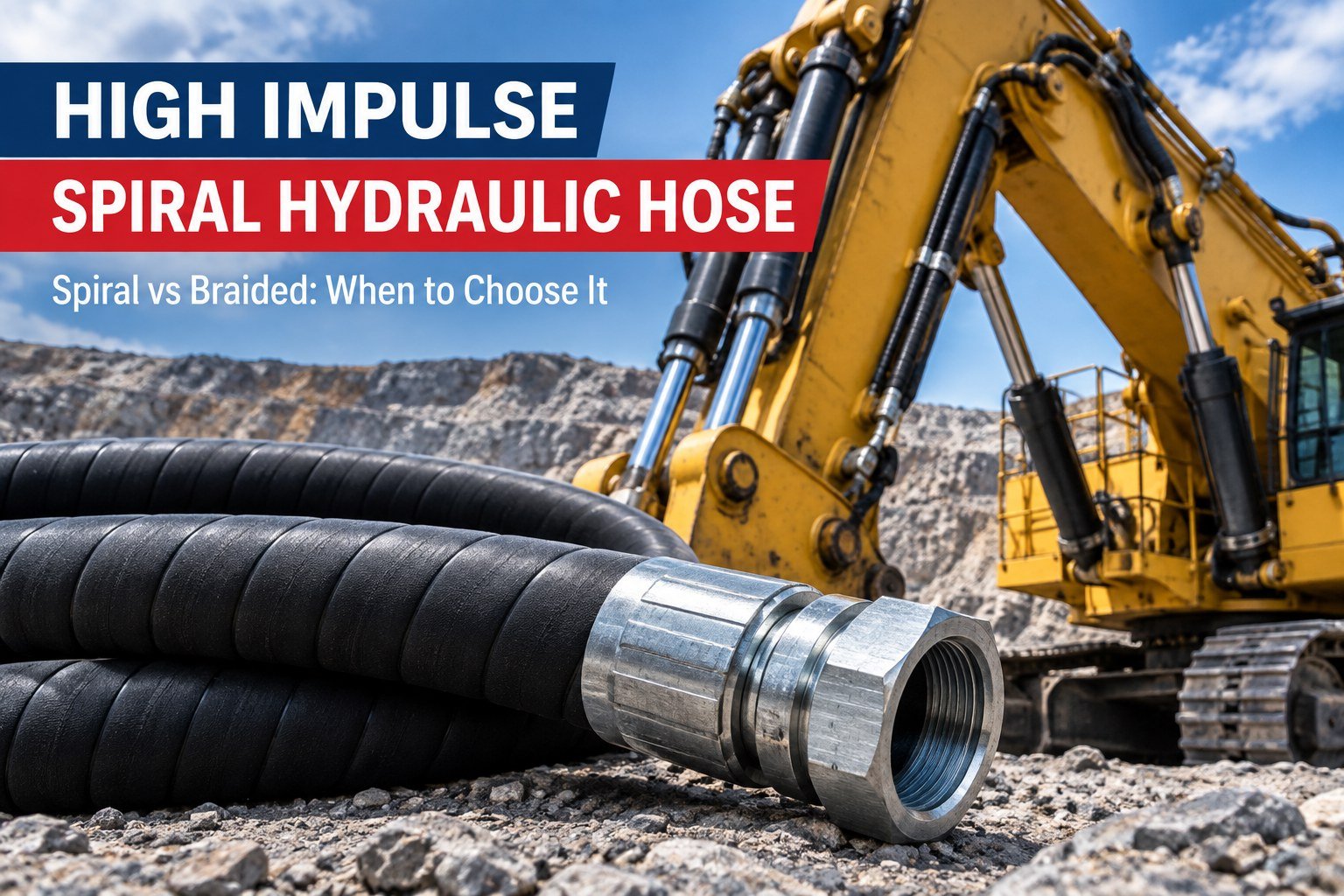
Excavators, mining shovels, drilling rigs and large presses run hydraulic circuits that see sharp, repeated pressure spikes every time a boom stops, a bucket bites or a valve shifts. A standard wire-braided hose can carry the rated pressure, but it is the number of pressure cycles that decides how long it survives. A high impulse spiral hydraulic hose is built for exactly this duty, with layers of spiral-wound steel wire that absorb pressure surges without fatiguing the reinforcement.
Choosing between spiral and braided construction is one of the most common questions our technical team receives from equipment workshops and plant maintenance engineers. This guide explains what a spiral hydraulic hose is, how it differs from braided hose, which SAE and EN grades apply, and how to decide when the extra reinforcement is worth specifying.
What Is a High Impulse Spiral Hydraulic Hose?
A high impulse spiral hydraulic hose uses four or six layers of high-tensile steel wire wound in a spiral pattern around an oil-resistant synthetic rubber tube. Each layer is laid at a set angle in alternating directions, so the wires do not cross over one another the way they do in a braid. The reinforcement is then covered with an abrasion, oil and weather resistant rubber cover.
Because the wires lie parallel within each layer, the hose can hold very high working pressures while flexing under load. The construction is defined by international standards:
- SAE 100 R12 — four-spiral hose for working pressures up to around 4,000 psi (275 bar), depending on bore size
- SAE 100 R13 — six-spiral hose rated for a constant 5,000 psi (350 bar) across common sizes
- SAE 100 R15 — six-spiral hose rated for a constant 6,000 psi (420 bar)
- EN 856 4SP and 4SH — the European four-spiral grades, with 4SH offering higher pressure and a tighter bend radius in larger bores
For a refresher on the braided grades these are compared against, read our guide to R1, R2 and R6 hydraulic hose.
Spiral vs Braided Hydraulic Hose: What Is the Real Difference?
Both constructions use steel wire, so the distinction is easy to overlook. The difference lies in how the wire is arranged and how that arrangement behaves under repeated pressure cycles.
Braided Reinforcement
In a SAE 100 R1 or R2 hose, wires are woven over and under each other in one or two layers. This makes a flexible, cost-effective hose that handles steady pressure well. However, every crossover point is a spot where wires rub against each other during pressure surges. Over thousands of cycles this rubbing causes wire fatigue and eventual failure.
Spiral Reinforcement
In a spiral hydraulic hose, the wires within each layer never cross. The layers work together to share the load evenly, so the hose can absorb pressure spikes with far less internal friction. This is why spiral hose is tested to a much higher number of impulse cycles than braided hose of the same working pressure.
- Impulse life — spiral hose is typically tested to 500,000 to 1,000,000 impulse cycles, compared with around 200,000 for braided hose
- Working pressure — six-spiral hose maintains its full rating in large bores, where braided hose ratings fall sharply
- Volumetric expansion — spiral hose swells less under pressure, giving more precise control response
- Flexibility — braided hose bends more easily and suits tight routing; spiral hose needs a larger bend radius
- Cost and weight — spiral hose is heavier and more expensive per metre, so it should be specified where the duty justifies it
When Should You Choose a High Impulse Spiral Hose?
The decision should be based on the pressure profile of the circuit, not the maximum pressure alone. A circuit that runs at 250 bar steadily may be fine on R2 hose. A circuit that cycles between 50 and 300 bar several times a minute will wear out braided hose long before its rated life.
High-Impulse Circuits
Boom, arm and bucket cylinders on excavators, backhoe loaders and mining shovels see a pressure surge every time the load stops or reverses. Spiral hose is the standard choice for these lines on machines above roughly 20 tonnes.
Large Bore Lines
Braided hose ratings drop as bore size increases. For 3/4 inch, 1 inch and larger pump and main pressure lines, a four or six spiral hose is usually the only construction that meets the system pressure with an adequate safety factor.
Mining, Drilling and Oil and Gas Equipment
Continuous-duty equipment such as hydraulic rock breakers, drill rigs, longwall supports and wellhead control units run at high pressure around the clock. Downtime costs far exceed the extra hose cost. Our article on why mining operations depend on high pressure rubber hose covers these environments in more detail.
Presses, Injection Moulding and Test Rigs
Industrial presses and moulding machines apply rapid clamp and release cycles. Spiral hose keeps control response tight and resists the fatigue that repeated clamping causes.
Where Braided Hose Is Still the Better Choice
Spiral hose is not automatically the superior option. In many applications, a well-specified braided hose gives longer service and easier installation:
- Return lines, pilot lines and low-pressure supply lines
- Steady-pressure circuits without frequent surges
- Tight routing behind panels or around steering columns where a small bend radius is essential
- Agricultural trolleys, small loaders and tractor implements running below 250 bar
- Applications where hose weight matters, such as hand-held hydraulic tools
For tractor-mounted equipment, a single or double braided hose is usually correct. See our guide on how a tractor trolley hydraulic hose works for that application.
Specifications to Check Before Ordering
A spiral hose assembly should be selected on the full set of operating conditions, not on the fitting size alone. Confirm the following with your supplier:
- Working pressure and peak pressure — the hose rating must exceed the peak, with a 4:1 burst safety factor
- Bore size — sized for flow rate so oil velocity stays within recommended limits and does not generate heat
- Minimum bend radius — spiral hose needs more room; check the installed route for sharp bends near fittings
- Temperature range — standard spiral hose operates from -40°C to +100°C, with high-temperature compounds available up to +125°C
- Fluid compatibility — mineral oil, water glycol and biodegradable fluids each need a compatible tube compound
- Fittings — spiral hose requires interlock or skive-type fittings crimped to the correct specification; braided-hose fittings must not be used
- Cover — abrasion-resistant or armoured covers for lines that contact rock, steel or moving parts
Pressure ratings and impulse test requirements for each grade are defined in SAE J517 and the related ISO 18752 standard. You can review the current standards through SAE International.
Installation and Maintenance Practices
Even the correct spiral hose will fail early if it is installed with a twist, routed against a sharp edge or clamped too tightly. Follow the printed lay line during installation, allow enough length for cylinder movement, and use protective sleeves where the hose contacts machine structure.
Inspect spiral hose assemblies regularly for cover cracking, exposed wire, bulging near fittings and weeping at the crimp. Our guides on the common causes of hydraulic hose failure and warning signs of hydraulic hose failure explain what to look for during inspection.
Choose the Right High Impulse Spiral Hose from Mangla Rubber Industries
Mangla Rubber Industries manufactures high impulse spiral hoses in four and six spiral constructions for mining, construction, oil and gas and heavy industrial hydraulics. Assemblies are supplied with matched interlock fittings, cut to length, in bulk or as fitted assemblies for OEMs, dealers and plant maintenance teams across India.
Share your working pressure, bore size, fitting details and application, and our technical team will recommend the correct spiral or braided construction. Contact Mangla Rubber Industries to request a quote.
Conclusion
A high impulse spiral hydraulic hose is the right choice when a circuit sees frequent pressure surges, runs in large bores or operates continuously in demanding environments. Braided hose remains the correct and more economical option for steady, lower-pressure and tightly routed lines. Matching the construction to the real pressure profile of the system, and installing it correctly, delivers the longest service life at the lowest total cost.
Frequently Asked Questions
What is the difference between 4SP and 4SH hydraulic hose?
Both are four-spiral hoses under EN 856. 4SH carries a higher working pressure and has a tighter bend radius in larger sizes, while 4SP is rated slightly lower and is often used where the extra pressure is not required.
Can I replace a braided R2 hose with a spiral hose?
Yes, provided the bend radius and fittings are suitable. Spiral hose needs more routing space and must be crimped with spiral-specific interlock fittings, not the fittings used on braided hose.
What working pressure does a six-spiral hose handle?
SAE 100 R13 hose is rated for 5,000 psi (350 bar) and R15 for 6,000 psi (420 bar), maintained across common bore sizes rather than dropping in larger diameters.
Why does a braided hose fail early on an excavator?
Excavator boom and bucket circuits generate sharp pressure spikes many times a minute. The crossover points in a braid rub against each other under these surges and fatigue well before the hose reaches its rated life.
How often should spiral hydraulic hoses be inspected?
Inspect visually at every service interval and at least monthly on continuous-duty equipment. Replace the assembly at the first sign of exposed wire, cover cracking, bulging or leakage at the fitting.