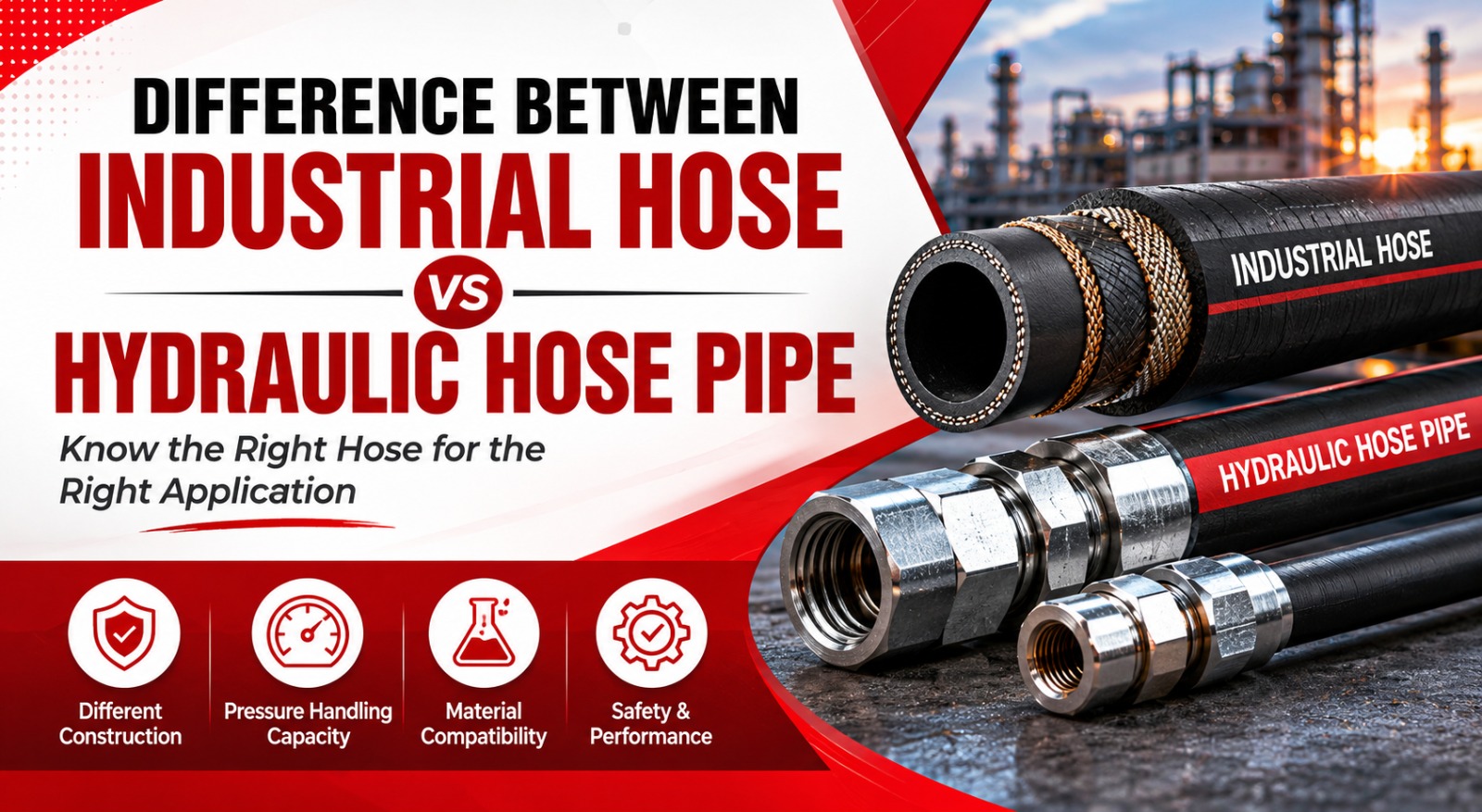
PVC Hoses vs Rubber Hoses In the evolving landscape of 2026, where industrial efficiency meets a heightened focus on sustainability, selecting the right material for fluid and gas transfer is more critical than ever. Whether you are managing a high-scale manufacturing plant or simply upgrading your home workshop, the debate between PVC and rubber remains a central topic for professionals globally. While both materials have undergone significant chemical advancements over the last few years, they serve distinct purposes. This guide breaks down the core differences between PVC and rubber hoses in 2026 to help you make an informed investment. The Evolution of Materials in 2026 Historically, the choice was simple: PVC was cheap and stiff, while rubber was expensive and flexible. In 2026, the lines have blurred slightly due to the rise of hybrid polymers, but the fundamental DNA of these materials still dictates their best use cases. Manufacturers are now producing pvc hose that mimic the feel of rubber, yet significant performance gaps remain. 1. Temperature Resilience and Flexibility The most immediate difference you will notice is how these materials react to the environment. Rubber Hoses: Traditionally made from EPDM (Ethylene Propylene Diene Monomer) or Nitrile, modern rubber hoses are the undisputed kings of temperature range. In 2026, high-grade synthetic rubber can withstand temperatures from -40°C to 120°C without losing its structural integrity. It remains supple in freezing winters, preventing the “coiling battle” many users face. PVC Hoses: Polyvinyl Chloride is a thermoplastic. While 2026 formulations have improved, standard pvc hosesare still susceptible to “thermal hardening.” In cold weather, they can become brittle and prone to cracking. Conversely, in extreme heat, pvc hoses may soften significantly, which can lead to kinking or a reduction in pressure rating. 2. Durability and Abrasion Resistance If your hose is going to be dragged across gravel, concrete, or factory floors, durability is your primary metric. PVC hoses are prized for being lightweight and resistant to many chemicals and salts. However, they lack the “self-healing” or rugged exterior of rubber. In 2026, premium pvc hoses are often reinforced with high-tensile polyester braiding to improve their burst pressure. Despite this, pvc hoses remain more vulnerable to pinhole punctures and external abrasions compared to their rubber counterparts. Rubber is naturally more “elastic.” It absorbs impact and resists the cutting action of sharp edges. This makes rubber the preferred choice for heavy-duty construction sites and automotive environments where the hose is constantly in motion. Comparison Table: PVC vs. Rubber (2026 Standards) Sustainability and Eco-Impact In 2026, the “green” factor is a major tie-breaker for procurement officers and eco-conscious homeowners. Modern pvc hoses have made huge strides in recyclability. Manufacturing now utilizes non-phthalate plasticizers, making pvc hoses safer for drinking water (look for “Lead-Free” and “BPA-Free” labels). Because they are lighter, pvc hoses also have a smaller carbon footprint during shipping, reducing the overall environmental impact of the supply chain. Rubber, particularly synthetic EPDM, is incredibly long-lasting, which supports a “buy it once” philosophy. However, rubber is significantly harder to recycle than pvc hoses. Many 2026 brands are now countering this by using reclaimed rubber content in the middle layers of their hoses to balance durability with environmental responsibility. When to Choose PVC Hoses? Despite the ruggedness of rubber, pvc hoses are often the smarter choice for specific applications: Light Gardening: The lightweight nature of pvc hoses makes them perfect for homeowners who don’t want to lug heavy equipment around the yard. Indoor Food & Beverage: Clear pvc hoses allow for visual inspection of the fluid, which is vital in food-grade and medical applications. Static Air Lines: In a shop where the line stays mounted to a reel, the weight advantage of pvc hoses makes them much easier to manage over long shifts. Budget-Conscious Projects: When the application is low-pressure and the environment is controlled, pvc hosesoffer the best ROI. The Final Verdict If you need a tool that can survive a decade of abuse, sub-zero temperatures, and high-pressure surges, rubber is your winner. However, if portability, chemical clarity, and cost-effectiveness are your priorities, modern pvc hoses are more capable today than they have ever been.
A Guide to Selecting the Right Air Compressor Hoses for Your Workshop In 2026.
Selecting the right air compressor hoses for your workshop is a decision that impacts every project you undertake. As we move through 2026, the technology behind pneumatic delivery has evolved, shifting from basic rubber tubes to sophisticated, multi-layered systems designed for high-efficiency and smart-monitoring environments. While the compressor acts as the heart of your system, the air compressor hoses are the arteries. If they are the wrong size, material, or length, even the most expensive industrial compressor will underperform. In this guide, we will break down everything you need to know about selecting air compressor hoses in 2026, ensuring your workshop stays productive and safe. 1. Material Innovation in 2026 The most critical factor in choosing air compressor hoses is the material. In 2026, we see a clear trend toward specialized polymers and advanced hybrid blends. Hybrid Polymer Hoses: These remain the top choice for general workshop use. By blending the flexibility of rubber with the light weight of PVC, hybrid air compressor hoses offer a “zero-memory” experience, meaning they lay flat instantly and won’t kink under pressure. Advanced Rubber Hoses: Modern rubber air compressor hoses are now often reinforced with synthetic fibers. They are the go-to for heavy-duty automotive work because they resist oil and heat better than any other material. Polyurethane (PU): If you are working in a tight cabinet shop or performing intricate finish work, PU air compressor hoses are incredibly light. In 2026, new UV-resistant coatings have made these hoses more durable for outdoor construction use as well. 2. Determining the Ideal Diameter The internal diameter (ID) of your air compressor hoses determines the Volume (CFM) of air that reaches your tools. In 2026, with the rise of high-torque cordless-pneumatic hybrids, choosing the right flow rate is more important than ever. 3. Length and the “Pressure Drop” Reality A common mistake in workshop design is buying air compressor hoses that are too long. While a 100-foot hose offers great reach, every foot of hose creates friction. By 2026 standards, most efficient workshops are moving toward a “lead-in” system: using a short, high-flow lead-in hose from the compressor to a reel, and then a 25-foot or 50-foot working hose. If you find yourself needing more than 50 feet of air compressor hoses, it is often better to upgrade your piping system to aluminum modular lines rather than simply adding more hose length. 4. Fittings: The 2026 Standard Your air compressor hoses are only as good as their connections. In 2026, “Universal” couplers have become the benchmark. These allow you to connect different plug styles (Industrial, Automotive, and ARO) without swapping fittings. Additionally, look for air compressor hoses equipped with swivel-end fittings. These prevent the hose from twisting into a “pigtail,” which is the leading cause of hose failure and user fatigue in professional settings. 5. Safety and Smart Maintenance Modern safety standards in 2026 emphasize “Whish-Prevent” technology. When disconnecting air compressor hosesunder pressure, traditional hoses can “whip” and cause injury. High-quality 2026 models often feature safety-venting couplers that bleed the air pressure before the hose is released. To maintain your air compressor hoses: Avoid Extreme Kinks: Even “kink-resistant” hoses can suffer internal structural damage if bent at 90-degree angles repeatedly. Temperature Awareness: If your workshop is unheated, ensure you are using hybrid or rubber air compressor hoses rated for sub-zero temperatures to prevent cracking. Regular Inspection: Check the “crimp” (where the hose meets the fitting) for signs of slippage or air bubbles. Conclusion: Making the Right Choice Investing in premium air compressor hoses is an investment in your tools’ longevity and your own efficiency. For most 2026 workshops, a 3/8-inch hybrid air compressor hose at a 50-foot length offers the perfect balance of durability, airflow, and ease of use. By understanding the synergy between material, diameter, and length, you can ensure that your air compressor hosesdeliver the consistent, high-pressure air your projects demand. Don’t let a cheap hose be the weak link in your professional workshop.
The 7 Essential Factors for Choosing the Right Chemical Hose In 2026?
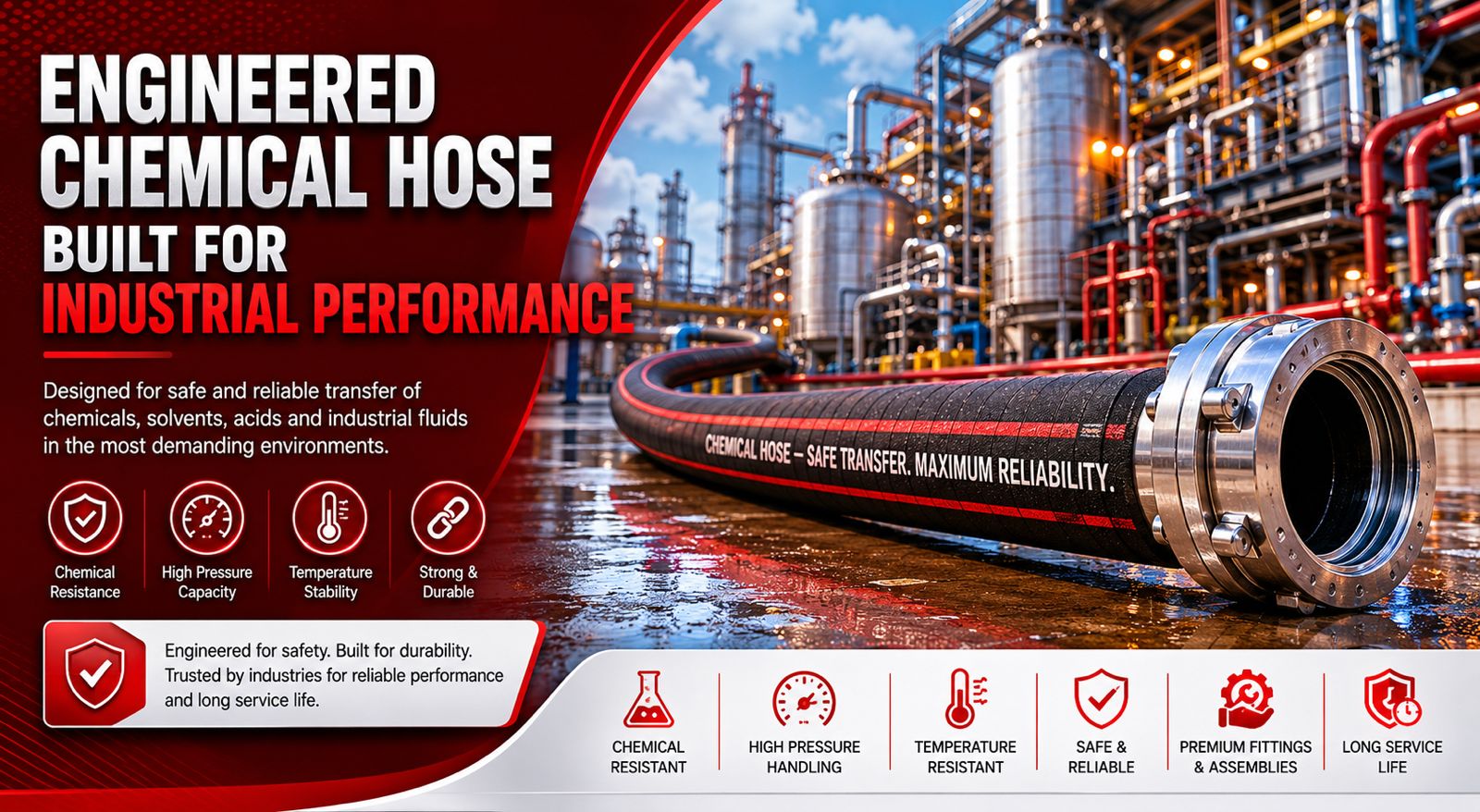
Choosing the right chemical hose in 2026 is crucial for safety and efficiency in industries like manufacturing, agriculture, and pharmaceuticals. With advancements in materials and regulations, a chemical hose must withstand harsh substances without leaking or degrading. Factor 1: Chemical Compatibility The primary concern for any transfer line is how well its inner lining interacts with the media it carries. In 2026, modern systems utilize advanced inner linings like PTFE (Polytetrafluoroethylene) or UHMWPE (Ultra-High Molecular Weight Polyethylene). These materials are engineered to resist acids, solvents, and alkalis without swelling or corroding. Always consult updated compatibility charts from standards like Cole-Parmer. Choosing an incompatible lining leads to permeation, where vapors seep through the walls, compromising the structural integrity of the entire assembly. Factor 2: Pressure Rating Every industrial line must be rated for specific operating and burst pressures. Current technology offers ratings ranging from 200 psi to well over 1000 psi, often reinforced with high-tensile textile braids or stainless steel wire spirals. Safety Factor: Always select an assembly with a safety margin—typically a 4:1 burst-to-working pressure ratio. Vacuum Resistance: For suction applications, ensure the design includes a helix wire to prevent collapse under negative pressure. Factor 3: Temperature Range Fluid transfer lines often face brutal thermal conditions, ranging from cryogenic liquids to boiling slurries. By 2026, fluoropolymer tubes have become the standard for enduring temperatures from -50°C to 250°C without softening or becoming brittle. In regions with intense ambient heat, such as Delhi, it is equally important to choose outer covers equipped with UV inhibitors to prevent environmental cracking. Factor 4: Size and Length Proper sizing is essential to optimize flow rates and minimize pressure drops. Standard inner diameters (ID) typically range from 1/4” for precision dosing to 4” for bulk transfers. Beyond diameter, you must calculate the bend radius. A general rule of thumb is a radius 4 to 12 times the ID. Forcing a tight bend beyond these limits causes kinking, which creates flow turbulence and permanent mechanical weakness. Factor 5: Material Construction Premium industrial lines feature sophisticated multi-layer architectures. This usually includes a chemical-resistant tube, reinforcement plies for strength, and an abrasion-proof outer cover made of Neoprene or Hypalon. EPDM: Ideal for alkaline environments. Viton: The go-to for hydrocarbon-based fluids. Nano-enhancements: In 2026, nano-infused materials have boosted flexibility and lifespan by up to 50%. Conductivity: In flammable environments, always opt for static-dissipative designs to prevent spark discharge. Factor 6: End Fittings and Assemblies Fittings must match the chemical hose perfectly to avoid leaks. Swaged stainless steel or banded PTFE-lined chemical hose fittings ensure secure, reusable connections. Camlock or Tri-Clamp ends speed assembly in pharma plants. Custom chemical hose assemblies with color-coded bands simplify identification and compliance. Factor 7: Certifications and Supplier Reliability In the regulatory landscape of 2026, certifications are non-negotiable. For specialized industries, look for FDA, USP Class VI, or ATEX ratings. Partnering with ISO 9001-certified suppliers ensures that every component has a paper trail for quality control. Reputable vendors now offer lifetime analysis and test their products against rigorous SAE or RMA standards to guarantee a 5-year service window. Application-Specific Tips For Delhi’s chemical plants, prioritize chemical hoses with ozone and UV resistance against monsoons and heat. Transfer hoses for batch processes need static grounding; suction chemical hoses require anti-collapse designs. Conduct pressure tests post-installation. Maintenance Best Practices Inspect chemical hoses quarterly for blisters, kinks, or cover damage. Store chemical hoses coiled in shade, away from sunlight. Replace after 2-5 years or 80% rated life, tracking via RFID tags in smart chemical hoses.Investing in the right chemical hose prevents downtime and hazards. These seven factors—compatibility, pressure, temperature, size, construction, fittings, and certifications—ensure optimal performance in 2026 operations. Choose wisely for durable, compliant chemical hoses tailored to your needs.
Why Choose Custom Industrial Hoses for Your Business
In today’s competitive industrial landscape, efficiency and reliability are everything. Whether you’re in manufacturing, agriculture, construction, or food processing, the equipment you use plays a major role in determining your productivity. Among these essential tools, hoses might seem like a small component—but they have a big impact. Choosing the right type of hose, especially a pvc braided hose pipe, can make a noticeable difference in performance, durability, and overall operational success. Understanding the Need for Customization Every business operates differently. Some require hoses that can withstand high pressure, while others need flexibility or resistance to chemicals and extreme temperatures. Off-the-shelf solutions may work temporarily, but they often fall short in meeting specific operational demands. This is where customized industrial rubber hoses come into play. A tailored pvc braided hose pipe is designed to meet your exact requirements, ensuring it performs optimally in your unique working environment. Instead of compromising with a generic product, customization allows you to align the hose’s specifications with your business needs. A well-designed pvc braided hose pipe ensures better compatibility with your systems. Enhanced Durability and Longevity One of the biggest advantages of choosing a custom solution is durability. Industrial environments can be harsh, with exposure to abrasion, chemicals, and fluctuating temperatures. A standard hose may wear out quickly under such conditions. A customized pvc braided hose pipe is built with the right materials and reinforcement layers to handle these challenges. This means fewer replacements, reduced downtime, and ultimately lower maintenance costs. Over time, investing in a durable pvc braided hose pipe pays off significantly. Improved Performance and Efficiency When your equipment is optimized, your operations run smoother. A well-designed pvc braided hose pipe ensures consistent flow rates, proper pressure handling, and minimal leakage. These factors directly contribute to improved efficiency. For example, in industries where fluid transfer is critical, even a slight inefficiency can lead to delays or losses. By using a hose tailored to your specifications, you eliminate these risks and maintain a steady workflow. A high-quality pvc braided hose pipe helps maintain this consistency across operations. Flexibility for Diverse Applications Different industries have different requirements, and even within the same industry, applications can vary widely. A custom pvc braided hose pipe offers the flexibility to adapt to these diverse needs. Whether you need a hose for water transfer, chemical handling, or air compression, customization ensures it performs effectively in each scenario. You can choose the diameter, length, reinforcement type, and even color coding for easy identification. This level of flexibility makes a pvc braided hose pipe a versatile solution. Safety Comes First Safety is a top priority in any industrial setting. Using the wrong type of hose can lead to leaks, bursts, or even accidents that put workers at risk. A properly designed pvc braided hose pipe minimizes these hazards. Customization allows you to select materials that are resistant to specific chemicals or pressures, ensuring safe operation. Additionally, reinforced layers in the hose provide extra strength, reducing the chances of failure. A reliable pvc braided hose pipe contributes to a safer working environment. Cost-Effectiveness in the Long Run At first glance, a custom hose might seem like a more expensive option. However, when you consider the long-term benefits, it becomes a cost-effective investment. A high-quality pvc braided hose pipe reduces the need for frequent replacements and repairs. Moreover, improved efficiency means less energy consumption and fewer operational disruptions. These savings add up over time, making customization a smart financial decision. Choosing the right pvc braided hose pipe ensures better return on investment. Better Adaptability to Changing Needs Businesses evolve, and so do their requirements. A custom pvc braided hose pipe can be designed with future scalability in mind. Whether you plan to expand operations or introduce new processes, having adaptable equipment gives you a significant advantage. Instead of constantly replacing hoses to meet new demands, you can rely on a well-designed solution that grows with your business. A flexible pvc braided hose pipe supports long-term operational goals. Environmentally Friendly Options Sustainability is becoming increasingly important across industries. Many manufacturers now offer eco-friendly materials and production methods for hoses. By choosing a custom pvc braided hose pipe, you can opt for solutions that align with your environmental goals. Durable hoses also contribute to sustainability by reducing waste. Fewer replacements mean less material consumption and a smaller environmental footprint. Using a long-lasting pvc braided hose pipe supports greener practices. Building Trust with Quality Equipment When your operations run smoothly, it reflects positively on your business. Clients and partners value reliability, and using high-quality equipment plays a role in building that trust. A dependable pvc braided hose pipe ensures consistent performance, which translates into better service delivery. Over time, this reliability strengthens your reputation and helps you stand out in a competitive market. Investing in a premium pvc braided hose pipe shows your commitment to quality. Final Thoughts Choosing the right hose is more important than it might initially seem. A customized pvc braided hose pipe offers durability, efficiency, safety, and flexibility—all essential factors for modern businesses. While standard options may appear convenient, they rarely provide the level of performance needed in demanding industrial environments. By investing in a solution tailored to your specific needs, you’re not just buying a hose—you’re enhancing your entire operation. In the long run, a well-chosen pvc braided hose pipe can lead to better productivity, lower costs, and a stronger foundation for growth. If you’re looking to improve your business processes, it might be time to rethink your approach to industrial hoses. Sometimes, the smallest components—like a pvc braided hose pipe—make the biggest difference.
Why Rubber Hoses Don’t Degrade in Direct Summer Sunlight In 2026?
Rubber hoses have become remarkably resilient to direct summer sunlight in 2026, thanks to cutting-edge material innovations. Modern rubber hose resist photodegradation far better than older versions, ensuring longevity even under intense UV exposure. UV-Resistant Formulations Rubber hoses now feature advanced polymer blends like EPDM and NBR, engineered specifically for sunlight durability. These rubber hose incorporate UV stabilizers that absorb harmful rays, preventing chain scission in the polymer matrix. Carbon black fillers at 40-60 levels shield the material, dissipating UV energy before it causes cracking or brittleness. Manufacturers have optimized rubber hose with nano-scale titanium dioxide (TiO₂) and silicon dioxide (SiO₂) particles. These ceramic blockers scatter photons without generating radicals, extending the life of rubber hoses by up to three times in tropical conditions. Hindered Amine Light Stabilizers (HALS) further neutralize free radicals formed by ozone, a byproduct of UV exposure. 2026 Technological Advances This year marks a leap in rubber hose technology, with self-indicating color-change layers alerting users to early wear. High-loading carbon black combined with reflective outer coatings reduces heat buildup, a key accelerator of degradation in summer sunlight. Field tests show these rubber hoses retain 90% tensile strength after years outdoors, far surpassing pre-2025 models. Graphene and nanoparticle fillers are emerging in premium rubber hose, boosting UV opacity while maintaining flexibility. Accelerated weathering tests using Xenon arc lamps simulate decades of sun exposure, confirming rubber hose now withstand Delhi’s harsh summers without fading or stiffening. Warranties have extended to five years, reflecting confidence in these rubber hose. Why Degradation Is Minimal Traditional rubber hose degraded via photodegradation, where UV breaks covalent bonds, leading to stiffness and cracks. But 2026 rubber hoses counter this with multi-layered protection: inner tubes resist chemicals, braided reinforcements handle pressure, and UV-barrier covers block 99% of rays. Ozone, generated alongside UV, no longer penetrates thanks to antiozonants embedded in every rubber hose. In agriculture and industry, rubber hoses endure South American-level sunlight without rapid aging. One study equated a month in UV chambers to a year outdoors, yet enhanced rubber hoses show negligible loss. Proper storage—away from direct sun when idle—further preserves rubber hoses, but their inherent design minimizes even that need. Real-World Durability Proof South American farms report UV-protected rubber hoses lasting seasons longer than unprotected ones, with no cracks or elasticity loss. Industrial users in India note rubber hoses on hydraulic systems stay supple through monsoons and summers alike. Ceramic additives preserve strength, making rubber hose ideal for outdoor Delhi applications.Even budget rubber hoses now include baseline UV shields, democratizing durability. Heat-reflective pigments cut surface temperatures by 20°C, slowing indirect UV effects. Maintenance is simple: inspect rubber hose quarterly, avoiding kinks that amplify stress under sun exposure. Maintenance for Peak Performance To maximize rubber hose lifespan, store them coiled in shade, though 2026 models forgive exposure. Clean with mild soap to remove ozone-trapping residues, and avoid petroleum oils that soften covers. Replacing every 3-5 years remains standard, but advanced rubber hoses often exceed this.Certifications like ISO testing validate rubber hose against UV, ensuring reliability. Users reports zero failures in direct summer sunlight, a testament to innovation. Future of Sun-Resistant Hoses Research into bio-based rubber hose promises even better UV resistance without synthetic fillers. For now, 2026 rubber hose set the standard, thriving where older ones crumbled. Invest in marked “UV-stabilized” rubber hose for worry-free performance hose. In summary, photodegradation is tamed by stabilizers, fillers, and smart materials—rubber hoses simply don’t degrade in direct summer sunlight anymore.
Top Features to Look for in Industrial Rubber Hoses
When it comes to industrial operations, the importance of choosing the right rubber hose cannot be overstated. Whether you’re working in manufacturing, automotive, or heavy machinery, the performance of your hose directly impacts safety, efficiency, and overall productivity. Among the many specialized options available, a high temp oil hose stands out as a critical component for industries dealing with extreme heat and oil transfer. But how do you choose the right one? Let’s break down the top features you should look for to ensure you’re making a reliable and long-lasting investment. 1. Heat Resistance and Temperature Range One of the most essential features to consider is the hose’s ability to withstand high temperatures. A high temp oil hose is specifically designed to handle elevated heat levels without degrading or losing flexibility. In industrial settings, hoses are often exposed to hot oils, steam, or heated machinery. If the hose material cannot tolerate these conditions, it may crack, harden, or even fail completely. Always check the temperature rating and ensure it exceeds your operational requirements. A quality high temp oil hose should maintain performance even in extreme environments. 2. Oil and Chemical Compatibility Not all rubber hoses are created equal when it comes to chemical resistance. A high temp oil hose must be compatible with various types of oils, fuels, and chemicals it will encounter. If the material reacts poorly with the substances it carries, it can lead to swelling, leaks, or contamination. Look for hoses made from specialized rubber compounds like nitrile or synthetic blends, which are known for their excellent oil resistance. Choosing the right high temp oil hose ensures both safety and durability over time. 3. Pressure Handling Capability Industrial operations often involve high-pressure systems, making it crucial to select a hose that can handle the load. A reliable high temp oil hose should have a clearly defined pressure rating, including both working pressure and burst pressure. Reinforcement layers—such as braided steel or textile fibers—play a key role in maintaining structural integrity under pressure. Investing in a high temp oil hose with strong reinforcement ensures consistent performance and reduces the risk of sudden failures. 4. Flexibility and Bend Radius Flexibility is another feature that is often overlooked but incredibly important. In many applications, hoses need to navigate tight spaces or move with machinery. A stiff hose can be difficult to install and more prone to damage. A good high temp oil hose should offer an optimal balance between strength and flexibility. Pay attention to the minimum bend radius, as exceeding this limit can weaken the hose over time. Flexible hoses are easier to handle, install, and maintain, making them a practical choice for dynamic environments. 5. Durability and Abrasion Resistance Industrial environments can be tough, with hoses exposed to rough surfaces, vibrations, and external wear. A durable high temp oil hose should have a robust outer cover that resists abrasion, cuts, and environmental damage. Look for hoses with reinforced outer layers or protective coatings. This added durability not only extends the lifespan of the high temp oil hose but also reduces maintenance costs and downtime. 6. Reinforcement and Construction Quality The internal construction of a hose determines its overall strength and longevity. A high-quality high temp oil hose typically features multiple layers, including an inner tube, reinforcement layer, and outer cover. Each layer serves a specific purpose—chemical resistance, pressure handling, and environmental protection. Hoses with advanced construction techniques offer better performance and reliability, especially in demanding industrial applications. 7. Compliance with Industry Standards Safety should always be a top priority. When selecting a high temp oil hose, ensure it meets relevant industry standards and certifications. These standards guarantee that the hose has been tested for quality, performance, and safety. Using a certified high temp oil hose not only protects your equipment but also ensures compliance with workplace regulations, reducing liability risks. 8. Ease of Maintenance and Inspection Regular inspection and maintenance are essential for extending the life of any industrial hose. A well-designed high temp oil hose should allow for easy visual inspection and cleaning. Features like smooth outer surfaces and clear labeling can make a big difference. Choosing a high temp oil hose that is easy to maintain helps prevent unexpected failures and keeps your operations running smoothly. 9. Environmental Resistance In addition to heat and oil, hoses may be exposed to UV rays, ozone, moisture, and other environmental factors. A high-quality high temp oil hose should be resistant to these elements to prevent premature aging. This is especially important for outdoor applications or facilities with fluctuating environmental conditions. A well-built high temp oil hose will maintain its integrity regardless of external challenges. 10. Cost vs. Long-Term Value While it may be tempting to opt for a cheaper option, investing in a high-quality high temp oil hose pays off in the long run. Lower-quality hoses may require frequent replacements, leading to higher overall costs. Consider the total cost of ownership, including durability, maintenance, and downtime. A premium high temp oil hose may have a higher upfront cost but offers better reliability and longer service life. Final Thoughts Choosing the right industrial hose is more than just a technical decision—it’s an investment in safety, efficiency, and performance. By focusing on key features like heat resistance, pressure handling, durability, and flexibility, you can confidently select the best high temp oil hose for your needs. In demanding industrial environments, the right hose can make all the difference. Take the time to evaluate your requirements, and don’t compromise on quality. A well-chosen high temp oil hose will not only meet your expectations but exceed them, ensuring smooth and reliable operations for years to come.
Heavy Duty Rubber Hoses for High Pressure Applications: Why the Right Flexible Hose Matters
In industries where reliability and safety are essential, even the smallest component can have a major impact. One such component is the flexible hose. From construction sites to manufacturing plants, these hoses play a critical role in ensuring smooth and efficient operations, especially in high-pressure environments. Heavy duty rubber hoses are specifically designed to handle demanding conditions. Unlike standard hoses, they are built to withstand intense pressure, harsh weather, and constant wear. Choosing the right flexible hose is not just about functionality—it’s about long-term performance and safety. What Defines a High-Pressure Flexible Hose? A flexible hose used in high-pressure applications must meet strict performance standards. It needs to maintain its shape and strength even when exposed to extreme internal pressure. This is typically achieved through reinforced layers made of synthetic fibers or steel wire, which provide durability without sacrificing flexibility. The quality of the rubber material is equally important. Premium rubber compounds are resistant to abrasion, chemicals, and temperature variations. This ensures that the hose performs consistently across different environments. A well-designed flexible hose also includes strong outer coverings that protect against external damage. Another key feature is its ability to handle sudden pressure surges. High-pressure systems often experience fluctuations, and a reliable hose must be able to absorb these changes without failing. This is where heavy duty rubber hoses truly stand out. Common Applications Across Industries Heavy duty rubber hoses are widely used due to their adaptability. In construction, they are essential for tasks like concrete pumping, compressed air delivery, and water transfer. These applications demand equipment that can endure rough handling and high stress. In the oil and gas sector, a flexible hose is used to transport fuels and other fluids safely. These environments often involve extreme temperatures and exposure to chemicals, making durability a top priority. Agriculture also depends heavily on these hoses. From irrigation systems to spraying equipment, farmers rely on durable solutions that can handle continuous use. A dependable flexible hose helps maintain productivity during critical farming operations. Manufacturing industries use these hoses in hydraulic systems and machinery where consistent pressure handling is crucial. Their flexibility allows them to fit into complex systems without compromising performance. Benefits of Heavy Duty Rubber Hoses One of the biggest advantages of using a flexible hose made from heavy duty rubber is its long lifespan. These hoses are designed to endure tough conditions, reducing the need for frequent replacements and lowering overall costs. Flexibility is another major benefit. Despite their strength, these hoses can bend easily, making them suitable for tight or complex installations. This adaptability simplifies setup and improves efficiency in various applications. Safety is also significantly improved. A high-quality flexible hose minimizes the risk of leaks, bursts, and sudden failures. This is especially important in high-pressure environments where equipment failure can lead to serious hazards. Additionally, these hoses offer excellent resistance to environmental factors such as UV exposure, moisture, and chemicals. This ensures consistent performance over time, even in challenging conditions. Choosing the Right Hose for Your Needs Selecting the correct flexible hose requires careful consideration of several factors. Pressure rating should always be the top priority. It’s important to choose a hose that can comfortably handle the maximum pressure of your system. Temperature resistance is another critical aspect. The hose must be able to withstand both the internal temperature of the fluid and the external environment without degrading. The type of material being transported also matters. Different fluids can react with certain materials, so compatibility is essential to prevent damage and ensure safety. Size is equally important. The correct length and diameter will improve efficiency and reduce strain on the system. An improperly sized flexible hose can lead to performance issues and increased wear. Maintenance and Care Tips Proper maintenance is key to extending the life of any hose. Regular inspections can help identify early signs of damage, such as cracks, bulges, or leaks. Addressing these issues promptly can prevent costly breakdowns. Storage also plays a significant role. Keeping hoses in a cool, dry place away from direct sunlight and sharp objects can help preserve their quality. A well-maintained flexible hose will perform more reliably over time. Cleaning after use is another good practice, especially when the hose is exposed to chemicals or abrasive materials. This helps prevent buildup and material degradation. Finally, always use the hose within its recommended limits. Overloading or exceeding pressure ratings can significantly reduce its lifespan and increase safety risks. Conclusion Heavy duty rubber hoses are essential for high-pressure applications across a wide range of industries. Their strength, flexibility, and durability make them a reliable choice for demanding tasks. Investing in the right flexible hose ensures better performance, improved safety, and long-term cost savings. By understanding what to look for and how to maintain it properly, businesses can maximize efficiency and keep operations running smoothly.
Best Hydraulic Hose Pipe Manufacturers in Delhi: A Complete Guide
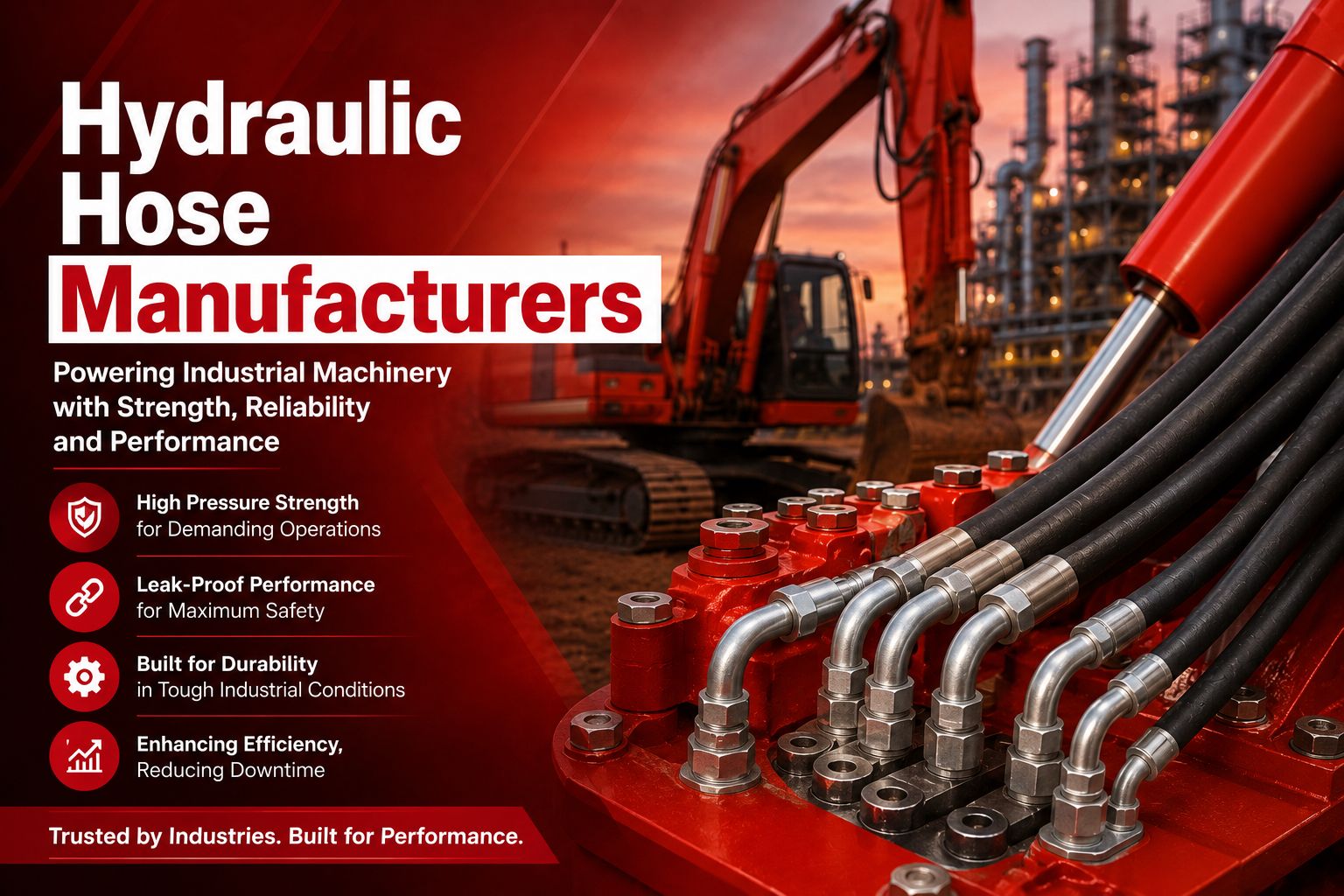
In today’s fast-paced industrial world, efficiency and reliability are everything. Whether you are in construction, manufacturing, agriculture, or heavy engineering, hydraulic systems play a critical role in daily operations. At the heart of these systems are durable and high-performance hose pipes. This is why choosing the right hydraulic hose pipe manufacturers in Delhi becomes essential for long-term success. Delhi is one of India’s largest industrial hubs, offering a wide range of manufacturers specializing in hydraulic components. However, finding the right partner among numerous hydraulic hose pipe manufacturers in Delhi can be challenging. This guide will help you understand what to look for and highlight some of the best options available. Why Choosing the Right Manufacturer Matters Hydraulic hose pipes are responsible for carrying fluids under high pressure. Any compromise in quality can lead to equipment failure, operational downtime, and safety risks. Reliable hydraulic hose pipe manufacturers in Delhi ensure that their products meet strict quality standards and perform efficiently under demanding conditions. A good manufacturer not only provides quality products but also offers technical support, customization, and long-term reliability. Key Factors to Consider Before selecting from the many hydraulic hose pipe manufacturers in Delhi, it’s important to evaluate a few critical factors: 1. Material QualityHigh-quality rubber, thermoplastics, and reinforced materials ensure durability and resistance to wear and tear. 2. Certifications and StandardsTop hydraulic hose pipe manufacturers in Delhi comply with ISO, SAE, and other industry standards. 3. Product RangeA wide product portfolio indicates expertise and the ability to meet diverse industrial needs. 4. CustomizationIndustries often require tailored solutions, and leading hydraulic hose pipe manufacturers in Delhi provide customized hose assemblies. 5. After-Sales SupportReliable service and maintenance support are essential for long-term partnerships. Top Hydraulic Hose Pipe Manufacturers in Delhi Here are some trusted names you can consider: 1. Rattan Hose & Engineering Works Pvt. Ltd.A well-established company known for manufacturing high-performance hydraulic hoses and industrial hose assemblies. They are widely trusted for their durability and engineering precision. 2. Rubber Hose India LLPThis company offers a broad range of hydraulic hoses and fittings. Their strong distribution network and consistent quality make them a preferred choice among hydraulic hose pipe manufacturers in Delhi. 3. DS Hydraulics (DSH)Known for precision-engineered hydraulic fittings and hoses, DS Hydraulics serves industries like automotive and heavy machinery with reliable solutions. 4. Shree Tirupati & AssociatesThey provide hydraulic hose pipes along with oil filtration systems and other hydraulic equipment, making them a comprehensive solution provider. 5. Sonu Hose PipeBased in Mayapuri, this supplier is known for quick service and a strong understanding of industrial requirements. 6. Hydron MachineriesHydron Machineries specializes in high-pressure hose pipes designed for demanding industrial environments. 7. DKS Rubber & HydraulicA trusted supplier offering a wide range of hydraulic hoses and fittings with strong local availability. 8. Atul Hose & Engineering CompanyThey provide versatile hydraulic solutions tailored to different industries, focusing on quality and customer satisfaction. 9. Mangla Rubber IndustriesMangla Rubber Industries is gaining recognition for its quality rubber products and hydraulic hose solutions. Their focus on durable materials and customized manufacturing makes them a reliable option among hydraulic hose pipe manufacturers in Delhi. They cater to multiple industries including construction, automotive, and heavy machinery. Benefits of Choosing Local Manufacturers Working with local hydraulic hose pipe manufacturers in Delhi offers several advantages: Faster delivery and reduced downtime Better communication and support Cost-effective logistics Easy access to maintenance and replacement services These benefits make Delhi-based manufacturers a practical choice for businesses operating in and around the region. Common Mistakes to Avoid While selecting from hydraulic hose pipe manufacturers in Delhi, avoid these mistakes: Focusing only on price instead of quality Ignoring certifications and testing standards Overlooking after-sales service Not checking customer reviews or industry reputation Making an informed decision will save both time and money in the long run. Future of Hydraulic Hose Manufacturing The hydraulic industry is evolving with new technologies. Many hydraulic hose pipe manufacturers in Delhi are adopting: Advanced materials for longer lifespan Eco-friendly production methods Improved flexibility and pressure resistance Automation for consistent quality These innovations are helping industries improve efficiency and sustainability. Final Thoughts Selecting the right hydraulic hose pipe manufacturers in Delhi is crucial for ensuring smooth operations and long-term reliability. With so many options available, the key lies in evaluating quality, experience, and service. By choosing a trusted manufacturer, you not only enhance the performance of your machinery but also reduce maintenance costs and downtime. Take your time, compare options, and invest in a partner that aligns with your business needs. In the end, the right choice among hydraulic hose pipe manufacturers in Delhi can make a significant difference in productivity, safety, and overall operational success. Know More
Breded Pipe vs Regular Pipe: Key Differences Explained
When it comes to plumbing, construction, or industrial applications, choosing the right type of pipe can make a huge difference in performance, durability, and cost. Among the many options available, the Breded Pipe has gained increasing attention for its strength and flexibility. But how does it compare to a regular pipe? And more importantly, which one should you choose? In this blog, we’ll break down the key differences between a Breded Pipe and a regular pipe in a simple, easy-to-understand way so you can make an informed decision. What is a Breded Pipe? A Breded Pipe is a type of pipe reinforced with an outer braided layer, typically made of stainless steel, nylon, or other durable materials. This braided layer adds extra strength and flexibility, making the pipe more resistant to pressure, bending, and external damage. Unlike standard pipes, a Breded Pipe is designed to handle demanding conditions, such as high-pressure systems or environments where movement and vibration are common. What is a Regular Pipe? A regular pipe, on the other hand, refers to standard pipes made from materials like PVC, copper, or steel without any additional reinforcement. These pipes are widely used in homes and industries for everyday applications like water supply, drainage, and gas lines. While regular pipes are cost-effective and easy to install, they may not offer the same level of durability and flexibility as a Breded Pipe. Key Differences Between Breded Pipe and Regular Pipe 1. Strength and Durability One of the biggest advantages of a Breded Pipe is its superior strength. The braided outer layer acts as a protective shield, making it highly resistant to wear and tear. Regular pipes, while reliable, can crack or break under high pressure or physical stress. In contrast, a Breded Pipe is built to last longer, especially in tough conditions. 2. Flexibility Flexibility is where a Breded Pipe truly shines. It can bend without breaking, making it ideal for installations in tight or complex spaces. Regular pipes are usually rigid and require multiple fittings to navigate corners. This not only increases installation time but also raises the risk of leaks. A Breded Pipe reduces the need for extra joints, making the system more efficient. 3. Pressure Resistance If your application involves high pressure, a Breded Pipe is often the better choice. The braided reinforcement helps it withstand higher pressure levels without bursting. Regular pipes have pressure limits and may fail if those limits are exceeded. This makes a Breded Pipe a safer option for demanding systems like industrial machinery or high-pressure water lines. 4. Installation Process Installing Breded Pipes are generally quicker and easier due to its flexibility. It can be maneuvered into place without requiring many connectors or fittings. Regular pipes often need precise measurements, cutting, and multiple joints. This can increase both labor time and installation costs. Using a Breded Pipe can simplify the process significantly. 5. Cost Consideration Cost is an important factor when choosing between the two. Breded Pipes are typically more expensive upfront because of its advanced construction and materials. However, it can save money in the long run by reducing maintenance, repairs, and replacements. Regular pipes are cheaper initially but may incur higher costs over time, especially in demanding applications. 6. Resistance to Corrosion and Damage A Breded Pipe often comes with added resistance to corrosion and external damage, especially when made with stainless steel braiding. Regular pipes, depending on the material, may be more prone to corrosion, especially in harsh environments. This makes Breded Pipes more reliable choice for long-term use. 7. Applications A Breded Pipes are commonly used in: Industrial systems High-pressure water lines Gas supply systems Automotive and machinery connections Regular pipes are suitable for: Household plumbing Drainage systems Low-pressure water supply Choosing a Breded Pipe is ideal when performance and durability are critical, while regular pipes work well for basic, everyday needs. Which One Should You Choose? The choice between Breded Pipes and a regular pipes depends on your specific requirements. If you need something durable, flexible, and capable of handling high pressure, Breded Pipes are the better option. It’s especially useful in environments where reliability is crucial. On the other hand, if your project is simple and budget is a concern, a regular pipe may be sufficient. It gets the job done for standard applications without unnecessary expense. Final Thoughts Both pipe types have their own advantages, but the Breded Pipes stands out for its strength, flexibility, and long-term reliability. While it may cost more initially, its performance often justifies the investment. Understanding the differences helps you avoid costly mistakes and ensures your system runs smoothly for years to come. Whether you’re working on a home project or an industrial setup, choosing the right pipe is a decision that truly matters. In the end, if durability and efficiency are your priorities, a Breded Pipse are hard to beat.
Industrial Hose Manufacturers for Oil & Gas: What Sets Them Apart In 2026
In 2026, the oil and gas industry runs on fluid under extreme pressure, temperature, and chemical stress—conditions that demand more than ordinary hoses. That’s why specialized Industrial Hose Manufacturers have become critical partners in drilling, fracking, refining, and offshore operations. These manufacturers don’t just sell rubber tubes; they deliver engineered solutions that directly affect safety, uptime, and regulatory compliance. What makes Industrial Hose Manufacturers for oil & gas different Industrial Hose Manufacturers serving oil & gas must meet some of the toughest standards in the world—API 7K, API 16C, ISO 1823, and other regional codes that govern drilling, well‑control, and pipeline‑transfer systems. Unlike general‑purpose hose suppliers, these Industrial Hose Manufacturers use specially formulated compounds, multi‑layer reinforcements, and rigorous testing protocols to ensure hoses can withstand thousands of pressure cycles, exposure to crude, chemicals, seawater, and high‑temperature environments. Another key difference is customization. Oil fields and offshore platforms rarely use standard “off‑the‑shelf” hose assemblies. Industrial Hose Manufacturers design bespoke lengths, bend radii, coupling types, and protective coatings to match specific rig layouts, subsea BOP (blowout preventer) systems, and chemical‑injection lines. Core design and material requirements Oil‑resistant inner tubes made from nitrile rubber, fuel‑resistant thermoplastics, or specialized PTFE‑based compounds are standard among Industrial Hose Manufacturers for oil & gas. These materials resist degradation from crude, diesel, methanol, and other hydrocarbons that would quickly break down ordinary hoses. Reinforcement is equally critical. Multi‑spiral steel‑wire layers and high‑tensile braids allow Industrial Hose Manufacturers to build hoses rated for pressures up to 3,000–4,000 bar in some ultra‑high‑pressure control and hydraulic‑test lines. Outer covers are engineered to be abrasion‑resistant, UV‑stable, and often anti‑static, which is essential in flammable atmospheres where static discharge can trigger fires or explosions. Working in harsh offshore and onshore environments Offshore platforms, FPSOs (floating production storage and offloading vessels), and deep‑sea installations place extraordinary demands on hose systems. Industrial Hose Manufacturers now produce ultra‑high‑pressure hose bundles that can run several kilometers underwater, handling chemical injections, methanol service, and control‑fluid transfer for subsea BOPs. These hoses must remain flexible despite extreme cold, salinity, and the constant movement of floating structures. On land, shale‑field operations and hydraulic fracturing units rely on Industrial Hose Manufacturers to supply choke‑and‑kill lines, drilling‑fluid hoses, and high‑pressure frac‑water lines that endure repeated coiling, vibration, and abrasive contact with sand and gravel. Leading Industrial Hose Manufacturers respond by offering abrasion‑resistant covers, robust couplings, and pre‑assembled hose strings that reduce field‑assembly time and leak points. Safety, compliance, and traceability In oil & gas, a single hose failure can lead to spills, fires, or even catastrophic well‑control events. Industrial Hose Manufacturers therefore implement strict quality‑control systems, including burst testing, impulse‑cycle testing, and kink testing at representative operating conditions. Many manufacturers now include digital traceability, so each hose assembly carries a unique identifier linking it to batch certificates, test records, and installation history. Certifications and documentation are equally important. Industrial Hose Manufacturers supplying oil & gas projects typically provide full technical dossiers compliant with API, ISO, and regional safety frameworks. This documentation helps operators satisfy environmental and safety‑audit requirements while also speeding up approval and commissioning processes. Emerging trends among Industrial Hose Manufacturers in 2026 By 2026, Industrial Hose Manufacturers serving oil & gas are moving toward lighter, higher‑performance constructions that reduce weight on rigs and offshore structures without sacrificing pressure rating. Some manufacturers are also exploring composite‑reinforced hoses and fiber‑based materials that combine flexibility with improved chemical resistance and fatigue life. Another growing trend is integrated service models. Beyond supplying hoses, Industrial Hose Manufacturers now offer installation support, on‑site training, and predictive‑maintenance programs that monitor hose life through inspection schedules and usage data. For operators, this shift means fewer unplanned shutdowns and more predictable replacement cycles in an industry where every hour of downtime is costly Why choosing the right Industrial Hose Manufacturers matters In 2026, the oil and gas sector can no longer treat hoses as a low‑cost, throwaway component. Instead, Industrial Hose Manufacturers are viewed as strategic partners whose products directly influence operational safety, environmental performance, and project economics. By selecting proven Industrial Hose Manufacturers who combine advanced materials, rigorous testing, and global‑standard certifications, operators ensure that their fluid‑transfer systems remain among the most reliable and resilient parts of the entire value chain.