Modern Manufacturing Depends on Reliable Fluid Transfer
Manufacturing environments today operate with very little tolerance for interruptions. Production systems are expected to run continuously for long hours while maintaining consistent output. In such conditions, even small failures inside a fluid transfer system can affect productivity. This is where a dependable industrial hose system becomes important. In hydraulic machinery, hoses carry pressurized oil between different machine components. In processing industries, hoses help transfer chemicals, steam, air, or liquids through controlled systems. Some operations require flexibility because machinery moves constantly, while others require hoses capable of handling high temperatures or abrasive conditions. The challenge is that industrial environments are rarely predictable. A hose working perfectly inside a clean production unit may not survive the same way in mining, construction, or heavy fabrication conditions. This is why industrial buyers increasingly prefer working with experienced hose manufacturers in India that understand how operating conditions affect hose performance over time.Heavy Equipment Places Constant Stress on Hose Systems
Heavy machinery rarely operates under stable conditions. Excavators, loaders, cranes, hydraulic presses, and material handling equipment work under continuous movement, vibration, and pressure fluctuation. In these environments, a weak hose quickly becomes a maintenance problem. A properly designed hydraulic and industrial hose system helps machines maintain pressure stability during operation. Without that consistency, hydraulic systems begin losing efficiency. Operators may notice reduced lifting performance, overheating, slower movement, or pressure imbalance across machinery. The operating environment also matters. Construction and mining equipment are exposed to dust, rough surfaces, oil exposure, weather conditions, and continuous movement throughout the day. Hoses used in such systems must maintain flexibility without weakening structurally. This is one reason industries sourcing hydraulic systems usually work with experienced hydraulic hose pipe manufacturers in India instead of choosing generic low-cost products available in the market.The Difference Usually Appears After Months of Usage
One of the biggest challenges in industrial procurement is that many hoses look similar during purchase. The actual difference between products becomes visible only after continuous use. Low-quality hoses may start showing surface cracks near bends or fittings. Some lose flexibility after exposure to oil and heat. Others begin leaking because reinforcement layers weaken under pressure cycles. These problems do not always appear immediately, which is why businesses often realize the quality gap only after machinery downtime begins increasing. A reliable industrial hose pipe system is expected to handle daily operational stress without affecting machine efficiency. This becomes even more important in industries where maintenance shutdowns directly impact production schedules. Manufacturers with proper production standards usually focus heavily on reinforcement quality, rubber bonding, and pressure handling consistency because industrial applications leave very little room for product instability.Manufacturing Efficiency Depends on Smaller Components Too
In industrial environments, efficiency is often associated with large machinery and automation systems. But smaller supporting components play an equally important role in maintaining operational continuity. Hoses directly affect fluid transfer speed, hydraulic response, and pressure stability. If flow becomes restricted or pressure handling weakens, machine performance also begins dropping gradually. For example, hydraulic systems operating with incorrect hose configurations may place additional load on pumps and moving components. Over time, this increases wear inside the machinery itself. Good Industrial Hose Applications improve operational balance because they allow systems to maintain proper flow and pressure under demanding conditions. This reduces unnecessary stress on equipment and helps machines perform more consistently during continuous operation.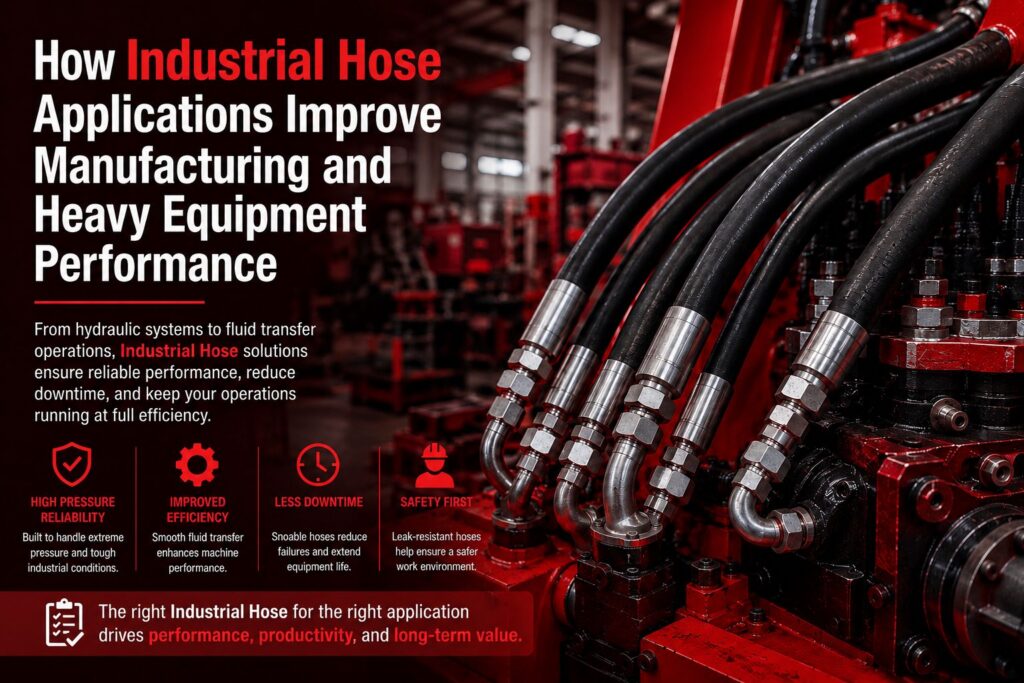
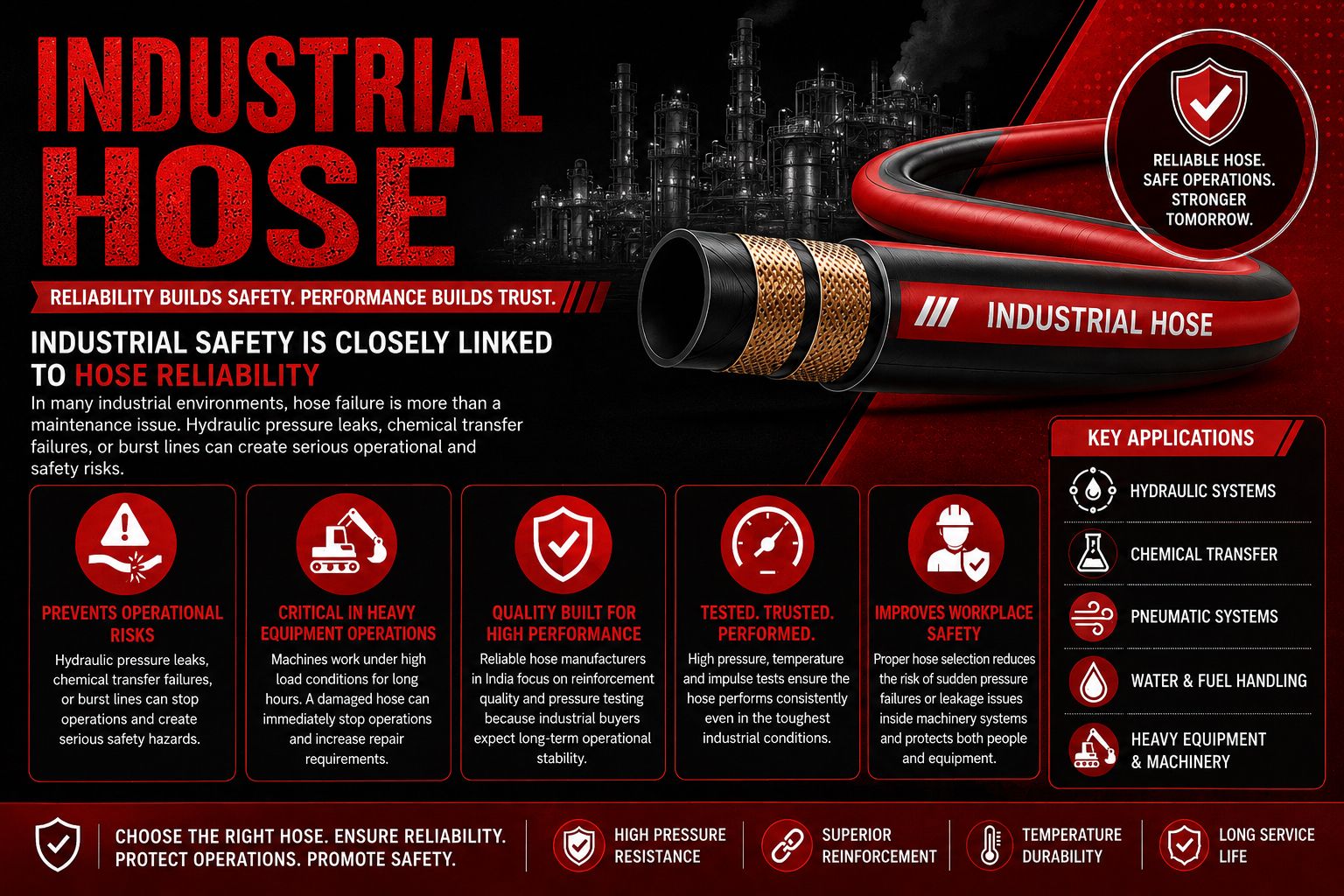
Industrial Safety is Closely Linked to Hose Reliability
In many industrial environments, hose failure is more than a maintenance issue. Hydraulic pressure leaks, chemical transfer failures, or burst lines can create serious operational and safety risks.
This becomes especially important in heavy equipment operations where machinery works under high load conditions for long hours. A damaged hose inside a hydraulic system can immediately stop operations and increase repair requirements.
Reliable hose manufacturers in India generally focus on reinforcement quality and pressure testing because industrial buyers expect long-term operational stability.
Proper hose selection also improves workplace safety by reducing the risk of sudden pressure failures or leakage issues inside machinery systems.
Industrial Requirements Are Becoming More Specialized
Industrial operations today are far more advanced than they were a decade ago. Machinery has become more powerful, automated systems are more common, and production environments demand higher efficiency levels.
As a result, businesses now require more specialized hydraulic and industrial hose solutions suited to specific operating conditions.
Some industries require hoses capable of handling high-temperature fluid transfer. Others need products designed for chemical resistance or continuous hydraulic movement. Manufacturing plants operating automated systems often require flexible hose assemblies that can withstand repetitive motion without failure.
This growing complexity has increased the importance of working with manufacturers that understand application-based requirements instead of offering only standard catalogue products.
Long-Term Performance Matters More Than Initial Pricing
Industrial buyers naturally compare pricing during procurement, but hose performance should always be evaluated over long-term operational use rather than short-term purchase cost.
A low-cost hose that fails repeatedly usually increases maintenance expenses, downtime, and operational inefficiency. In heavy equipment industries, even a single hydraulic failure can interrupt work schedules and increase repair costs significantly.
This is why many businesses eventually shift toward suppliers capable of maintaining product consistency instead of focusing only on low pricing.
Experienced manufacturers generally understand that industrial buyers value reliability because operational continuity is directly connected to machine performance. For product updates, industrial insights, and industry-related discussions, businesses can also follow Mangla Rubber Industries on LinkedIn.
Conclusion
The role of Industrial Hose Applications in manufacturing and heavy equipment operations continues to grow as industries become more dependent on hydraulic systems and continuous production environments.
From maintaining fluid transfer efficiency to supporting hydraulic pressure stability, industrial hoses contribute directly to machine performance, maintenance efficiency, and operational reliability.
Whether the application involves heavy machinery, manufacturing systems, or industrial transfer operations, selecting the right hose system can significantly improve long-term equipment performance.
Industrial hose Industrial hose Industrial hose Industrial hose Industrial hose