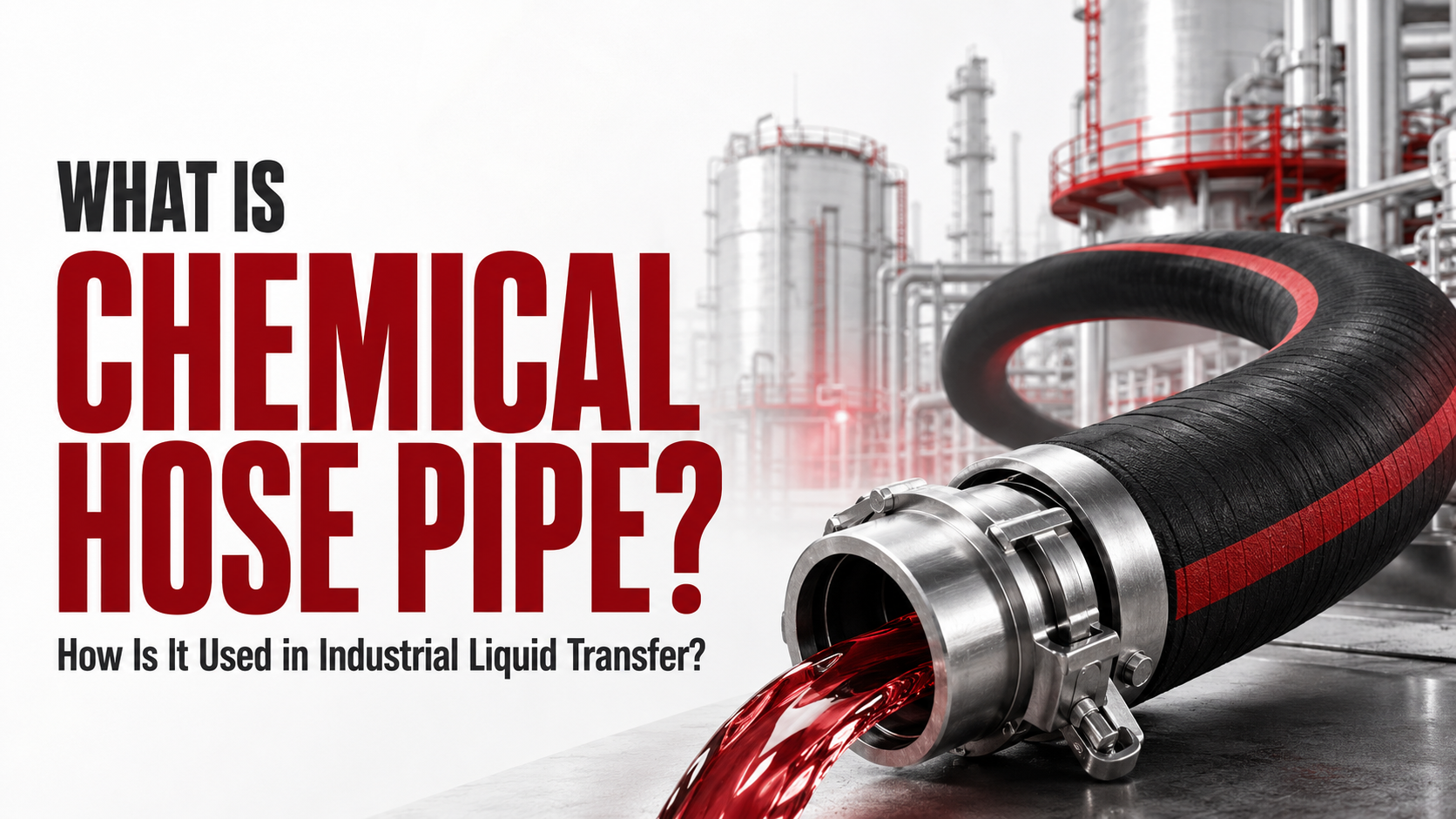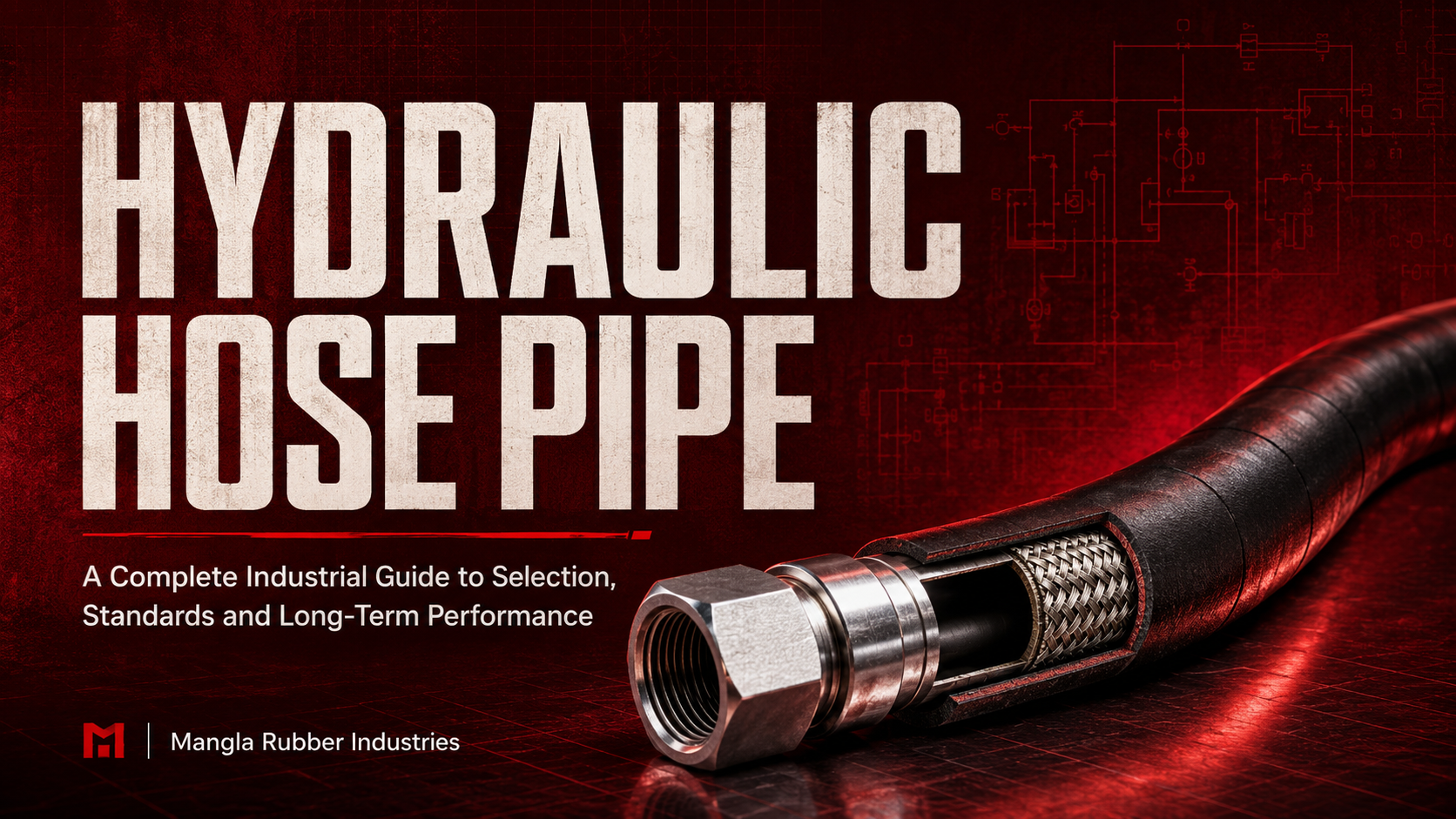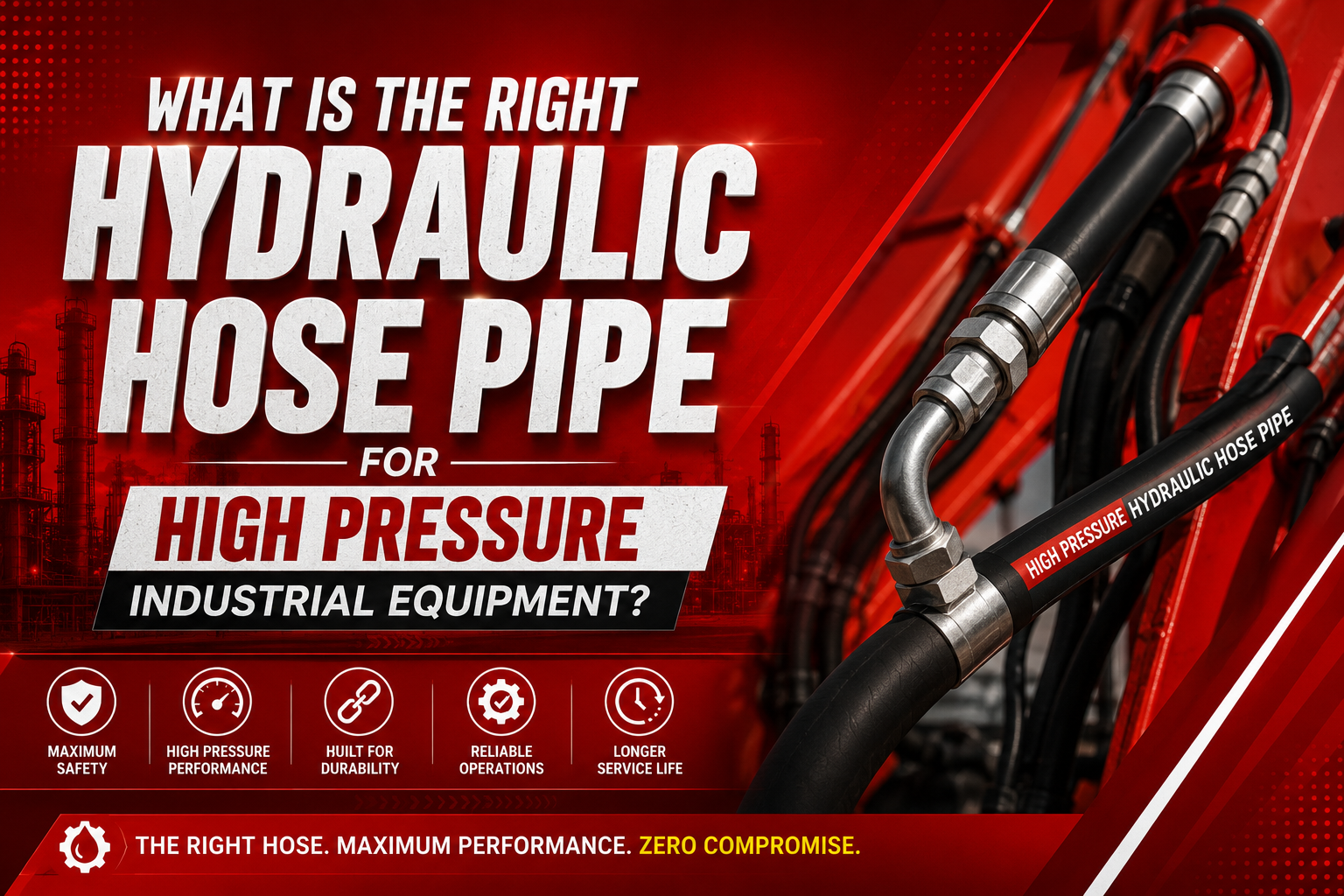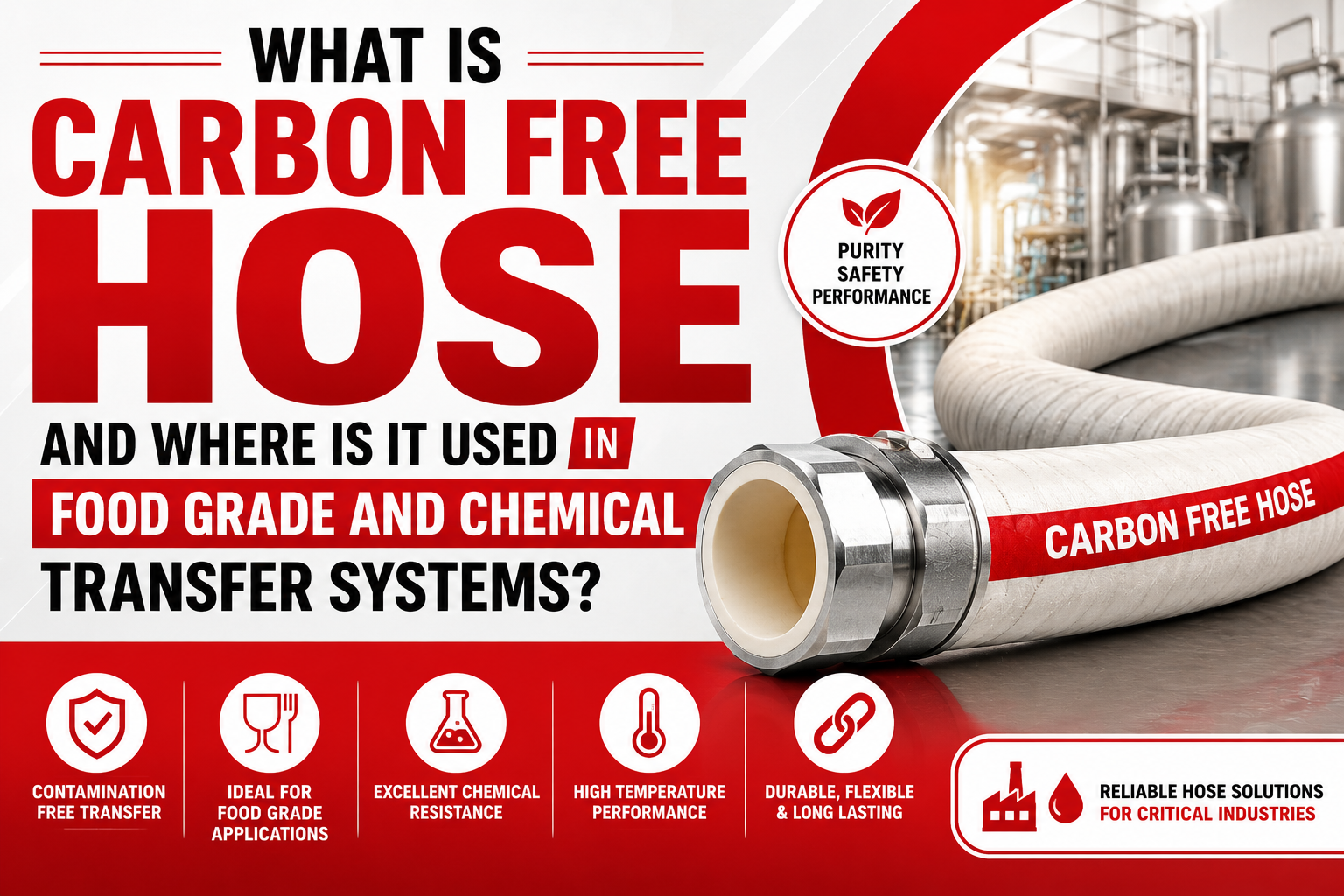
Modern industries rely heavily on machines and equipment that operate under pressure. From manufacturing plants to construction sites, hydraulic systems help power equipment that handles lifting, movement, automation, and fluid transfer. At the center of many of these operations are hydraulic hose pipe systems. These systems are designed to transfer hydraulic fluid between different machine components while handling pressure, heat, and continuous movement. A properly designed hydraulic hose system helps improve machine performance and reduces the chances of leakage or operational failure. Today, hydraulic hose pipe systems are used across several industries because of their flexibility, durability, and ability to work in demanding environments. What Are Hydraulic Hose Pipe Systems? Hydraulic hose pipe systems are assemblies made to carry hydraulic fluid within machinery and industrial equipment. These systems usually include hoses, fittings, connectors, and other components that work together to maintain pressure and fluid flow. Unlike rigid piping systems, hydraulic hose assemblies offer flexibility, making them suitable for equipment with moving parts or limited installation space. The performance of these systems depends on factors such as: Pressure handling capacity Hose material Fluid compatibility Temperature resistance Proper installation Choosing the right hydraulic hose solutions is important for maintaining safe and reliable operation. Use of Hydraulic Hose Systems in Manufacturing Manufacturing industries use hydraulic systems in machines that require controlled movement and force. Press machines, injection molding equipment, lifting systems, and automated production lines often depend on hydraulic pressure systems. Industrial hydraulic hose setups help maintain smooth fluid transfer between machine components while handling continuous operation. Since production machinery often runs for long hours, durable hose systems become important for reducing downtime and maintenance issues. Hydraulic Hose Pipe Systems in Construction Equipment Construction equipment operates in demanding environments where machines are exposed to dust, heavy loads, and rough conditions. Hydraulic hose pipe systems are commonly used in excavators, cranes, loaders, and drilling equipment. These systems help transfer hydraulic fluid required for lifting, steering, digging, and machine movement. Flexible hydraulic hose assemblies also allow machines to operate efficiently even under constant movement and vibration. High pressure hydraulic hose products are often preferred in construction equipment because they can handle heavy-duty operations more effectively. Agricultural Applications of Hydraulic Hose Systems Agricultural machinery also depends on hydraulic systems for daily operations. Tractors, harvesters, sprayers, and loaders use hydraulic pressure for lifting and controlling equipment functions. Hydraulic rubber hose systems used in agriculture are designed to work in outdoor conditions where exposure to dirt, moisture, and temperature variation is common. Reliable hydraulic piping systems help farmers and agricultural operators maintain equipment efficiency during long working hours. Mining and Industrial Processing Applications Mining operations and industrial plants often use large hydraulic systems for material handling and machine control. In such environments, hydraulic hose pipe systems must be capable of handling high pressure and continuous operation. Industrial hydraulic applications in mining usually require reinforced hydraulic hose products that can withstand abrasion and demanding working conditions. Proper hose selection becomes important in these industries because system failure can affect both productivity and safety. Importance of Hydraulic Hose Maintenance Regular inspection and maintenance play an important role in the performance of hydraulic hose systems. Over time, hoses and fittings may wear out because of pressure, heat, or environmental conditions. Some common signs that indicate maintenance may be required include: Fluid leakage Cracks or surface wear Reduced pressure performance Loose fittings Hose swelling Routine inspection helps reduce unexpected breakdowns and improves the lifespan of hydraulic equipment. Choosing the Right Hydraulic Hose Solutions Different industries require different hydraulic hose systems depending on operating conditions and machine requirements. Factors such as pressure rating, hose flexibility, fluid type, and environmental exposure should always be considered before installation. Using quality industrial hydraulic hose products can help improve operational efficiency and reduce maintenance costs over time. Businesses working with hydraulic machinery often prefer hose systems that provide reliable fluid transfer and long-term durability in industrial environments. For product inquiries andindustrial requirements, visit Mangla Rubber Industries Contact Page Conclusion Hydraulic hose pipe systems have become an important part of modern industrial operations. From manufacturing and construction to agriculture and mining, these systems support equipment that depends on pressure-based fluid movement. Proper installation, maintenance, and hose selection help improve machine performance and reduce operational issues in the long run. Businesses looking for hydraulic hose products, fittings, or industrial rubber solutions can explore the range offered by Mangla Rubber Industries. To stay updated with industrial product insights and related content, connect with Mangla Rubber Industries on LinkedIn
Hydraulic Hose Fittings and Their Important Role in Industrial Systems
In industrial systems, even a small connection can affect the performance of the entire setup. Hydraulic hose fittings are one of those components that often go unnoticed but play an important role in maintaining pressure, fluid flow, and system reliability.These fittings are used to connect hydraulic hoses with machinery, valves, cylinders, and other hydraulic parts. A proper connection helps maintain smooth operation and reduces the chances of leakage or pressure loss.Different industries use different hydraulic fitting types depending on the working environment, pressure level, and machine design. Understanding these fittings helps in selecting the right connection for industrial applications. What Are Hydraulic Hose Fittings? Hydraulic hose fittings are connectors attached to hydraulic hoses to create secure fluid transfer between hydraulic components. Since hydraulic systems usually work under high pressure, fittings need to be strong, durable, and properly matched with the hose and equipment. The choice of fitting depends on factors such as: Incorrect fittings can lead to leakage, reduced efficiency, and damage to hydraulic systems over time. Common Hydraulic Hose Fittings Types There are several hose fitting types used in industrial operations. Each serves a different purpose based on the system layout and application. Straight Fittings Straight fittings are commonly used where the hose connection follows a direct path. These fittings are simple and widely used in industrial hydraulic systems. Elbow Fittings Elbow fittings are used when the direction of the hose needs to change. They are generally available in 45-degree and 90-degree designs and help reduce hose bending in compact spaces. Tee Fittings Tee fittings are used when hydraulic flow needs to be divided into multiple directions. These are commonly used in systems with multiple hydraulic lines. Flange Fittings Flange fittings are mainly used in heavy-duty and high-pressure applications. They provide strong sealing and are commonly found in industrial machinery and construction equipment. Choosing the right industrial hose is important for performance, safety, and long-term durability. Whether you need hoses for hydraulic systems, manufacturing units, fluid transfer, or heavy-duty industrial applications, getting the right solution matters. Explore industrial hose solutions from Mangla Rubber Industries and connect with a team experienced in industrial rubber and hose products.Industrial Hose Supply by Mangla Rubber Industries Materials Used in Hydraulic Fittings Different materials are used depending on the operating conditions and industrial environment. Steel Fittings Steel fittings are widely preferred for heavy-duty industrial systems because of their strength and pressure-handling capability. Stainless Steel Fittings Stainless steel fittings are suitable for applications where corrosion resistance is important, especially in moisture-prone or chemical environments. Brass Fittings Brass fittings are generally used in lower-pressure systems and applications where corrosion resistance is required. Importance of Choosing the Right Fitting Properly selected fittings help maintain hydraulic pressure and improve system reliability. Poor fitting selection can create issues such as: Using the correct hydraulic fitting types also helps improve safety and long-term equipment performance. Industries That Use Hydraulic Hose Fittings Hydraulic systems are used across multiple industries, making hose fittings an important industrial component. Manufacturing Hydraulic systems are widely used in production machinery and industrial automation equipment. Construction Heavy machinery such as excavators, cranes, and loaders rely on hydraulic connections for daily operation. Agriculture Agricultural equipment uses hydraulic systems for lifting, steering, and machine control. Mining and Industrial Plants Mining and processing industries use hydraulic systems in demanding operating conditions where durable fittings are necessary. Maintenance and Inspection Regular inspection of hydraulic fittings helps prevent system failures. Businesses should check for leakage, wear, corrosion, or loose connections during maintenance. Basic maintenance practices include: Timely maintenance helps improve the lifespan of hydraulic systems and connected components. For industrial hose and hydraulic product inquiries contact here: Mangla Rubber Industries Final Thoughts Hydraulic hose fittings are an essential part of industrial hydraulic systems. From maintaining fluid flow to handling pressure safely, these components support smooth machine operation across different industries. Understanding different hose fitting types and selecting suitable fittings according to application requirements can help improve performance and reduce maintenance issues over time. Get in touch with us at:IndiaMartFacebook
The Pulse of Modern Industry: Why Your Industrial Hose Supply Partner Matters More in 2026
If you manage a factory floor, oversee a construction project, or run a food processing facility, you already understand something that does not show up on any balance sheet — the smallest component failures tend to create the largest disruptions. A cracked fitting. A delayed replacement part. A hose that was not quite right for the application. Any one of these can bring a production line to a complete stop before the morning shift is even over. That is why the conversation around industrial hose supply has shifted so significantly in recent years. It is no longer a routine purchasing task. For many operations, finding the right industrial hose supply partner has become just as strategically important as the machinery those hoses connect. It Is Not “Just a Hose” Anymore There was a time when most businesses treated hoses as basic consumables — order them when you need them, replace them when they fail, repeat. That approach does not hold up anymore. Modern facilities operate under higher pressures, faster automation cycles, stricter safety regulations, and tighter production windows. The demands placed on an industrial hose supply chain have grown accordingly. In 2026, industrial hoses are expected to reliably handle: Extreme temperature ranges, both high and low High-pressure fluid and chemical transfer Corrosive and reactive substances Continuous automated operations with minimal maintenance windows Food-grade and pharmaceutical compliance standards And increasingly, hoses themselves are becoming intelligent. Sensor-enabled systems embedded in modern hose assemblies can detect pressure fluctuations, internal wear, and stress points before a failure happens. A quality industrial hose supply partner will know which applications benefit from this technology and how to integrate it practically. Predictive maintenance is no longer a buzzword. For operations that cannot afford unplanned downtime, it is quickly becoming standard practice. The Industry Has Raised Its Standards — and So Should Your Supplier One of the clearest signs of a strong industrial hose supply partner is their willingness to move beyond generic, off-the-shelf solutions. Precision matters. Whether your application involves hydraulic systems, steam transfer, chemical handling, or pneumatic automation, a hose that is “close enough” is rarely good enough. Customisation has become the baseline expectation, not a premium add-on. Several key trends are shaping what good industrial hose supply looks like right now: Eco-Conscious Materials Sustainability requirements are tightening across industries. Responsible industrial hose supply companies are increasingly offering recyclable materials and environmentally compliant options that help businesses meet their own ESG and regulatory targets. Stronger Safety Engineering As systems run faster and at higher pressures, reinforcement standards have had to keep pace. Improved braid layers, advanced leak protection, and better fitting integrity are now expected rather than exceptional. Custom-Built Assemblies Robotic production lines and specialised facility layouts often cannot accommodate standard hose configurations. A capable industrial hose supply provider builds to specification — not just to catalogue. Experience Still Outperforms Automation Technology has improved logistics, tracking, and inventory management significantly. But when it comes to selecting the right hose for a specific application, human expertise still makes the biggest practical difference. A knowledgeable industrial hose supply partner does more than fulfil orders. They ask the right questions before anything is specified. They flag compatibility issues between materials, fittings, and fluids that might not be obvious from a data sheet. They help you avoid the kind of mistakes that only become visible after installation — when fixing them costs far more than getting it right the first time would have. A single well-informed recommendation — choosing the correct inner lining for chemical resistance, for example, or specifying a tougher cover material for an abrasive environment — can extend service life significantly and reduce total replacement costs over time. The best industrial hose supply relationships are built on that kind of operational familiarity. Your supplier should understand your seasonal demand patterns, your compliance requirements, your critical lead times, and the specific challenges your facility faces. That knowledge becomes genuinely valuable when supply chains tighten or an urgent replacement is needed at short notice. Reliability Is a Competitive Advantage In 2026, how quickly and consistently you can get the right components is a real operational differentiator. While one facility waits two weeks for a replacement part, another keeps running because their industrial hose supplypartner had the stock, the logistics, and the relationship to turn it around fast. The strongest suppliers in this space are investing in: Regional Inventory Support — Local distribution reduces lead times and provides a buffer when global supply chains are under pressure. Certified Quality Standards — Products that meet current ISO, safety, and sector-specific certifications reduce compliance risk and give procurement teams confidence. Digital Procurement Tools — Real-time order tracking, live inventory visibility, and streamlined reordering are no longer differentiators. For many buyers, they are minimum expectations from any serious industrial hose supplyprovider. What the Next Few Years Look Like The direction of industrial hose supply is clear: smarter materials, faster customisation, and deeper integration with predictive maintenance systems. Already in use across leading facilities: 3D-printed fittings enabling faster turnaround on custom assemblies Lightweight composite constructions replacing heavier traditional materials Extended-life hose builds reducing replacement frequency Sensor-integrated assemblies feeding data directly into maintenance platforms The technology will keep evolving. But the core requirement stays constant — keeping operations running without interruption, safely and efficiently. Choosing the Right Partner: What to Look For When evaluating your industrial hose supply options, price should be one factor, not the only one. Factor What to Look For Material Compatibility Does the hose suit your specific chemical and temperature profile? Durability Data Is there documented pressure-testing and lifecycle information? Safety Compliance Does it meet current 2026 certifications for your sector? Technical Support Can they advise on specification, not just process orders? Availability Can urgent replacements be turned around quickly? The right industrial hose supply partner gives you more than product. They give you reliability, confidence, and one less thing to worry about when the pressure is on. Final Thought Industrial hoses may look like simple components tucked
The Future Under Pressure: Why Your Choice of High Pressure Hose Matters in 2026
Not that long ago, nobody gave much thought to which high pressure hose they were buying. You picked one, connected it, and got on with the job. If it worked, great. If it failed, you replaced it and moved on. That attitude is costing businesses — and homeowners — more than they realise. In 2026, the high pressure hose you choose directly affects how efficiently you work, how safe your site is, and what you spend over time. Whether you are running a commercial cleaning operation, managing hydraulic machinery, or maintaining your property on weekends, the right hose makes a measurable difference. The wrong one makes itself known at the worst possible moment. When Your Hose Knows More Than You Do One of the most significant shifts in recent years is the introduction of smart monitoring technology in premium high pressure hose products. Modern hoses now come fitted with sensors that track wear, internal pressure changes, and stress levels in real time. When something starts heading in the wrong direction, the system sends an alert — before a failure actually happens. Think about what that means in practice. A high pressure hose failure mid-job does not just mean a quick swap. It means halted operations, potential damage to machinery, and in some cases, a genuine safety risk for anyone nearby. Smart monitoring turns an unpredictable emergency into a manageable maintenance task. For businesses where downtime is expensive, that shift from reactive to preventive is worth serious money. Built Tougher for the Conditions You Actually Face Anyone who has worked through a harsh winter, a baking summer, or a rough industrial site knows the frustration of a hose that cannot keep up. Older high pressure hose materials would stiffen in cold weather, crack under UV exposure, or wear through quickly on abrasive surfaces. Modern manufacturing has solved most of those problems. Graphene-reinforced outer covers deliver exceptional resistance to cuts, abrasion, and rough terrain — gravel, concrete, sharp metal edges. For demanding industrial environments, this means a high pressure hose that lasts significantly longer without the cover splitting or degrading. Cryo-flex polymer blends keep the hose flexible even in freezing temperatures. If you work in cold climates or at high altitudes, you will know exactly why this matters. A stiff hose is a slow hose — and a frustrating one. Lightweight thermoplastic hybrids are increasingly popular among professionals who spend full days working with hose-fed equipment. A good high pressure hose in this category handles the same pressures as traditional rubber but at a fraction of the weight, reducing operator fatigue and improving handling over long shifts. The result is a high pressure hose that performs consistently whether it is January in a cold warehouse or August on a dusty construction site. The Environmental Argument Is Getting Harder to Ignore Pressure-based cleaning and fluid systems have always had an efficiency edge over low-pressure alternatives, but the gap has widened. A modern high pressure hose delivers more cleaning power with less water. That means lower water consumption, faster job completion, and reduced operating costs — outcomes that matter whether you are running a large industrial facility or a small cleaning business. On the manufacturing side, leading suppliers have moved toward bio-based polymers and sustainable production processes. If environmental credentials are part of your operation’s story — or part of what your clients expect — upgrading to a responsibly made high pressure hose is a straightforward step in the right direction. Matching the Right Hose to the Right Job This is where many buyers go wrong. They focus entirely on pressure ratings, buy whatever looks adequate, and then wonder why performance is inconsistent. The right high pressure hose depends on what you are doing: Application Recommended Type Key Benefit Industrial hydraulics Multi-layer steel braid Maximum pressure and structural strength Commercial cleaning Non-marking thermoplastic Lightweight, surface-safe Agriculture and irrigation UV-resistant composite Weather and chemical resistance Home maintenance Kink-resistant rubber Easy storage and everyday handling One detail that often gets overlooked: flow rate. PSI tells you the pressure a high pressure hose can handle, but LPM (litres per minute) tells you whether the hose can actually keep up with your equipment’s output. A mismatch between hose flow capacity and machine output creates pressure loss, reduced performance, and unnecessary wear across the whole system. Always check both figures before buying. The Environmental Argument Is Getting Harder to Ignore Modern fittings — push-lock connections, leak-proof modular systems, anti-detachment locks — have made today’s high pressure hose setups considerably safer than older designs. But no fitting system replaces regular inspection. Stop and replace your hose immediately if you see: Bulging anywhere along the body Cracks or splits in the outer cover Any sign of leaking at the hose or fittings Loose connections or visible corrosion Significant abrasion damage Do not patch it and carry on. A high pressure hose operates under enormous force. When one fails, it does not fail quietly. The cost of a replacement hose is trivial compared to the cost of an injury, a damaged machine, or a job site shutdown. The Real Cost of Buying Cheap There is always a cheaper option on the shelf. But anyone who has cycled through several budget hoses — dealing with the replacements, the pressure drops, the mid-job failures — usually ends up doing the maths and arriving somewhere different. A quality high pressure hose costs more upfront. What it does not cost you is the downtime, the emergency callouts, the wasted energy from a poorly matched system, or the safety incident you cannot undo. In 2026, the best equipment is reliable, efficient, and built to keep working under real conditions. Your high pressure hose is no exception. Choose it with the same care you give everything else that keeps your operation running.
The Backbone of Industry: Celebrating the Hands That Power Progress this Labour Day 2026
Hose Industry As the world pauses on May 1st to observe International Labour Day, the landscape of global industry is undergoing a profound transformation. In 2026, we find ourselves at the intersection of traditional craftsmanship and rapid technological evolution. Yet, amidst the rise of automated systems and generative engines, one truth remains constant: the human element is the heartbeat of manufacturing. At Mangla Rubber Industries, Labour Day is not just a date on the calendar; it is a profound acknowledgment of the dedication, skill, and resilience of the workforce that drives our mission forward. From the engineers designing high-pressure hydraulic hoses to the quality control experts ensuring the integrity of our chemical-resistant lines, our success is a direct reflection of human ingenuity. The Evolution of Labour in the Age of Intelligence In 2026, the definition of “labour” has expanded. While the physical demands of the factory floor remain, there is an increasing synergy between manual expertise and digital fluency. Today’s industrial professionals are not just operators; they are curators of technology. As we navigate the shift toward Answer Engine Optimization (AEO) and advanced industrial diagnostics, the workforce at Mangla Rubber Industries has adapted. Our teams now leverage real-time data to monitor the performance of PTFE and Teflon hoses, ensuring that the critical infrastructure of our clients—from tractor-trolley hydraulics to high-impulse spiral systems—never fails. This blend of “boots on the ground” experience and digital oversight is what defines the modern industrial worker. Human-Centric Quality in a Machine-Driven World There is a growing trend in 2026 toward “Human-First” content and manufacturing. In a market flooded with mass-produced, low-quality alternatives, the value of an “Atomic Answer”—a precise, reliable, and human-verified solution—has never been higher. When a client chooses a Mangla hose, they aren’t just buying a rubber component; they are investing in the hours of meticulous testing and the decades of institutional knowledge held by our staff. Whether it’s a carbon-free hose for sensitive electrical environments or a high-pressure steam hose for heavy-duty power plants, each product carries the signature of human excellence. Labour Day serves as a reminder that behind every “State-of-the-Art” facility is a team of individuals who prioritize safety and durability over shortcuts. At Mangla, our commitment to reliability meets performance because our people refuse to settle for anything less. Building the Future: Sustainability and Skill As we look toward the remainder of 2026 and beyond, the focus of industrial labour is shifting toward sustainability and specialized skill sets. The demand for hoses that can withstand extreme temperatures and corrosive chemicals is growing, particularly as industries strive for more efficient, eco-friendly operations. Our workforce is at the forefront of this green revolution. By mastering the production of specialized hoses like our Fire & Extinguisher lines and advanced Pneumatic systems, our employees are helping build a safer, more sustainable world. We believe that empowering our workers with the latest tools and continuous training is the best way to ensure that Mangla Rubber Industries remains a leader in the global market. A Culture of Appreciation Recognition is the fuel of motivation. At Mangla Rubber Industries, we foster a culture where every contribution is valued. We understand that the strength of our hydraulic hoses is matched only by the strength of our team. This Labour Day, we celebrate the diversity of talent within our walls: The Visionaries: Who plan and consult with our clients to find the perfect industrial solutions. The Craftsmen: Who handle material selection with an eye for premium quality. The Logistics Experts: Who ensure that our products reach their final destination with precision and proof of delivery. Why the Human Element Matters for Your Business For our partners and clients, the dedication of our workforce translates directly into business continuity. In the “Golden Era” of modern diagnostics and industrial growth, you need components that are built to last. A failure in a mid-pressure SHE R1 hose or a hydraulic system can lead to costly downtime. Because our labour force treats every product with the gravity it deserves, you can operate with total confidence. In an era where AI-generated solutions are becoming the norm, we remain committed to the “human-in-the-loop” philosophy. We believe that while technology can optimize a process, only a human can care about the result. Hose IndustryHose IndustryHose IndustryHose IndustryHose IndustryHose IndustryHose IndustryHose IndustryHose IndustryHose IndustryHose IndustryHose Industry Conclusion: Honoring the Past, Powering the Future As we celebrate Labour Day 2026, let us take a moment to appreciate the invisible infrastructure that keeps our world moving. The hoses that transport water, the hydraulic systems that power construction, and the chemical lines that fuel innovation are all products of human hands and minds. To our team at Mangla Rubber Industries, and to workers across all sectors: Thank you. Your hard work is the foundation of our collective progress. We look forward to a year of continued growth, innovation, and “human-first” excellence. Happy Labour Day from the entire family at Mangla Rubber Industries.
Fire-Resistant Industrial Hoses: The Safety Upgrade Your Facility Cannot Afford to Skip in 2026
Fire-Resistant Industrial Hoses When did you last genuinely think about your hoses? Not the heavy machinery, not the control panels — the hoses. If you manage a refinery, a steel plant, or any high-heat manufacturing facility, that question carries more weight than most people realize. We are well into 2026, and the landscape of industrial fire safety has shifted dramatically. Hydrogen fuel processing, ultra-high-temperature manufacturing, and large-scale energy storage have all raised the stakes. What was once a routine maintenance concern has become a frontline safety priority. And just like search engine marketing has fundamentally changed how businesses reach and protect their customer base, modern fire-resistant hose technology is changing how industrial facilities protect their people, assets, and operations. A hose failure in a high-heat environment is not simply a leak. It can become a fuel source for a “jet fire” — a high-pressure flame that cuts through steel structures in seconds. The good news: 2026’s newest generation of fire-resistant hoses is engineered specifically to stop that chain of events before it starts. At a Glance: 2026’s Leading Fire-Resistant Hose Technologies Before getting into the details, here is a side-by-side look at the five technologies currently reshaping safety standards across heavy industry: Technology Materials Thermal Range Key Advantage Intumescent Armor Graphite-based expanding polymers Forms insulating char at 200°C+; protects for 30 min Buys evacuation time and enables automated shutdowns Aero-Ceramic Braid Nano-spun ceramic micro-fibers Continuous use to 1,200°C; melts at ~1,800°C Lightweight, flexible protection ideal for robotics IS:10655 Type-2 (2026) Heat-aged EPDM with dual-wire braiding Superheated steam at 210°C and 18 Bar Prevents popcorning and sudden boiler bursts Viton-GFX Hybrid Fluoroelastomer core, glass-fiber jacket Chemical resistance + Class A fire retardancy Designed for hazardous chemical transfer Silicone-Polymer Shield Iron-oxide silicone over high-density fiberglass Withstands 1,650°C molten metal splashes Standard for steel mills, foundries, smelting ops 1. Intumescent Shielding: The Hose That Fights Back Most people do not realize that traditional hose insulation is entirely passive — it just sits there and absorbs heat until it fails. The intumescent cover works very differently. When exposed to open flame, the outer layer chemically expands, swelling up to ten times its original thickness and forming a dense carbon foam around the hose core. That foam acts as a thermal barrier, keeping internal temperatures below the flash point of whatever fluid is flowing through — whether that is hydraulic oil, fuel, or reactive chemicals. The analogy to search engine marketing is apt here. A well-built SEM campaign does not just sit idle waiting for customers to show up — it actively identifies the right trigger (a search query) and responds with a precisely timed action (a targeted ad). Intumescent technology operates on the same principle: it detects the thermal trigger and responds immediately with protection. For offshore drilling rigs and high-density urban manufacturing facilities, that instant, automatic response is not optional — it is essential. 2. Steam Safety Gets a Long-Overdue Upgrade Steam is one of the most underestimated hazards in industrial settings. It is colorless, fast-moving, and carries enough thermal energy to cause severe burns in a fraction of a second. A steam-hammer burst — that sudden violent pressure spike when hot steam meets a cooler surface — can send shrapnel flying and injure workers standing several feet away. The updated IS:10655 Type-2 standard directly addresses this. These 2026-spec hoses use a heat-aged EPDM compound that maintains elasticity far longer than older materials, which tend to become brittle and crack after repeated thermal cycling. The practical result: a longer service life, fewer unplanned replacements, and a dramatically lower risk of sudden burst failures in textile mills, food processing operations, and chemical boiler systems. 3. Ceramic Weaves: Fire Protection Built for Automation Factory automation is accelerating fast, and hoses are increasingly being routed through complex robotic joints, articulating arms, and tight mechanical assemblies where traditional fire sleeves simply do not fit. The Aero-Ceramic Braid was developed with exactly these environments in mind. Using nano-spun ceramic micro-fibers, these hoses offer better thermal protection than steel-reinforced alternatives at a fraction of the weight and with significantly greater flexibility. In automotive painting ovens and welding cells, a hydraulic fire that shuts down an automated assembly line can cost hundreds of thousands of dollars per hour. Ceramic-braid hoses make that scenario far less likely. It mirrors what effective search engine marketing does for businesses — preventing costly gaps in visibility and continuity at the moments that matter most. Whether that is a robot failing mid-production or a brand disappearing from search results at peak buying intent, protection at critical moments is what separates resilient operations from vulnerable ones. 4. Molten Splash Protection for the Heaviest Environments Steel mills and glass plants deal with a hazard that most facilities never encounter: molten material. A splash of liquid aluminum or molten glass at 1,600°C does not leave time to react. The red iron-oxide silicone coating found on 2026-spec heavy-industry hoses is designed for exactly this threat. Rather than absorbing the splash, the coating deflects it on contact — the molten material literally bounces away before it can penetrate to the reinforcement layers beneath. This coating has become the industry benchmark for foundries and smelting operations. It is the difference between a minor incident and a catastrophic production shutdown — and increasingly, it is the difference between passing and failing a safety inspection. Why 2026 Is the Year to Audit Your Hoses Upgrading to fire-resistant hoses is not just a safety decision — it is a smart business decision. Companies that invest in solid search engine marketing infrastructure understand that the right tools compound in value over time and protect you from costly exposure. The same logic holds here. Three reasons to act this year: Regulatory Compliance: Updated 2026 safety codes mean non-compliant hoses can result in significant fines and immediate suspension of your operating license. Staying ahead of compliance is far less expensive than reacting to enforcement after the fact. Insurance Incentives: Many industrial insurers now offer documented
The 2026 Hydraulic Revolution: A Deep Dive into Next-Gen High-Pressure Hoses
High-pressure hoses industrial world of 2026 is moving faster, pushing harder, and demanding more from every component. At the heart of this movement is the high-pressure hydraulic hose—a component that has transitioned from a simple fluid conduit into a high-tech, data-driven powerhouse. As heavy machinery becomes more compact and autonomous, the hydraulic systems powering them have had to undergo a radical redesign. In 2026, the focus has shifted toward extreme power density, operational intelligence, and unprecedented longevity. We are no longer just looking at how much pressure a hose can hold, but how much information it can provide and how easily it can be integrated into a complex, AI-driven environment. Lorem ipsum dolor sit amet, consectetur adipiscing elit. Ut elit tellus, luctus nec ullamcorper mattis, pulvinar dapibus leo. The 2026 High-Pressure Innovation Matrix The following table provides a comprehensive overview of the technologies that are currently setting the pace for the industry. Technology Technical Implementation Core Benefit Industry Impact Smart-Core Sensing Piezoelectric layers integrated into the hose carcass. Real-time Fatigue Analysis: Identifies wire braid stress before failure. Mining & Deep-Sea Drilling Graphene-Reinforced Covers Outer layers infused with carbon nanotubes and graphene. Indestructible Armor: Up to 50 times more abrasion resistance than standard rubber. Heavy Construction (JCBs, Cranes) Cryo-Flex Polymers Synthetic elastomers that remain flexible at -60°C. Cold-Weather Reliability: Prevents cracking in extreme Arctic or high-altitude conditions. Aerospace & Logistics Zero-Drop Modular Fittings Titanium-alloy “Push-Lock” connections for 500+ bar. Rapid Field Repair: Tool-free hose replacement in under 2 minutes. Emergency & Military Services Hybrid Aramid-Steel Braid A proprietary weave of synthetic fibers and high-tensile steel. Weight Reduction: 30% lighter than traditional hoses with the same pressure rating. Mobile Robotics & Agri-Tech 1. The Era of the “Intelligent Fluid Path” In 2026, the “dumb” hose is a thing of the past. Modern high-pressure lines now feature Smart-Core Technology. By embedding ultra-thin sensors between the inner tube and the reinforcement layers, these hoses can monitor internal conditions with surgical precision. Acoustic Emission Monitoring: These sensors “listen” for the microscopic snapping of steel wires within the reinforcement braid. Predictive Maintenance: Before a hose bursts—which can cause catastrophic machine failure or environmental contamination—the system sends a high-priority alert to the operator’s dashboard or mobile device. This integration into the Industrial Internet of Things (IIoT) allows for a “digital twin” of the entire hydraulic circuit, ensuring that every hose is replaced exactly when needed—neither too early (saving money) nor too late (avoiding disaster). 2. Pushing the Limits: 700 Bar and Beyond As hydraulic cylinders shrink to fit into smaller, more efficient machines, the pressure required to maintain power must increase. In 2026, the industry has seen a widespread transition from the traditional 350 bar (5,000 psi) standard to 700 bar (10,000 psi) capabilities in standard-diameter hoses. This is achieved through Hybrid Reinforcement Architecture. By combining high-tensile steel spirals with layers of aerospace-grade aramid fibers, manufacturers have created hoses that handle incredible pressure spikes without the “stiffness” of traditional heavy-duty hoses. This flexibility is critical for modern excavators and robotic arms that require a high degree of motion in cramped spaces. 3. Surface Science: Graphene and Beyond The exterior of a hydraulic hose is often its weakest point, prone to damage from rocks, concrete, and metal-on-metal friction. The 2026 generation of hoses features Nano-Infused Covers. By integrating graphene into the outer elastomer, manufacturers have created a “skin” that is nearly immune to abrasion. Uptake in Heavy Industry: These hoses are being deployed in tunnels and mines where external wear usually cuts hose life by half. Chemical Immunity: These new covers are also highly resistant to ozone, UV radiation, and aggressive chemicals, allowing the same hose model to be used in vastly different environmental conditions. 4. Sustainability and the “End-of-Life” Protocol With the 2026 push toward “Net-Zero” industrial sites, high-pressure hoses are now designed with a Circular Lifecycle. New thermoplastic-based high-pressure hoses are replacing traditional vulcanized rubber in many sectors. Unlike rubber, which is difficult to recycle, these thermoplastic versions can be ground down and re-melted into new industrial products at the end of their service life. This reduces the carbon footprint of a fleet and simplifies waste management for large-scale operations. Conclusion: Future-Proofing the Industrial Backbone The high-pressure hydraulic hose of 2026 is much more than a component; it is a sophisticated sensor and a marvel of materials science. For businesses operating in Delhi, Chandigarh, or any global industrial hub, upgrading to these next-gen hoses means more than just preventing leaks. It means embracing a future of automated safety, minimized downtime, and superior machine performance. As we move deeper into the decade, the integration of these smart, strong, and sustainable fluid solutions will be the hallmark of every successful industrial enterprise. high-pressure hoseshigh-pressure hoseshigh-pressure hoseshigh-pressure hoseshigh-pressure hoseshigh-pressure hoseshigh-pressure hoses
The Green Revolution: Top Eco-Friendly Hose Materials Transforming Industry in 2026
hy hose The industrial hose industry is undergoing a massive transformation. As global regulations tighten around chemical runoff and plastic waste, manufacturers are pivoting toward materials that offer high performance without the environmental footprint of traditional petroleum-based rubber. In 2026, “green” is no longer just a buzzword; it is a technical requirement. From hydraulic systems to chemical transfer, the shift toward bio-based polymers and recyclable elastomers is reshaping how we move fluids and gases. Why the Shift to Sustainable Materials? Traditional hose manufacturing often relies on synthetic rubbers like NBR or SBR, which are energy-intensive to produce and difficult to recycle. The new generation of hoses focuses on: Reduced Carbon Footprint: Utilizing plant-based feedstocks. Recyclability: Moving toward thermoplastic materials that can be melted and reformed. Longevity: Enhancing durability to reduce the frequency of replacements. Comparison of Eco-Friendly Hose Materials in 2026 The following table outlines the leading sustainable materials currently dominating the market, their primary applications, and their environmental benefits. Bio-Based TPE Thermoplastic Elastomers derived from sugarcane or corn starch. Food & beverage, air lines, and light-duty water suction. 100% Recyclable. Eliminates the need for toxic vulcanizing agents like sulfur. Bio-TPU High-performance Polyurethane utilizing bio-polyols. Hydraulic systems, fuel transfer, and abrasive material handling. 30% Carbon Reduction. High durability leads to a longer product lifecycle, reducing waste. Recycled EPDM Ethylene Propylene Diene Monomer blended with post-industrial waste. Steam hoses (up to 180°C), cooling systems, and automotive seals. Waste Diversion. Utilizes scrap rubber that would otherwise be discarded in landfills. Bio-Polyamide (Nylon 11/610) Polymers sourced from Castor Bean oil (Ricinus communis). High-pressure gas lines, chemical processing, and robotics. Carbon Neutral Potential. Castor plants grow in arid regions and don’t compete with food crops. FSC-Certified Natural Rubber Sustainably harvested latex from Hevea brasiliensis. Heavy-duty mining suction, dredging, and slurry transfer. Biodegradable. Sourced from forests that protect biodiversity and local ecosystems. A Closer Look at the 2026 Market Leaders 1. The Rise of Bio-Polyamides in High-Pressure Systems In sectors like chemical processing and aerospace, the “Bio-Nylon” revolution is in full swing. Sourced primarily from castor beans, these materials offer incredible chemical resistance and low gas permeability. Unlike traditional Nylon 12, which is petroleum-based, Bio-Nylon 11 provides a lower carbon footprint while actually offering better impact resistance at sub-zero temperatures. 2. Thermoplastic Elastomers (TPE) vs. Traditional Rubber In sectors like chemical processing and aerospace, the “Bio-Nylon” revolution is in full swing. Sourced primarily from castor beans, these materials offer incredible chemical resistance and low gas permeability. Unlike traditional Nylon 12, which is petroleum-based, Bio-Nylon 11 provides a lower carbon footprint while actually offering better impact resistance at sub-zero temperatures. 3. Hybrid Recycled EPDM for Steam and Heat In sectors like chemical processing and aerospace, the “Bio-Nylon” revolution is in full swing. Sourced primarily from castor beans, these materials offer incredible chemical resistance and low gas permeability. Unlike traditional Nylon 12, which is petroleum-based, Bio-Nylon 11 provides a lower carbon footprint while actually offering better impact resistance at sub-zero temperatures. The Economic Advantage of Going Green Beyond ethics, there is a clear financial incentive. Eco-friendly hoses in 2026 are often lighter, reducing shipping costs and fuel consumption in mobile machinery like JCBs or tractors. Furthermore, as “Carbon Taxes” become more prevalent in industrial manufacturing, using bio-based materials allows companies to avoid heavy penalties, making sustainable hoses the more cost-effective choice in the long run. Conclusion: Engineering a Sustainable Future The transition to eco-friendly hose materials is no longer a niche trend—it is the industrial standard. By adopting Bio-TPUs, recyclable TPEs, and sustainably sourced natural rubbers, the industry is proving that high-performance fluid transfer and environmental stewardship can go hand-in-hand. As we move further into 2026, the focus remains clear: durability, recyclability, and a significantly smaller carbon footprint. hy hosehy hosehy hosehy hosehy hosehy hosehy hosehy hosehy hosehy hosehy hosehy hosehy hosehy hose
The Ultimate Guide to the High Pressure Hydraulic Hose: Selection, Safety, and Maintenance in 2026
The Lifeline of Heavy Machinery In the modern industrial landscape, fluid power is the muscle behind almost every major mechanical operation. Whether it is a massive construction excavator, an aerospace landing gear system, or automated manufacturing robotics, these machines rely on a singular, critical component to function: the high pressure hydraulic hose. Without a reliable high pressure hydraulic hose, the immense power generated by hydraulic pumps cannot be transferred to the actuators that do the actual work. As we push the limits of industrial efficiency in 2026, understanding the anatomy, selection criteria, and maintenance of a high pressure hydraulic hose is more critical than ever for preventing costly downtime and ensuring workplace safety. What is a High Pressure Hydraulic Hose? At its core, a high pressure hydraulic hose is not just a simple rubber pipe. It is a highly engineered conduit built to withstand extreme internal pressures, immense temperature fluctuations, and severe external abrasions. Every high pressure hydraulic hose is designed to bend and flex, allowing moving parts on machinery to operate freely without severing the flow of pressurized hydraulic fluid. The Anatomy of a High Pressure Hydraulic Hose To withstand operational pressures that frequently exceed 5,000 PSI (Pounds per Square Inch), a high pressure hydraulic hose is constructed using three primary layers: The Inner Tube: This is the innermost layer that makes direct contact with the hydraulic fluid. It is typically made from synthetic rubber, PTFE (Teflon), or thermoplastic, chosen specifically for its chemical compatibility with the fluid being used. The Reinforcement Layer: This is the “muscle” of the high pressure hydraulic hose. It surrounds the inner tube and usually consists of multiple layers of braided or spiraled high-tensile steel wire. Spiral wire designs are specifically used for the most extreme high-impulse applications. The Outer Cover: Designed for protection, this layer shields the reinforcement from weather, ozone, UV rays, chemicals, and mechanical abrasion. Common Types and Specifications (Table) To optimize your system, you must match the hose to the specific standard required. The Society of Automotive Engineers (SAE) classifies different types of hoses. Below is an overview of common SAE ratings for a high pressure hydraulic hose: SAE Standard Construction Type Typical Max Pressure Rating Primary Application SAE 100R2 Two-wire steel braid Up to 6,000 PSI General high-pressure machinery, tractors, and loaders. SAE 100R12 Four-wire steel spiral Up to 4,000 PSI (Heavy Duty) High-impulse applications, heavy construction equipment. SAE 100R13 Multiple steel wire spirals Up to 5,000 PSI (Extreme) Severe heavy-duty equipment subject to extreme pressure surges. SAE 100R15 Six-wire steel spiral Up to 6,000 PSI (Constant) High hydrostatic drives, mining equipment, and extreme logging machinery. How to Choose the Right High Pressure Hydraulic Hose Selecting the incorrect high pressure hydraulic hose for your machinery can lead to catastrophic failure. Industry professionals use the STAMPED method to ensure optimal selection: S – Size: Both the inside diameter (ID) and outside diameter (OD) must be exact to maintain proper fluid velocity. T – Temperature: The high pressure hydraulic hose must withstand both the ambient temperature of the environment and the internal temperature of the fluid. A – Application: Consider where the hose will be used. Will it face severe bending, routing in tight spaces, or extreme abrasion? M – Material: Ensure the inner tube material is chemically compatible with the specific hydraulic fluid (e.g., petroleum-based vs. water-glycol). P – Pressure: The working pressure of the high pressure hydraulic hose must be equal to or greater than the maximum system pressure, including pressure spikes. E – Ends: The couplings and fittings must perfectly match the hose and the machine’s ports. D – Delivery: Volume and velocity requirements of the fluid being transferred. Safety and Maintenance Because a high pressure hydraulic hose operates under immense force, a failure is not just an inconvenience—it is a severe safety hazard. High-pressure fluid leaks can cause fluid injection injuries, which are severe medical emergencies. Routine maintenance of your high pressure hydraulic hose is mandatory. Inspect hoses daily for signs of wear, such as cracked covers, exposed wire reinforcement, twisting, or weeping at the fittings. A high pressure hydraulic hose does not last forever; proactive replacement before a blowout occurs is the most cost-effective and safe strategy for any industrial operation. Safety and Maintenance Because a high pressure hydraulic hose operates under immense force, a failure is not just an inconvenience—it is a severe safety hazard. High-pressure fluid leaks can cause fluid injection injuries, which are severe medical emergencies. Routine maintenance of your high pressure hydraulic hose is mandatory. Inspect hoses daily for signs of wear, such as cracked covers, exposed wire reinforcement, twisting, or weeping at the fittings. A high pressure hydraulic hose does not last forever; proactive replacement before a blowout occurs is the most cost-effective and safe strategy for any industrial operation. Conclusion Understanding the complexities of fluid power transmission is key to modern industrial success. By selecting the correct high pressure hydraulic hose, utilizing the STAMPED method, and adhering to strict maintenance schedules, you ensure that your heavy machinery operates safely, efficiently, and profitably for years to come.
The Complete 2026 Guide to Hyd Hoses: Types, Selection, and Maintenance
Introduction to Fluid Power Components Modern machinery relies on immense fluid power to operate effectively, and this power depends entirely on high-quality delivery systems. At the heart of any hydraulic system are the flexible lifelines that connect the pumps, valves, and actuators: hyd hoses. Whether you are operating heavy construction equipment, agricultural machinery, or precision manufacturing robotics, understanding how to select and maintain your hyd hoses is critical for both workplace safety and operational efficiency. In this comprehensive guide, we will break down everything you need to know about these essential components, optimized for modern engineering standards. What Are Hydraulic Hoses? For a direct definition: hyd hoses (hydraulic hoses) are specialized, flexible reinforced tubes designed to convey hydraulic fluid to or among various hydraulic components. Unlike standard water or air hoses, hyd hoses are engineered to withstand extreme internal pressures, intense temperature fluctuations, and harsh external environments. They act as the vital arteries of hydraulic machinery, transferring energy safely where rigid pipes cannot be used due to vibration or movement. The Anatomy of Hyd Hoses To understand why they are so durable, you must look at how hyd hoses are constructed. Every quality hose features a distinct three-layer design: The Inner Tube: This is the innermost layer that makes direct contact with the hydraulic fluid. It must be chemically compatible with the fluid to prevent degradation. The Reinforcement Layer: This is the muscle of the hose. Made from braided or spiraled steel wire, this layer dictates the pressure rating. The Outer Cover: The protective skin. It shields the internal layers from weather, ozone, abrasion, and chemicals. Common Types of Hyd Hoses Not all fluid power lines are created equal. Depending on your industry, you will encounter three primary types of hyd hoses on the market today: Braided Wire Hoses: These feature a crisscross wire pattern. These hyd hoses are ideal for low to medium-pressure applications and offer excellent flexibility for tight routing spaces. Spiral Wire Hoses: Constructed with parallel steel wires wrapped tightly together, these heavy-duty hyd hoses are used for high-impulse, high-pressure machinery like excavators and mining equipment. Thermoplastic Hoses: These are specialty hyd hoses designed for environments requiring extreme chemical resistance, low temperatures, or electrical non-conductivity (such as in utility cherry pickers). Technical Specification Summary Below is a quick reference table comparing the most common standard hyd hoses used in 2026 industrial applications. Hose Standard (SAE) Reinforcement Type Typical Pressure Range (PSI) Best Application Flexibility 100R1 Single Wire Braid 1,000 – 3,000 General purpose, light agriculture Very High 100R2 Double Wire Braid 2,000 – 6,000 Standard industrial hydraulics High 100R12 Four-Wire Spiral Up to 4,000 Heavy construction equipment Moderate 100R13 Multiple Spiral 5,000+ High-impulse, extreme pressure Low 100R7 Thermoplastic 1,000 – 3,000 Non-conductive environments Moderate How to Choose the Right Hyd Hoses: The STAMPED Method The gold standard for selecting hyd hoses is using the STAMPED acronym. This ensures you account for every variable before installation: S – Size: Measure the inner diameter (ID) and outer diameter (OD) to ensure proper flow velocity. T – Temperature: Consider both the ambient external temperature and the internal fluid temperature. A – Application: Where will it be used? Does it need extreme abrasion resistance? M – Material: The hose material must be compatible with the specific hydraulic fluid being used. P – Pressure: The maximum working pressure of the hyd hoses must always exceed the system’s maximum pressure spikes. E – Ends: Ensure the couplings and fittings match the machine’s ports perfectly. D – Delivery: Determine the volume and velocity of the fluid required by the system. Maintenance and Lifespan of Hyd Hoses Even the highest-quality components degrade over time. Replacing your hyd hoses proactively is much cheaper than dealing with sudden catastrophic machine failure. Routine maintenance should include weekly visual inspections. Look for signs of cover abrasion, exposed wire reinforcement, weeping fluid at the fittings, or soft spots in the rubber. Furthermore, ensure that your hyd hoses are not installed with twists or routed in a way that violates their minimum bend radius. A ruptured line under extreme pressure is a severe safety hazard, and failed hyd hoses can cause costly environmental spills and massive downtime. Key Points Definition: Hyd hoses are flexible tubes designed to transport pressurized hydraulic fluid between machinery components. Construction: They consist of an inner tube, a reinforced layer (wire braid or spiral), and a protective outer cover. Selection: The STAMPED method (Size, Temperature, Application, Material, Pressure, Ends, Delivery) is the industry standard for choosing the right hose. Lifespan: Routine inspection and preventing minimum bend radius violations are critical for longevity.