The Role of High Pressure Steam Hose in Industrial Operations
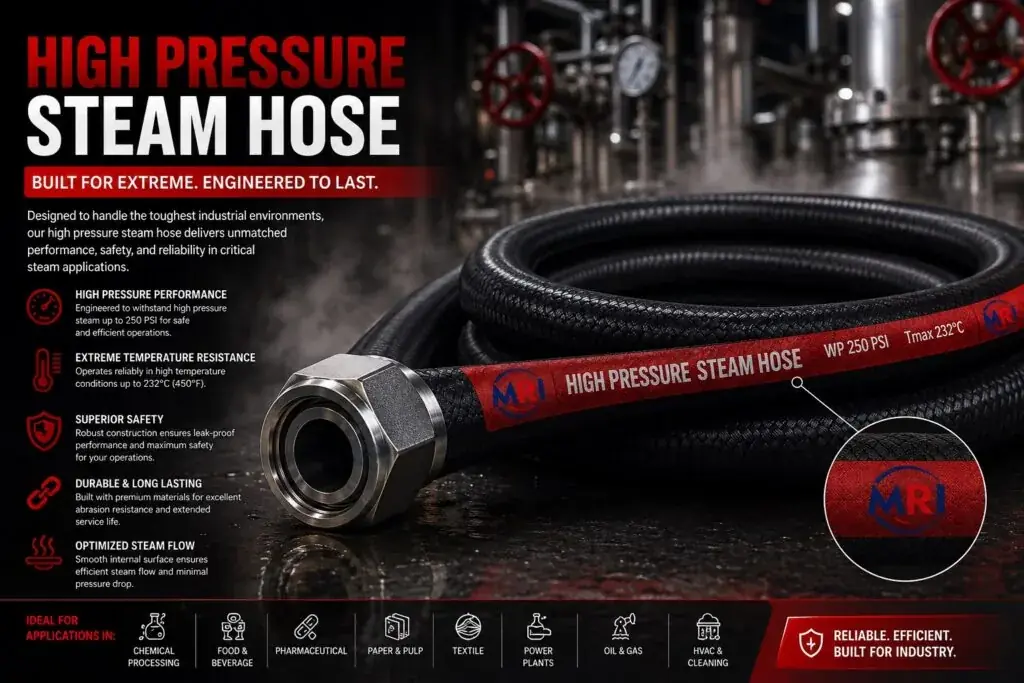
Steam systems are a critical part of industrial operations across manufacturing plants, processing facilities, chemical industries, textile units, food production systems, and heavy engineering environments. Steam is widely used for heating, cleaning, pressure transfer, sterilization, and maintaining production efficiency in high-temperature industrial processes.
Behind these operations, one component plays a much larger role than most industries realize: the High Pressure Steam Hose.
In demanding industrial environments, steam transfer systems operate under constant pressure and elevated temperatures for long hours. A standard hose cannot withstand these conditions for extended periods. This is why industries rely on specially designed steam hose systems capable of handling both thermal stress and continuous pressure without affecting operational stability.
The quality of the hose system directly impacts safety, machine performance, maintenance requirements, and production continuity.
Steam Transfer Systems Operate Under Harsh Conditions
Industrial steam systems work very differently from standard fluid transfer applications. Steam moves at high temperatures while carrying moisture and pressure simultaneously through industrial machinery and processing lines.
A reliable High Pressure Steam Hose is specifically designed to withstand these demanding operating conditions. In manufacturing plants, steam is commonly transferred between boilers, machinery, cleaning systems, and industrial process equipment throughout the day. Continuous exposure to heat and pressure places enormous stress on the hose structure.
Ordinary hoses often begin hardening, cracking, or weakening internally when exposed to steam for long periods. This can eventually result in leakage, pressure loss, or complete operational failure.
Because of this, industries working with high-temperature operations usually prioritize durable steam hose systems over low-cost alternatives.
Industrial Operations Depend on Reliable Steam Flow
Steam is used in industries because it transfers heat efficiently and supports continuous production processes. However, maintaining stable steam flow requires dependable hose systems capable of handling pressure fluctuations and operational stress.
A properly manufactured steam hose pipe helps industries maintain controlled steam transfer without affecting system performance. This becomes especially important in applications where production systems run continuously with very little downtime.
In many industrial facilities, even a small issue inside a steam transfer line can affect machinery efficiency or interrupt production schedules. A weak hose connection or poor reinforcement layer may begin leaking after prolonged pressure exposure.
This is why industries increasingly focus on hose quality, reinforcement strength, and heat resistance while selecting steam transfer systems.
Why a High Pressure Steam Hose is Important in Industrial Environments
High-pressure steam applications place much greater stress on industrial hose systems compared to standard fluid transfer operations. A High Pressure Steam Hose is built specifically for environments where steam operates under elevated pressure conditions for long operational cycles.
These hoses are commonly used in:
- Manufacturing plants
- Chemical processing systems
- Food production units
- Textile industries
- Industrial cleaning operations
- Pharmaceutical processing facilities
The reinforcement structure inside a High Pressure Steam Hose helps maintain stability during pressure fluctuation and thermal expansion. Without proper reinforcement, hoses may weaken internally after repeated heating cycles.
Industries operating high-temperature systems usually require a High Pressure Steam Hose capable of maintaining flexibility and structural durability simultaneously.
Flexibility Matters in Steam Transfer Systems
Industrial machinery layouts are rarely simple. Steam lines often move around production equipment, boilers, and process machinery where installation space may be limited.
A durable flexible steam hose helps industries manage these installation challenges more effectively. Flexible hose systems allow smoother routing through compact industrial setups while reducing stress on fittings and connected machinery.
However, flexibility alone is not enough in steam applications. A steam hose must also resist heat, pressure, and operational wear during continuous usage.
This combination of flexibility and pressure resistance is one reason industries prefer specialized steam transfer systems instead of conventional industrial hoses.
A reliable flexible steam hose pipe also performs better in environments involving machine movement or vibration because it absorbs operational stress more efficiently.
Rubber Steam Hoses Continue to Be Widely Used
A rubber steam hose remains one of the most commonly used steam transfer solutions across industrial sectors. Rubber-based steam hoses are designed to provide flexibility while maintaining heat resistance under continuous steam exposure.
Industries prefer a steam rubber hose pipe because it performs effectively in applications involving steam cleaning systems, industrial heating operations, and production machinery.
The performance of a rubber steam hose depends heavily on reinforcement quality and rubber compound strength. Low-grade hose materials often begin deteriorating quickly when exposed to constant thermal stress.
Industrial facilities operating steam systems continuously generally prefer hoses designed specifically for long-term durability and stable pressure handling.
Different Steam Applications Require Different Hose Types
Not every industrial steam operation works under the same pressure conditions. Some systems require heavy-duty steam transfer while others operate under lower pressure environments.
A low pressure steam hose is generally suitable for controlled industrial applications where operational pressure remains moderate. These systems typically involve less aggressive steam movement and lower thermal stress.
On the other hand, industries operating high-capacity processing systems often require a High Pressure Steam Hose capable of handling more demanding conditions safely.
Selecting the wrong hose category can reduce operational efficiency and increase maintenance frequency. This is why industries usually evaluate operating temperature and pressure conditions carefully before finalizing steam hose systems.
Stainless Steel Steam Hoses are Used in Specialized Industries
Certain industrial environments require even greater durability and resistance to harsh operating conditions. In such cases, a stainless steel steam hose is often preferred.
These hoses are commonly used in chemical processing plants, pharmaceutical industries, food-grade operations, and high-temperature industrial systems where additional structural strength is required.
Stainless steel steam hoses generally offer stronger external protection and improved resistance against mechanical damage. However, hose selection always depends on the actual operating environment and industrial application.
Some industries use stainless steel systems because of their ability to handle demanding operational conditions over extended periods.
Steam Hose Fittings Are Critical for Operational Safety
Even a durable steam hose system can fail if the fittings are not compatible with pressure and temperature requirements. Reliable steam hose fittings help maintain secure sealing and improve overall steam transfer stability.
Steam systems experience continuous thermal expansion and pressure variation during operation. Weak fitting connections often become the first point of failure inside industrial steam systems.
Proper fitting compatibility helps reduce leakage risk while improving operational reliability in high-temperature applications.
Industries working with steam transfer systems generally prefer complete hose assemblies where fittings and hose structures are designed together for specific operational requirements.
Demand for Reliable Steam Hose Systems Continues to Increase
As industrial operations continue expanding, the demand for dependable steam transfer systems is also increasing. Steam remains one of the most efficient heat transfer mediums across industrial environments because of its versatility and operational effectiveness.
This growing demand has increased the importance of durable High Pressure Steam Hose systems capable of handling long operational hours and continuous thermal exposure. Industrial buyers today are also focusing more on long-term reliability instead of simply selecting lower-cost hose systems. Frequent hose failure in steam applications can increase downtime, maintenance expenses, and operational safety concerns significantly.
Manufacturers supplying industrial steam systems generally focus heavily on reinforcement quality, heat resistance, and production consistency because steam operations require dependable long-term performance.
For industrial product updates, hydraulic system insights, and industry-related discussions, businesses can also follow Mangla Rubber Industries on LinkedIn
Conclusion
The role of a reliable High Pressure Steam Hose in industrial operations continues to grow as industries become more dependent on steam systems for heating, cleaning, processing, and pressure transfer applications.
Whether the requirement involves a flexible steam hose, a rubber steam hose, or a stainless steel steam hose, selecting the correct steam transfer solution directly affects operational safety, equipment performance, and maintenance efficiency. A properly designed High Pressure Steam Hose helps industries maintain stable steam flow while reducing operational interruptions and long-term maintenance issues.
Need application help?
Our technical team will help you pick the right hose.