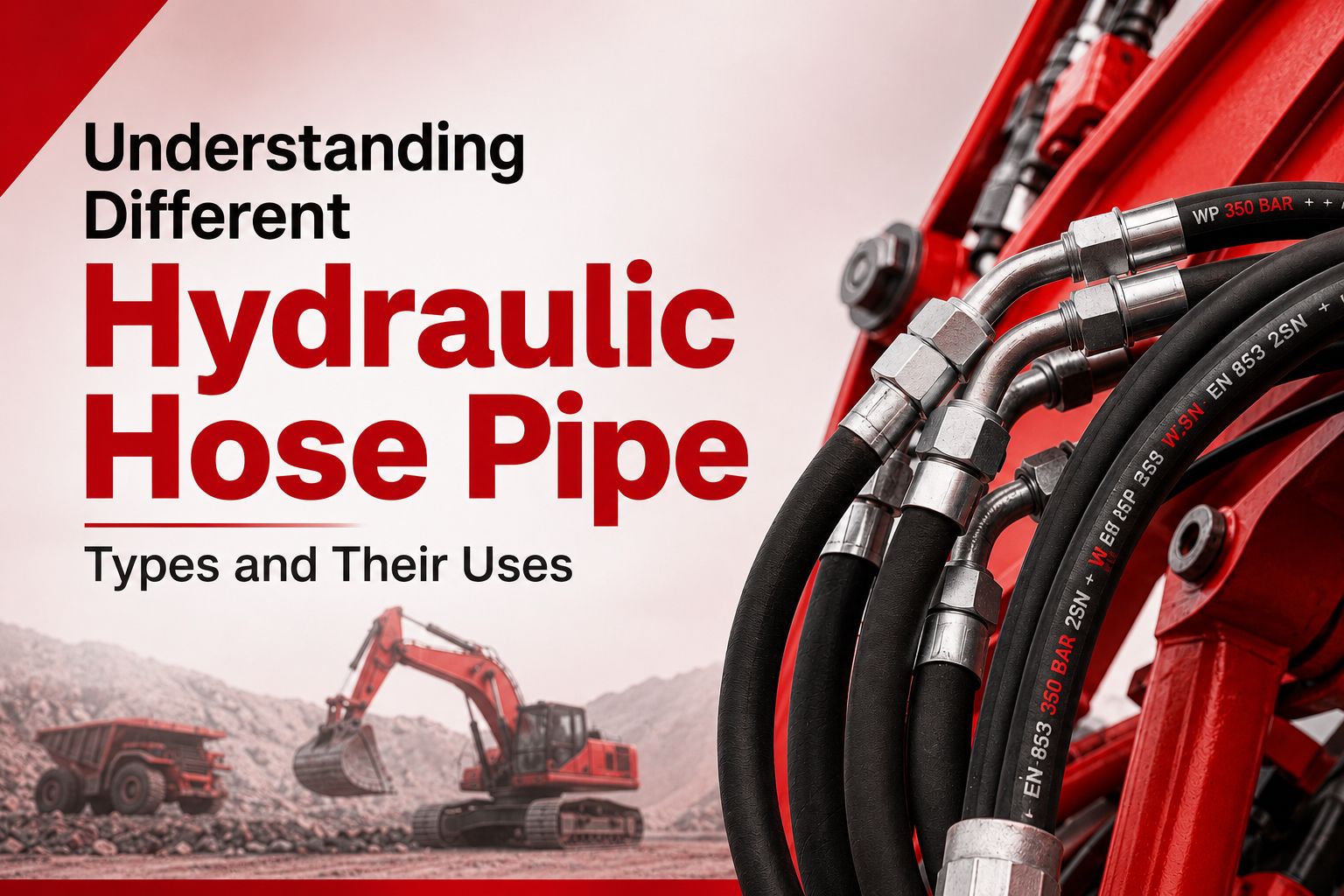
Hydraulic systems are used across almost every major industrial sector today. Construction equipment, agricultural machinery, manufacturing plants, mining operations, transport systems, and engineering units all depend on hydraulic pressure for movement and operational control.
At the center of these systems is the Hydraulic Hose Pipe.
A hydraulic hose is responsible for carrying hydraulic fluid between different machine components under pressure. Its performance directly affects machine efficiency, operational stability, and long-term equipment reliability. When the wrong hose type is used, issues such as pressure loss, overheating, leakage, and premature machine wear often begin appearing over time.
Many buyers focus only on hose length or fitting compatibility while sourcing hydraulic systems. In reality, hose selection depends on pressure requirements, machine movement, operating conditions, and the type of hydraulic application involved.
Understanding the different types of hydraulic hoses helps industries make better decisions for both machine performance and maintenance efficiency.
Hydraulic Systems Operate Under Different Working Conditions
Not every hydraulic system works under the same pressure or environmental conditions. A hose used inside a manufacturing machine operates very differently from one used in an excavator or mining equipment.
Some hydraulic systems require greater flexibility because machinery moves continuously. Others require higher pressure handling because equipment operates under heavy load conditions for long hours. Temperature exposure, vibration, oil compatibility, and outdoor working environments also affect hose performance.
This is why experienced hydraulic hose pipe manufacturers usually evaluate machine requirements carefully before recommending products. A hose that performs well in one industry may not last under different operational conditions.
Industrial buyers who overlook these differences often face recurring maintenance issues later.
Braided Hydraulic Hose Pipes are Common in Industrial Machinery
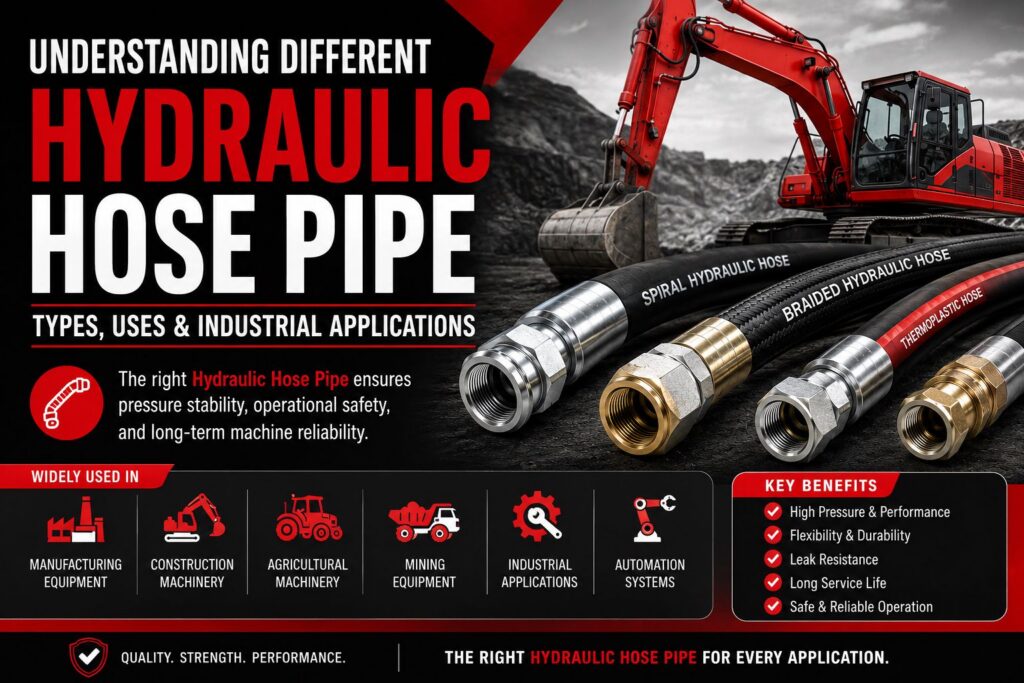
Braided hoses are among the most widely used hydraulic hose types across manufacturing and industrial applications. These hoses use braided steel wire reinforcement that helps maintain pressure stability while allowing flexibility during machine operation.
A braided hydraulic hose pipe is commonly used in factory equipment, hydraulic tools, industrial automation systems, and material handling machinery. These applications usually require balanced performance where both flexibility and pressure resistance are important.
Braided hoses are often preferred in environments where machinery operates continuously but does not experience extremely high pressure levels. Their flexible structure also makes installation easier in compact industrial systems.
The long-term performance of braided hoses depends heavily on reinforcement quality and manufacturing consistency. Poor-quality reinforcement layers often weaken under continuous hydraulic pressure, eventually leading to leakage or reduced flexibility.
Spiral Hydraulic Hose Pipes are Used for Heavy-Duty Operations
Heavy machinery places much higher stress on hydraulic systems compared to standard industrial equipment. Excavators, cranes, mining machinery, loaders, and construction equipment all require hydraulic hoses capable of handling intense pressure fluctuations.
This is where a high pressure hydraulic hose pipe becomes important.
Spiral hydraulic hoses use multiple layers of spiral wire reinforcement, which provides greater structural strength under demanding operating conditions. These hoses are designed specifically for applications involving heavy pressure cycles and continuous machine movement.
Construction and mining equipment often operate in rough environments involving vibration, abrasive surfaces, dust exposure, and outdoor weather conditions. Hydraulic hoses used in such equipment must maintain pressure stability without losing flexibility or structural integrity.
A reliable jcb hydraulic hose pipe is a good example of a hose system designed for demanding construction equipment applications where operational reliability is critical.
Thermoplastic Hydraulic Hoses are Used in Specialized Applications
Not all hydraulic systems use traditional rubber hose construction. In some industries, thermoplastic hydraulic hoses are preferred because of their lightweight structure and chemical resistance properties.
These hoses are commonly used in specialized industrial applications where flexibility, compact installation, or resistance to certain chemicals becomes important. Material handling systems, lubrication equipment, and mobile hydraulic tools often use thermoplastic hose systems.
However, the suitability of thermoplastic hoses depends entirely on operating pressure and machinery requirements. Industrial buyers should always select hose types based on actual application conditions instead of choosing products only by appearance or availability.
Hydraulic Hose Sizes Directly Affect Machine Performance
One of the most overlooked aspects of hydraulic systems is proper hose sizing. Incorrect sizing can affect pressure balance, fluid transfer efficiency, and machine response during operation.
Different hydraulic hose pipe sizes are designed for different flow requirements and pressure capacities. A hose with insufficient diameter may restrict hydraulic flow and increase system strain, while an oversized hose can affect operational efficiency and installation flexibility.
Correct hose sizing helps hydraulic systems maintain proper fluid movement and stable operational pressure. This reduces unnecessary load on pumps and connected machine components.
Experienced suppliers generally evaluate machinery requirements carefully before recommending hose sizes because even small sizing errors can affect long-term equipment performance.
Hose Fittings are Just as Important as the Hose Itself
A hydraulic system is only as reliable as its weakest connection point. Even a well-manufactured hose may create problems if the fittings are not properly matched with pressure requirements and machine specifications.
Proper hydraulic hose pipe fittings help maintain sealing performance and pressure stability during operation. In high-pressure systems, poor fitting compatibility often leads to leakage or operational instability.
Different hydraulic systems use different fitting standards depending on machine design and pressure configuration. This is why industries usually prefer sourcing complete hydraulic hose pipe and fittings solutions instead of purchasing both separately without compatibility checks.
Manufacturers with technical expertise are generally better equipped to recommend fitting combinations suited for industrial applications.
Industrial Buyers Often Prioritize Availability and Support
In industrial operations, machine downtime directly affects productivity. This is one reason businesses searching for hydraulic hose pipe near me usually focus on suppliers capable of providing both quick availability and technical support.
Hydraulic hose replacement often becomes urgent during maintenance shutdowns or equipment failure situations. Delayed supply can interrupt production schedules and increase operational costs.
Experienced hydraulic hose pipe manufacturers in India generally maintain broader product availability across different pressure categories, hose sizes, and fitting configurations to support industrial requirements more efficiently.
Reliable supply support becomes especially important for industries operating heavy machinery or continuous manufacturing systems.
Manufacturing Quality Determines Long-Term Reliability
Hydraulic hoses operate under continuous pressure and demanding working conditions. Because of this, manufacturing quality plays a major role in product performance.
Reinforcement strength, rubber compound quality, curing consistency, and pressure testing all affect how long a hydraulic hose performs under industrial usage.
Experienced hydraulic hose pipe manufacturers usually maintain stricter quality control because hydraulic systems leave very little room for product inconsistency. A poorly manufactured hose may initially function properly but begin showing signs of wear much earlier under continuous operation.
Industrial buyers generally benefit more from suppliers that understand operational requirements instead of focusing only on standard product supply. For industrial product updates, hydraulic system insights, and industry-related discussions, businesses can also follow Mangla Rubber Industries on LinkedIn
Conclusion
Understanding different Hydraulic Hose Pipe types helps industries choose more reliable hydraulic systems for manufacturing machinery, heavy equipment, and industrial operations.
Whether the requirement involves braided hoses for industrial equipment or a high pressure hydraulic hose pipe for heavy-duty machinery, selecting the correct hose type directly affects machine efficiency, maintenance performance, and operational reliability.
From hose sizing and reinforcement structure to fitting compatibility and application-specific performance, every part of a hydraulic system plays a role in long-term equipment operation.