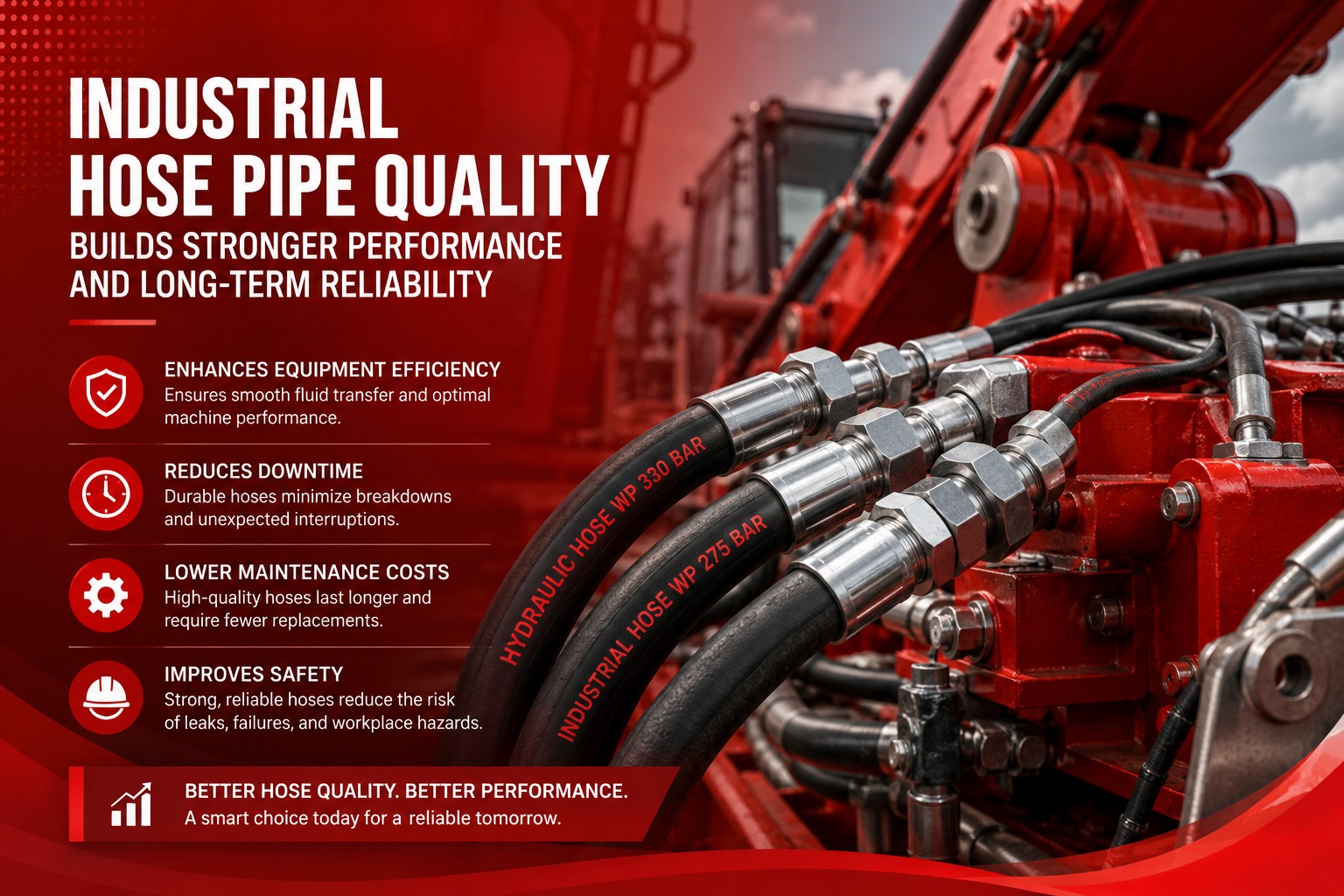
Industrial equipment operates under constant pressure, movement, temperature variation, and demanding working conditions. Whether it is manufacturing machinery, hydraulic systems, construction equipment, or processing units, every industrial setup depends on reliable fluid transfer systems to maintain operational stability. In many cases, the performance of the entire system depends heavily on the quality of the Industrial Hose Pipe being used.
Many industries focus primarily on machinery specifications and overlook the importance of hose quality during equipment setup or maintenance Industrial Hose Pipe. However, a poorly manufactured hose can lead to pressure loss, leakage, downtime, and premature equipment wear. On the other hand, a high-quality Industrial Hose Pipe supports smoother operation, reduces maintenance frequency, and improves the overall life of industrial systems.
As industrial operations continue to become more demanding, businesses are paying closer attention to the Industrial Hose Pipe long-term impact of hose performance on machinery reliability and operational efficiency.
Understanding the Role of an Industrial Hose Pipe
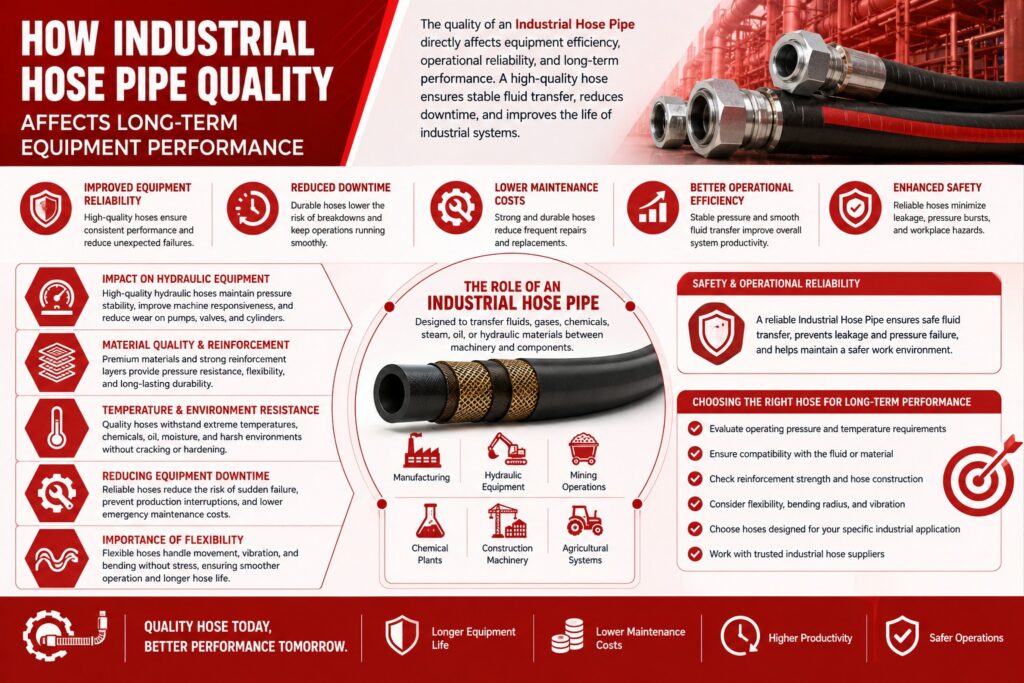
An Industrial Hose Pipe is designed to transfer fluids, gases, chemicals, steam, oil, or hydraulic materials between industrial components and machinery. These hose systems are used in manufacturing facilities, hydraulic equipment, mining operations, construction machinery, chemical plants, and agricultural systems.
The performance of a hose directly affects fluid movement, pressure control, and equipment efficiency. Even a small issue within a hose assembly can interrupt the operation of an entire machine or production line.
A standard hose pipe may appear simple from the outside, but industrial-grade hoses are carefully engineered using multiple material layers, reinforcement systems, and protective covers to handle demanding industrial conditions.
The quality of these components determines how effectively the hose performs over an extended period of time.
Why Hose Quality Matters in Industrial Operations
Industrial machinery often works continuously for long hours under heavy operational loads. In such environments, the quality of the Industrial Hose Pipe becomes critical for maintaining equipment reliability.
Low-quality hoses may initially appear cost-effective, but they often deteriorate faster under pressure, heat, vibration, and environmental exposure. Cracking, leakage, pressure instability, and reinforcement failure are common problems associated with substandard hose systems Industrial Hose Pipe.
A high-quality flexible hose provides better resistance against abrasion, external wear, and operational stress. This helps machinery maintain stable performance while reducing unexpected maintenance interruptions.
Industrial operations depend heavily on consistency. Even minor fluid transfer issues can affect production timelines, machinery efficiency, and workplace safety. This is why businesses increasingly prioritize hose quality during equipment installation and replacement.
Impact on Hydraulic Equipment Performance
Hydraulic systems are particularly sensitive to hose quality because they operate under controlled pressure conditions. A poor-quality hydraulic hose can affect pressure stability, fluid flow, and machine responsiveness.
Hydraulic machinery depends on precise fluid transmission to generate movement and operational force. If the hose experiences internal leakage or pressure loss, the machinery may operate inefficiently or fail to perform at full capacity.
A durable hydraulic hose pipe helps maintain pressure consistency while reducing stress on pumps, valves, and hydraulic cylinders. This improves overall equipment efficiency and minimizes long-term mechanical wear.
Many industries operating hydraulic machinery use reinforced hose systems specifically designed for pressure resistance and vibration control. Proper hose construction supports safer operation and improves the service life of hydraulic equipment.
Material Quality and Reinforcement Strength
The construction quality of an Industrial Hose Pipe plays a major role in long-term equipment performance.
Industrial hoses are typically manufactured using synthetic rubber compounds, thermoplastics, textile reinforcement layers, or steel wire reinforcement depending on the application Industrial Hose Pipe. The internal tube must remain compatible with the transferred material, while the reinforcement layers provide pressure resistance and structural stability.
A low-quality flexible hose pipe may lose flexibility over time, especially when exposed to heat, chemicals, or continuous movement. Cracks and surface damage can gradually develop, eventually leading to leakage or operational failure.
High-grade industrial hoses are designed to withstand harsh operating conditions while maintaining structural integrity over long periods. This reduces the chances of premature hose replacement and equipment downtime.
Resistance to Temperature and Environmental Conditions
Industrial environments expose hoses to a wide range of operating conditions. Heat, moisture, chemicals, oil exposure, dust, and outdoor weather conditions can all affect hose durability.
A properly manufactured Industrial Hose Pipe is designed to tolerate these environmental challenges without significant performance deterioration. Temperature resistance becomes especially important in industries involving steam transfer, heated fluids, hydraulic systems, or outdoor equipment operation.
Low-quality hoses may harden, soften, or crack when exposed to temperature fluctuations. Once the hose material begins to weaken, fluid leakage and pressure instability often follow.
A durable flexible hose maintains operational stability even when exposed to continuous movement and varying environmental conditions. This contributes directly to long-term machinery performance.
Reducing Equipment Downtime Through Better Hose Performance
Equipment downtime is one of the most expensive problems in industrial operations. Unexpected hose failure can stop production, delay operations, and increase maintenance costs.
Using a high-quality Industrial Hose Pipe helps reduce the risk of sudden operational interruptions. Strong reinforcement layers, reliable material construction, and proper pressure tolerance allow industrial systems to operate more consistently.
A damaged hydraulic pipe can affect not only the hose itself but also connected machinery components. Pressure imbalance inside hydraulic systems may increase stress on pumps, seals, valves, and cylinders.
By investing in reliable hose systems, industries can reduce emergency maintenance requirements and improve overall operational productivity.
Importance of Flexibility in Industrial Applications
Flexibility is another important factor affecting equipment performance.
Industrial machinery often involves moving components, vibration, bending, and confined installation spaces. A properly designed flexible hose pipe allows smoother movement without excessive stress on hose assemblies.
Poor-quality hoses may become rigid over time, increasing the risk of cracking or connection failure during machine movement. Flexible hose systems designed for industrial use help maintain operational efficiency while reducing mechanical strain.
In hydraulic systems, a high-performance hydraulic hose must balance flexibility with pressure resistance. Excessively rigid hoses may place additional stress on fittings and connected components, while overly soft hoses may fail under pressure.
This balance is essential for maintaining long-term equipment reliability.
Safety and Operational Reliability
Industrial safety is closely connected to hose performance. A failed hose can lead to fluid leakage, pressure release, equipment malfunction, and workplace hazards.
A properly manufactured Industrial Hose Pipe helps industries maintain safer working conditions by supporting stable fluid transfer and reducing the risk of sudden failure.
Hydraulic systems are especially sensitive because high-pressure fluid release can damage machinery and create safety concerns for operators. A reliable hydraulic hose pipe minimizes these risks through stronger reinforcement and pressure handling capability.
Regular hose inspection and preventive maintenance are also important for identifying wear before operational failure occurs.
Choosing the Right Hose for Long-Term Performance
Selecting the correct Industrial Hose Pipe requires more than simply matching hose size. Industries must evaluate operating pressure, fluid compatibility, temperature range, flexibility requirements, and environmental conditions before choosing a hose system.
A high-quality hose pipe should match the demands of the industrial application while maintaining durability under continuous operational stress.
For hydraulic systems, businesses should choose reinforced hydraulic hose assemblies designed specifically for pressure handling and fluid compatibility.
Working with experienced industrial hose suppliers can help businesses identify suitable hose systems for long-term industrial performance and reduced maintenance costs.
For industrial insights, hose system updates, and hydraulic application information, businesses can also connect with Mangla Rubber Industries on LinkedIn to stay updated with developments in industrial hose and rubber product solutions.
Conclusion
The quality of an Industrial Hose Pipe has a direct impact on equipment efficiency, operational reliability, and long-term machinery performance.
Industrial systems operate under demanding conditions where pressure control, fluid transfer stability, and environmental resistance are essential. A poor-quality hose can increase downtime, reduce machinery efficiency, and create maintenance challenges over time.
High-performance hose systems support smoother operation, better pressure management, improved safety, and reduced equipment wear. Whether used in manufacturing systems, hydraulic machinery, or industrial processing units, selecting the right hose solution is an important part of maintaining long-term industrial productivity.
Businesses looking for reliable Industrial Hose Pipe, hydraulic hose, hydraulic hose pipe, and industrial fluid transfer solutions can explore the industrial product range available at Mangla Rubber Industries. The company provides industrial hose systems and rubber solutions designed for demanding industrial applications and long-term operational performance.
Conclusion
Why is Industrial Hose Pipe quality important for industrial machinery?
The quality of an Industrial Hose Pipe affects fluid transfer efficiency, pressure stability, operational safety, and equipment durability. High-quality hoses help reduce downtime and improve long-term machinery performance.
How does a poor-quality hydraulic hose affect equipment?
A low-quality hydraulic hose may develop leakage, pressure instability, or reinforcement failure, which can reduce machine efficiency and increase stress on hydraulic components.
What is the difference between a standard hose pipe and an industrial hose system?
A standard hose pipe is typically designed for lighter applications, while industrial hose systems are engineered for pressure handling, abrasion resistance, chemical compatibility, and continuous industrial operation.
Why is flexibility important in a flexible hose pipe?
A flexible hose pipe supports smoother movement in machinery and reduces stress on fittings and connected components. Proper flexibility also helps prevent cracking and operational damage.
Where are hydraulic hose pipe systems commonly used?
Hydraulic hose pipe systems are commonly used in construction equipment, hydraulic presses, mining machinery, agricultural equipment, and industrial automation systems.