Industrial systems operating under high temperatures require components that can maintain stability without affecting performance. In industries involving chemicals, hydraulic systems, steam transfer, compressed air, and heated fluid movement, standard rubber hoses often struggle after prolonged exposure to heat and pressure.
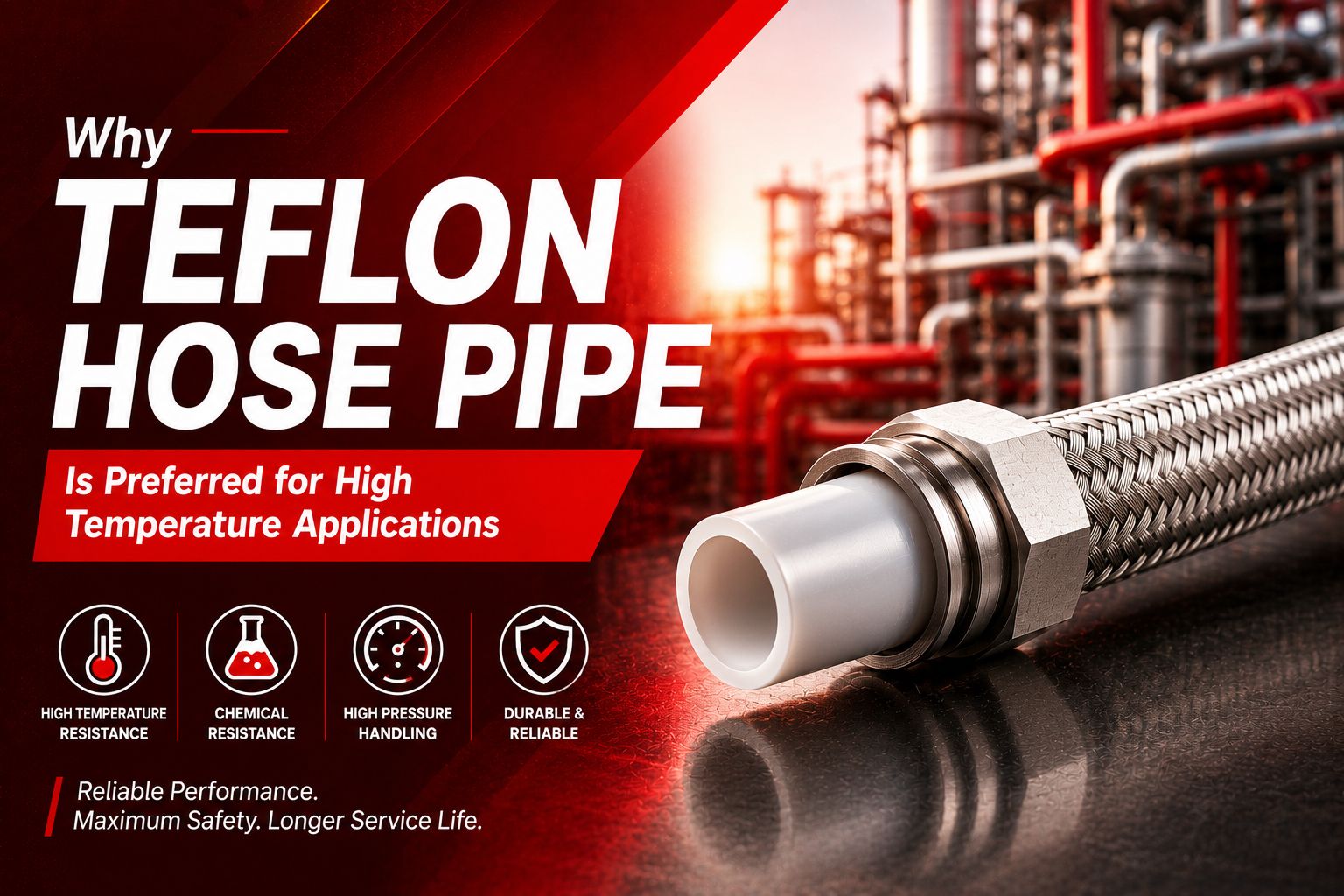
This is one reason why the teflon hose pipe has become widely preferred across demanding industrial environments.
Known for its temperature resistance, chemical stability, and pressure handling capability, a Teflon hose is commonly used in applications where operational conditions are too aggressive for conventional hose materials. Industries such as chemical processing, pharmaceuticals, food processing, automotive manufacturing, hydraulic systems, and heavy engineering frequently rely on Teflon-based hose systems because of their long-term reliability under extreme conditions.
As industrial operations continue becoming more advanced, the demand for durable hose systems capable of handling both heat and pressure has increased significantly.
High Temperature Resistance Makes Teflon Suitable for Industrial Use
One of the biggest advantages of a teflon hose pipe is its ability to maintain structural stability under high operating temperatures. Many industrial hoses begin hardening, cracking, or losing flexibility after continuous heat exposure, especially in systems operating under pressure.
Teflon material performs differently because it maintains its properties even when exposed to elevated temperatures for long periods. This makes it suitable for applications involving heated fluids, steam systems, hot oil transfer, and industrial processing environments where temperature fluctuations are constant.
Industries using high-temperature machinery often require hose systems that can operate continuously without affecting fluid transfer performance. In such environments, a properly manufactured high pressure teflon hose provides better operational reliability compared to standard hose constructions.
Heat resistance also helps reduce maintenance frequency because the hose structure remains more stable during prolonged industrial usage.
Chemical Resistance is Another Major Advantage
Industrial environments often involve aggressive chemicals, solvents, oils, and corrosive substances that gradually damage ordinary hose materials. A major reason industries prefer Teflon-based systems is because of their strong chemical resistance properties.
A teflon flexible hose is capable of handling a wide range of industrial chemicals without deteriorating internally. This becomes particularly important in chemical processing plants, pharmaceutical production units, paint manufacturing systems, and industrial transfer operations where fluid compatibility directly affects safety and operational stability.
Unlike conventional rubber hoses, Teflon hoses are less likely to react with chemicals passing through the system. This helps improve both durability and fluid purity during transfer operations. This growing demand has increased the importance of working with experienced teflon hose manufacturers in India suppliers capable of delivering application-specific solutions for industrial environments. Industries today require products that can maintain long-term operational stability instead of simply handling short-term usage conditions.
For industries dealing with sensitive or corrosive materials, hose reliability becomes critical because leakage or internal contamination can create operational as well as safety concerns.
Pressure Handling Capability Supports Industrial Hydraulic Systems
Modern industrial machinery frequently operates under high-pressure conditions, especially in hydraulic systems. A hose used in such environments must maintain pressure stability without losing flexibility or structural integrity.
A properly designed teflon hydraulic hose performs well in hydraulic applications involving pressure fluctuation, heat exposure, and continuous machine movement. This is one reason Teflon hoses are increasingly used in hydraulic machinery operating under demanding industrial conditions.
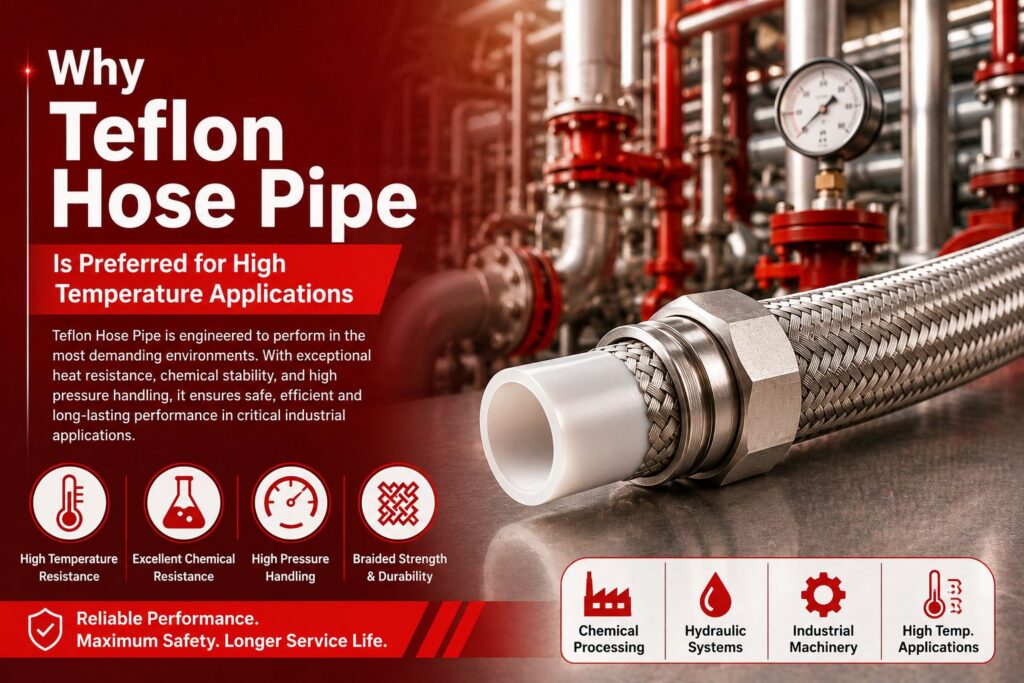
The inner Teflon tube helps maintain smooth fluid movement while outer reinforcement layers improve pressure handling capability. In many industrial systems, this combination improves long-term operational efficiency and reduces the chances of hose failure during continuous usage.
Industries operating heavy machinery, hydraulic presses, automation systems, and processing equipment often prefer Teflon hose systems because they provide more stable performance in high-temperature hydraulic environments.
Braided Construction Improves Strength and Durability
In many industrial applications, external reinforcement becomes equally important as internal hose material. A teflon braided hose uses stainless steel or similar reinforcement layers to improve strength and pressure resistance.
Braided reinforcement protects the hose structure from expansion under pressure while also improving durability against mechanical stress. This becomes important in industries where hoses are exposed to vibration, movement, abrasion, or demanding installation environments.
A braided hose construction also improves operational safety because the hose can maintain structural stability even under fluctuating pressure conditions.
Many industries working with heated fluid transfer systems or hydraulic operations prefer braided Teflon hoses because they combine flexibility with higher pressure tolerance.
Flexibility Helps in Complex Industrial Installations
Industrial machinery often operates in compact layouts where hose routing becomes challenging. Some systems require hoses to bend around equipment, move continuously during operation, or fit within limited installation space.
A durable teflon flexible hose offers better installation flexibility compared to rigid piping systems. This helps industries maintain smoother machine layouts while reducing strain on hydraulic and fluid transfer systems.
Flexibility also becomes useful in applications involving machine movement or vibration because the hose can absorb operational stress more effectively.
However, flexibility alone is not enough in industrial environments. The hose must also maintain pressure handling capability and heat resistance during continuous operation. This balance between flexibility and durability is one reason Teflon hose systems are widely preferred across multiple industrial sectors.
Teflon Hose Assemblies Improve System Reliability
Industrial buyers today often prefer complete hose assemblies instead of sourcing hoses and fittings separately. A properly designed teflon hose assembly helps ensure fitting compatibility, pressure stability, and operational safety.
Improper fitting combinations are one of the common reasons for hose leakage and pressure-related failures in industrial systems. A complete hose assembly reduces these risks because the hose and fittings are designed to work together under specific operating conditions.
This becomes particularly important in hydraulic systems, chemical transfer lines, and high-pressure industrial operations where even minor leakage can affect equipment performance.
Businesses sourcing industrial hose systems should always evaluate fitting quality and compatibility along with hose construction.
Hose Fittings Play a Critical Role in Performance
Even the best hose material can underperform if the fittings are not properly selected. Reliable teflon hose fittings help maintain sealing efficiency and improve pressure stability across industrial systems.
Different applications require different fitting configurations depending on pressure levels, operating temperature, and machinery type. Industries using hydraulic systems or chemical transfer operations usually prioritize fitting quality because weak connections can lead to operational interruptions.
Experienced manufacturers generally recommend fittings based on actual application requirements instead of supplying generic combinations.
Businesses looking for industrial hose systems and fluid transfer solutions can also explore the services available through Mangla Rubber Industries .
Understanding Hose Specifications Helps Buyers Choose Better Products
Industrial buyers often focus only on hose size or availability while sourcing products. However, understanding the actual teflon hose specification is important for selecting the correct hose system.
Specifications generally include factors such as temperature resistance, pressure rating, hose diameter, reinforcement structure, flexibility range, and chemical compatibility.
Different industries require different specifications depending on operational conditions. A hose designed for compressed air systems may not perform effectively in high-temperature chemical transfer applications. This is why experienced industrial suppliers usually evaluate application requirements carefully before recommending products.
Demand for Teflon Hose Systems is Growing Across Industries
As industrial machinery becomes more advanced, operational conditions are also becoming more demanding. Higher temperatures, automated systems, pressure-intensive operations, and chemical processing environments all require more durable hose systems.
Experienced manufacturers generally focus more on reinforcement quality, material consistency, and production standards because industrial applications require dependable long-term performance. For industrial product updates, hydraulic system insights, and industry-related discussions, businesses can also follow Mangla Rubber Industries on LinkedIn
Conclusion
The growing use of the teflon hose pipe across industrial sectors is largely driven by its ability to handle high temperatures, chemical exposure, pressure fluctuation, and demanding operating environments more effectively than conventional hose systems.
Whether used in hydraulic machinery, chemical transfer systems, heated fluid applications, or compressed air operations, Teflon hoses help improve operational reliability and long-term performance. From high pressure teflon hose systems to customized teflon hose assembly solutions, choosing the right hose configuration plays an important role in maintaining industrial efficiency and reducing maintenance issues.
teflon hose pipe teflon hose pipe teflon hose pipe teflon hose pipe teflon hose pipe teflon hose pipe teflon hose pipe teflon hose pipe teflon hose pipe teflon hose pipe teflon hose pipe teflon hose pipe