
Hydraulic Hoses for Port Cranes and Marine Equipment: Corrosion, Salt and Impulse Challenges
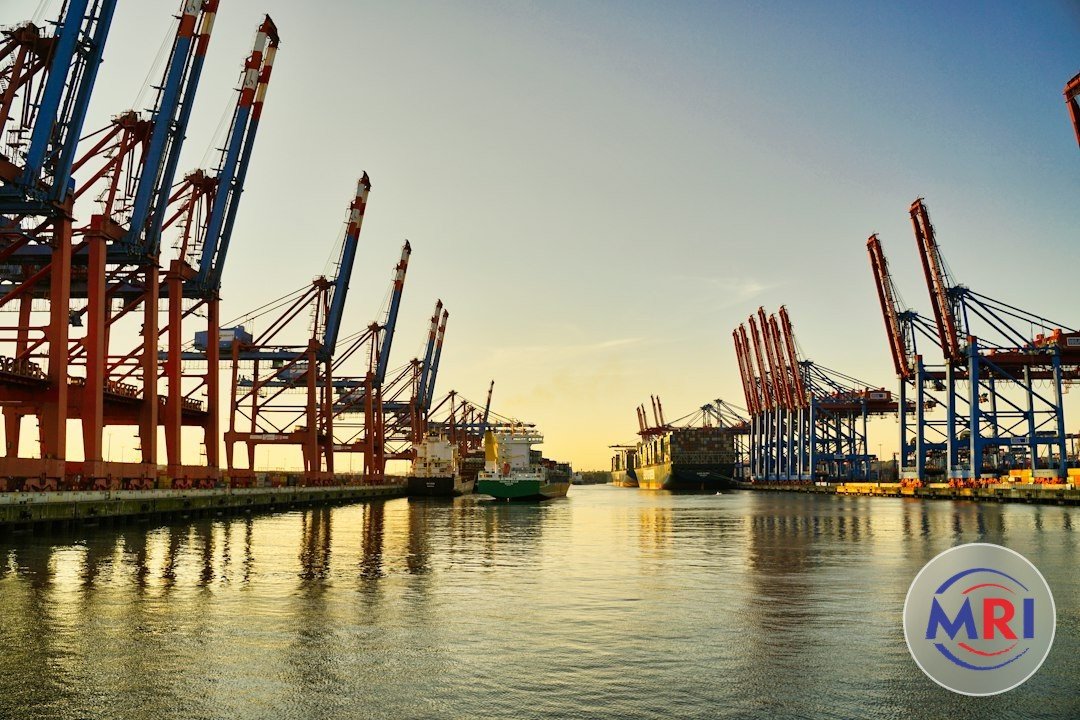
India’s major ports handle well over a billion tonnes of cargo a year, and almost every tonne is moved by hydraulic machinery: ship-to-shore container cranes, rubber-tyred gantry cranes, mobile harbour cranes, reach stackers, grab unloaders and spreaders. All of them depend on flexible hose assemblies working in one of the harshest environments any hydraulic system faces — salt-laden air, direct sun, high humidity and round-the-clock duty cycles. Port crane hydraulic hoses fail differently here than they do inland, and a maintenance plan copied from a factory or construction site will not keep a berth running.
This article explains why the marine environment is so hard on port crane hydraulic hoses, which failure modes dominate on quay cranes and yard equipment, and how maintenance teams at ports, terminals and shipyards should specify and inspect hose assemblies.
What Are Port Crane Hydraulic Hoses?
Port crane hydraulic hoses are the flexible high-pressure lines that carry hydraulic oil to the working circuits of quayside and yard handling equipment. On a typical container terminal they appear in dozens of places on each machine.
- Spreader circuits — twist-lock actuation, telescoping and flipper arms on container spreaders, where hoses travel with the spreader through every lift
- Boom and luffing circuits — cylinder feeds on mobile harbour cranes and reach stackers, seeing high pressure and repeated load cycles
- Grab and attachment circuits — open-close lines on grabs handling coal, ore and fertiliser at bulk berths
- Brake, steering and outrigger circuits — on rubber-tyred gantries, reach stackers and terminal tractors
- Winch and slew drives — motor feed and drain lines on hydraulically driven winches and slewing systems
Working pressures typically range from 250 to 420 bar on main circuits, which places most assemblies in wire braid or spiral hose territory rather than textile grades.
Why the Marine Environment Destroys Hoses Faster
Salt Corrosion of Fittings and Reinforcement
The single biggest difference between port service and inland service is salt. Airborne chloride settles on every surface within a few hundred metres of the waterline. On a hose assembly the vulnerable points are the steel end fittings and, wherever the cover is nicked or abraded, the steel wire reinforcement underneath. Plated carbon steel fittings that last years inland show red rust at a port in months. Once corrosion reaches the wire, the hose loses burst strength invisibly — the assembly looks serviceable until it fails under pressure.
Countermeasures are well established: specify fittings with high-grade zinc-nickel plating or stainless steel for the worst locations, repair or replace hoses with cover damage promptly instead of waiting, and wash down equipment with fresh water as part of routine maintenance.
UV, Ozone and Heat
Quay cranes have no shade. Hose runs on booms and spreaders face direct sun through the working day, and deck temperatures rise well above ambient. UV and ozone age the rubber cover, producing the fine crazing that lets salt and moisture through to the reinforcement. Covers compounded for weather resistance, and routing that keeps hoses out of direct sun where possible, both extend life.
Continuous Impulse Duty
A container crane can perform 25 to 35 moves an hour, every hour of a vessel call. Each move cycles the spreader circuits from near zero to full working pressure. This is classic impulse duty, and it fatigues braided reinforcement faster than steady pressure ever would. High-cycle circuits are strong candidates for four- or six-wire spiral hose, which is designed for exactly this loading; our comparison of high impulse spiral hydraulic hose vs braided hose explains when the upgrade pays for itself.
Movement and Abrasion
Spreader hoses flex with every lift, hoses on festoon systems and cable reelers bend around sheaves continuously, and grab hoses slap against the grab structure in bulk service. Abrasion sleeves, correct bend radii and properly spaced clamps are not optional extras at a port — they are the difference between a hose that lasts eighteen months and one that fails in four.
Failure Modes Maintenance Teams Should Watch
Port maintenance records show a consistent pattern of hose failures, most of which give warning signs first:
- Fitting-end leaks — corrosion under the ferrule or crimp loosens the grip on the hose; look for rust staining and oil weep at the shank
- Cover cracking and exposed wire — the precursor to sudden burst; any exposed reinforcement at a port should mean immediate replacement, not observation
- Impulse fatigue burst — failure in the middle of the hose on a high-cycle circuit, often with no external warning; managed by matching hose type to duty and by age-based replacement
- Abrasion-through — flat worn patches where a hose rubs on structure, common on spreaders and grabs
- Oil ageing — high oil temperatures on continuously working machines harden the tube and shorten life from the inside
The underlying causes and prevention measures are the same ones seen across heavy industry; our detailed article on the common causes of hydraulic hose failure is a useful training reference for terminal maintenance crews.
Specifying Hoses for Port and Marine Duty
A practical specification checklist for ports, terminals and shipyards:
- Pressure with margin — select hose whose rated working pressure meets the circuit relief setting; never count on burst margin for normal duty
- Spiral construction for high-cycle circuits — spreaders, luffing and grab circuits justify spiral hose even where braided hose meets the static rating
- Weather-resistant cover — specify covers with proven ozone and UV performance for exposed runs
- Corrosion-protected fittings — zinc-nickel plated as minimum, stainless steel for splash-zone and offshore-facing positions
- Abrasion protection — sleeves or spring guards on every hose that can contact structure
- Traceability — batch-marked hose and recorded installation dates, so age-based change-out is possible on safety-critical circuits
Fuel and oil transfer duties at berths bring their own requirements beyond hydraulics; our guide to oil and fuel transfer hoses for offshore rigs covers hoses that handle petroleum products in marine environments.
Ports investing under the Sagarmala programme are adding new mechanised berths and equipment every year, and hose maintenance planning should be part of every new terminal’s asset management system; the Ministry of Ports, Shipping and Waterways publishes capacity and modernisation plans that indicate how fast this equipment base is growing.
Maintenance Practice That Works at Ports
The terminals with the best hose reliability follow a few simple disciplines. They inspect visually every shift on high-cycle equipment and formally every month, with cover damage and fitting corrosion as hard rejection criteria. They fresh-water wash equipment on a schedule to remove salt. They keep crimping capability and hose stock on site so a failed assembly is replaced with the correct specification rather than whatever a local shop can supply at midnight. And they track hose age on safety-critical circuits — spreader and boom lines — replacing on time rather than on failure, because a burst over a vessel or a stack costs far more than the hose.
Choose Port Crane Hydraulic Hoses from Mangla Rubber Industries
Mangla Rubber Industries manufactures high-pressure hydraulic hoses in Delhi for port, marine and heavy equipment applications, including our high impulse spiral hose range built for the continuous pressure cycling that container handling equipment imposes. We supply weather-resistant covers and can advise on fitting protection for saline environments.
If you maintain cranes, reach stackers or bulk handling equipment at a port, terminal or shipyard and want hoses specified for marine duty rather than adapted from inland grades, contact Mangla Rubber Industries with your circuit details.
Conclusion
Salt, sun and relentless duty cycles make ports the toughest routine environment for hydraulic hose. Port crane hydraulic hoses reward teams that specify spiral construction for impulse duty, protect fittings against corrosion, guard covers against abrasion and replace on age for critical circuits. Get these fundamentals right and hose failures stop dictating berth availability.
Frequently Asked Questions
Why do hydraulic hoses fail faster at ports than inland?
Salt corrodes fittings and any exposed wire reinforcement, UV and ozone age the cover, and container handling imposes continuous impulse cycling. The combination shortens hose life well below what the same assembly achieves at an inland site.
Should port cranes use spiral or braided hose?
High-cycle circuits such as spreaders, luffing cylinders and grabs justify four- or six-wire spiral hose because it withstands impulse fatigue far better. Braided hose remains suitable for low-cycle auxiliary circuits within its pressure rating.
What fittings should be used in marine environments?
Specify zinc-nickel plated fittings as a minimum, and stainless steel for splash-zone positions and offshore-facing equipment. Standard zinc-plated carbon steel corrodes quickly in salt air and undermines the crimp.
How often should port equipment hoses be inspected?
Walk-around visual checks every shift on high-cycle machines, a formal documented inspection monthly, and immediate replacement of any hose with exposed reinforcement or fitting corrosion. Track installation dates on safety-critical circuits and replace on age.
Does fresh-water washing really extend hose life?
Yes. Regular fresh-water washdown removes chloride deposits from fittings and covers before corrosion establishes, and it is one of the cheapest life-extension measures a terminal can adopt.