What Is the Right Hydraulic Hose Pipe for High Pressure Industrial Equipment?
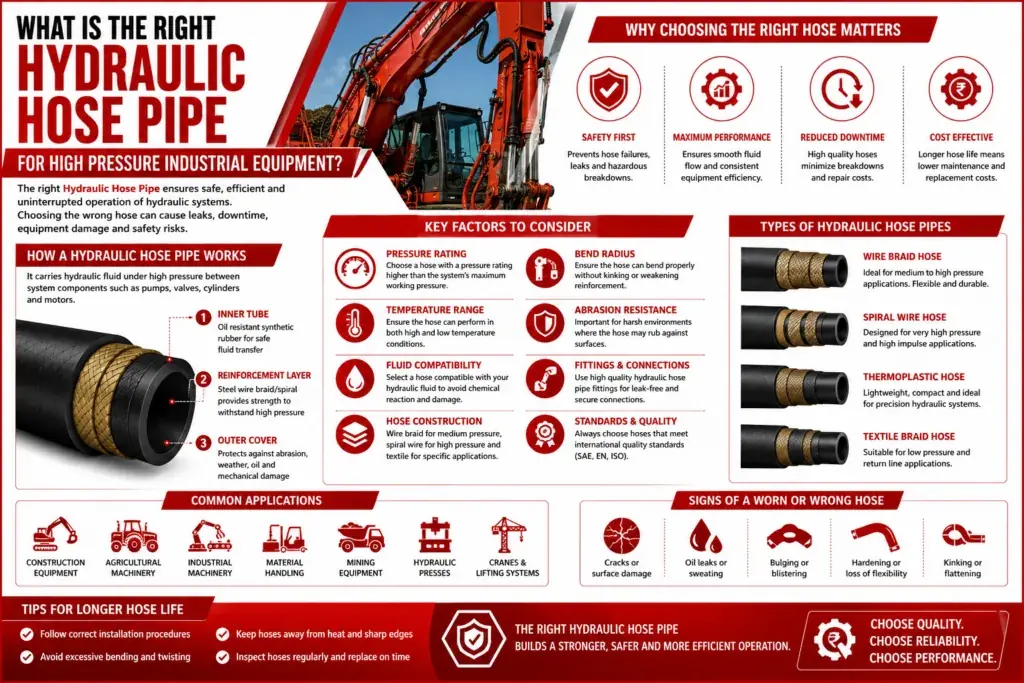
Industrial machinery depends on hydraulic systems to perform heavy-duty operations with accuracy and consistency. Whether it is a construction site, manufacturing plant, mining operation, agricultural field, or material handling facility, hydraulic power allows equipment to lift, push, pull, and move heavy loads efficiently. At the center of every hydraulic system is the Hydraulic Hose Pipe, a component responsible for transporting hydraulic fluid under high pressure while maintaining the safety and performance of the entire system.
Selecting the right Hydraulic Hose Pipe is more important than many people realize. A hose that cannot withstand the required pressure, operating temperature, or environmental conditions may fail unexpectedly, resulting in costly downtime, equipment damage, and safety risks. Modern industries demand reliable hydraulic systems that can perform continuously under challenging conditions, making the quality of the hose just as important as the quality of the machine itself.
Many buyers often focus only on hose size or price without considering important technical specifications. Factors such as pressure rating, reinforcement type, compatibility with hydraulic fluids, flexibility, abrasion resistance, and working environment all play a major role in choosing the ideal Hydraulic Hose Pipe. Working with experienced hydraulic hose pipe manufacturers in india also helps businesses receive products that meet industrial quality standards and provide long service life.
If your hydraulic equipment operates under demanding conditions, investing in a premium high pressure hydraulic hose pipe can significantly improve efficiency while reducing maintenance costs. From excavators and cranes to hydraulic presses and industrial machinery, every application requires a hose designed specifically for its operating conditions.
But how do you identify the right Hydraulic Hose Pipe for your equipment? What technical specifications should you evaluate before making a purchase? Understanding these factors can help industries improve productivity while avoiding unnecessary operational failures.
Why Choosing the Right Hydraulic Hose Pipe Matters
Every hydraulic system depends on controlled fluid movement to generate power. The e acts as the pathway that transfers hydraulic fluid between pumps, valves, cylinders, and motors. Because this fluid travels under extremely high pressure, the hose must maintain structural integrity throughout continuous operation.
An improperly selected can create several operational challenges. Pressure fluctuations may cause hose expansion, fluid leakage, or sudden bursts. Excessive bending may weaken the reinforcement layers, while incompatible hose materials can deteriorate when exposed to hydraulic oils or chemicals. These issues not only reduce equipment efficiency but may also create serious workplace hazards.
Industries that rely on heavy machinery cannot afford unexpected hydraulic failures. Downtime often leads to delayed production schedules, increased repair costs, and reduced profitability. Choosing premium products from trusted hydraulic hose pipe manufacturers helps businesses minimize these risks while ensuring consistent equipment performance.
Quality hoses also improve energy efficiency. A properly engineered Hydraulic Hose Pipe maintains stable fluid flow with minimal pressure loss, allowing hydraulic systems to operate more efficiently while reducing unnecessary strain on pumps and other components.
Understanding How a Hydraulic Hose Pipe Works
Choosing the ideal Hydraulic Hose Pipe begins with understanding your equipment’s operating requirements. Pressure rating is one of the first specifications to evaluate. Every hydraulic system operates within a defined pressure range, and the selected hose must comfortably handle both working pressure and occasional pressure spikes.
Temperature is another critical consideration. Hydraulic systems operating near furnaces, foundries, or outdoor environments experience varying temperatures throughout the year. The hose material should remain flexible in cold conditions while maintaining structural strength under high temperatures.
Fluid compatibility also plays a significant role. Hydraulic oils, synthetic fluids, biodegradable fluids, and specialty chemicals may react differently with hose materials. Selecting a compatible Hydraulic Hose Pipe helps prevent internal deterioration and extends operational life.
The routing path of the hose should also be considered. Equipment with frequent movement requires hoses that can bend repeatedly without damage. Proper installation techniques, along with suitable hydraulic hose pipe fittings, ensure leak-free performance while reducing stress on the hose assembly.
Businesses should also think about future maintenance requirements. Partnering with reliable hydraulic hose pipe manufacturers in india ensures consistent product quality, technical support, and replacement availability whenever maintenance becomes necessary.
Pressure Rating Is the Most Important Selection Factor
One of the biggest mistakes industries make is selecting a hose based only on internal diameter. In reality, pressure capacity has a much greater influence on hose performance.
A high pressure hydraulic hose pipe is specifically engineered to handle demanding industrial applications where hydraulic fluid operates under extremely high pressure. Equipment such as hydraulic presses, excavators, loaders, cranes, drilling machines, injection molding machines, and heavy industrial machinery require hoses capable of maintaining pressure without failure.
Using a hose with insufficient pressure capacity may result in expansion, cracking, leakage, or sudden rupture. On the other hand, selecting a properly rated improves equipment safety while extending maintenance intervals.
Pressure ratings should always be matched with the manufacturer’s specifications, taking into account operating pressure, surge pressure, and safety factors. Choosing the correct hose from experienced hydraulic hose pipe manufacturers helps industries maintain reliable hydraulic performance while reducing unexpected operational interruptions.
How to Choose the Right Hydraulic Hose Pipe for High Pressure Equipment
Selecting the correct begins with understanding the operating pressure of your hydraulic system. Every hose has a maximum working pressure, and exceeding this limit can lead to sudden failures. It is always recommended to choose a hose that comfortably meets the system’s working pressure while also accommodating pressure surges that occur during operation.
The next consideration is the hose size. An undersized Hydraulic Hose Pipe restricts fluid flow, increases heat generation, and reduces system efficiency. An oversized hose, on the other hand, may affect pressure control and increase installation costs. Selecting the correct inner diameter ensures smooth hydraulic fluid movement and optimum equipment performance.
The routing of the hose also plays an important role. A Hydraulic Hose Pipe should never be twisted, stretched, or bent beyond its recommended bend radius. Proper routing prevents unnecessary stress on the reinforcement layers and significantly extends hose life. Using protective sleeves or clamps in high-friction areas can further improve durability.
Another important factor is compatibility with the operating environment. If the hose is exposed to chemicals, sunlight, moisture, or abrasive materials, the outer cover should be designed to resist these conditions. A high-quality Hydraulic Hose Pipe maintains its performance even when used in harsh industrial environments.
The selection of hydraulic hose pipe fittings should always match the hose specifications. Incorrect fittings can reduce sealing efficiency and increase the chances of leakage. High-quality hydraulic hose pipe fittings provide secure connections, reduce maintenance requirements, and improve overall system safety.
Common Mistakes While Selecting a Hydraulic Hose Pipe
Many equipment owners focus only on hose length or price when purchasing. This approach often leads to higher maintenance costs later.
One common mistake is selecting a hose with an inadequate pressure rating. A hose designed for lower pressure applications may fail prematurely when installed on heavy industrial equipment.
Another mistake is ignoring temperature requirements. Hydraulic systems operating at elevated temperatures require hoses specifically designed to withstand continuous heat exposure.
Using incompatible hydraulic hose pipe fittings is another frequent issue. Even premium quality hoses can fail if paired with incorrect fittings or poorly assembled hose ends.
Many users also delay replacing worn hydraulic hoses. Small cracks, oil seepage, exposed reinforcement, or damaged outer covers should never be ignored. Replacing a damaged Hydraulic Hose Pipe before failure helps prevent equipment damage and unexpected downtime.
Why Quality Matters
A premium offers several long-term advantages. It delivers consistent hydraulic performance, reduces maintenance expenses, minimizes leakage, and improves equipment safety. High-quality hoses also maintain flexibility throughout their service life, making installation and maintenance easier.
Industrial operations cannot afford unexpected shutdowns caused by hydraulic failures. Investing in a reliable Hydraulic Hose Pipe from trusted hydraulic hose pipe manufacturers helps improve productivity while reducing operational risks.
Today, many industries prefer sourcing products from experienced hydraulic hose pipe manufacturers in india because they offer products that comply with international quality standards while delivering excellent value. Leading hydraulic hose pipe manufacturers in india also provide technical assistance, customized hose assemblies, and reliable after-sales support for various industrial sectors.
Whether you operate construction machinery, mining equipment, manufacturing plants, or agricultural vehicles, working with established hydraulic hose pipe manufacturers ensures you receive products designed for demanding applications.
Looking for the Right Hydraulic Solution?
If you are planning to upgrade your hydraulic system or replace an existing hose, it is worth understanding how hydraulic hoses are used across different industries. One of our latest resources explains the importance of choosing the right hose for agricultural applications and heavy-duty machinery.
Read our detailed guide on Tractor Trolley Hydraulic Hose to understand its applications, benefits, and selection process. Visit: Tractor Trolley Hydraulic Hose
The article also explains how selecting the appropriate hydraulic hose improves operational safety, increases equipment efficiency, and reduces maintenance costs for modern agricultural machinery.
Conclusion
Selecting the right is one of the most important decisions for maintaining the efficiency and safety of any hydraulic system. Pressure rating, hose size, flexibility, temperature resistance, environmental compatibility, and fitting quality all contribute to long-term performance.
Businesses should always prioritize quality over short-term cost savings. Investing in a premium from experienced hydraulic hose pipe manufacturers reduces maintenance expenses, minimizes downtime, and improves operational reliability.
Whether you are searching for a hydraulic hose pipe near me, replacing a jcb hydraulic hose pipe, or sourcing a durable high pressure hydraulic hose pipe, choosing a trusted manufacturer ensures your hydraulic equipment performs efficiently for years to come.
Stay updated with the latest industrial hose technologies, product launches, maintenance tips, and expert insights by following Mangla Rubber Industries on LinkedIn.
Frequently Asked Questions
1. What is a Hydraulic Hose Pipe used for?
A Hydraulic Hose Pipe transfers pressurized hydraulic fluid between different hydraulic components, enabling machinery to perform lifting, pushing, pulling, and other mechanical operations.
2. How do I choose the right high pressure hydraulic hose pipe?
Select a hose based on the system’s working pressure, temperature range, fluid compatibility, bend radius, and environmental conditions. Always use compatible hydraulic hose pipe fittings for safe operation.
3. Why are quality hydraulic hose pipe fittings important?
Quality hydraulic hose pipe fittings create secure, leak-free connections, maintain pressure integrity, and improve the overall reliability and safety of hydraulic systems.
4. Why should I buy from experienced hydraulic hose pipe manufacturers in india?
Leading hydraulic hose pipe manufacturers in india offer internationally compliant products, consistent quality, technical support, customized solutions, and dependable after-sales service.
5. How often should a Hydraulic Hose Pipe be replaced?
A Hydraulic Hose Pipe should be inspected regularly and replaced immediately if it shows cracks, oil leakage, exposed reinforcement, excessive abrasion, or reduced flexibility. Routine inspections help prevent unexpected equipment failures.
Need application help?
Our technical team will help you pick the right hose.