What Is the Difference Between SAE 100 R1 and R2 Hydraulic Hose and Which One Should You Use?
Hydraulic systems are the backbone of countless industries, from construction and mining to agriculture and manufacturing. The performance of any hydraulic setup depends heavily on the quality and suitability of the hose being used. Among the most commonly used hydraulic hoses in industrial applications are SAE 100 R1 and R2 Hydraulic Hose variants.
While both hose types are designed for hydraulic fluid transfer and comply with SAE standards, they are not identical. Their construction, pressure handling capability, flexibility, and application areas differ significantly. Choosing the wrong hose can lead to premature failures, downtime, increased maintenance costs, and safety concerns.
If you are planning to invest in a SAE 100 R1 and R2 Hydraulic Hose, understanding the differences between these two options is essential for making the right decision.
Understanding SAE Hydraulic Hose Standards
The SAE 100 series was developed to establish standardized specifications for hydraulic hoses used across various industries. These standards define construction requirements, pressure ratings, temperature ranges, and performance expectations for hydraulic hoses. According to SAE hydraulic hose classifications, R1 and R2 are among the most widely used wire-braided hydraulic hoses in industrial systems.
Both hose types are designed to transport petroleum based hydraulic fluids and are manufactured using oil resistant synthetic rubber tubes with steel wire reinforcement. The primary difference lies in the number of reinforcement layers used inside the hose.
What Is SAE 100 R1?
SAE 100 R1 is a medium pressure hydraulic hose designed with a single braid of high tensile steel wire reinforcement. It consists of an oil resistant inner tube, one layer of steel wire braid, and an abrasion resistant outer cover. This construction provides a good balance between flexibility and pressure resistance.
The design of sae 100 r1 hose makes it ideal for agricultural machinery, tractors, loaders, industrial equipment, and general hydraulic systems that operate under moderate pressure conditions. Because it contains only one wire braid, it remains more flexible and easier to route through compact hydraulic systems.
When industries require a hose that can handle regular hydraulic operations without excessive pressure demands, sae 100 r1 hose is often the preferred choice.
What Is SAE 100 R2?
SAE 100 r2 is a high pressure hydraulic hose that incorporates two layers of braided high tensile steel wire reinforcement. This additional reinforcement significantly increases the hose’s pressure handling capabilities and overall durability.
A typical sae 100 r2 hose is designed for demanding hydraulic systems such as construction equipment, cranes, hydraulic presses, mining machinery, and other heavy duty applications where pressure spikes and continuous high pressure operation are common.
Because of its dual wire braid construction, sae 100 r2 hose is generally stronger but slightly less flexible than R1 hoses.
Why Does Reinforcement Matter in Hydraulic Hoses?
Hydraulic systems often operate under intense pressure. A hose must be capable of handling both working pressure and sudden pressure surges without compromising safety.
The single wire braid used in sae 100 r1 provides adequate strength for medium pressure systems while maintaining excellent flexibility. The double wire braid used in sae 100 r2 offers enhanced durability and allows the hose to withstand significantly higher pressures.
This difference in reinforcement is the main reason why selecting the correct hose is critical for hydraulic system performance.
How Do You Know Which Hydraulic Hose Is Right for Your Equipment?
Many buyers assume that higher pressure ratings automatically mean a better hose. However, this is not always true. Installing a high pressure hose where it is not required may increase costs unnecessarily and reduce flexibility.
The right choice depends on your system pressure, routing requirements, operating conditions, and expected service life.
For businesses looking to improve hydraulic system reliability, understanding certification standards is equally important. Read our detailed guide on hydraulic hose pipe certification requirements to learn how quality standards affect hose performance and safety.
SAE 100 R1 Hose Specifications
Understanding sae 100 r1 hose specifications helps buyers determine whether this hose suits their application.
The hose features a single steel wire braid reinforcement combined with an oil resistant synthetic rubber tube and abrasion resistant cover. Typical working pressures can reach approximately 215 bar depending on hose size. The hose generally operates within a temperature range of minus 40°C to plus 100°C.
Because of its flexibility and moderate pressure capability, R1 hoses are commonly used in agricultural machinery, mobile hydraulic equipment, and general industrial systems.
SAE 100 R2 Hose Specifications
The sae 100 r2 hose specifications are designed to meet the demands of higher pressure hydraulic systems.
The hose contains two braided steel wire reinforcement layers, providing significantly greater strength than R1 hoses. Working pressures can reach approximately 400 bar depending on hose size and construction. The hose is also designed to operate in demanding industrial environments where pressure fluctuations occur frequently.
These characteristics make sae 100 r2 hose suitable for cranes, excavators, hydraulic presses, mining equipment, and heavy industrial machinery.
Key Differences Between SAE 100 R1 and R2 Hydraulic Hose
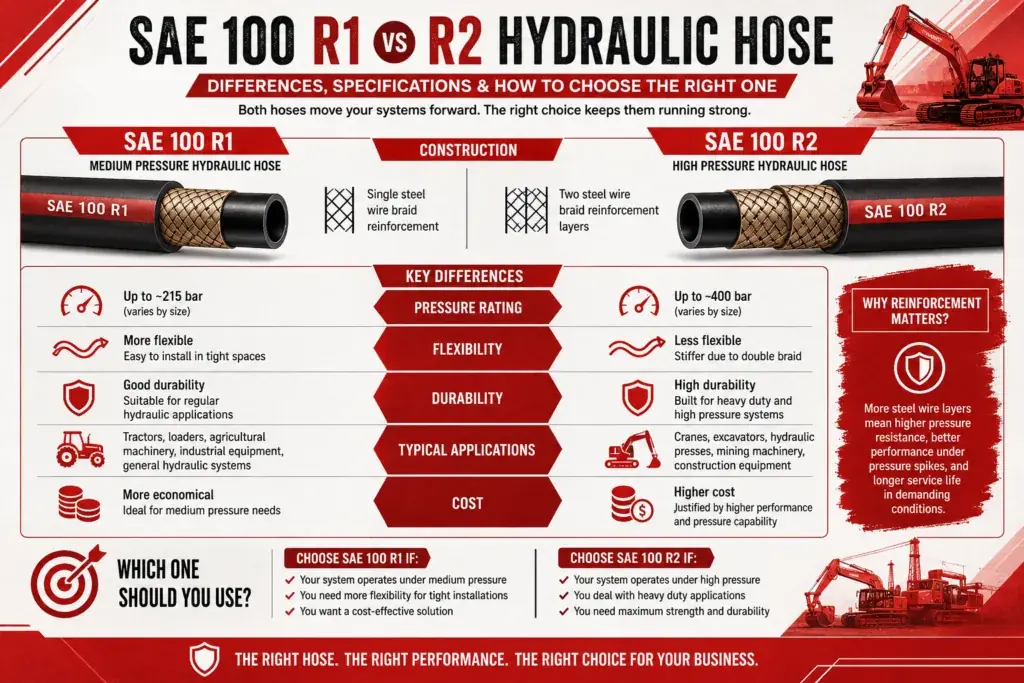
The biggest difference between SAE 100 R1 and R2 Hydraulic Hose lies in reinforcement construction. R1 hoses use a single steel wire braid, whereas R2 hoses use two steel wire braids. This directly impacts pressure capacity and durability.
Flexibility is another major difference. Since sae 100 r1 hose contains only one reinforcement layer, it offers easier installation in compact spaces. R2 hoses are slightly stiffer but provide superior resistance to pressure and wear.
Cost is also a consideration. R1 hoses are generally more economical, making them ideal for medium pressure applications. R2 hoses involve higher manufacturing costs but deliver better performance in demanding environments.
If your hydraulic system regularly experiences high pressure cycles, investing in sae 100 r2 is usually the better long term decision.
Which One Should You Use?
The choice between SAE 100 R1 and R2 Hydraulic Hose depends entirely on your operating conditions.
If your equipment operates under medium pressure and requires greater flexibility, sae 100 r1 is often the most practical option. Agricultural machinery, tractors, and general industrial hydraulic systems commonly benefit from this hose type.
If your application involves high pressure circuits, heavy machinery, construction equipment, hydraulic presses, or cranes, sae 100 r2 is the safer and more reliable choice. Its dual wire braid construction offers the strength necessary to handle demanding hydraulic environments.
Selecting the right hose not only improves performance but also extends equipment life and reduces maintenance expenses.
For businesses interested in learning more about customized hose solutions, check out our previous blog on custom rubber hose manufacturing and discover how engineered hose designs improve industrial performance.
Before choosing a hydraulic hose supplier, it is important to understand the certifications and quality standards that ensure safety, reliability, and long term performance. Read our detailed guide on Rubber Hose Supplier Certification to learn how certified manufacturers maintain product quality, meet industry requirements, and deliver dependable hose solutions for industrial applications. This guide will help you make a more informed purchasing decision and avoid costly operational issues.
Conclusion
Choosing between SAE 100 R1 and R2 Hydraulic Hose should never be based solely on price. Understanding the construction, pressure capability, flexibility, and application requirements of each hose is essential for making an informed decision.
SAE 100 R1 is an excellent solution for medium pressure systems where flexibility and cost efficiency are priorities. SAE 100 R2 delivers greater strength and pressure resistance for heavy duty industrial applications. Both hose types play an important role in modern hydraulic systems, but selecting the correct option ensures maximum safety, reliability, and productivity.
Working with an experienced manufacturer can help you identify the most suitable hose for your specific operational requirements and achieve long term performance benefits.
Want more expert insights on hydraulic hoses, industrial rubber products, and the latest industry trends? Follow Mangla Rubber Industries LinkedIn for valuable updates, product knowledge, and practical solutions that help businesses improve operational efficiency and equipment performance. Stay connected with our team and never miss the latest developments in hydraulic hose technology.
SAE 100 R1 and R2 Hydraulic HoseSAE 100 R1 and R2 Hydraulic HoseSAE 100 R1 and R2 Hydraulic HoseSAE 100 R1 and R2 Hydraulic HoseSAE 100 R1 and R2 Hydraulic HoseSAE 100 R1 and R2 Hydraulic HoseSAE 100 R1 and R2 Hydraulic HoseSAE 100 R1 and R2 Hydraulic HoseSAE 100 R1 and R2 Hydraulic Hose
FAQs
What is the main difference between SAE 100 R1 and R2 Hydraulic Hose?
The main difference is the reinforcement layer. SAE 100 R1 has a single steel wire braid, while SAE 100 R2 contains two steel wire braids for higher pressure resistance.
Where is sae 100 r1 hose commonly used?
Sae 100 r1 hose is commonly used in tractors, agricultural equipment, industrial machinery, and medium pressure hydraulic systems.
What are the important sae 100 r1 hose specifications?
Key sae 100 r1 hose specifications include single wire braid reinforcement, working pressure up to approximately 215 bar, and an operating temperature range of minus 40°C to plus 100°C.
What are the key sae 100 r2 hose specifications?
Important sae 100 r2 hose specifications include double steel wire braid reinforcement, higher pressure capacity, and enhanced durability for demanding hydraulic systems.
Is sae 100 r2 hose better than R1?
Not necessarily. Sae 100 r2 hose is better for high pressure applications, while sae 100 r1 hose is often more suitable for medium pressure systems that require greater flexibility.
Need application help?
Our technical team will help you pick the right hose.