
How Pneumatic Rubber Hose Handles Compressed Air in Automation and Manufacturing Plants
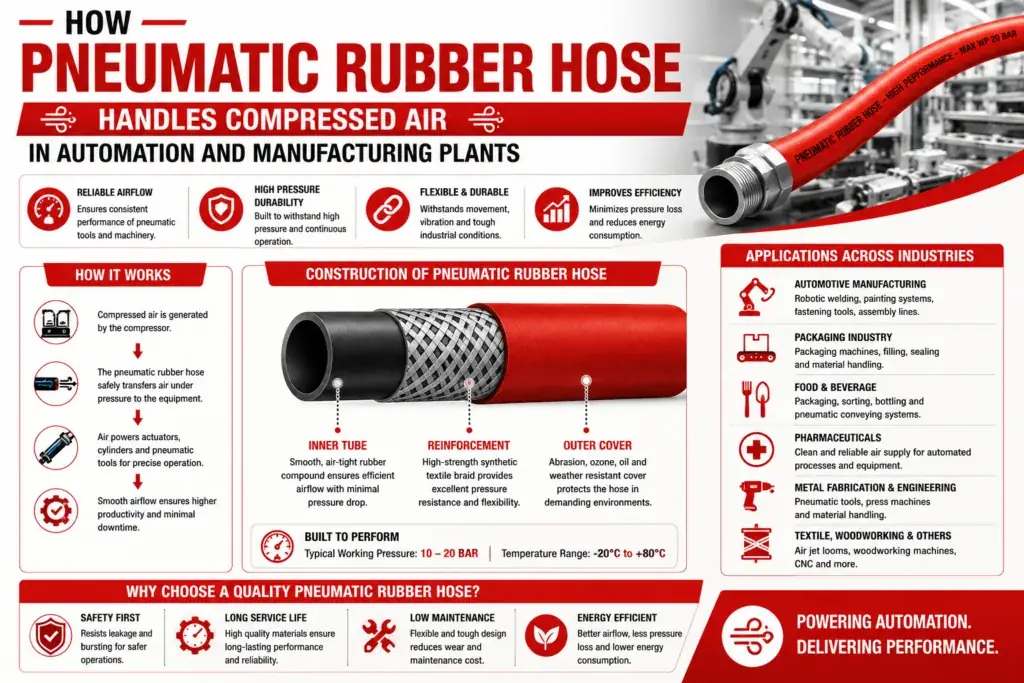
Automation has transformed the way modern manufacturing plants operate. From assembly lines and packaging units to CNC machines and robotic systems, compressed air has become one of the most reliable energy sources used across industrial operations. Behind every efficient pneumatic system is a dependable Pneumatic Rubber Hose, designed to transport compressed air safely and consistently between different components.
Whether it is powering pneumatic tools, actuators, air cylinders, or automated machinery, selecting the right Pneumatic Rubber Hose plays an important role in maintaining productivity and minimizing operational downtime. A well-designed hose not only ensures smooth airflow but also withstands pressure fluctuations, continuous movement, and demanding industrial environments.
If you want to understand how hydraulic hoses support agricultural equipment as effectively as pneumatic systems support factory automation, you can also read our detailed blog on Where Is Tractor Trolley Hydraulic Hose Used in Agricultural Machinery in India? It explains how hose technology improves efficiency across different industrial and agricultural applications.
As industries continue to adopt advanced automation, businesses increasingly look for durable pneumatic hose solutions that can perform under continuous operation. Choosing a quality hose is not simply about pressure ratings. It involves evaluating flexibility, material quality, temperature resistance, compatibility with fittings, and long-term durability.
But how does a Pneumatic Rubber Hose actually manage compressed air without losing efficiency? And why do manufacturing facilities invest in premium hose systems instead of ordinary air pipes? Understanding these questions helps businesses make better decisions when designing or upgrading pneumatic systems.
Understanding the Role of Pneumatic Rubber Hose in Industrial Automation
A Pneumatic Rubber Hose is a flexible industrial hose specially designed to transport compressed air between compressors, pneumatic valves, regulators, actuators, and machinery. Unlike rigid metal pipelines, rubber hoses provide flexibility that allows equipment to move without affecting airflow or system performance.
Manufacturing environments often require hoses to bend around machines, robotic arms, conveyors, and production equipment. A properly manufactured Pneumatic Rubber Hose can withstand repeated flexing while maintaining consistent pressure throughout the system.
Industries that commonly rely on pneumatic hose systems include automotive manufacturing, food processing, pharmaceuticals, textile production, packaging, electronics, woodworking, metal fabrication, and heavy engineering.
In these industries, uninterrupted airflow directly impacts production speed. Any leakage or hose failure can reduce machine efficiency, increase energy consumption, and lead to unexpected downtime.
Why Compressed Air Is Widely Used in Manufacturing Plants
Compressed air is often referred to as the fourth utility in industrial manufacturing because of its extensive applications. It provides clean power without introducing electrical hazards into demanding work environments.
Many automated production systems depend on compressed air because it offers quick response times, precise movement, and relatively simple maintenance compared to hydraulic or electrical alternatives.
A high-quality Pneumatic Rubber Hose helps transfer compressed air with minimal pressure loss, ensuring pneumatic tools and equipment operate at their intended performance levels.
From operating pneumatic cylinders to controlling automated production lines, the hose becomes a critical connection between the compressed air source and the equipment performing the actual work.
How Pneumatic Rubber Hose Maintains Efficient Airflow
Compressed air travels through the Pneumatic Rubber Hose under controlled pressure. The inner tube is designed to provide a smooth passage that minimizes friction and pressure drop while protecting airflow quality.
The reinforcement layers inside the hose provide structural strength to withstand internal pressure generated by industrial compressors. Meanwhile, the outer rubber cover protects the hose from abrasion, moisture, oil exposure, sunlight, and physical damage commonly found inside manufacturing facilities.
When these layers work together, the hose delivers stable airflow even during continuous production shifts.
Proper airflow management also helps reduce compressor workload, contributing to improved energy efficiency across the entire pneumatic system.
Construction of a Pneumatic Rubber Hose
The performance of a Pneumatic Rubber Hose depends largely on its construction.
The inner tube is manufactured using rubber compounds that are compatible with compressed air. It helps maintain airflow quality while resisting wear caused by continuous air movement.
The reinforcement layer usually consists of high-strength synthetic textile braiding. This reinforcement allows the hose to safely handle varying operating pressures while maintaining flexibility.
The outer cover protects the hose against environmental conditions commonly encountered inside industrial plants. It resists abrasion, weather exposure, oil mist, grease, and minor chemical contact, making the hose suitable for demanding factory environments.
Together, these components create a reliable pneumatic rubber hose pipe capable of performing under continuous industrial use.
Applications of Pneumatic Rubber Hose Across Manufacturing Industries
Modern production facilities depend on Pneumatic Rubber Hose for a wide range of operations.
Automotive assembly plants use compressed air for robotic welding, painting systems, fastening equipment, and automated assembly lines.
Food processing facilities rely on pneumatic air hose systems for packaging machines, sorting equipment, filling stations, and material handling systems where clean operation is essential.
Textile industries use pneumatic controls to automate weaving, spinning, and fabric processing equipment.
Woodworking facilities operate pneumatic nail guns, sanders, cutting equipment, and automated handling systems using reliable compressed air supplied through durable pneumatic hose pipe assemblies.
Metal fabrication workshops use compressed air for laser cutting support systems, CNC machines, pneumatic presses, and precision manufacturing equipment.
Packaging industries utilize pneumatic automation for labeling, sealing, carton handling, palletizing, and conveyor controls.
Across all these industries, dependable hose performance directly contributes to uninterrupted production.
Factors That Help Pneumatic Rubber Hose Handle Continuous Pressure
Industrial automation rarely stops. Many manufacturing plants operate around the clock, placing continuous demands on compressed air systems.
A quality Pneumatic Rubber Hose is engineered to maintain stable performance even during extended operating hours.
Its flexibility prevents stress from machine movement while reinforced construction resists bursting under recommended working pressure.
The hose also absorbs vibration generated by compressors and moving machinery. This flexibility reduces stress on connected equipment and extends the lifespan of the entire pneumatic system.
Temperature resistance further improves reliability. Many industrial environments expose hoses to varying temperatures throughout daily operations. High-quality rubber compounds help the hose remain flexible without cracking or becoming excessively rigid.
These characteristics make the Pneumatic Rubber Hose suitable for automation systems that require dependable airflow every day.
The Importance of Pneumatic Hose Fittings
Fittings create secure connections between hoses, valves, regulators, air preparation units, compressors, and pneumatic equipment.
Poor-quality fittings often become the primary source of compressed air leakage. Even small leaks can significantly increase compressor operating costs over time.
Properly matched pneumatic hose fittings help maintain pressure consistency while improving safety and reducing unnecessary energy loss.
Selecting fittings according to pressure rating, hose diameter, and application requirements is essential for achieving reliable long-term performance.
Businesses looking for a trusted Rubber Hose Supplier can explore the certified industrial hose solutions offered by Mangla Rubber Industries:
How to Select the Right Pneumatic Rubber Hose for Industrial Applications
Choosing the right Pneumatic Rubber Hose depends on several operational factors rather than simply selecting a hose based on its size. Every manufacturing plant has different pressure requirements, operating temperatures, machine layouts, and environmental conditions.
The first factor to consider is the working pressure of the pneumatic system. The hose should always have a pressure rating that comfortably exceeds the normal operating pressure to ensure long-term safety and reliability.
Flexibility is another important consideration. Automation equipment often involves moving components, robotic arms, and continuously operating machines. A flexible pneumatic hose can bend repeatedly without developing cracks or restricting airflow.
Temperature also affects hose performance. Industrial facilities may expose hoses to high temperatures near machinery or lower temperatures in storage and processing areas. A quality pneumatic rubber hose pipe should maintain its flexibility and structural strength across varying operating conditions.
Compatibility with pneumatic hose fittings is equally important. Properly matched fittings reduce the chances of leakage, maintain pressure consistency, and improve the overall efficiency of the compressed air system.
Common Challenges Faced by Pneumatic Air Systems
Although pneumatic systems are known for their reliability, they still require properly maintained components to deliver consistent performance.
Air leakage is one of the most common issues in manufacturing plants. Damaged hoses, loose fittings, or worn connectors can result in pressure loss, forcing compressors to work harder than necessary.
Abrasion is another challenge. In busy production facilities, hoses often come into contact with machinery, metal surfaces, or factory floors. A durable Pneumatic Rubber Hose with a high-quality outer cover helps minimize wear caused by continuous friction.
Improper installation can also shorten hose life. Excessive twisting, sharp bends, or incorrect routing places unnecessary stress on the hose, increasing the risk of premature failure.
Contaminated compressed air containing moisture or oil residue may gradually affect hose performance if regular maintenance is ignored.
By addressing these challenges early, manufacturers can improve operational reliability while reducing maintenance costs.
Maintenance Practices That Improve Hose Life
Regular inspection plays a major role in extending the service life of a **Pneumatic Rubber Hose.
Operators should periodically examine hoses for surface cracks, abrasion, swelling, cuts, or loose connections. Early identification of wear helps prevent unexpected downtime during production.
Cleaning the exterior of the hose removes accumulated dust, grease, and industrial contaminants that may affect long-term durability.
Routine inspection of pneumatic hose fittings is equally important. Loose fittings should be tightened according to manufacturer recommendations, while damaged connectors should be replaced immediately.
Avoiding excessive bending and ensuring proper hose routing also contribute to longer service life. Hoses should never be stretched beyond their recommended limits or allowed to rub continuously against sharp edges.
With preventive maintenance, businesses can maximize the performance of both the hose and the entire pneumatic system.
Why Quality Pneumatic Rubber Hose Matters in Automation
Automation depends on consistency. Every pneumatic cylinder, valve, actuator, and robotic movement relies on stable compressed air pressure.
A premium Pneumatic Rubber Hose minimizes pressure fluctuations, helping automated equipment operate with greater precision and repeatability.
Reliable hose performance also contributes to workplace safety. Sudden hose failures can interrupt production, damage equipment, and create hazardous working conditions.
For manufacturers aiming to improve operational efficiency, investing in high-quality pneumatic air hose solutions often leads to reduced maintenance, lower energy consumption, and improved productivity over time.
Future of Pneumatic Rubber Hose in Smart Manufacturing
Industrial automation continues to evolve with the adoption of smart factories, connected equipment, and Industry 4.0 technologies.
As manufacturing systems become more advanced, the demand for durable and efficient Pneumatic Rubber Hosesolutions is expected to grow.
Modern production facilities require hoses capable of handling continuous operation while supporting increasingly sophisticated pneumatic control systems. Improved rubber compounds, enhanced reinforcement technologies, and better manufacturing standards are helping industrial hoses meet these evolving requirements.
Businesses investing in automation recognize that every component within the pneumatic system contributes to overall productivity. Choosing the right pneumatic hose pipe therefore becomes an important part of long-term operational planning.
Final Thoughts
The Pneumatic Rubber Hose is far more than a simple air transfer component. It forms an essential part of every pneumatic system used in automation and manufacturing plants. By ensuring efficient compressed air delivery, supporting continuous machine operation, and withstanding demanding industrial conditions, it helps businesses maintain productivity while reducing downtime.
Selecting the right Pneumatic Rubber Hose, compatible pneumatic hose fittings, and durable pneumatic air hose assemblies contributes directly to system performance and operational safety. Combined with proper installation and regular maintenance, a quality hose becomes a valuable long-term investment for any industrial facility.
Frequently Asked Questions
1. What is a Pneumatic Rubber Hose used for?
A **Pneumatic Rubber Hose is used to transfer compressed air between compressors, valves, pneumatic tools, cylinders, and automated industrial equipment. It plays a critical role in manufacturing, packaging, automotive, textile, and engineering industries.
2. How is a Pneumatic Rubber Hose different from a hydraulic hose?
A **Pneumatic Rubber Hose is specifically designed for compressed air applications, whereas hydraulic hoses are built to carry hydraulic fluids under much higher operating pressures. Each hose is engineered according to its intended industrial application.
3. How often should pneumatic hose fittings be inspected?
Industrial experts recommend inspecting **pneumatic hose fittings during routine maintenance schedules. Regular inspection helps identify air leaks, loose connections, and wear before they affect production efficiency.
4. What factors should be considered when selecting a pneumatic rubber hose pipe?
Important factors include working pressure, hose diameter, operating temperature, flexibility, environmental conditions, compatibility with fittings, and the specific requirements of the pneumatic system.
5. Can a Pneumatic Rubber Hose improve manufacturing efficiency?
Yes. A high-quality **Pneumatic Rubber Hose provides consistent airflow, minimizes pressure loss, reduces maintenance requirements, and supports uninterrupted machine operation, all of which contribute to improved manufacturing efficiency.
Need application help?
Our technical team will help you pick the right hose.