JCB Backhoe Loader Hydraulic Hose Replacement Guide: Sizes, Fittings and Costs
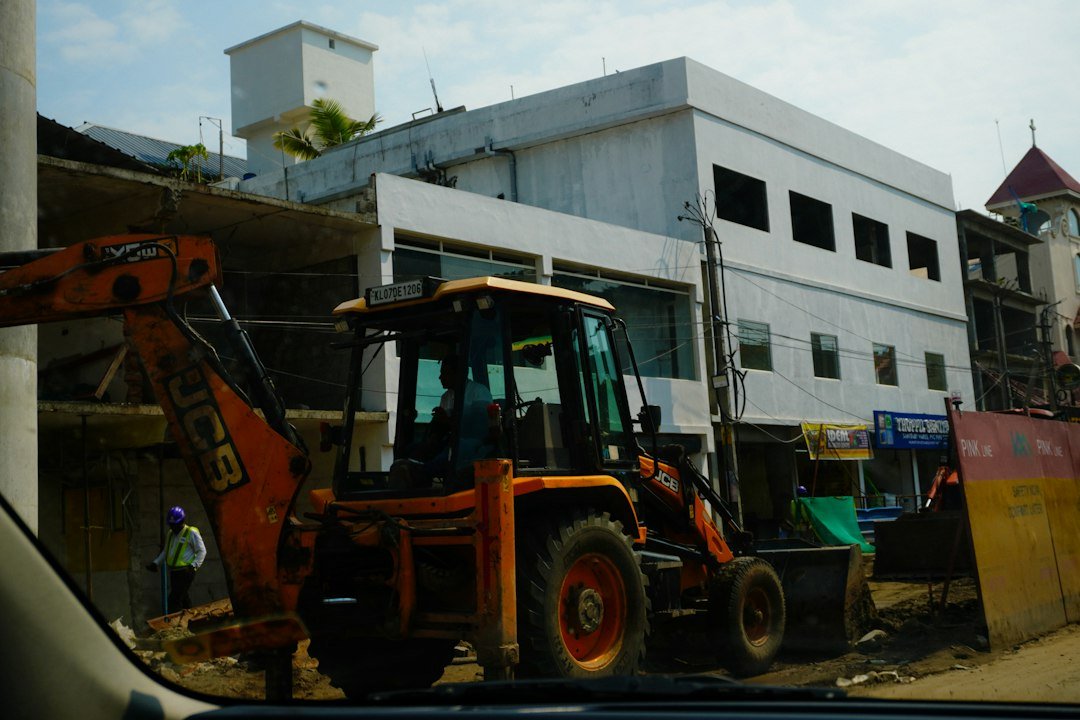
Photo by Adhitya Sibikumar on Unsplash
The backhoe loader is the most common piece of construction equipment in India, and JCB machines make up the majority of the fleet. Whether it is digging trenches, loading trucks at a brick kiln or clearing a site in a small town, a backhoe works long hours on hydraulic hoses that see high pressure, constant flexing and abrasive conditions. When a line fails, the machine stops earning. A correctly specified JCB hydraulic hose replacement gets it back to work and stays in service, while a poor one fails again within weeks.
This guide explains how the hydraulic circuits on a backhoe loader are laid out, which lines fail most often, how to identify the correct JCB hydraulic hose size and fitting before ordering, and what a replacement should reasonably cost. It is written for machine owners, hire contractors and workshop mechanics who service 3DX-class backhoe loaders and similar machines across India.
What Is a JCB Hydraulic Hose?
A JCB hydraulic hose is a wire-braided or spiral-reinforced rubber hose assembly, fitted with crimped steel end fittings, that carries pressurised oil between the pump, control valves, cylinders and motors on a JCB backhoe loader or similar machine. The hose is not a proprietary product: the assemblies on these machines are built to international standards such as SAE 100 R1, SAE 100 R2 and EN 853, and a hose made to the same standard, bore, pressure rating and fitting specification is a direct replacement.
A typical backhoe loader carries between fifty and eighty hose assemblies across several circuits:
- Main pump to control valve — large-bore, high-pressure lines running around 200 to 250 bar on most models
- Loader arm and bucket — lift, tilt and (where fitted) 6-in-1 bucket clamp cylinders at the front
- Backhoe boom, dipper and bucket — the hardest-working lines, flexing with every dig cycle
- Slew and stabiliser legs — moderate pressure, cycled at every repositioning
- Extending dipper — long hoses that run along the dipper and flex with extension
- Steering and brakes — smaller-bore lines to the steering ram and brake circuit
- Return and drain lines — low-pressure hose back to the tank and cooler
Which Hoses Fail Most Often on a Backhoe Loader?
Every workshop that services backhoes sees the same lines coming in for replacement. The pattern is driven by where the hose sits and how much it moves.
Backhoe Bucket and Dipper Hoses
The lines feeding the dipper and bucket cylinders run along the boom and dipper, flexing through a wide angle at every cycle and passing close to soil, rock and the bucket itself. Cover abrasion, cuts and crimp fatigue are all common. On machines with an extending dipper, the long hoses that follow the extension are frequently rubbed against the dipper section or trapped between moving parts when routed carelessly after a repair.
Loader Bucket Tilt and 6-in-1 Lines
Hoses across the loader arms are exposed to spilled material and to the bucket edge when the bucket is rolled back. Lines to a 6-in-1 clamshell bucket see additional pressure spikes every time the clam closes on hard material.
Lines Near the Engine
Hoses routed past the engine, exhaust and hydraulic cooler age from heat. The cover hardens and cracks long before the reinforcement is worn, and the crimp begins to weep. Our article on the common causes of hydraulic hose failure covers these mechanisms in detail.
How to Identify the Correct Replacement Hose
The single most common mistake in the field is ordering a hose by guesswork. Five pieces of information identify any hydraulic assembly exactly, and all of them can be read or measured from the old hose.
Pressure Grade
Read the lay line printed along the hose. A backhoe loader uses a mix of single-wire SAE 100 R1 (EN 853 1SN) hose on return, drain and low-pressure lines and two-wire SAE 100 R2 (EN 853 2SN) hose on the main pressure, boom, dipper and bucket circuits. If the lay line has worn off, cut the old hose and count the wire braids. Our SAE 100 R1 vs R2 comparison lists the working pressure of each grade by size. Never fit a lower grade than the original, even as a temporary measure.
Bore Size
Hydraulic hose is sized by inside diameter, usually expressed as a dash number in sixteenths of an inch. A -4 hose is 1/4 inch bore, -6 is 3/8 inch, -8 is 1/2 inch, -12 is 3/4 inch and -16 is 1 inch. Backhoe loaders mostly use -6, -8 and -12 hose, with -16 on some main pump lines. The lay line normally shows the dash size or the bore in millimetres.
Fitting Type and Thread
JCB machines assembled in India predominantly use BSP (British Standard Pipe) female swivel fittings with a 60 degree cone seat, with some metric and ORFS fittings on later models. Check each end: female swivel, male, straight, 45 degree or 90 degree elbow. Our guide to hydraulic hose fittings explains how to tell BSP, JIC, metric and ORFS threads apart.
Overall Length
Measure from the sealing face of one fitting to the sealing face of the other, with the hose laid straight. A hose that is too short will pull tight and fail at the crimp; one that is too long will loop and rub. Where both ends are elbows, also note the angle between them when viewed along the hose, because an assembly crimped with the wrong orientation will be twisted when installed.
Common Hose Sizes and What They Cost
Prices vary with hose grade, bore, length, fitting type and protective sleeving, so the notes below describe relative cost for a standard R2 assembly with two BSP fittings bought in India. Treat them as a guide for budgeting, not a quotation.
- -6 (3/8 inch) R2, up to 1 metre — typically a few hundred rupees per assembly; used on steering, stabiliser and pilot lines
- -8 (1/2 inch) R2, 1 to 2 metres — the most common size on the loader arm and backhoe bucket lines; mid-range cost
- -12 (3/4 inch) R2, 1 to 3 metres — main pressure and boom lines; noticeably more per metre because of the larger wire and fittings
- -16 (1 inch) R2, pump lines — the highest per-metre cost on the machine, but only a handful are fitted
- Extras — spiral guard, abrasion sleeve, heat sleeve and elbow fittings each add to the price but usually pay for themselves in longer service
The cheapest hose is rarely the cheapest option. An unbranded assembly with an unknown reinforcement grade or a poorly crimped fitting may cost a third less and fail in the first month, taking a full day of machine time with it. Buy from a manufacturer that marks the hose with its standard and pressure rating. Our article on why certification matters when selecting a rubber hose supplier explains what to look for.
Fitting a Replacement Hose Correctly
A few steps make the difference between an assembly that lasts a year and one that lasts five.
- Relieve pressure first — lower all attachments to the ground, switch off the engine and work the controls to release trapped pressure
- Cap open ports — dirt entering the system is the leading cause of pump and valve wear
- Check the new hose — confirm the lay line, bore, fittings and length match the old assembly before fitting
- Do not twist — hold the hose straight while tightening fittings; a visible twist in the lay line shortens life dramatically
- Route as original — use the same clamps, guides and protective sleeves; keep the hose away from edges and heat
- Tighten to the correct torque — overtightening a BSP swivel damages the cone seat and causes a leak that no amount of further tightening will cure
- Run at idle and check — cycle the circuit slowly and inspect for leaks before returning the machine to work
Keep grease points on the boom, dipper and loader arms serviced as well, because worn pins let the structure move in ways the hose routing was not designed for; our guide on grease gun hoses for tractors and JCB equipment covers that side of maintenance. Hydraulic fluid escaping under pressure is a recognised injection injury hazard; the UK Health and Safety Executive publishes guidance on safe working with hydraulic systems that applies equally to Indian workshops.
Choose JCB Hydraulic Hose Replacements from Mangla Rubber Industries
Mangla Rubber Industries manufactures SAE 100 R2 high pressure hose and SAE 100 R1 hose in all the dash sizes used on JCB and other backhoe loaders, supplied as crimped assemblies with BSP, metric, JIC and ORFS fittings or as bulk hose for workshops that crimp their own. Abrasion-resistant covers, spiral guards and heat sleeves are available for boom, dipper and engine-bay lines.
Send us the lay-line markings, bore, fitting details and length, or a clear photograph of the old assembly, and our technical team will match it. Contact Mangla Rubber Industries for a quotation.
Conclusion
A JCB hydraulic hose replacement is a routine job when the five identifying details are known: pressure grade, bore, fitting type, length and orientation. Read the old hose, match the grade rather than downgrading, buy from a manufacturer that marks and tests its hose, and fit the new assembly without twist and with the original protection. The extra care costs a few minutes and a few rupees, and it keeps the machine digging instead of waiting for the next hose.
Frequently Asked Questions
Are JCB hydraulic hoses a special size?
No. Backhoe loader hoses are built to standard SAE and EN specifications in standard dash sizes. Any hose of the same grade, bore, length and fitting specification is a direct replacement.
Can I use R1 hose in place of R2 on a backhoe?
Not on pressure lines. R1 single-wire hose is rated well below the working pressure of the boom, dipper and main pump circuits. It is acceptable only where the original hose was R1, such as return and drain lines.
How do I know if the fittings are BSP or JIC?
Measure the thread and look at the seat. BSP fittings have a 60 degree cone and Whitworth thread form; JIC fittings have a 37 degree flare and UNF threads. A thread gauge settles it quickly, and a supplier can identify a fitting from a clear photograph.
Why does a new hose fail at the crimp within weeks?
Usually because the hose was fitted with a twist, cut too short so it pulls tight under load, or crimped with the wrong die or ferrule for the hose. Occasionally the fitting was overtightened and the seat damaged.
How long should a replacement hose last on a backhoe?
A correctly specified and routed R2 assembly on a boom or bucket line typically lasts two to four years in Indian working conditions. Lines in protected locations can last much longer, while badly routed lines can fail in months.