
What Hoses Are Used in Data Center Liquid Cooling Systems and How Are They Selected?
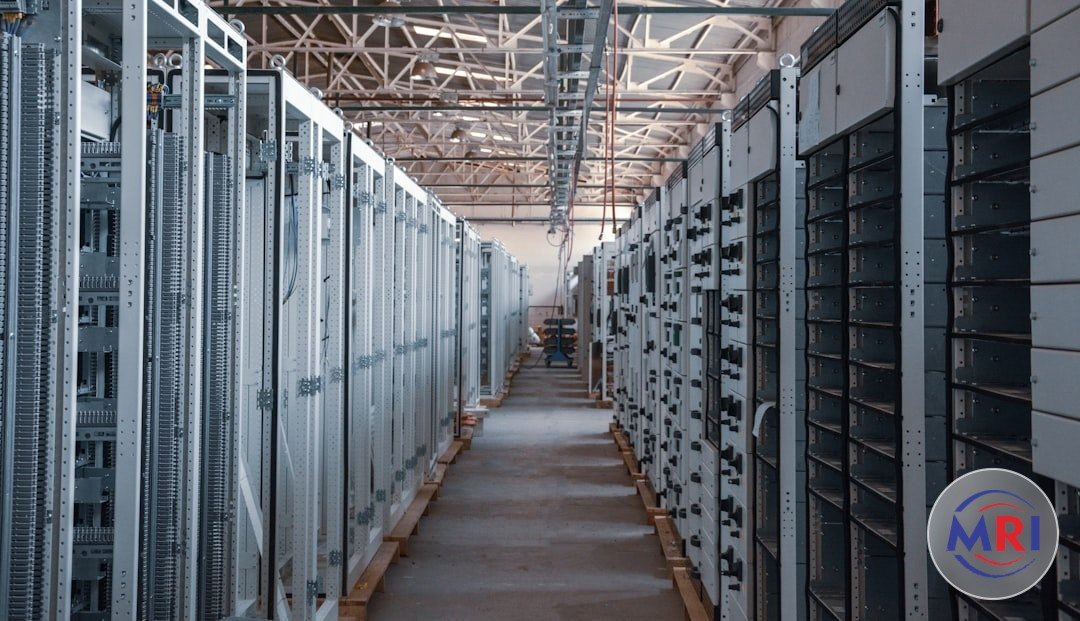
Photo by İsmail Enes Ayhan on Unsplash
India is building data centre capacity faster than at any point in its history, with new campuses in Navi Mumbai, Chennai, Hyderabad, Noida and Pune designed for high-density AI and cloud workloads. Air cooling cannot remove the heat from racks that draw 40 to 100 kW, so operators are moving to direct-to-chip and immersion liquid cooling. That shift makes data center cooling hoses a critical component: they carry coolant to and from servers worth many crores, and a single leak or a slow release of contaminants can take a rack offline.
This guide is written for data centre design engineers, facility managers, mechanical contractors and OEMs building cooling distribution systems in India. It explains where hoses are used in a liquid-cooled facility, which materials suit each loop, and how data center cooling hoses should be specified so that they are clean, leak-free and long-lived.
What Are Data Center Cooling Hoses?
Data center cooling hoses are flexible lines that carry water or a water-glycol coolant between the facility chilled water system, the coolant distribution unit (CDU), the rack manifolds and the cold plates mounted on processors. Unlike a hydraulic hose, they operate at low pressure, typically below 6 bar, and at moderate temperature, usually between 15°C and 60°C. What makes them demanding is the requirement for very low permeation, minimal leaching of ions or plasticisers into the coolant, and a flexible, kink-free construction that can be routed inside a crowded rack.
A liquid-cooled facility uses hoses at several points:
- Facility water side — flexible connectors between chillers, pumps and the CDU that absorb vibration and thermal movement
- Secondary loop — hoses from the CDU to the rack manifolds, carrying treated water or a propylene glycol mixture
- Rack manifold to server — small-bore hoses with dry-break quick disconnects feeding each cold plate
- Immersion tanks — hoses carrying dielectric fluid between the tank and its heat exchanger
- Rear-door heat exchangers — flexible supply and return lines to the door coil
Why Does Hose Material Matter So Much in Liquid Cooling?
In most industrial applications a hose is judged on pressure, temperature and abrasion. In a data centre, the coolant loop is a closed circuit that passes through microchannel cold plates with passages well under a millimetre wide. Anything the hose releases into the coolant, whether plasticiser, sulphur compounds, carbon particles or dissolved copper from a fitting, can foul those channels, promote corrosion or feed microbial growth. A hose that would be perfectly acceptable for a factory water line can shorten the life of an entire cooling loop.
Three material properties therefore dominate selection:
- Low extractables — the tube compound must not leach into water or glycol over years of service
- Low permeation — oxygen entering through the hose wall accelerates corrosion of copper and aluminium cold plates, and water vapour leaving through the wall changes glycol concentration
- Chemical compatibility — the tube must resist the coolant, its corrosion inhibitors and biocides, and any dielectric fluid used in immersion systems
Which Hose Materials Are Used for Each Cooling Loop?
No single material suits every loop. The choice depends on the fluid, the temperature and how much handling the hose will see. Our comparison of EPDM, nitrile and silicone rubber hose covers the general properties of these compounds; the notes below apply them to cooling systems.
EPDM for Water and Glycol Loops
Peroxide-cured EPDM is the most widely used material for water and propylene glycol coolant hoses. It has excellent resistance to hot water and glycol, low extractables when compounded correctly, good flexibility and a long service life at cooling temperatures. Reinforced EPDM hose with a smooth, clean tube is the standard choice from the CDU to the rack manifold. Avoid sulphur-cured EPDM, which can release sulphur compounds that tarnish copper.
Carbon-Free and Non-Conductive Hose Near Electronics
Where a hose runs close to live equipment, a non-conductive construction reduces the risk of a fault path if a leak occurs. A carbon-free hose uses a compound without conductive carbon black, giving high electrical resistance and a low risk of particle shedding into the coolant. This construction is well suited to server-level and manifold-level lines.
PTFE for High-Purity and Dielectric Fluids
PTFE-lined hose has the lowest extractables of any flexible line and resists virtually every coolant and dielectric fluid. It is used where deionised water is circulated, where the operator specifies minimum contamination, and for hydrocarbon or fluorinated dielectric fluids in immersion cooling that would swell EPDM. Our article on where PTFE Teflon hose is used covers its properties in detail.
Nitrile and Fluoroelastomer for Immersion Systems
Single-phase immersion cooling uses synthetic hydrocarbon fluids similar to light mineral oil. EPDM swells in these fluids and must not be used. Nitrile hose handles hydrocarbon dielectrics well at cooling temperatures, and fluoroelastomer (FKM) is chosen where the fluid runs hotter or where the longest life is required.
Silicone: Limited Use
Silicone is flexible and clean but has high gas permeability, which allows oxygen into the loop. It is generally limited to short, low-stress connections rather than long coolant runs.
Specifications to Confirm Before Ordering
Because cooling hoses are ordered in large quantities for a single facility, a mistake in the specification is repeated hundreds of times. Confirm the following with the supplier and record them in the project documentation.
- Fluid — treated water, deionised water, propylene glycol concentration, inhibitor package or dielectric fluid type
- Working pressure — typically 4 to 10 bar for secondary loops; specify a 3:1 or 4:1 burst safety factor
- Temperature range — supply and return temperatures, plus the maximum during a chiller fault
- Bore and length — sized for flow rate with low pressure drop; long runs in small bore starve the last servers on a manifold
- Bend radius — the hose must route inside the rack without kinking; kink-resistant helix constructions are available
- Fittings — dry-break quick disconnects at the server, barbed or crimped fittings at the manifold, in stainless steel or brass compatible with the coolant
- Cleanliness — request tubes flushed and capped before despatch to prevent contamination during shipping
- Flame rating — covers meeting a recognised flammability rating for use inside an occupied electronic enclosure
- Traceability — batch marking so a suspect lot can be identified and replaced
The industrial rubber hose selection guide sets out a general procedure for working through these points with a supplier.
Installation and Maintenance in a Live Facility
Hoses should be installed with gentle bends, secured clear of sharp edges and cable trays, and labelled at both ends. Pressure test each loop with the actual coolant before connecting servers, and inspect quick disconnects for correct seating. Over the life of the facility, inspect hoses annually for hardening, discolouration, weeping at fittings and any change in coolant chemistry that points to a hose problem. Replace hoses on a planned schedule rather than waiting for a leak.
Leak detection cable under the rack and a drip tray beneath the manifold are standard practice, and cooling loops should be documented as part of the facility’s safety and continuity plans. Government policy on data centre development, including the draft Data Centre Policy, is available from the Ministry of Electronics and Information Technology. Similar coolant hose requirements apply to battery plants, which we cover in our article on coolant hoses for EV battery plants and gigafactories.
Choose Data Center Cooling Hoses from Mangla Rubber Industries
Mangla Rubber Industries manufactures carbon-free hoses, PTFE hoses and EPDM water hoses suitable for coolant distribution in data centres, telecom facilities and electronics manufacturing. Hoses are supplied in bulk or as cut-to-length assemblies with the fittings specified by the system designer, for mechanical contractors, CDU builders and OEMs across India.
Share your coolant type, pressure, temperature, bore and fitting details and our technical team will recommend a suitable construction and provide samples for compatibility testing. Contact Mangla Rubber Industries to discuss your project.
Conclusion
As Indian data centres move to liquid cooling, data center cooling hoses become part of the critical path between the chiller and the processor. Peroxide-cured EPDM suits water and glycol loops, carbon-free constructions suit lines near electronics, PTFE suits high-purity and dielectric duties, and nitrile or FKM suits hydrocarbon immersion fluids. Specify for low extractables, low permeation and fluid compatibility, install carefully and replace on a schedule, and the cooling loop will protect the equipment it serves.
Frequently Asked Questions
What coolant is used in direct-to-chip liquid cooling?
Most systems use treated water or a propylene glycol and water mixture, typically around 25 percent glycol, with corrosion inhibitors. Some systems use deionised water, which requires hoses with very low extractables.
Can standard rubber water hose be used in a data centre cooling loop?
It is not recommended. General-purpose hose may leach plasticisers or sulphur compounds and shed carbon particles that foul cold plates. Specify a peroxide-cured EPDM, carbon-free or PTFE hose intended for coolant duty.
What pressure do data center cooling hoses operate at?
Secondary loops from the CDU to the rack usually run below 6 bar, with hoses rated for 10 bar or more. Facility water connections may run somewhat higher depending on the pump and building height.
Which hose is suitable for immersion cooling fluids?
Hydrocarbon dielectric fluids require nitrile or fluoroelastomer hose; EPDM swells and fails. PTFE-lined hose is compatible with both hydrocarbon and fluorinated dielectric fluids.
How often should cooling hoses be replaced?
Inspect annually and replace on a planned interval set by the hose manufacturer’s data and the facility’s experience, typically well before any sign of hardening, weeping or coolant contamination appears.