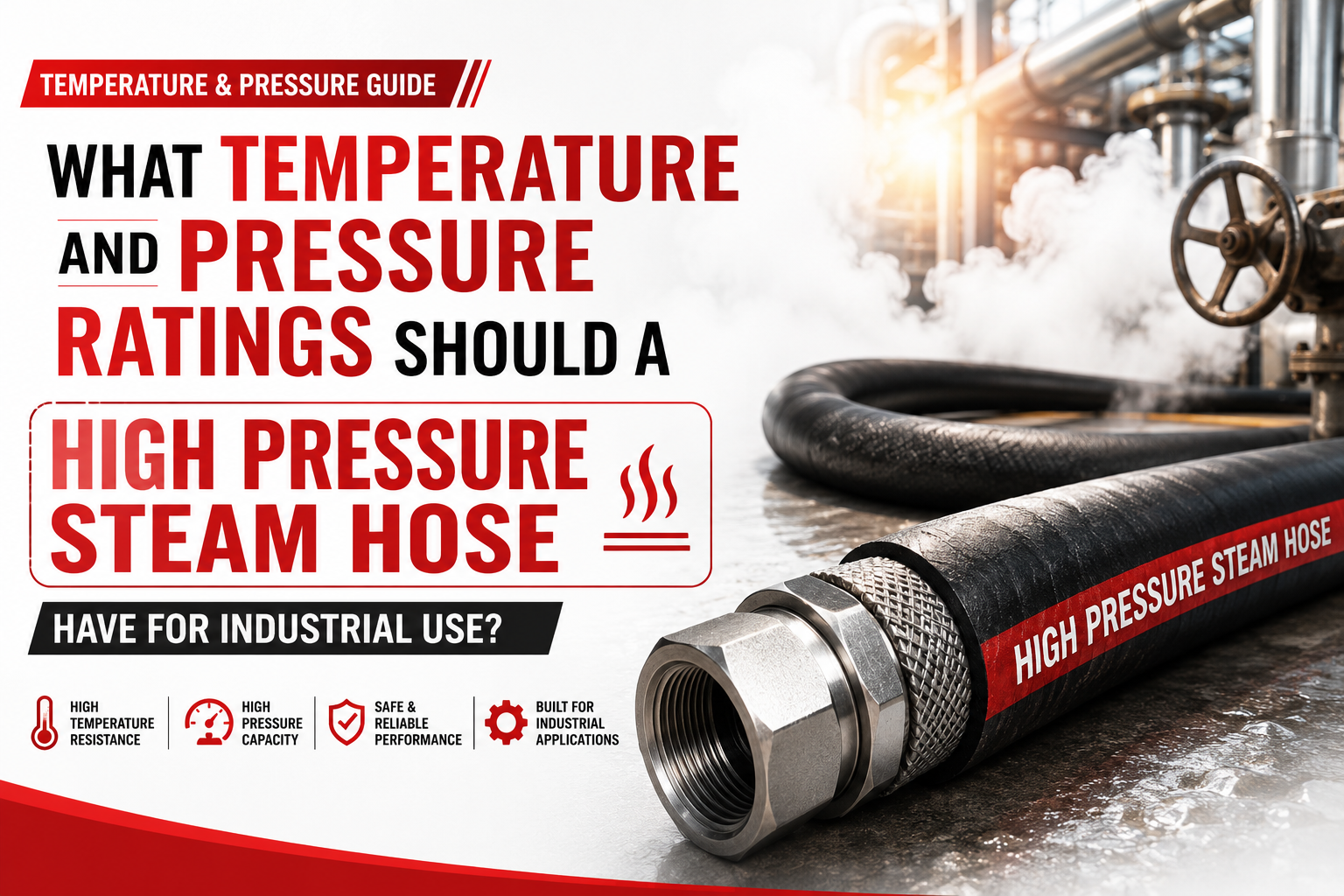
Steam is one of the most efficient sources of heat transfer in industrial operations, but it also presents significant safety and performance challenges. Whether it is used in chemical processing, food manufacturing, refineries, textile units, or power plants, selecting the right High Pressure Steam Hose is essential for ensuring safe and uninterrupted operations. A hose that cannot withstand the required temperature or pressure can fail unexpectedly, leading to production downtime, equipment damage, and serious safety risks.
Many industrial buyers focus only on hose size or fittings while overlooking two of the most important specifications, temperature rating and pressure rating. These factors determine whether a hose can safely handle the demands of a steam application over an extended period.
If your industry regularly handles high temperature steam, understanding these ratings can help you choose a hose that delivers reliable performance while reducing maintenance costs and operational risks.
Businesses looking for dependable industrial hose solutions often stay updated with the latest product developments and application guides from Mangla Rubber Industries. Following industry insights can help maintenance teams and procurement professionals make informed decisions when selecting hoses for demanding industrial environments.
If you are also evaluating hoses designed for high pressure fluid transfer, you may find our previous guide on High Pressure Rubber Hose helpful. It explains how different hose constructions perform under demanding industrial conditions and what factors should be considered before selecting the right solution.
Why Does Temperature Rating Matter in a High Pressure Steam Hose?
Steam applications operate under much harsher conditions than standard water or air transfer systems. Unlike ordinary fluids, steam transfers both pressure and intense heat simultaneously. This combination places continuous stress on the hose tube, reinforcement layers, and outer cover.
A quality High Pressure Steam Hose is specifically engineered with heat resistant materials that can maintain flexibility and structural integrity under elevated temperatures. Choosing High Pressure Steam Hose a with an insufficient temperature rating increases the likelihood of hardening, cracking, blistering, or premature failure.
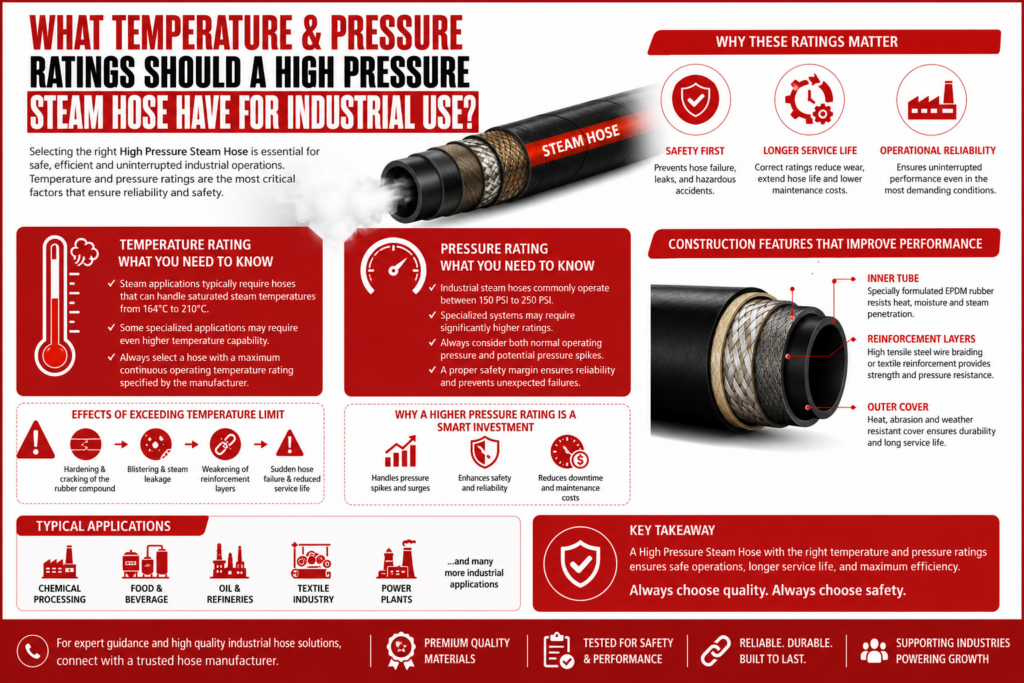
Most industrial steam applications require a steam hose pipe capable of handling saturated steam temperatures ranging from approximately 164°C to 210°C. Some specialized industrial environments may require hoses designed for even higher temperatures depending on the equipment and operating conditions.
The hose manufacturer should always specify the maximum continuous operating temperature along with any limitations regarding intermittent exposure.
How can operating above the recommended temperature affect hose performance?
When a hose is consistently exposed to temperatures beyond its design limit, the internal rubber compound begins to deteriorate. This deterioration reduces flexibility and weakens the reinforcement layers, eventually causing leaks or sudden hose failure.
Excessive temperatures can also shorten service life considerably, increasing replacement frequency and maintenance costs.
What Pressure Rating Should a High Pressure Steam Hose Have?
Pressure rating is equally important because steam systems often operate under continuously changing pressure conditions. A High Pressure Steam Hose must safely withstand both normal operating pressure and temporary pressure fluctuations without compromising safety.
Pressure ratings are generally expressed in PSI or bar. Depending on the application, industrial steam hoses commonly operate between 150 PSI and 250 PSI, although certain specialized systems may require significantly higher ratings.
It is important to understand that the pressure rating should never be selected based only on average operating pressure. Engineers normally include an adequate safety margin to account for pressure spikes, equipment startup conditions, and unexpected surges within the system.
A properly designed rubber steam hose combines multiple reinforcement layers with heat resistant rubber compounds to safely handle these demanding operating conditions.
Why is selecting a higher pressure rating often a better investment?
Industrial environments rarely operate under perfectly stable conditions. Pumps, control valves, and pressure changes can create temporary spikes that exceed normal operating pressure.
Selecting a hose with an appropriate safety margin helps reduce the risk of unexpected failures, extends service life, and minimizes costly production interruptions. It also provides additional reliability when operating conditions change over time.
Construction Features That Improve Steam Hose Performance
Not every industrial hose is suitable for steam transfer. A genuine High Pressure Steam Hose is manufactured using materials specifically selected to withstand continuous exposure to high temperatures and pressure.
The inner tube is typically made from specially formulated EPDM rubber that resists heat, High Pressure Steam Hose moisture, and steam penetration. Reinforcement layers usually consist of high tensile steel wire braiding or textile reinforcement, depending on the required working pressure. The outer cover is designed to resist abrasion, weather exposure, and external heat while maintaining flexibility during operation.
The quality of construction directly influences hose durability, pressure handling capability, and operational safety. Even the best high pressure hose pipe can underperform if it is not manufactured using high grade materials and precise production standards.
In industries where both steam and hydraulic systems operate side by side, buyers often compare a high pressure hydraulic hose with a steam hose. Although both are built for demanding environments, they High Pressure Steam Hose are designed for entirely different media and operating conditions. Hydraulic hoses are intended for hydraulic fluids, while steam hoses use specialized rubber compounds that can withstand continuous exposure to high temperature steam without degrading.
Choosing the Right High Pressure Steam Hose for Different Industries
Different industries place different demands on steam transfer systems. A food processing plant may require frequent cleaning with high temperature steam, while a refinery may operate under continuous high pressure conditions for extended periods. Textile manufacturing, pharmaceutical production, chemical processing, and power generation each have unique operating environments that influence hose selection.
The right High Pressure Steam Hose should always be selected after evaluating operating temperature, maximum working pressure, media compatibility, installation layout, bending radius, and maintenance requirements. These factors work together to determine long term reliability and safety rather than relying on pressure or temperature ratings alone.
Industrial buyers should also consider the expected service life and maintenance schedule. Investing in a well-designed rubber steam hose often results in fewer replacements, reduced downtime, and improved operational efficiency over time.
Inspection and Maintenance Practices for a High Pressure Steam Hose
Even the highest quality High Pressure Steam Hose requires regular inspection to ensure safe operation. Steam systems are exposed to continuous thermal expansion and contraction, which places repeated stress on the hose structure. Over time, this can affect both the inner tube and the reinforcement layers.
Routine visual inspections should be carried out before and after operation. Any signs of cracking, blistering, cuts, exposed reinforcement, loose fittings, or leakage should be addressed immediately. A damaged hose should never be repaired temporarily for steam applications because the operating conditions leave very little margin for error.
Another important practice is allowing the hose to cool naturally after use. Rapid cooling with water can shorten the life of the hose by creating unnecessary thermal stress within the rubber compounds.
Proper storage also contributes to longer service life. Steam hoses should be stored away from direct sunlight, chemicals, and sharp objects. They should not be bent beyond the recommended bend radius or left under continuous tension when not in use.
Common Mistakes to Avoid When Selecting a High Pressure Steam Hose
Many industrial hose failures occur because the wrong hose has been selected rather than because of manufacturing defects. Understanding the application before purchasing can prevent expensive downtime and improve workplace safety.
One common mistake is selecting a hose based only on pressure capacity while ignoring temperature requirements. Steam places unique demands on rubber materials, and a hose designed for water or compressed air cannot safely handle saturated steam.
Another mistake is confusing a high pressure hydraulic hose with a steam hose. While both products are built for demanding industrial environments, hydraulic hoses are designed for oil based hydraulic fluids and should never be used for steam transfer. Likewise, using a standard high pressure hose for steam applications can result in rapid deterioration because it lacks the specialized rubber compounds required to resist continuous heat and moisture.
Ignoring compatibility with fittings is another issue. The hose, couplings, and clamps should all be designed to work together as a complete assembly. Poor quality or mismatched fittings can become weak points within the system, increasing the risk of leaks or failures under pressure.
Industrial buyers should also avoid choosing a hose based solely on price. A lower initial investment may lead to more frequent replacements, increased maintenance costs, and unexpected production interruptions. Selecting a reliable steam hose pipe with proven performance is generally more economical over the life of the equipment.
Why Material Quality Plays a Major Role
The performance of a High Pressure Steam Hose depends not only on its pressure and temperature ratings but also on the quality of materials used during manufacturing. Premium rubber compounds provide better resistance to heat, moisture, ozone, and external abrasion.
The reinforcement layer also determines how well the hose performs under demanding conditions. High tensile steel wire reinforcement offers greater strength for heavy industrial applications, while textile reinforcement may be suitable for lighter duty operations depending on the system requirements.
A well-manufactured rubber steam hose maintains flexibility while resisting deformation during repeated heating and cooling cycles. This helps improve operator safety and extends the working life of the hose.
Manufacturing quality control is equally important. Every hose should be produced according to recognized industrial standards and tested for pressure resistance, dimensional accuracy, and overall durability before reaching the customer.
Choosing a Reliable Industrial Hose Manufacturer
Selecting the right supplier is just as important as selecting the right hose. An experienced manufacturer understands the operating conditions across different industries and can recommend products based on temperature, pressure, media, and installation requirements.
Businesses should look for manufacturers that offer consistent product quality, technical guidance, and reliable after sales support. Detailed product specifications, quality testing, and application expertise are valuable indicators of a dependable supplier.
Mangla Rubber Industries manufactures industrial hose solutions designed for demanding applications across manufacturing, construction, chemical processing, agriculture, and other industrial sectors. By focusing on quality materials and reliable engineering, the company helps businesses select hose solutions suited to their operational requirements.
If your business is looking for dependable High Pressure Steam Hose, high pressure hose pipe, high pressure hose, high pressure hydraulic hose, and rubber steam hose solutions for industrial applications, explore the complete range of industrial hose products offered by Mangla Rubber Industries. Visit the website or get in touch with the technical team to discuss the right hose for your operating conditions and performance requirements.
Final Thoughts
Selecting the right High Pressure Steam Hose is about much more than choosing a hose that fits the connection. Temperature rating, pressure rating, material quality, reinforcement, construction, and proper installation all contribute to safe and efficient industrial operations.
A hose that is correctly matched to the application’s operating conditions delivers better reliability, longer service life, and reduced maintenance costs. It also improves workplace safety by minimizing the risk of failures in high temperature steam systems.
Whether your facility operates in manufacturing, food processing, pharmaceuticals, textiles, power generation, or chemical processing, investing in the right High Pressure Steam Hose ensures that your steam transfer system performs consistently under demanding industrial conditions.
Stay connected with Mangla Rubber Industries on LinkedIn for the latest updates on industrial hose technology, product innovations, and practical application guides.
High Pressure Steam Hose High Pressure Steam Hose High Pressure Steam Hose High Pressure Steam Hose High Pressure Steam Hose