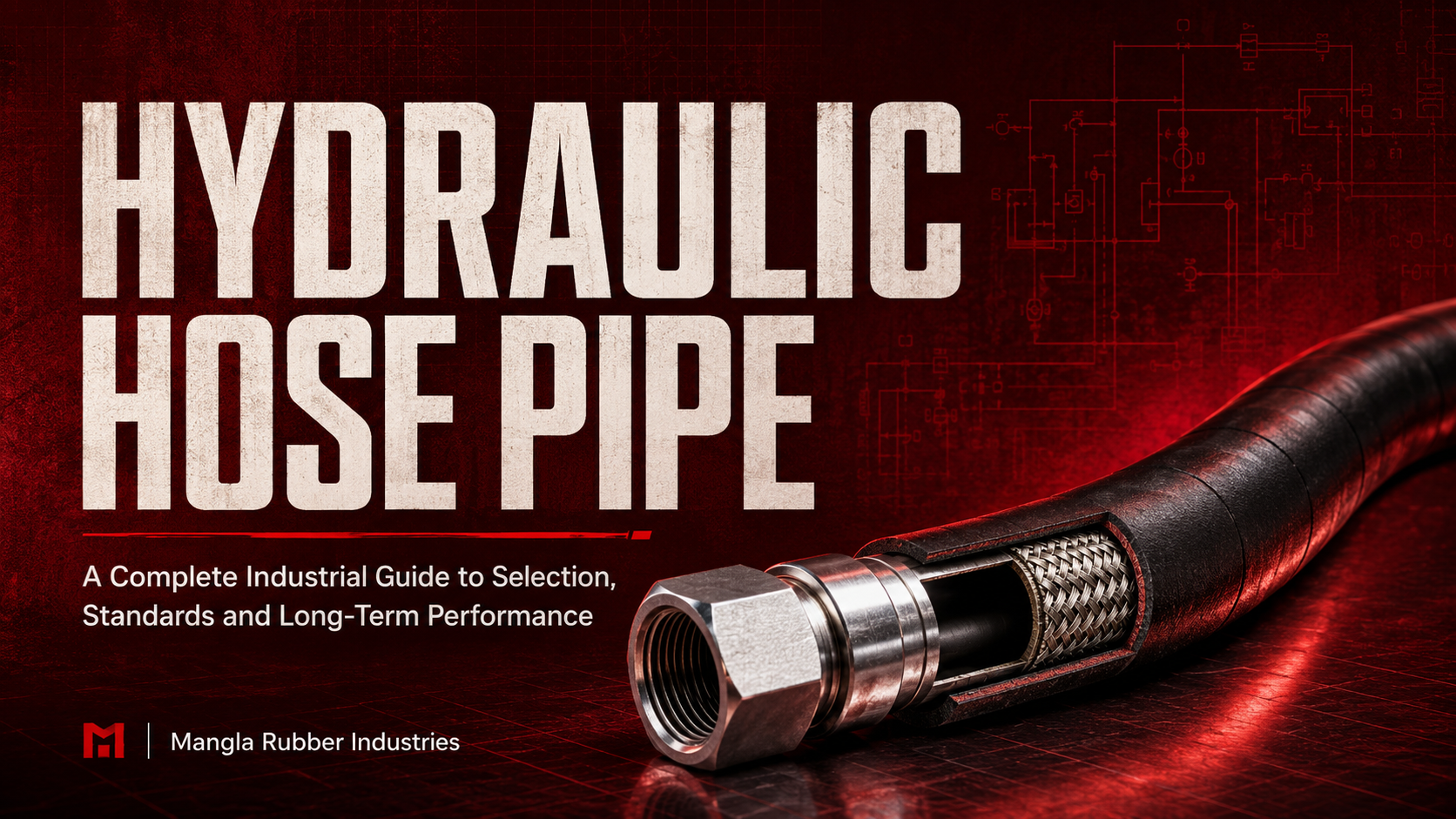
Hydraulic systems are only as reliable as the components that connect them. A hydraulic hose pipe is responsible for safely transferring pressurized hydraulic fluid between pumps, valves, cylinders, and motors while maintaining consistent system performance. Selecting the correct hose not only improves operational efficiency but also reduces downtime, maintenance costs, and safety risks.
For industrial buyers, OEMs, and maintenance teams, understanding hydraulic hose specifications is essential before selecting a replacement or designing a new hydraulic system. This guide explains the key considerations, industry standards, and practical selection factors that help businesses make informed purchasing decisions.
Mangla Rubber Industries on LinkedIn
What Is a Hydraulic Hose Pipe?
A hydraulic hose pipe is a flexible conduit designed to transport hydraulic fluid under pressure between various components within a hydraulic system. Unlike rigid metal tubing, hydraulic hoses absorb vibration, allow equipment movement, and simplify installation in applications where flexibility is required.
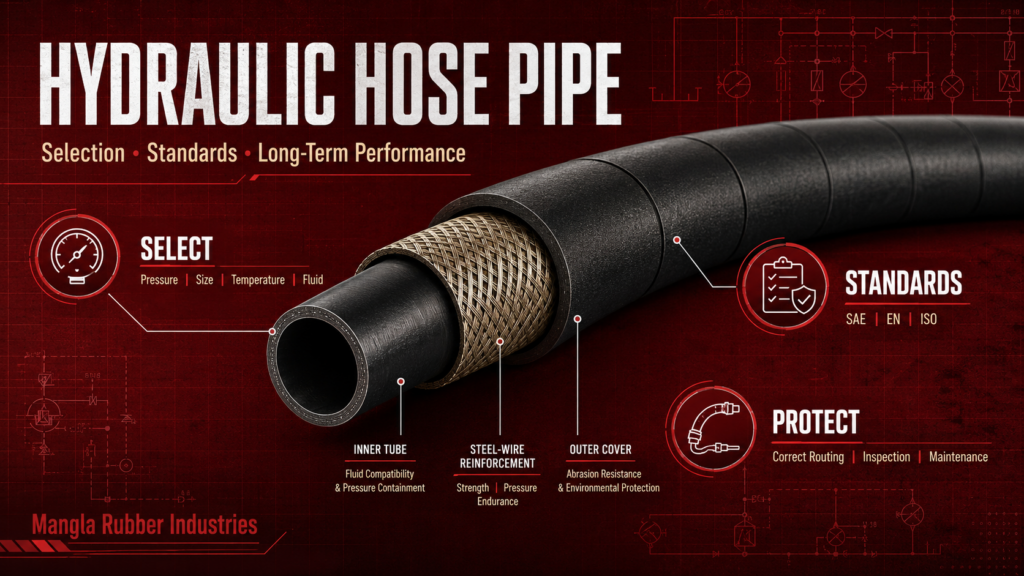
Most industrial hydraulic hoses are manufactured using three primary layers:
- Inner tube that carries hydraulic fluid
- Reinforcement layer made from braided or spiral steel wire
- Outer cover that protects against abrasion, oil, weather, and external damage
The combination of these layers enables hydraulic hoses to withstand demanding industrial environments while maintaining consistent performance
Where Hydraulic Hose Pipes Are Used
Hydraulic hose pipes are used across industries that rely on fluid power for motion and force. Common applications include:
- Construction and earthmoving equipment
- Agricultural machinery
- Manufacturing plants
- Hydraulic presses
- Injection moulding machines
- Mining equipment
- Material handling systems
- Marine hydraulic systems
- Industrial automation equipment
- Mobile hydraulic machinery
Each application has unique operating conditions, making proper hose selection an important part of system design.
How to Choose the Right Hydraulic Hose Pipe
Selecting the right hydraulic hose involves evaluating several technical factors rather than choosing based on size alone.
Operating Pressure
Every hydraulic hose has a specified working pressure and burst pressure. The selected hose should comfortably handle the system’s maximum operating pressure, including temporary pressure spikes that occur during operation.
Choosing a hose with an inadequate pressure rating may lead to premature failure and unplanned downtime.
Hose Size
The internal diameter of a hose directly affects hydraulic fluid flow. A hose that is too small may increase pressure loss and heat generation, while an oversized hose can reduce system efficiency.
Correct sizing helps maintain smooth hydraulic performance throughout the system.
Temperature Range
Industrial environments often expose hydraulic hoses to fluctuating temperatures. Both the hydraulic fluid temperature and surrounding ambient conditions should be considered when selecting hose materials.
Fluid Compatibility
Hydraulic fluids vary depending on the application. The hose’s inner tube material must be compatible with the fluid being transported to prevent degradation and extend service life.
Bend Radius
Every hydraulic hose has a recommended minimum bend radius. Exceeding this limit places excessive stress on the reinforcement layers and may shorten the hose’s lifespan.
Understanding Hydraulic Hose Standards
Industrial hydraulic hoses are manufactured according to internationally recognized standards that define performance requirements for pressure, construction, and testing.
Some commonly referenced standards include:
- SAE (Society of Automotive Engineers)
- EN (European Norm)
- ISO hydraulic hose standards
These standards help ensure consistency in product quality and compatibility across industrial applications. When selecting a hose, businesses should always verify that it meets the specifications required for their equipment and operating conditions.
Types of Hydraulic Hose Pipe
Different hydraulic systems require different hose constructions depending on pressure and flexibility requirements.
Wire Braided Hydraulic Hose
Wire braided hoses are widely used in medium-pressure industrial applications where flexibility and durability are equally important.
Typical applications include:
- Industrial machinery
- Manufacturing equipment
- Agricultural systems
- Hydraulic power units
Spiral Wire Hydraulic Hose
Spiral wire reinforced hoses are designed for high-pressure applications where heavy-duty performance is essential.
These hoses are commonly used in:
- Mining machinery
- Excavators
- Construction equipment
- Heavy industrial hydraulic systems
Textile Reinforced Hydraulic Hose
Textile reinforced hoses are generally suitable for lower-pressure hydraulic applications where lightweight construction and flexibility are priorities.
Installation Practices That Improve Hose Life
Even a high-quality hydraulic hose pipe can experience reduced service life if installed incorrectly.
Good installation practices include:
- Avoid twisting the hose during installation
- Maintain the recommended bend radius
- Use proper routing to prevent abrasion
- Secure hoses with appropriate clamps where required
- Protect hoses from excessive heat and moving components
- Inspect fittings for proper alignment
Following these practices helps reduce unnecessary stress on the hose assembly.
Preventive Maintenance and Inspection
Routine inspection allows maintenance teams to identify wear before it leads to unexpected equipment failure.
Regular inspections should check for:
- Surface cracks
- Abrasion
- Oil leakage
- Blistering
- Loose fittings
- Reinforcement exposure
- Corrosion around connections
- Deformed hose sections
For a detailed guide on identifying early warning signs, businesses can also explore related resources on hydraulic hose maintenance available in the Mangla Rubber Industries Blog, helping build a complete understanding of hydraulic system reliability.
Choosing a Trusted Hydraulic Hose Pipe Manufacturer
Industrial buyers often look beyond pricing when evaluating suppliers. Product consistency, manufacturing quality, and technical support are equally important for long-term operational performance.
An experienced hydraulic hose pipe manufacturer typically offers:
- Consistent product quality
- Industry-compliant manufacturing
- Reliable pressure-rated hoses
- Technical product guidance
- Broad industrial product range
- Dependable supply capabilities
Businesses working on large industrial projects also benefit from manufacturers capable of supplying products across multiple application requirements.
Finding Reliable Hydraulic Hose Manufacturers in India
India has become a significant manufacturing hub for industrial rubber and hydraulic products. Working with established hydraulic hose manufacturers in India offers businesses access to quality products supported by local manufacturing expertise and efficient supply chains.
When evaluating a supplier, consider factors such as:
- Manufacturing experience
- Product certifications
- Quality control processes
- Industrial application expertise
- Technical assistance
- Delivery capabilities
Choosing the right hydraulic hose pipe supplier can help improve procurement efficiency while supporting long-term equipment performance.
Explore Industrial Hydraulic Hose Solutions
Businesses looking for dependable hydraulic hose solutions and industrial rubber products can explore the product range offered by Mangla Rubber Industries. For product enquiries, technical assistance, or application-specific recommendations, visit the Contact Page to connect with the team.
Final Thoughts
Choosing the right hydraulic hose pipe requires a clear understanding of operating conditions, pressure requirements, industry standards, and installation practices. A well-selected hydraulic hose contributes to improved equipment reliability, reduced maintenance, and safer industrial operations.
Whether sourcing from experienced hydraulic hose manufacturers in India or selecting a trusted hydraulic hose pipe manufacturer, investing in quality products and proper application knowledge helps support long-term operational efficiency across industries.
Frequently Asked Questions
1. What is a hydraulic hose pipe used for?
A hydraulic hose pipe is used to transfer pressurized hydraulic fluid between different components of a hydraulic system, such as pumps, cylinders, valves, and motors. It is commonly found in construction equipment, manufacturing machinery, agricultural vehicles, mining equipment, and other industrial applications where reliable fluid power transmission is essential.
2. How do I choose the right hydraulic hose pipe for my application?
Choosing the right hydraulic hose pipe depends on several factors, including operating pressure, hose size, temperature range, hydraulic fluid compatibility, and the working environment. It’s also important to consider the minimum bend radius and the type of fittings used to ensure safe and efficient system performance.
3. How often should a hydraulic hose pipe be inspected?
Hydraulic hose pipes should be inspected regularly as part of a preventive maintenance program. Look for signs such as cracks, abrasion, leaks, bulging, loose fittings, or damaged outer covers. Replacing a worn hose before it fails can help prevent equipment downtime and costly repairs.
4. Why should businesses work with experienced hydraulic hose manufacturers in India?
Established hydraulic hose manufacturers in India typically offer products that meet industry standards, maintain consistent quality, and are supported by technical expertise. Working with an experienced manufacturer also helps businesses source hydraulic hoses that are suitable for demanding industrial applications while ensuring reliable supply and support.
5. What should I look for in a hydraulic hose pipe supplier?
A reliable hydraulic hose pipe supplier should provide quality-tested products, a wide product range, timely deliveries, and technical assistance when required. Businesses should also consider the supplier’s manufacturing capabilities, industry experience, and ability to recommend suitable hydraulic hose solutions for specific applications.