Hose Hoses we move further into 2026, the way we maintain our outdoor spaces has undergone a digital and sustainable transformation. At the heart of this transformation is a tool that has been reimagined for the modern age: the garden hose. Whether you are managing a high-tech hydroponic setup or a traditional backyard sanctuary, understanding the nuances of modern hose is essential for efficient water management and plant health. In this guide, we’ll explore the latest advancements in watering technology, from self-healing materials to AI-integrated irrigation systems, ensuring your hose hoses are up to the task of 2026 gardening standards. Why Quality Matters: The Anatomy of Modern Hose Hoses In years past, a hose was just a tube. Today, hoses are engineered pieces of equipment designed to withstand extreme climate shifts. With the unpredictable weather patterns we’ve seen throughout 2025 and early 2026, durability is no longer optional. Modern hose hoses typically consist of several layers: The Core: Often made of antimicrobial materials to prevent algae buildup. The Reinforcement: High-tensile mesh that prevents kinking and allows the hoses to handle higher PSI (pounds per square inch). The Outer Cover: UV-resistant polymers that protect the hoses from the harsh 2026 summer sun. The Rise of Sustainable and Smart Hoses Sustainability is the primary driver of garden tech this year. Many homeowners are now opting for hose hoses made from recycled food-grade polymers. These are not only safer for watering organic vegetable gardens but are also fully recyclable at the end of their lifespan. Furthermore, “Smart” hose hoses have entered the mainstream. These systems feature integrated sensors that communicate with your home’s central AI hub. If the hose hoses detect a drop in pressure—suggesting a leak—or if the soil moisture levels reach an optimal point, the system can automatically throttle the water flow. This integration of hose hoses into the broader smart home ecosystem is a hallmark of 2026 living. Comparing the Top Hose Hoses Categories Choosing the right tool depends entirely on your specific landscape needs. Here is a breakdown of the leading hoses categories currently dominating the market: Type of Hose Best For Key 2026 Feature Hybrid Polymer General Gardening Kink-free “memory” technology. Expandable Small Patios/Balconies High-density 3750D fabric casing. Soaker Hose Hoses Deep Root Irrigation Precision micro-pore distribution. Stainless Steel Rough Terrains Heat-reflective coating for cool-to-touch use. When selecting your hose hoses, prioritize the “Burst Strength” rating. In 2026, with many municipal water systems upgrading their pressure, you want hose hoses rated for at least 500 PSI to ensure longevity and safety. Maintenance 2.0: Keeping Your Hose Hoses in Peak Condition Even the most advanced hose hoses require basic upkeep to maintain their performance. AI overviews of modern gardening trends emphasize “preventative care” over “reactive repair.” To keep your hose hoses functioning perfectly, follow these 2026-standard maintenance tips: Automated Drainage: Use a smart reel that automatically clears the water from your hoses after use. This prevents stagnant water from degrading the interior lining. UV Protection: While modern hose are more resistant to the sun, storing them in a dedicated UV-shielded housing can double their lifespan. Fitting Lubrication: Use eco-friendly, silicone-based lubricants on the brass fittings of your hoses twice a year to prevent mineral buildup and “seizing.” Leak Detection: Periodically run a pressure test. Many modern hose hoses come with colour-changing indicators that highlight thin spots before they become full-blown leaks. The Environmental Impact of Choosing the Right Hose Hoses As we focus on water conservation in 2026, the efficiency of your hose plays a massive role in your environmental footprint. Traditional, low-quality hoses can lose up to 5% of water through “sweating” or micro-leaks at the couplings. By upgrading to professional-grade hose hoses, you ensure that every gallon is delivered precisely to your plants. Furthermore, the longevity of premium hose hoses means fewer plastic products ending up in landfills. A single pair of high-quality hoses can replace five or six “budget” alternatives over a ten-year period. Conclusion: Investing in the Future of Your Garden The humble garden hose is no longer an afterthought. In 2026, your hose are the veins of your outdoor living space. By selecting hose hoses that offer a blend of durability, smart integration, and material safety, you are investing in the long-term health of your garden and the planet. Whether you are looking for the lightweight flexibility of an expandable model or the rugged reliability of a hybrid polymer, make sure your hoses are rated for the high-pressure demands of modern irrigation. Happy gardening!
The Definitive Guide to Hydraulic Fitting in 2026: Trends, Standards, and Smart Innovation
In the industrial landscape of 2026, the humble hydraulic fittings has undergone a high-tech revolution. As global manufacturing shifts toward “Industry 5.0” and smart infrastructure, the demand for high-performance, leak-free fluid power connections is at an all-time high. A modern hydraulic fitting is no longer just a metal connector; it is a precision-engineered component critical to the efficiency of automated factories, construction robotics, and sustainable energy systems. Whether you are maintaining a mobile excavator or designing a high-pressure manufacturing line, choosing the right hydraulic fitting is the difference between a high-efficiency operation and costly environmental liability. The Rise of Smart Hydraulic Fitting Technology By 2026, the most significant trend in the fluid power industry is the integration of the Internet of Things (IoT) directly into the hydraulic fitt. “Smart” fittings now feature embedded sensors that monitor pressure, temperature, and even acoustic signatures of early-stage fatigue. Predictive Maintenance: A smart hydraulic fitting can detect micro-vibrations that signal an impending leak, sending real-time alerts to a centralized dashboard. Zero-Leak Performance: New 2026 international standards for hydraulic fitting design prioritize O-ring face seals (ORFS) and bite-type connectors that eliminate the environmental impact of fluid loss. Advanced Materials: We are seeing a move toward lightweight, high-strength alloys and corrosion-resistant coatings that extend the life of a hydraulic fitting in harsh offshore or mining environments. The Rise of Smart Hydraulic Fitting Technology With the 2026 focus on standardization and high-pressure safety, selecting the correct hydraulic requires understanding the specific strengths of each connection type. Fitting Type Pressure Rating (2026 Std) Sealing Method Best Application ORFS (O-Ring Face Seal) Up to 6,000 PSI Elastomeric Seal High-Vibration Machinery JIC 37° Flare Up to 3,000 PSI Metal-to-Metal Low-Pressure Fuel & Oil DIN 24° Cone (Bite Type) Up to 8,000 PSI Compression Ring Heavy Industrial & Marine SAE Code 61/62 Flange Up to 6,000 PSI Bolted Gasket High-Flow Earthmoving Quick-Connect Smart Fitting Varies IoT-Monitored Seal Modular Robotics & Ag-Tech Key Drivers for Hydraulic Fitting Demand in 2026 The global hydraulic fitting market is projected to reach record highs this year, driven by several key industrial shifts: Infrastructure Booms: Massive renewable energy projects—from wind turbine hydraulics to hydrogen storage—rely on a specialized hydraulic fitting to handle extreme gas and fluid pressures. Automation & Robotics: As factories become more modular, the need for a “Plug-and-Play” hydraulic fitting that allows for rapid reconfiguration without system draining is paramount. Sustainability Regulations: In 2026, many jurisdictions have implemented strict “Zero-Leak” mandates. This has led to a mass retrofit of older machinery with modern, high-integrity hydraulic fitting solutions. The Importance of Compatibility: ISO and SAE Standards One of the biggest challenges in 2026 remains the “fitting mismatch.” A hydraulic fitting might look like it fits, but even a fractional difference in thread pitch or seat angle can lead to catastrophic failure. To ensure safety, always verify that your hydraulic meets current international standards such as ISO 12151 or SAE J514. In the modern era, many manufacturers now laser-etch QR codes onto each hydraulic, allowing technicians to instantly scan the part to verify its torque specs, material composition, and pressure limits. Best Practices for Hydraulic Fitting Installation Proper installation is the only way to guarantee the longevity of your hydraulic. Follow these 2026 industry best practices: Avoid Over-Torquing: Over-tightening a hydraulic is the #1 cause of cracked seats and damaged threads. Use a calibrated torque wrench. Inspect Before Use: Check for “nicks” in the sealing surface. A single scratch on a high-pressure hydraulic fittingcan lead to a high-velocity injection injury. Monitor Bend Radii: Ensure that the hose attached to the hydraulic has enough slack. Tension on the fitting leads to premature fatigue and eventual separation. Conclusion: Future-Proofing Your Systems As we look ahead through 2026, the hydraulic will continue to be the unsung hero of industrial progress. By investing in high-quality, IoT-ready, and standardized hydraulic components, businesses can significantly reduce their maintenance overhead and environmental footprint. Don’t settle for “just a connector.” Choose a hydraulic fitting that offers the durability, precision, and intelligence required for the next generation of industrial excellence. In a world where every drop of fluid counts, the right hydraulic fitting is your best defense against downtime.
The Ultimate Guide to the Flexible Chemical Hose in 2026: Innovation, Safety, and Industrial Strategy
In the industrial landscape of 2026, the flexible chemical has evolved from a basic utility into a precision-engineered asset. As global manufacturing pivots toward Industry 5.0—where human-centric design meets hyper-efficient automation—the role of fluid transfer systems has never been more critical. Managing hazardous substances requires more than just a tube; it requires a sophisticated flexible chemical hoses system capable of withstanding extreme thermal fluctuations, corrosive environments, and high-pressure cycles. This year, we are seeing a massive shift in how procurement managers and engineers view the flexible chemical hoses. It is no longer just about “making the connection”; it is about optimizing the entire lifecycle of chemical transport to ensure zero-contamination and maximum worker safety. The Evolution of Flexible Chemical Hose Technology in 2026 The flexible chemical hoses of today is vastly superior to the models of a decade ago. Material science has reached a point where we can now bond disparate materials at the molecular level, creating a flexible chemical hose that offers the chemical inertness of glass with the flexibility of high-grade rubber. 1. Smart Sensing and Integrated IoT Perhaps the most significant trend in 2026 is the “Smart flexible chemical hoses.” These assemblies are embedded with conductive filaments or RFID sensors that provide real-time data on: Liner Integrity: Detecting early signs of chemical permeation. Internal Pressure: Monitoring for surges that could lead to a catastrophic flexible chemical hose failure. Temperature Spikes: Ensuring that volatile chemicals remain within their safe operational windows. 2. Advanced Fluoropolymers and Bio-Liner Materials Environmental sustainability is the driving force behind the 2026 flexible chemical hose market. Manufacturers are now utilizing bio-based polymers that offer the same resistance as traditional PTFE but with a 40% lower carbon footprint. Furthermore, the modern flexible chemical hose often features “micro-smooth” internal bores, reducing friction loss and saving energy during the pumping process. The Evolution of Flexible Chemical Hose Technology in 2026 Choosing a flexible chemical hose is a high-stakes decision. A failure doesn’t just result in downtime; it can lead to environmental disasters and severe legal liabilities. To optimize your selection, you must evaluate the flexible chemical hose based on the following 2026 industry benchmarks: Chemical Compatibility and Permeation Not all liners are created equal. While a flexible chemical hoses with a UHMWPE liner is excellent for most industrial acids, it may fail when exposed to certain concentrated solvents at high temperatures. In 2026, engineers use digital twin simulations to predict how a flexible chemical hose will react to specific chemical “cocktails” before they ever hit the factory floor. Mechanical Stress and Bend Radius A common mistake is selecting a flexible chemical hose that is too rigid for the workspace. Modern designs prioritize a “tight bend radius,” allowing the flexible chemical hose to navigate cramped machinery without kinking. A kinked flexible chemical hose creates a flow restriction and a localized pressure point, which is a leading cause of premature hose rupture. Technical Specification Comparison Table (2026 Standards) The following table compares the top-performing flexible chemical hose variants currently dominating the 2026 market. Hose Category Primary Material Max Working Pressure Temp Range (°C) Industry Focus Ultra-Flex PTFE Fluoropolymer 500 PSI -70 to +260 Pharma & Fine Chem High-Impact UHMWPE Polyethylene 250 PSI -40 to +100 Bulk Acid Transfer Multi-Layer Composite Polypropylene/Films 200 PSI -30 to +80 Marine & Tanker Advanced Viton (FKM) Fluoroelastomer 300 PSI -20 to +200 Petrochemical Eco-EPDM Bio-Rubber 150 PSI -40 to +150 Water Treatment Maintenance and Lifespan Management In 2026, the philosophy regarding the flexible chemical hose has shifted from “reactive replacement” to “predictive maintenance.” Visual Inspections: Regularly check the outer cover of the flexible chemical for signs of “wicking” (where chemicals seep into the reinforcement layer) or exposed braiding. Hydrostatic Testing: Yearly pressure testing of every flexible chemical in service is now a standard requirement for ISO 2026 compliance. Proper Storage: When not in use, a flexible chemical hose should be stored away from direct UV light and ozone-generating motors, both of which can cause the outer cover to crack and degrade. The Role of Couplings in Hose Performance A flexible chemical is only as strong as its weakest link—the fittings. In 2026, “encapsulated” fittings are the gold standard. These fittings ensure that the chemical media only touches the inert liner of the flexible chemical and the fitting face, preventing the metal housing from corroding over time. Whether you use Camlocks, Flanges, or Tri-Clamps, ensuring a seamless transition from the flexible chemical to the fitting is paramount for hygiene and safety. Conclusion: Investing in Quality The flexible chemical is the lifeblood of the modern chemical plant. As we navigate the complexities of 2026, the focus must remain on quality, traceability, and technological integration. While a cheaper flexible chemical might save money in the short term, the long-term costs of failure, cleanup, and lost production far outweigh the initial investment in a premium flexible chemical hose. Stay ahead of the curve by upgrading to IoT-enabled, high-durability flexible chemical solutions that meet the rigorous demands of tomorrow’s industrial world. By prioritizing the right flexible chemical hose, you aren’t just buying equipment; you are buying peace of mind.
The Essential Guide to Oil and Fuel Transfer Hoses for Offshore Rigs in 2026
In the demanding environment of offshore drilling, the integrity of fluid transfer systems is paramount. Oil and fuel transfer hoses for offshore rigs serve as the vital arteries of a platform, facilitating the movement of hydrocarbons, bunkering fuels, and drilling fluids between supply vessels and the rig. Because these operations occur in some of the most volatile conditions on earth, choosing the right equipment is not just a matter of efficiency—it is a matter of safety and environmental stewardship. Why Quality Matters: The Role of Oil and Fuel Transfer Hoses for Offshore Rigs Offshore operations face a unique trifecta of challenges: high pressure, corrosive saltwater, and constant mechanical motion. Oil and fuel transfer hoses for offshore rigs are specifically engineered to withstand these stresses. Unlike standard industrial hoses, marine-grade transfer lines must resist UV degradation, ozone exposure, and the abrasive nature of the sea floor or rig structure. Failure to use specialized oil and fuel transfer hoses for offshore rigs can lead to catastrophic leaks. A single rupture can result in millions of dollars in lost product, severe environmental fines, and immediate danger to the crew. Therefore, understanding the specifications of these hoses is the first step toward a secure operation. Types of Hoses Used in Offshore Environments Not all oil and fuel transfer hoses for offshore rigs are created equal. Depending on the specific application—be it suction, discharge, or floating transfer—different constructions are required. Composite Hoses: These are highly flexible and lightweight, making them ideal for ship-to-platform transfers.They consist of multiple layers of thermoplastic films and fabrics held together by internal and external wire spirals. Rubber Suction and Discharge (S&D) Hoses: These heavy-duty oil and fuel transfer hoses for offshore rigsfeature reinforced textile or steel cord layers. They are designed to handle high-pressure surges and the vacuum forces of suction. Floating Hoses: Used primarily in deep-water loading, these hoses have integrated buoyancy foam to stay on the surface, preventing entanglement with subsea equipment. Technical Specifications and Standards To ensure reliability, oil and fuel transfer hoses for offshore rigs must adhere to international standards such as OCIMF (Oil Companies International Marine Forum) guidelines and ISO 15547. These standards dictate: Pressure Ratings: Most offshore hoses are rated for at least 150 to 300 PSI, though high-pressure lines can exceed this. Temperature Resilience: They must operate effectively in temperatures ranging from -25°C to +80°C. Chemical Compatibility: The inner lining (often Nitrile or Viton) must be resistant to the specific aromatic content of the fuels being moved. When sourcing oil and fuel transfer hoses for offshore rigs, operators must verify that the hose assembly—including the couplings and flanges—matches the pressure rating of the hose itself. A hose is only as strong as its weakest connection. Detailed Technical Comparison To ensure operational success, engineers must match the hose type to the specific fluid and environmental conditions. The following table provides a comprehensive breakdown of the most common oil and fuel transfer hoses for offshore rigs. Feature/Type Composite Transfer Hose Heavy-Duty Rubber S&D Floating Bunkering Hose Submarine Armored Hose Primary Use Ship-to-platform fuel transfer Drilling mud & crude suction Mid-water fuel bunkering Subsea manifold connections Lining Material PTFE / Polyamide films High-grade Nitrile (NBR) Synthetic Elastomer Fluoroelastomer (Viton) Reinforcement Internal/External wire helix Multiple steel cord plies High-tensile textile/steel Double-wire steel armor Temp Range -30°C to +100°C -25°C to +80°C -20°C to +70°C -35°C to +90°C Max Pressure 15 Bar (217 PSI) 20 Bar (290 PSI) 15 Bar (217 PSI) 40+ Bar (580+ PSI) Key Advantage Extreme flexibility/Weight Vacuum resistance Prevents propeller snagging High crush resistance Critical Engineering Standards: The OCIMF Benchmark When procuring oil and fuel transfer hoses for offshore rigs, documentation is as important as the hardware. The gold standard for these components is the OCIMF (Oil Companies International Marine Forum) guidelines. These standards ensure that the hose has undergone rigorous testing, including: Burst Pressure Testing: Ensuring the hose can withstand at least four times its rated working pressure (4:1 safety factor). Bending Radius Verification: Confirming that the hose can be coiled without kinking, which is vital for storage on tight rig decks. Electrical Continuity: In fuel transfer, static electricity is a major fire risk. Oil and fuel transfer hoses for offshore rigs are tested to ensure they either conduct or dissipate static charges safely to the grounding system. Vacuum Resistance: Specifically for suction hoses, this ensures the internal lining won’t collapse and choke the flow during high-volume pumping. Maintenance Protocols and Lifespan Management Even the most robust oil and fuel transfer hoses for offshore rigs have a shelf life. Most safety officers recommend a retirement age of 3 to 5 years, regardless of visual appearance. To maximize the ROI on these expensive assets, rigs follow a strict maintenance cycle: The “Six-Month” Rule: Every six months, hoses should be laid out on a flat surface for a “visual health check.” Operators look for “cover tears,” which allow saltwater to reach the steel reinforcement, leading to “hidden” rust. Hydrostatic Pressure Tests: Annually, the hose is filled with water and pressurized to 1.5× its working pressure to check for leaks or permanent elongation. Cleaning and Flushing: After transferring crude or heavy fuels, the oil and fuel transfer hoses for offshore rigs must be flushed with cleaning agents to prevent the internal lining from becoming “coked” or brittle. The 2026 Innovation: Smart Hose Systems The latest trend in the offshore sector is the integration of IoT into oil and fuel transfer hoses for offshore rigs. Modern “Smart Hoses” feature embedded sensors that monitor: Wall Thinning: Ultrasonic sensors detect internal erosion from abrasive drilling fluids. Real-time Pressure Spikes: Alerts the control room immediately if a surge threatens the hose’s integrity. GPS Tracking: Ensures that floating hoses are not drifting toward the rig’s propulsion or intake systems. These advancements ensure that oil and fuel transfer hoses for offshore rigs are no longer “dumb” rubber tubes but sophisticated components of the digital oilfield. Conclusion: Investing in Reliability In the offshore world, there is no room for “good enough.”
The Ultimate Guide to Partnering with Top Hose Manufacturers in Delhi Of 2026
Industrial hoses are the absolute lifelines of numerous commercial sectors, ranging from large-scale agriculture to heavy construction, factory automation, and chemical processing. Finding reliable, high-quality suppliers is a crucial step for ensuring smooth, uninterrupted daily operations. If your business is looking for top-tier industrial products, the hose manufacturers in Delhi stand out for their uncompromising quality, durability, and constant technical innovation. In this expanded and comprehensive guide, we will explore exactly why hose manufacturers in Delhi are the preferred choice for businesses across India, what types of products they offer, and how you can select the perfect partner for your specific industrial fluid and air transfer needs Why the Capital is an Industrial Hub The National Capital Region has rapidly evolved into a massive, highly efficient industrial hub over the last few decades. Manufacturing zones such as Okhla, Bawana, Mayapuri, and Narela are teeming with state-of-the-art production facilities. Consequently, hose manufacturers in Delhi have scaled their operations dramatically to meet the ever-growing national and international demand. These hose manufacturers in Delhi leverage cutting-edge extrusion technology, advanced curing processes, and highly skilled labor to produce hoses that can easily withstand extreme pressures, harsh chemicals, and fluctuating temperatures. Furthermore, by sourcing directly from hose manufacturers in Delhi, businesses benefit from highly competitive wholesale pricing and excellent logistical connectivity. The city’s extensive transport network ensures that products from hose manufacturers in Delhi are delivered promptly, safely, and cost-effectively across the entire country. Extensive Varieties and Types Available When exploring the industrial market, you will quickly find that hose manufacturers in Delhi offer an incredibly extensive variety of products designed for highly specialized applications. To help you understand the vast breadth of what is available, here is a detailed breakdown of the common types of hoses supplied by the leading hose manufacturers in Delhi: Hose Category Primary Materials Used Key Industry Applications Standout Features & Benefits Hydraulic Hoses Synthetic Rubber, Steel Wire Braiding Earthmoving, Construction, Heavy Machinery High burst pressure resistance, extreme temperature tolerance, and anti-abrasive covers. PVC Suction Hoses Premium Grade PVC, Rigid PVC Spiral Agriculture, Water Treatment, Sludge Pumping Highly flexible, crush-resistant, weather-proof, and easy to maneuver. Pneumatic Hoses Polyurethane (PU), Nylon, PE Factory Automation, Robotics, Air Tools Lightweight, kink-resistant, chemically stable, and available in color-coded variations. Industrial Ducting Thermoplastic, Silicone, Neoprene HVAC Systems, Fume Extraction, Ventilation Flame retardant, highly compressible, and durable against airborne particulates. Chemical Hoses EPDM, PTFE (Teflon), UHMWPE Pharmaceuticals, Petrochemicals, Paint & Solvents Exceptional chemical resistance, anti-static properties, and zero cross-contamination. Key Trends Shaping the 2026 Hose Market As we move through 2026, the industrial landscape in Delhi is undergoing a digital and green transformation. Partnering with a manufacturer today isn’t just about buying a rubber tube; it’s about integrating with a modern supply chain. Smart Hose Technology: Leading manufacturers in the NCR are now incorporating IoT-enabled sensors into high-pressure hydraulic lines. These sensors track wear and tear in real-time, allowing for predictive maintenance that prevents costly downtime. Sustainability & Eco-Materials: With stricter environmental regulations in 2026, many Delhi units have pivoted to bio-based thermoplastic elastomers (TPE) and recyclable PVC alternatives, helping businesses meet their ESG (Environmental, Social, and Governance) goals. Customization via 3D Prototyping: Gone are the days of “one size fits all.” Manufacturers in Okhla and Bawana now use rapid prototyping to create custom fittings and specialized hose geometries tailored to niche robotic or medical applications. Critical Checkpoints for Choosing Your Partner Selecting a partner among the hundreds of hose manufacturers in Delhi requires a disciplined approach. In 2026, quality is a baseline, but reliability is the true differentiator. 1. Verifying Certifications Don’t just take their word for it. Ensure your supplier holds updated certifications that match global standards: ISO 9001:2015: For quality management. ISO 14001: For environmental compliance (crucial for export-oriented businesses). BIS (Bureau of Indian Standards): Specifically for fire-fighting and domestic gas hoses. 2. Technical Support and After-Sales A top-tier manufacturer provides more than a product; they provide a solution. Look for partners who offer on-site pressure testing, installation guidance, and a clear warranty policy. 2026’s market leaders often provide a digital “birth certificate” for each hose batch, detailing its test results and material composition. 3. Proximity to Industrial Clusters Strategically choosing a manufacturer located in hubs like Bawana, Narela, or Okhla can significantly reduce your logistics costs. These zones have optimized transport links to the KMP (Kundli-Manesar-Palwal) Expressway, ensuring that even bulk orders reach your facility with minimal lead time. Conclusion: Future-Proofing Your Supply Cha Partnering with the right hose manufacturer in Delhi in 2026 is a strategic move that goes beyond a simple transaction. By focusing on technical innovation, material durability, and logistical efficiency, you ensure that the “lifelines” of your business remain robust. Whether you are in the heart of a construction boom or scaling a high-tech automated factory, the capital’s manufacturers are equipped to keep your operations flowing.
The Ultimate Guide to Heat Resistant Rubber Hose Pipes: Durability Under Pressure in 2026
In the demanding world of industrial manufacturing, automotive engineering, and heavy-duty processing, temperature is often the enemy of efficiency. Standard materials brittle, crack, or melt when exposed to extreme thermal conditions. This is where the heat resistant rubber hose pipe becomes an unsung hero, ensuring that fluids, gases, and chemicals move safely through high-heat environments without catastrophic failure. Whether you are managing a chemical plant or maintaining a high-performance engine, choosing the right heat resistant rubber hose pipe is a critical decision for both safety and longevity. What Makes a Rubber Hose Heat Resistant? Not all rubber is created equal. A standard garden hose would disintegrate in minutes if attached to an industrial boiler. A true heat resistant rubber hose pipe is engineered using specialized synthetic polymers designed to maintain structural integrity at temperatures that would liquefy standard plastics. Common Materials Used: EPDM (Ethylene Propylene Diene Monomer): Known for its excellent resistance to heat, ozone, and weather. It is a staple for steam and hot water applications. Silicone: Offers the widest temperature range, remaining flexible in freezing cold and stable in intense heat. Viton (Fluoroelastomer): The “gold standard” for high-heat environments that also involve aggressive chemicals or fuels. Nitril (NBR): While primarily oil-resistant, specific blends are used for a heat resistant rubber hose pipe in automotive fuel lines. Key Industrial Applications The versatility of a heat resistant rubber hose pipe allows it to serve multiple sectors. Here are the primary industries where these components are indispensable: Automotive and Aerospace: From turbocharger hoses to coolant systems, these pipes must endure engine bay temperatures exceeding 150°C. Manufacturing and Foundries: Moving molten glass or cooling heavy machinery requires a heat resistant rubber hose pipe that can withstand both internal fluid heat and external radiant heat. Chemical Processing: High-temperature chemical reactions require transport systems that won’t degrade or leach contaminants into the mixture. Steam and Power Generation: Handling pressurized steam is one of the most volatile tasks, demanding a specialized heat resistant rubber hose pipe reinforced with high-tensile wire. Why You Shouldn’t Compromise on Quality Investing in a high-quality heat resistant rubber hose pipe isn’t just about performance; it’s about risk management. 1. Thermal Stability A premium heat resistant rubber hose pipe prevents “thermal hardening.” Lower-quality hoses become brittle over time, leading to cracks and leaks. High-end variants retain their flexibility, ensuring the hose can handle vibrations and movement without snapping. 2. Safety and Pressure Ratings Temperature and pressure are intrinsically linked. As heat increases, the pressure-bearing capacity of a hose typically decreases. An optimized heat resistant rubber hose pipe is designed with multi-layer reinforcement (such as aramid fibers or stainless steel braiding) to maintain its burst pressure rating even at peak temperatures. 3. Longevity and Cost-Effectiveness While the initial cost of a specialized heat resistant rubber hose pipe may be higher, the “cost per hour of operation” is significantly lower. Fewer replacements mean less downtime and lower labor costs for maintenance. Selecting the Right Hose: Factors to Consider To find the perfect heat resistant rubber hose pipe for your specific needs, use the S.T.A.M.P.E.D. method: Factor Description Size The ID (Inside Diameter) and length required for flow efficiency. Temperature Both the internal fluid temperature and the external ambient temperature. Application Will the heat resistant rubber hose pipe be bent, submerged, or dragged? Material Compatibility between the hose liner and the substance being transported. Pressure The maximum working pressure and potential surges. Ends The type of couplings or fittings needed for a leak-proof seal. Delivery Testing requirements and certification (e.g., FDA or ISO standards). Maintenance Tips for High-Heat Hoses Even the best heat resistant rubber hose pipe won’t last forever, but proper care can extend its life: Routine Inspection: Look for “cover cracking” or discoloration, which indicates the hose is reaching its thermal limit. Proper Routing: Ensure the heat resistant rubber hose pipe isn’t touching a heat source directly (like an exhaust manifold) unless it is specifically rated for contact. Avoid Over-Pressurization: Heat weakens the molecular bonds of rubber; pushing a hose to its limit in a hot environment accelerates wear. Conclusion Even the best heat resistant rubber hose pipe won’t last forever, but proper care can extend its life: The heat resistant rubber hose pipe is a masterpiece of material science. By selecting the correct polymer and reinforcement, industries can operate at higher temperatures and higher efficiencies than ever before. When you choose a heat resistant rubber hose pipe, you aren’t just buying a tube; you are buying the peace of mind that your operations will remain fluid, safe, and productive, no matter how high the mercury rises. Don’t wait for a failure to upgrade. Analyze your thermal requirements today and ensure you are using a heat resistant rubber hose pipe that is built to take the heat.
Chemical Resistant Industrial Hose India: The Ultimate Guide to Safe Fluid Transfer in 2026
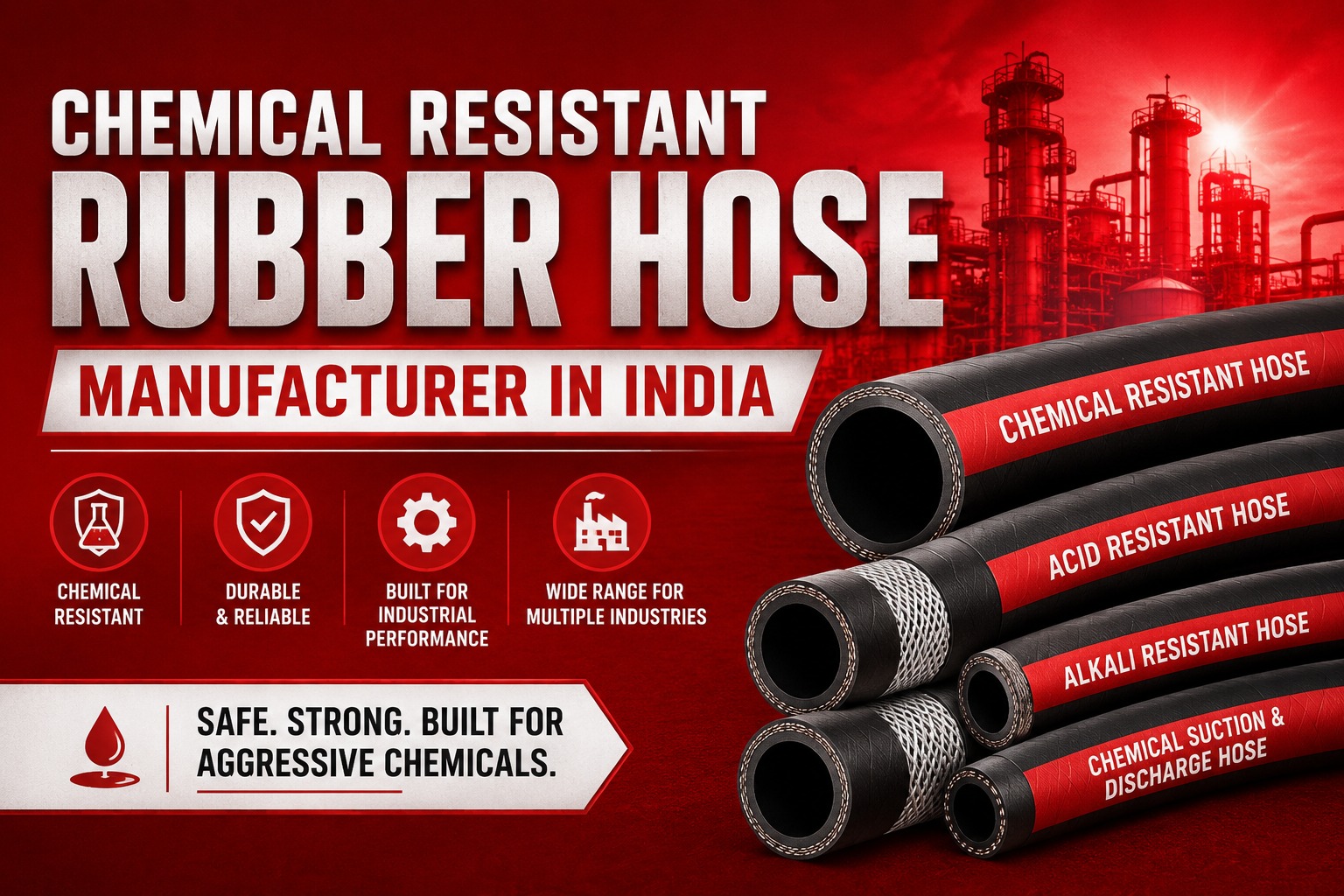
Chemical Resistant Industrial Hose India In the rapidly evolving landscape of Indian manufacturing, safety and efficiency are the twin pillars of success. Whether you are operating a pharmaceutical plant in Gujarat or a chemical processing unit in Maharashtra, the integrity of your fluid transfer systems is non-negotiable. At the heart of these systems lies the chemical resistant industrial hoses Indiaindustries rely on to handle aggressive media, extreme temperatures, and high-pressure environments. As India’s industrial sector targets a $5 trillion economy, the demand for specialized equipment that can withstand corrosive substances like sulfuric acid, nitric acid, and various solvents has reached an all-time high. This blog explores everything you need to know about selecting and maintaining a chemical resistant industrial hoses India businesses use for peak performance. Why Quality Matters: The Role of Chemical Resistant Industrial Hose India The primary function of a chemical resistant industrial hoses India is to facilitate the safe passage of hazardous fluids without degrading the hose material or contaminating the product. In India, where humidity and ambient temperatures can be extreme, a standard rubber hose simply won’t suffice. Using an inferior chemical resistant industrial hoses India leads to: Permeation: Where chemicals seep through the hose wall. Corrosion: Resulting in structural failure and dangerous leaks. Contamination: High-purity sectors like food and pharma cannot risk material leaching. Key Materials Used in Chemical Resistant Industrial Hose India When looking for a chemical resistant industrial hoses India suppliers offer, you will find several material compositions tailored for specific chemical profiles: UHMWPE (Ultra-High Molecular Weight Polyethylene): Known for its incredible versatility, UHMWPE is the “gold standard” for a chemical resistant industrial hoses India application. It handles 98% of common industrial chemicals. PTFE (Teflon): For extreme temperatures and the most aggressive solvents, PTFE-lined chemical resistant industrial hose India products provide unmatched chemical inertness. EPDM (Ethylene Propylene Diene Monomer): Often used in a chemical resistant industrial hoses Indiadesigned for handling ketones, alcohols, and concentrated acids. XLPE (Cross-linked Polyethylene): A robust and cost-effective solution for a chemical resistant industrial hoses India used in suction and discharge of diverse chemicals. Industry Applications Across the Subcontinent The versatility of the chemical resistant industrial hose India market caters to a wide array of sectors: Industry Common Use Case for Chemical Resistant Industrial Hose India Pharmaceuticals Transfer of high-purity solvents and acids in cleanroom environments. Petrochemicals Handling aromatic hydrocarbons and aggressive fuel additives. Agriculture Distribution of liquid fertilizers and pesticides. Manufacturing Paint and ink transfer, involving strong solvents and dyes. Safety Standards and Compliance in India Selecting a chemical resistant industrial hose India requires more than just picking a material; it requires checking for compliance. In the Indian market, look for hoses that meet BIS (Bureau of Indian Standards) such as IS 10733 or international equivalents like ISO 1307. A certified chemical resistant industrial hose India ensures: Burst Pressure Safety: Typically 3 or 4 times the working pressure. Electrical Conductivity: Essential for preventing static build-up when transferring flammable chemicals. Flexibility: Ensuring the chemical resistant industrial hose India can be used in tight industrial spaces without kinking. How to Choose the Right Chemical Resistant Industrial Hose India To optimize your selection process for a chemical resistant industrial hose India, use the S.T.A.M.P.E.D. method: Size: ID, OD, and length. Temperature: Both the fluid and the ambient Indian climate. Application: Will it be used for suction, discharge, or both? Material: The specific chemical being conveyed. Pressure: Maximum working pressure required. Ends: The type of fittings (Flanged, Camlock, or Threaded). Delivery: Testing and certification requirements. Maintenance Tips for Your Chemical Resistant Industrial Hose India To maximize the lifespan of your chemical resistant industrial hose India, regular inspections are vital. Visual Checks: Look for blisters, cracks, or soft spots on the outer cover. Proper Storage: Store your chemical resistant industrial hose India in a cool, dry place away from direct sunlight (UV rays can degrade rubber). Flushing: Always flush the chemical resistant industrial hose India after use to prevent residual chemical buildup that could eat away at the lining. Conclusion Investing in a high-quality chemical resistant industrial hose India is an investment in your facility’s safety and operational longevity. As Indian industries continue to modernize, the role of a reliable chemical resistant industrial hose India becomes even more critical in preventing downtime and environmental hazards. Whether you are upgrading an existing line or setting up a new plant, always consult with a certified chemical resistant industrial hose India manufacturer to ensure your fluid transfer solutions are built to last.
10 Powerful Uses of Rubber Air Hose in Industrial Applications
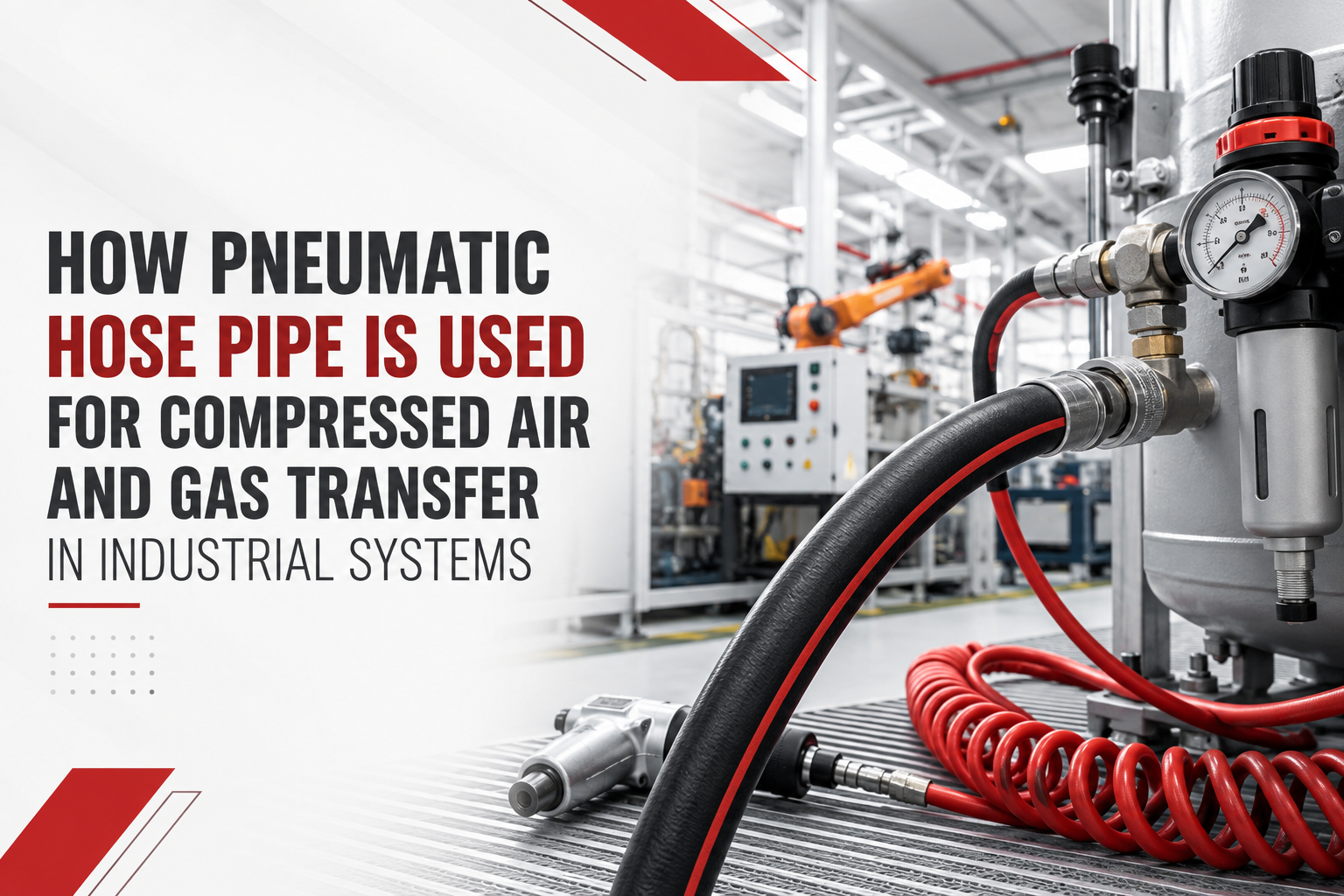
Have you ever stopped to think about the unsung heroes of the industrial world? While massive machines, roaring engines, and cutting-edge robotics get all the glory, there is a much simpler tool working quietly behind the scenes. The humble rubber air hose is quietly keeping the wheels of modern industry turning. Whether you are running a bustling auto repair shop, managing a massive manufacturing plant, or overseeing a tough construction site, reliable air delivery is non-negotiable. While plastic or polyurethane alternatives exist, nothing quite matches the durability, flexibility, and safety of a high-quality rubber air hose. Let’s dive into ten powerful ways this essential piece of equipment drives heavy-duty industrial applications every single day. 1. Powering Heavy-Duty Pneumatic Tools In assembly lines and mechanical workshops, pneumatic tools are the undisputed kings of productivity. A heavy-duty rubber air hose delivers the high-pressure compressed air needed to effortlessly operate impact wrenches, nail guns, and metal grinders. Because a rubber air hose remains highly flexible even in freezing environments, it allows workers to maneuver easily without fighting stiff, unyielding lines that cause physical fatigue. 2. Automotive Manufacturing and Repair From inflating tires to spray-painting car bodies with flawless precision, the automotive industry relies heavily on consistent air delivery. Mechanics inherently trust a durable rubber air hose to handle the abrasive, chaotic environment of a garage floor. A premium rubber air hose actively resists engine oil, grease, and the constant wear and tear of being repeatedly dragged across rough concrete surfaces. 3. Construction and Rock Excavation Construction sites are notoriously rugged and unforgiving. Supplying power to heavy-duty jackhammers, rivet busters, and rock drills requires equipment that will not fail under immense pressure. A structurally reinforced rubber air hoseabsorbs the intense mechanical vibrations and resists dangerous abrasions from sharp rocks, falling debris, and heavy machinery rolling right over it. 4. Deep Underground Mining Operations Underground and surface mining operations demand equipment that prioritizes both absolute safety and extreme durability. A specialized industrial rubber air hose is frequently utilized for crucial mine ventilation and powering heavy pneumatic mining drills. The natural heat and abrasion resistance of a rubber air hose makes it perfectly suited for the harsh, unpredictable conditions found deep within the earth. 5. Shipbuilding and Marine Maintenance Commercial shipyards are incredibly harsh environments constantly exposed to corrosive saltwater, extreme weather changes, and heavy physical impacts. Shipbuilders rely on a thick, weather-resistant rubber air hose to continuously power massive sandblasters and industrial paint sprayers. The superior ozone and UV resistance of a high-grade rubber air hose ensures it will not rapidly crack or degrade when left out in the marine elements. 6. Agricultural Machinery and Farming Modern agricultural farming relies heavily on compressed air for a multitude of daily tasks, ranging from crop spraying to blowing dust out of massive harvesting combines. Farmers often choose a long, highly flexible rubber air hose to reach across sprawling barns and expansive equipment yards. Its proven resistance to harsh agricultural chemicals and liquid fertilizers makes it an absolute farm staple. 7. Food and Beverage Processing While you might not associate heavy industry with your morning cereal, food manufacturing plants use compressed air extensively for vacuum packaging, ingredient mixing, and automated sorting. These highly regulated facilities often utilize a specialized, non-toxic rubber air hose to ensure that the vital air supply powering their pneumatic sorting arms remains clean, consistent, and completely free of hazardous contaminants. 8. Material Handling and Robotics Automated factory conveyor systems and high-speed robotic arms require incredibly precise bursts of air to grip, move, and release delicate products. The inherent flexibility of a rubber air hose allows it to bend, twist, and flex millions of times alongside mechanical robotic joints without kinking or bursting, ensuring the automated production line never experiences costly, unexpected downtime. 8. Material Handling and Robotics Automated factory conveyor systems and high-speed robotic arms require incredibly precise bursts of air to grip, move, and release delicate products. The inherent flexibility of a rubber air hose allows it to bend, twist, and flex millions of times alongside mechanical robotic joints without kinking or bursting, ensuring the automated production line never experiences costly, unexpected downtime. 9. Chemical and Petrochemical Plants In hazardous manufacturing environments where volatile chemicals are present, static electricity buildup can be incredibly dangerous. Many modern facilities utilize a specialized anti-static rubber air hose to safely dissipate electricity while delivering vital air pressure to transfer pumps and fluid agitators. This specific hose type is strictly crucial for maintaining a completely safe, explosion-proof workspace. 10. Metalworking and Steel Fabrication Busy metal fabrication shops are filled with flying sparks, razor-sharp edges, and extreme, localized heat. A standard plastic air line would simply melt or puncture in a matter of seconds. However, a thick, wire-braided version of the traditional rubber air hose can easily withstand flying welding sparks and jagged metal shavings, safely and consistently powering heavy plasma cutters. Conclusion From the dark, dusty depths of a coal mine to the spotless, gleaming floors of a modern packaging plant, the importance of a reliable compressed air system simply cannot be overstated. Investing in the absolute right equipment for your specific daily application prevents highly expensive downtime, protects your workforce, and keeps your operations running smoothly. When sourcing your next industrial line, remember that a premium rubber air hose is not just an optional accessory—it is a critical, long-lasting lifeline for your most important machinery.
Why Choose Custom Industrial Rubber Hoses for Your Business
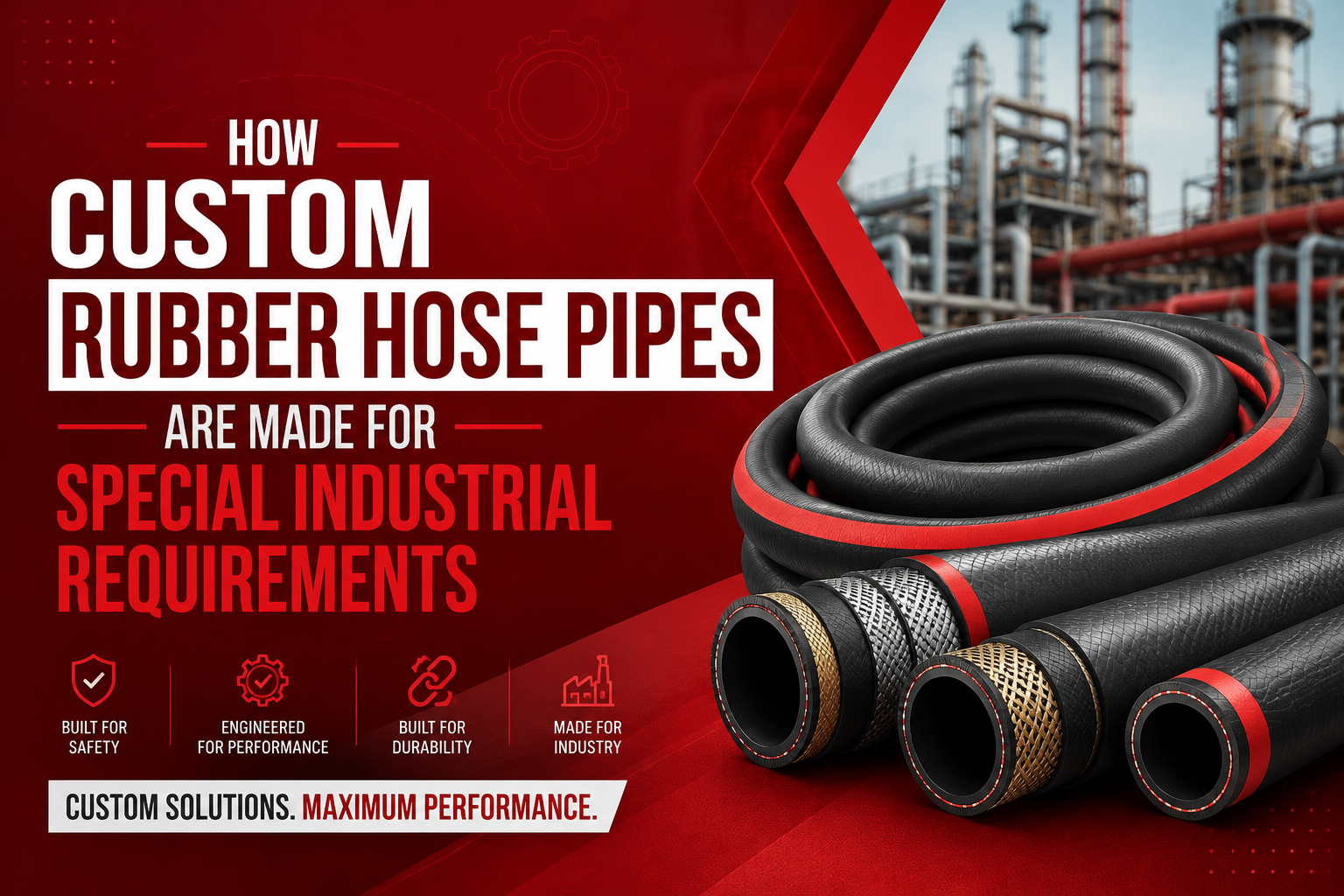
In today’s fast-paced industrial environment, efficiency, safety, and reliability are more important than ever. Whether you operate in manufacturing, construction, agriculture, or chemical processing, the tools and components you use can directly impact your productivity. One such essential component is the flexible hose. While standard options may work in some cases, more businesses are now turning toward custom solutions to meet their specific needs. A flexible hose is designed to transport fluids, gases, or abrasive materials under varying conditions. However, not all operations are the same. That’s where custom industrial rubber hoses make a real difference. They are built to match your exact requirements, ensuring better performance and long-term value. Tailored to Your Exact Requirements Every industry has unique demands. A one-size-fits-all approach rarely works when dealing with complex systems. Custom hoses allow you to define parameters such as length, diameter, pressure rating, temperature resistance, and material composition. When you invest in a customized flexible hose, you’re essentially designing a product that fits perfectly into your workflow. This reduces the need for modifications or additional connectors, saving both time and money. It also ensures that the hose performs efficiently without unnecessary strain or risk of failure. Enhanced Durability and Longevity Industrial environments can be harsh. Exposure to chemicals, extreme temperatures, high pressure, and abrasive materials can quickly wear out standard hoses. Custom rubber hoses are engineered with these conditions in mind. A high-quality flexible hose made from the right materials can withstand challenging environments much better than generic alternatives. This means fewer replacements, reduced downtime, and lower maintenance costs. Over time, this durability translates into significant savings for your business. Improved Safety Standards Safety is a top priority in any industrial setting. Using the wrong type of hose can lead to leaks, bursts, or even accidents that put workers at risk. Custom hoses are designed to meet specific safety standards relevant to your industry. By choosing a custom flexible hose, you can ensure that it can handle the exact pressure and temperature conditions of your operations. This minimizes the chances of unexpected failures and creates a safer working environment for your team. Better Efficiency and Performance Efficiency is not just about speed—it’s also about consistency and reliability. A poorly fitted hose can restrict flow, cause pressure drops, or lead to energy losses. Custom hoses are optimized to deliver maximum performance. A well-designed flexible hose ensures smooth flow and minimal resistance. This improves the overall efficiency of your system, whether you’re transporting liquids, gases, or solids. As a result, your operations run more smoothly, and your productivity increases. Cost-Effective in the Long Run At first glance, custom hoses may seem more expensive than standard options. However, when you consider the long-term benefits, they often turn out to be more cost-effective. A durable and reliable flexible hose reduces the need for frequent replacements and repairs. It also minimizes downtime, which can be costly for any business. By investing in quality upfront, you can save significantly over time. Versatility Across Industries One of the biggest advantages of custom hoses is their versatility. They can be designed for a wide range of applications, including: Chemical transfer Water and fluid transportation Air and gas systems Food and beverage processing Heavy-duty industrial use No matter your industry, a custom flexible hose can be tailored to meet your specific requirements. This adaptability makes it a valuable asset for businesses looking to optimize their operations. Compatibility with Existing Systems Integrating new components into existing systems can sometimes be challenging. Standard hoses may not fit perfectly, leading to inefficiencies or additional costs for adjustments. Custom hoses are designed to be fully compatible with your current setup. A properly fitted flexible hose ensures seamless integration, reducing installation time and eliminating the need for extra fittings or modifications. Environmentally Friendly Options Sustainability is becoming increasingly important for businesses worldwide. Many manufacturers now offer eco-friendly materials and production methods for custom hoses. By choosing a sustainable flexible hose, you can reduce your environmental impact while maintaining high performance. This not only benefits the planet but also enhances your brand image as a responsible business. Expert Support and Guidance When you opt for custom solutions, you also gain access to expert advice. Manufacturers work closely with you to understand your needs and recommend the best materials and designs. This collaboration ensures that your flexible hose is not only functional but also optimized for your specific application. Having expert support can make a significant difference in achieving the best results. Final Thoughts Choosing the right components for your industrial operations is crucial for success. While standard hoses may seem convenient, they often fall short when it comes to performance, durability, and safety. A custom flexible hose offers a tailored solution that meets your exact needs. From improved efficiency and safety to long-term cost savings, the benefits are clear. By investing in customized industrial rubber hoses, you’re not just buying a product—you’re enhancing the overall performance and reliability of your business. In a competitive market, small improvements can lead to big advantages. And sometimes, something as simple as the right flexible hose can make all the difference.
High Durability Industrial Hoses System: Ultimate Performance Guide for 2026
High Durability Industrial Hoses In the demanding industrial landscape of 2026, operational downtime is the ultimate enemy of profitability. At the core of every successful fluid transfer operation—whether in chemical processing, oil and gas, or heavy manufacturing—lies the reliability of your conduits. Selecting high durability industrial hoses is no longer just a procurement choice; it is a strategic decision to safeguard your facility against catastrophic failures and environmental hazards. As we navigate this year’s advancements in material science, understanding what constitutes high durability industrial hoses is essential for any plant manager aiming for peak efficiency. The Anatomy of High Durability Industrial Hoses What makes a hose “high durability”? In 2026, the standard has shifted from simple rubber tubes to multi-layered, engineered systems. High durability industrial hoses are designed to withstand extreme internal pressures, external abrasion, and aggressive chemical reactions simultaneously. 1. Advanced Reinforcement Layers The “spine” of high durability industrial hoses usually consists of high-tensile wire braids or spiral-wound synthetic fibers. These layers prevent the hose from bursting under surge pressures, ensuring that high durability industrial hosesmaintain their structural integrity even when stressed beyond standard operating limits. 2. Specialized Inner Linings The media being transported—be it corrosive acids, abrasive slurries, or high-temperature steam—constantly attacks the inner tube. Modern high durability industrial hoses utilize ultra-smooth, chemically inert linings like modified PTFE or cross-linked polyethylene (XLPE) to resist degradation and maintain flow efficiency. 3. Abrasion-Resistant Outer Covers Industrial environments are brutal. Hoses are dragged across concrete, exposed to UV radiation, and subjected to ozone. High durability industrial hoses feature outer covers made from carboxylated nitrile or specialized polyurethanes that offer 10x the abrasion resistance of standard rubber. Key Applications for High Durability Industrial Hoses Different industries require different “flavors” of durability. Here is how high durability industrial hoses are being deployed across sectors in 2026: Chemical and Pharmaceutical In these sectors, high durability industrial hose must offer “universal” chemical resistance. The focus here is on non-contaminating linings that won’t leach into the product, ensuring high-purity results alongside long-term resilience. Construction and Mining For transferring cement, gravel, or ore, the internal tube of high durability industrial hose must be thick and resilient enough to handle constant “sandblasting” from the inside. Oil and Gas Offshore environments require high durability industrial hose that can resist salt-water corrosion externally while handling high-temperature hydrocarbons internally. Maintenance Tips for High Durability Industrial Hoses Even the best high durability industrial hoses require care to reach their maximum lifespan. Follow these 2026 best practices: Visual Inspections: Regularly check your high durability industrial hose for kinks, cover cracks, or “weeping” at the fittings. Proper Routing: Ensure that high durability industrial hose are not bent beyond their minimum bend radius, which can cause internal reinforcement fatigue. Temperature Management: Avoid exposing high durability industrial hose to ambient temperatures that exceed their rated limits for prolonged periods. Conclusion: Investing in the Future As we look toward the remainder of 2026, the trend is clear: resilience is the new efficiency. By integrating high durability industrial hose into your systems, you are protecting your machinery, your people, and your profit margins. The evolution of high durability industrial hose has reached a point where “indestructible” is no longer a marketing buzzword—it’s an engineering reality. Don’t settle for the weak link in your production chain. Choose high durability industrial hose and experience the peace of mind that comes with ultimate performance.