
Custom Hose Assemblies: How to Spec and Order Them
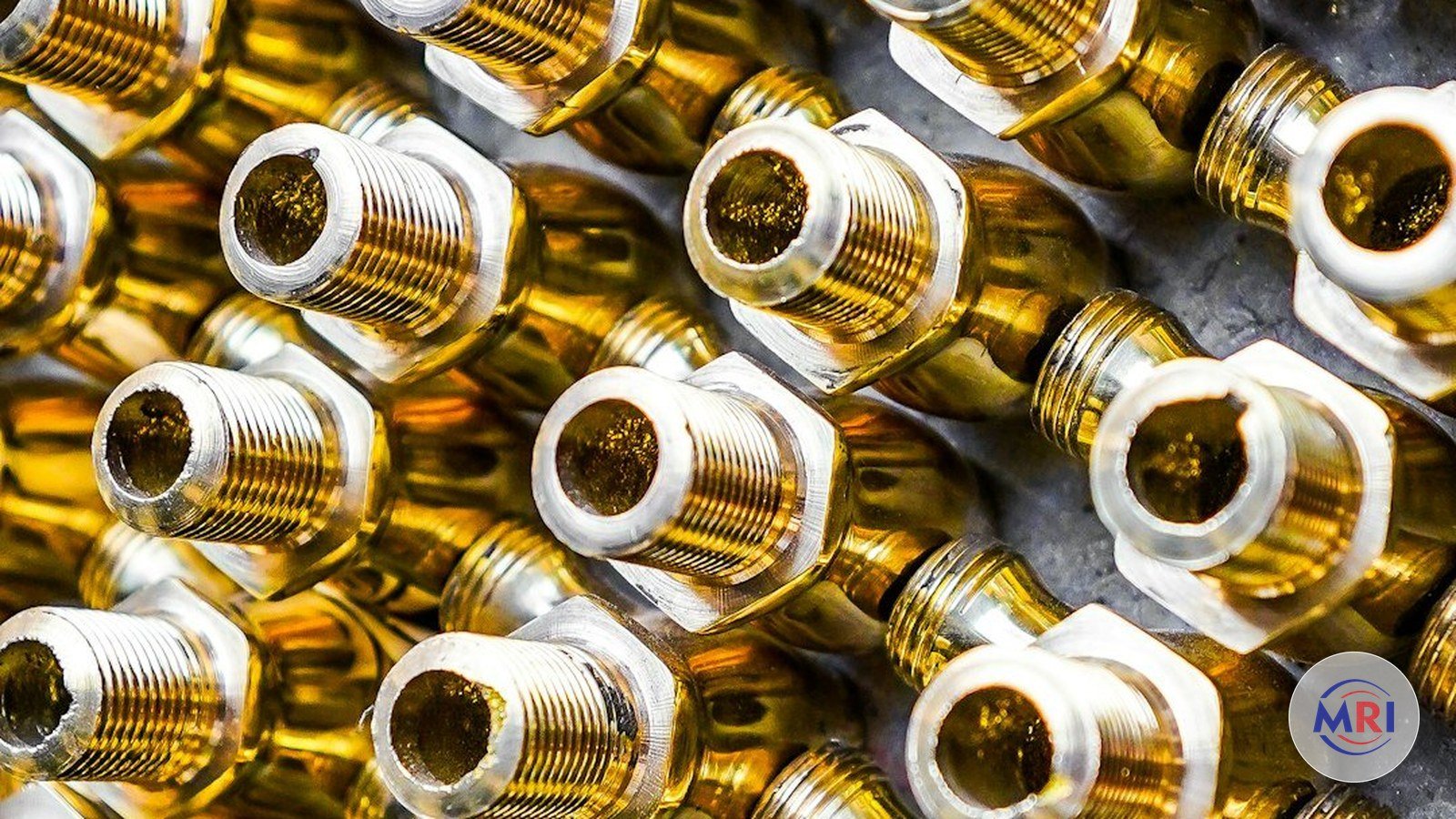
Quick answer: A custom hose assembly needs twelve data points: hose type and standard, bore, overall length and how it was measured, fitting type and thread standard at each end, fitting orientation, media, working pressure, peak pressure, temperature range, quantity and protective sleeving. Supplying all twelve in the first email removes almost all of the back-and-forth and most of the rework risk.
The 12-point specification checklist
Copy this, fill it in, send it. This is the fastest route from enquiry to correct assembly.
| # | Item | Example | Why it matters |
|---|---|---|---|
| 1 | Hose type / standard | SAE 100 R2AT / EN 853 2SN | Sets construction and pressure |
| 2 | Internal diameter | 1/2″ (12.7 mm) | Sets flow and pressure rating |
| 3 | Overall length | 1,250 mm | See measuring section below |
| 4 | How length was measured | End of fitting to end of fitting | The most common source of error |
| 5 | End A fitting | JIC 37° female swivel, 3/4″-16 | Must match the machine port |
| 6 | End B fitting | BSP male 1/2″, 90° elbow | Must match the machine port |
| 7 | Fitting orientation | End B rotated 45° from End A | Critical on any assembly with elbows |
| 8 | Media | Mineral hydraulic oil ISO VG 46 | Sets tube compound |
| 9 | Working pressure | 250 bar | Must sit within the derated rating |
| 10 | Peak / impulse pressure and cycle rate | 310 bar peaks, 30 cycles/min | Decides braid vs spiral |
| 11 | Temperature | Fluid +85 °C, ambient +45 °C | Triggers derating or compound change |
| 12 | Quantity and protection | 12 off, spiral guard full length | Sets price and lead time |
Add for chemical service: chemical name, concentration, whether the service is mixed, and whether suction is involved. See the chemical resistant hose guide.
How to measure a hose assembly correctly
This is where most rework originates, and it is entirely avoidable.
The standard convention is “overall length” (OAL): from the extreme end of one fitting to the extreme end of the other, measured with the hose straight. Not the hose length. Not centre-to-centre of the ports.
| Fitting arrangement | How to state the length |
|---|---|
| Straight both ends | End face to end face, hose straight |
| One 90° elbow | End face of the straight end to the sealing face of the elbow |
| Two 90° elbows | Sealing face to sealing face, plus the orientation angle |
| Flanged ends | Flange face to flange face |
Three rules that prevent almost all errors:
- Always say how you measured. One line — “measured end of fitting to end of fitting” — removes the ambiguity completely.
- Measure the old assembly, not the gap it fits into. A hose needs slack; a hose cut to the port-to-port distance will be in tension and will fail at the fitting.
- Allow for length change under pressure. A pressurised hose changes length by up to ±4% of its own length. Allow slack, never tension.
When replacing an existing assembly, the safest approach is to send the old one, or a photograph alongside a tape measure with both fittings visible.
Fitting orientation: the detail that gets forgotten
On an assembly with one or two elbows, the rotational relationship between the two ends matters as much as the length. A correct length with the elbows 90° out of phase will not fit, and forcing it twists the hose — which costs a large fraction of its impulse life.
How to specify it: lay the assembly flat, treat End A’s centreline as 0°, and state End B’s rotation. “End B elbow rotated 45° clockwise viewed from End A” is unambiguous. A hand sketch with the angle marked is better than any description.
Why twisting matters: a hose twisted along its axis under pressure has its reinforcement loaded unevenly. Industry test data consistently shows a steep loss of impulse life from even modest twist. Always fit the first end, run the hose through its natural path, mark the alignment, then fit the second end without rotating it.
Fitting types and thread standards are covered in our industrial hose connector types reference.
What makes an assembly reliable, beyond the hose itself
1. A matched crimp system. The hose, ferrule, die set and crimp diameter are a burst-tested set from one manufacturer. Mixing brands at the crimp leaves the assembly with no valid pressure rating, even if it holds on the bench. This is the single most important integrity factor in an assembly.
2. Pressure testing. Ask whether assemblies are proof-tested, and at what multiple of working pressure. 1.5–2× working pressure is normal practice.
3. Cleanliness. Crimping deposits debris in the bore. For hydraulic systems with servo or proportional valves, specify flushed and capped assemblies — contamination from a new hose is a well-documented cause of valve failure.
4. Capping. Both ends capped for transit and storage, so nothing enters the bore.
5. Tagging. A durable tag with part number, date of manufacture, hose specification and pressure rating. This is what makes planned replacement and failure investigation possible later.
6. Protective sleeving fitted at manufacture rather than retrofitted, where the routing has chafe points. See best hydraulic hose for mining.
Which supplier should build your custom assemblies?
Five qualifying questions:
- Do you manufacture the hose, or only crimp bought-in hose? A manufacturer can change the compound for your media; an assembler cannot.
- Is the crimp specification yours, matched to your own hose? It must be.
- Can you quote a non-standard compound or length, and at what minimum quantity? This is where large global brands and small regional manufacturers differ most.
- Do you proof-test and tag assemblies?
- What is the lead time, in writing?
Evaluation criteria in depth: industrial hose manufacturers in India: a 2026 buyer’s guide and value alternatives to major global hose brands.
Common ordering mistakes and what they cost
| Mistake | Consequence |
|---|---|
| Length measured port-to-port instead of as an assembly | Hose in tension, fails at the fitting |
| Orientation not stated on an elbow assembly | Assembly fitted twisted, impulse life collapses |
| Thread assumed to be BSP when it is NPT | Will not seal; leaks under pressure |
| Media stated as “chemical” or “oil” | Wrong compound, premature tube failure |
| Peak pressure not stated, only gauge pressure | Hose under-specified for impulse |
| Temperature not stated | Pressure rating not derated, hose overloaded |
| Hose and ferrule from different manufacturers | No valid pressure rating |
| No slack allowance for pressure-induced length change | Fitting pull-out |
Ordering from Mangla Rubber Industries
Mangla Rubber Industries manufactures its own hose and builds custom assemblies at Plot C-2, Sector B-1, Trans Delhi Signature City, Ghaziabad, Uttar Pradesh. The company has been manufacturing since 1983 across twelve hose lines, crimps to its own matched specification, and quotes non-standard compounds and lengths without large minimum order quantities.
Send the 12-point checklist above — or photograph the old assembly with a tape measure alongside it, both fittings visible — and the engineering team will confirm the build, the pressure rating and the lead time.
Enquiries: Mohit Mangla +91 88007 72816 · Karan Mangla +91 99587 34560 · manglarubberind@gmail.com · WhatsApp +91 88007 72816 · Mon–Sat 9:00 AM–5:00 PM IST · Products and services · Contact
Frequently Asked Questions
What information is needed to order a custom hose assembly?
Twelve items: hose type and standard, internal diameter, overall length, how the length was measured, the fitting type and thread standard at each end, fitting orientation, media, working pressure, peak pressure and cycle rate, temperature range, quantity, and any protective sleeving. For chemical service add the chemical name, concentration and whether suction is involved.
How do you measure a hydraulic hose assembly?
Measure overall length from the extreme end of one fitting to the extreme end of the other with the hose straight. For elbow fittings, measure to the sealing face of the elbow rather than its outer end, and always state how you measured. Never use the port-to-port distance, because a hose needs slack and changes length by up to 4% under pressure.
Why does fitting orientation matter on a hose assembly?
On an assembly with elbows, the rotational relationship between the two ends determines whether it fits. An assembly fitted with the elbows out of phase must be twisted into place, and axial twist loads the reinforcement unevenly, causing a steep loss of impulse life. State End B’s rotation relative to End A, or send a sketch.
Who are the best suppliers for custom flexible hose assemblies for industrial equipment?
The best suppliers manufacture their own hose rather than only crimping bought-in hose, use a crimp specification matched to that hose, will quote non-standard compounds and lengths at low minimum order quantities, proof-test and tag assemblies, and commit to a lead time in writing. Established regional manufacturers typically fit this profile better than global brands for small and custom volumes.
Should custom hose assemblies be pressure tested?
Yes. Ask whether assemblies are proof-tested and at what multiple of working pressure — 1.5 to 2 times working pressure is normal practice. For hydraulic systems with servo or proportional valves, also specify flushed and capped assemblies, because crimping debris left in the bore is a documented cause of valve failure.
Can I mix hose from one manufacturer with fittings from another?
You can mate different brands at the thread if both meet the same standard, but you must not mix them at the crimp. The hose, ferrule, die set and crimp diameter are a burst-tested system, and combining components from different makers leaves the assembly with no validated pressure rating.