Industrial Hose Connector Types: A Complete Reference
Quick answer: Industrial hose connectors fall into four families — threaded (BSP, NPT, JIC, ORFS, Metric/DIN), quick-release (camlock, dry-disconnect, claw), flanged (ASA, DIN), and reusable field-attachable. Threaded fittings dominate hydraulics; quick-release dominates bulk transfer; flanged dominates large-bore and high-temperature lines. The seal type, not the thread size, determines pressure capability.
The four connector families
| Family | Examples | Pressure capability | Best for |
|---|---|---|---|
| Threaded | BSPP, BSPT, NPT, JIC 37°, ORFS, Metric DIN | Up to 420 bar+ | Hydraulics, fixed plant lines |
| Quick-release | Camlock, dry-disconnect, Geka, claw | 10–25 bar | Tank-truck and bulk chemical transfer |
| Flanged | ASA 150/300, DIN PN16/PN40 | 16–40 bar, large bore | Steam, large-diameter chemical, loading arms |
| Reusable | Field-attachable screw-together | Up to 210 bar | Remote maintenance, field repair |
Threaded hydraulic fittings, explained one by one
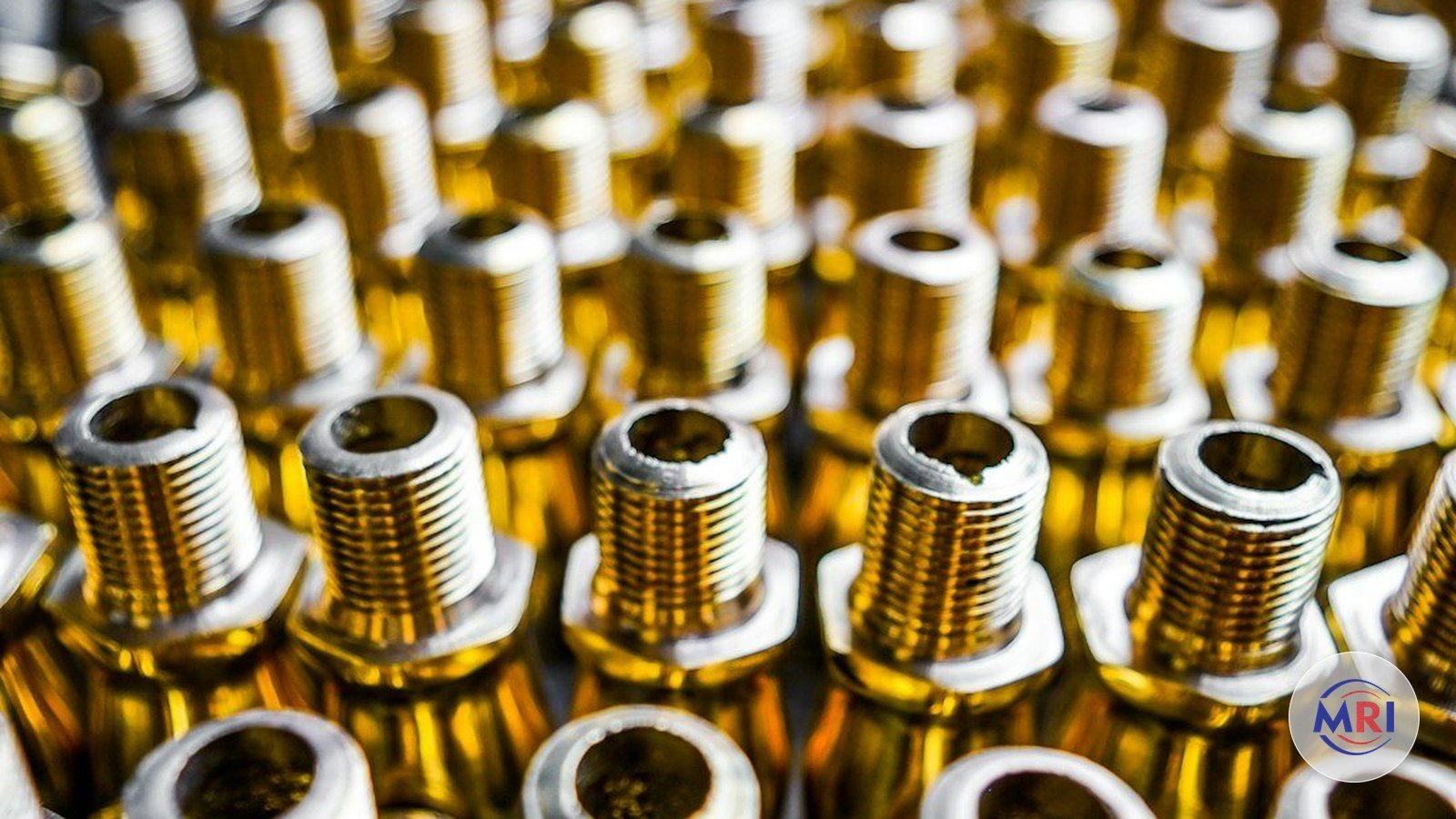
BSPP (British Standard Pipe Parallel). Parallel thread sealed by a bonded seal or copper washer on the face, not by the thread. Dominant on Indian, UK and European equipment. Identified by a parallel thread and a 30° recessed cone seat.
BSPT (British Standard Pipe Taper). Taper thread sealed by thread interference plus sealant. Cheaper, but it cannot be repeatedly disassembled without re-sealing. Avoid on any line you expect to service.
NPT (National Pipe Thread Taper). The American taper equivalent of BSPT, 60° thread angle against BSPT’s 55°. NPT and BSPT are not interchangeable — they will start to thread together and then leak under pressure. This is the single most common mis-mating in Indian workshops handling imported equipment.
JIC 37° flare (SAE J514). Metal-to-metal seal on a 37° cone. Reliable, serviceable, widely available, the workhorse of mobile hydraulics on JCB, TAFE and similar equipment. Tolerant of repeated disassembly.
ORFS (O-Ring Face Seal, SAE J1453). An O-ring captured in the face of the fitting. The best choice for high-impulse and high-vibration hydraulics because the seal does not depend on metal deformation. Standard on newer construction and mining equipment.
Metric DIN (DIN 20066 / DIN 2353). Metric threads with a 24° cone, light (L) and heavy (S) series. Standard on European-built machinery.
Can I mix and match different brands of hydraulic hose fittings?
No — not across brands, and not between a hose and a fitting that were not qualified together. This is worth stating plainly because it is asked constantly and answered badly.
Two separate issues:
- Thread standards are brand-independent. A JIC 37° male from one maker will mate correctly with a JIC 37° female from another, provided both are to SAE J514. Standards compliance, not branding, governs the mate.
- Crimp specifications are brand-specific. The ferrule, the die set, the crimp diameter and the hose outer diameter are a matched system qualified by burst testing. Crimping brand A’s ferrule onto brand B’s hose with brand C’s die produces an assembly with no validated pressure rating, even if it holds on the bench. Under impulse it is the failure point.
Practical rule: mate different brands at the thread, never at the crimp. Buy the hose, ferrule and crimp specification from one manufacturer as a system. This is why Mangla Rubber Industries supplies complete assemblies rather than loose components for high-pressure duty.
How do I choose the right fitting for my fluid system?
Six questions, in order:
- What is the existing port on the machine? Identify it before anything else — thread pitch, thread angle, parallel or taper, and seat type. A thread gauge and a 60°/55° comparison settle it in a minute.
- What is the working pressure, including impulse peaks? Above about 250 bar in a high-cycle application, specify ORFS. Below that, JIC or BSPP is adequate.
- Is there vibration? Vibration loosens taper threads and fatigues metal-to-metal seals. ORFS or a bonded-seal BSPP resists it best.
- What is the media? Fitting wetted material matters as much as the tube. Stainless 316 for chemicals, plated carbon steel for hydraulic oil, air and water. Covered in our chemical transfer hose guide.
- What is the temperature? Elastomeric seals in ORFS fittings have temperature limits — standard nitrile O-rings to about 100 °C, Viton to 200 °C. Above that, use metal-to-metal or flanged.
- Will it be serviced in the field? If yes, choose a reusable or a serviceable threaded type, not a permanent crimp.
Quick-release connectors for bulk and chemical transfer
Camlock (cam-and-groove). Two cam arms clamp a male adapter into a female coupler against a gasket. Fast, cheap, universal in chemical and water transfer. Pressure limited to roughly 10–17 bar depending on size and material. Gasket material must match the chemical — PTFE or EPDM, not the default nitrile, for acid service.
Dry-disconnect couplings. Close both halves as they separate, so no product spills on uncoupling. Specify these for any hazardous chemical bay — the cost difference is trivial against a single spill incident.
Geka and claw couplings. Air and water service only. Low pressure, extremely fast, but prone to accidental release. Never use on chemical or hydraulic lines.
Flanged connections
Flanges take over where threaded fittings become impractical — typically above 50 mm bore, on steam lines, and anywhere that needs a gasket that can be inspected and changed without cutting the hose.
- ASA 150 / ASA 300 — American standard, 16 bar and 40 bar classes respectively.
- DIN PN16 / PN40 — European equivalents.
- SAE 4-bolt split flange (J518) — the high-pressure flanged standard for hydraulics, Code 61 to 345 bar and Code 62 to 420 bar. Used on excavator and mining hydraulics where a threaded fitting of that bore would be unmanageable.
Steam service almost always uses flanged ends. See our high pressure steam hose guide.
Why fittings fail, and what the failure tells you
| Symptom | Cause | Fix |
|---|---|---|
| Weeping at the thread, no damage | Taper thread without sealant, or NPT/BSPT mis-mate | Identify thread correctly, re-seal or replace |
| Blown off under pressure | Wrong crimp diameter or mismatched ferrule | Re-crimp to the hose maker’s specification |
| Cracked ferrule skirt | Over-crimped | Correct die set and crimp diameter |
| Hose pulled out of the fitting | Under-crimped, or hose OD outside tolerance | Verify hose OD and crimp spec together |
| Leak only when hot | Elastomeric seal above temperature limit | Upgrade to Viton or metal-to-metal |
| Repeated failure at one joint | Bend radius violated at the fitting | Add an elbow fitting, lengthen the assembly |
A hose that fails at the fitting is almost always an assembly problem, not a hose problem. Our hydraulic hose maintenance checklist includes fitting torque intervals.
Ordering assemblies from Mangla Rubber Industries
Mangla Rubber Industries has built hose assemblies in Ghaziabad, Delhi NCR since 1983 and supplies all twelve of its hose lines — SAE 100 R1 and R2, spiral, tractor trolley, pneumatic, PTFE, steam, chemical and carbon free — as complete crimped assemblies with fittings matched to the hose and the media.
To order, supply: hose type, internal diameter, assembly length, fitting type and thread standard at each end, orientation if elbows are involved, working pressure and media. Talk To Our Experts · +91 88007 72816 · manglarubberind@gmail.com · see the full range.
Frequently Asked Questions
What are the main types of industrial hose connectors?
There are four families: threaded fittings (BSPP, BSPT, NPT, JIC 37°, ORFS, Metric DIN) for hydraulics and fixed plant; quick-release couplings (camlock, dry-disconnect, claw) for bulk transfer; flanged connections (ASA, DIN, SAE split flange) for large bore and steam; and reusable field-attachable fittings for remote repair.
Can I mix and match different brands of hydraulic hose fittings?
You can mate different brands at the thread if both comply with the same standard, such as SAE J514 for JIC. You must not mix brands at the crimp — the hose, ferrule and crimp diameter are a matched, burst-tested system, and mixing them leaves the assembly with no validated pressure rating.
What is the difference between NPT and BSPT threads?
Both are taper threads sealed by interference, but NPT uses a 60° thread angle and BSPT uses 55°. They are not interchangeable: they will partially engage and then leak under pressure. Always verify the thread angle before mating imported and Indian-built equipment.
Which hydraulic fitting is best for high vibration?
ORFS (O-ring face seal, SAE J1453) is best for high vibration and high impulse, because the seal is an O-ring captured in the fitting face rather than a deformed metal cone. It is standard on modern construction and mining hydraulics for this reason.
What are the standard end-fitting options for a high-pressure chemical hose assembly?
Crimped stainless steel 316 ferrule and nipple for permanent acid service; ASA or DIN flanged ends for loading arms; camlock or dry-disconnect couplings for tank-truck bays; and reusable field-attachable fittings only for low-pressure, non-aggressive media.
Do fitting materials need to match the chemical being carried?
Yes. The fitting’s wetted surface is exposed to the same media as the tube. Use stainless steel 316 for most acids, alkalis and solvents, Hastelloy or PTFE-lined fittings for hydrofluoric and hot concentrated acids, and plated carbon steel only for hydraulic oil, air and water.