
Hose Chemical Compatibility Chart: NBR, EPDM, CSM, PTFE and Silicone
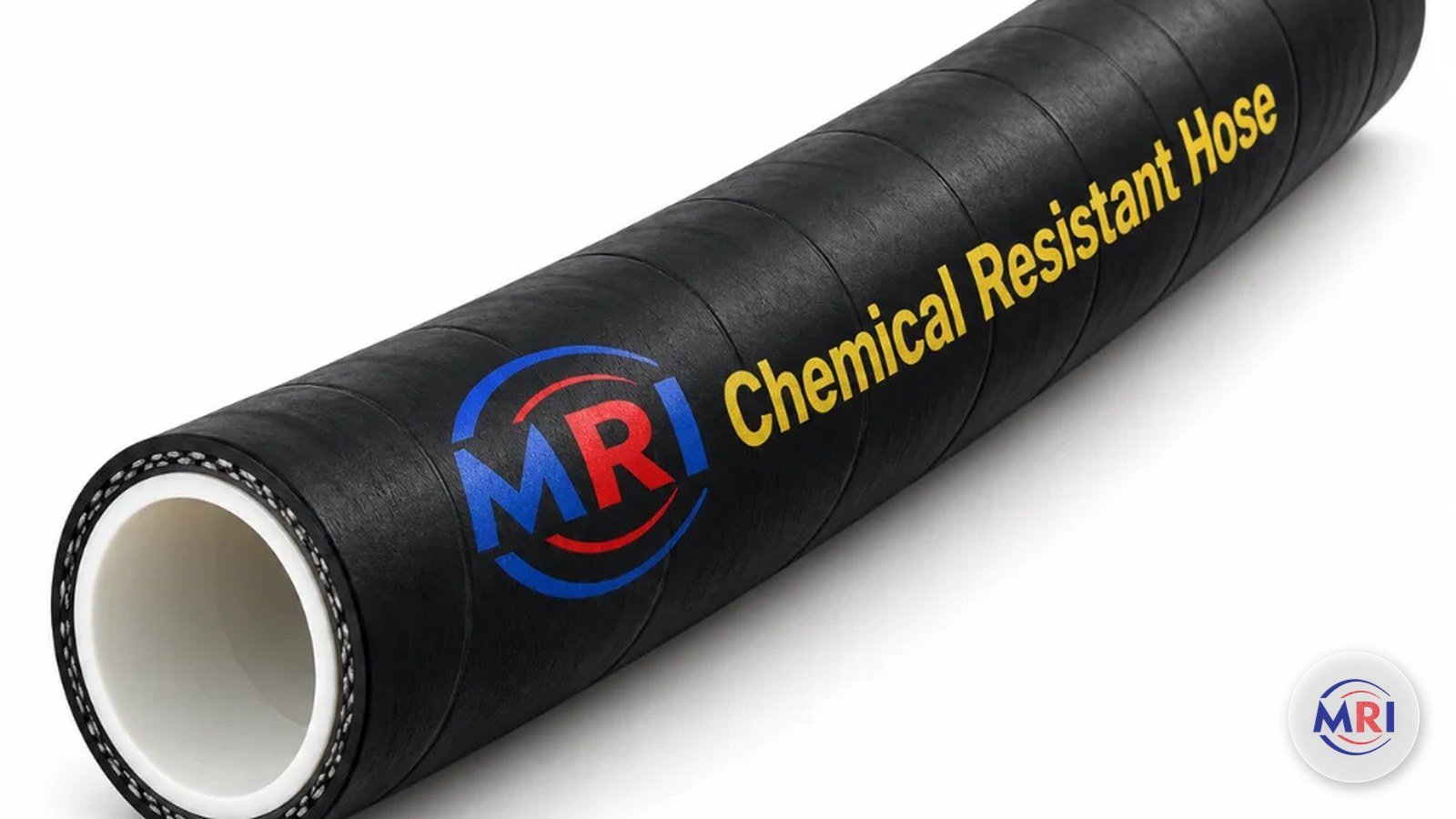
Quick answer: Hose chemical compatibility is decided by the inner tube compound. NBR suits oils and fuels; EPDM suits dilute acids, alkalis and hot water; CSM (Hypalon) suits concentrated oxidising acids; PTFE suits almost everything; silicone suits high-temperature clean service. The chart below rates six tube materials against 30 common industrial chemicals. Always confirm concentration and temperature before ordering.
How to read the ratings: A = recommended · B = acceptable, shorter life · C = limited, test first · X = not recommended.
Chemical compatibility chart by tube material
| Chemical (ambient, unless noted) | NBR | EPDM | CSM | PTFE | Silicone | UHMWPE |
|---|---|---|---|---|---|---|
| Acetic acid, 10% | C | A | A | A | B | A |
| Acetone | X | C | C | A | X | A |
| Ammonia solution | B | A | A | A | B | A |
| Aviation / jet fuel | A | X | C | A | X | A |
| Benzene | X | X | X | A | X | B |
| Caustic soda (NaOH) 20% | B | A | A | A | B | A |
| Chromic acid | X | C | A | A | C | B |
| Citric acid | B | A | A | A | A | A |
| Diesel fuel | A | X | B | A | X | A |
| Ethanol | B | A | A | A | A | A |
| Ethylene glycol | A | A | A | A | A | A |
| Ferric chloride | C | A | A | A | B | A |
| Formaldehyde | C | A | A | A | B | A |
| Hydraulic oil (mineral) | A | X | B | A | X | A |
| Hydrochloric acid, 10% | C | A | A | A | B | A |
| Hydrochloric acid, 37% | X | C | A | A | C | B |
| Hydrofluoric acid | X | C | C | A | X | C |
| Hydrogen peroxide, 30% | X | B | A | A | B | A |
| Kerosene | A | X | B | A | X | A |
| MEK (methyl ethyl ketone) | X | X | X | A | X | B |
| Methanol | B | A | A | A | A | A |
| Nitric acid, 10% | X | B | A | A | C | A |
| Nitric acid, 60% | X | X | B | A | X | C |
| Phosphoric acid, 50% | C | A | A | A | B | A |
| Sodium hypochlorite (bleach) | X | B | A | A | B | A |
| Sulphuric acid, 10% | C | A | A | A | B | A |
| Sulphuric acid, 70% | X | C | A | A | X | B |
| Sulphuric acid, 98% | X | X | C | A | X | C |
| Toluene | X | X | X | A | X | B |
| Xylene | X | X | X | A | X | B |
Important limits of any chart, including this one. A compatibility rating assumes ambient temperature, the stated concentration and intermittent exposure. Raise the temperature by 10 °C and the rate of chemical attack roughly doubles. Change the concentration and the rating can move two grades. Introduce a second chemical and the interaction may be worse than either alone. Treat every B and C as a candidate for a sample test before committing to a production line.
What is the best tubing material for chemicals?
PTFE, by a wide margin. It carries an A rating across every chemical in the table above, operates from −60 °C to +260 °C and does not swell, soften or harden on exposure. If you need one answer that is safe for unknown or mixed media, it is PTFE-lined hose with a stainless steel braid.
The trade-offs are real: PTFE costs more per metre, is stiffer with a larger bend radius, and is gas-permeable in thin walls. Where the media is single, known and under 80 °C, a correctly matched rubber compound gives equivalent service life far more cheaply. Details in our PTFE and Teflon hose guide.
EPDM vs nitrile: the comparison people ask for most
| Property | NBR (nitrile) | EPDM |
|---|---|---|
| Petroleum oils, fuels, diesel | Excellent | Poor — swells badly |
| Dilute acids and alkalis | Fair | Excellent |
| Hot water and steam | Poor | Excellent to +150 °C |
| Ozone, UV, weathering | Fair | Excellent |
| Aromatic solvents | Poor | Poor |
| Temperature range | −30 to +100 °C | −40 to +150 °C |
| Typical cost | Low | Low |
They are complementary, not competing. If the media is a hydrocarbon, use NBR. If the media is aqueous, use EPDM. Specifying EPDM on a diesel line, or NBR on a caustic line, is one of the most common and most expensive hose errors in Indian plants.
Silicone adds a third option: outstanding temperature range (−60 °C to +200 °C) and clean, taste-neutral service, but poor resistance to oils, fuels and steam under pressure. It belongs in food, beverage and pharmaceutical duty, not chemical transfer. Our pharmaceutical and sanitary hose guide covers that choice.
What about permeation resistance?
Permeation is the slow migration of chemical molecules through the intact tube wall into the reinforcement. It is invisible from outside and it is why chemical hoses burst without warning.
Ranked best to worst for permeation resistance: PTFE → UHMWPE → CSM → EPDM → NBR → silicone.
Two practical defences: specify a thicker tube wall for aggressive media, and replace chemical hoses on a calendar schedule rather than waiting for a visible defect. Our chemical transfer hose guide sets out replacement intervals.
How to use this chart to place an order
- Find your chemical in the left column and note which tubes score A.
- Eliminate any that cannot meet your temperature — check the range row in the EPDM/NBR table above.
- Of the survivors, choose the cheapest that also suits your cover environment and pressure.
- Match the fitting wetted material — stainless 316 for most chemicals.
- Send the chemical, concentration, temperature, pressure, ID and length to the manufacturer for confirmation.
Mangla Rubber Industries has compounded chemical, PTFE, steam and carbon free hose in Ghaziabad, Delhi NCR since 1983, and will confirm compound selection against your stated media before building. Send your specification or see the full hose range.
Frequently Asked Questions
Where can I find a compatibility chart for chemicals and hose materials?
The chart above rates six tube compounds — NBR, EPDM, CSM, PTFE, silicone and UHMWPE — against 30 common industrial chemicals using an A to X scale. Ratings assume ambient temperature and the stated concentration; confirm both with the manufacturer before ordering.
Is nitrile or EPDM better for chemical resistance?
Neither is universally better. NBR is better for petroleum oils, diesel and fuels. EPDM is better for dilute acids, alkalis, hot water and steam. Each performs poorly where the other performs well, so the deciding factor is whether your media is a hydrocarbon or aqueous.
What compounds provide the best oil and fuel resistance for industrial transfer hoses?
NBR (nitrile) is the standard choice for oil and fuel resistance at low cost, covering diesel, kerosene, mineral hydraulic oil and lubricants. PTFE also resists all of these and adds temperature capability, but costs considerably more. Avoid EPDM and silicone for any petroleum service.
Does temperature change chemical compatibility?
Yes, substantially. The rate of chemical attack on a rubber tube roughly doubles for every 10 °C increase. A compound rated acceptable at 25 °C may fail within weeks at 80 °C in the same chemical, so always specify continuous and peak temperature alongside the chemical name.
What is hose permeation and why does it matter?
Permeation is chemical migration through an intact tube wall into the reinforcement, where it corrodes braid or spiral wire from the inside with no external sign. PTFE and UHMWPE resist it best, NBR and silicone worst. Because the damage is invisible, chemical hoses should be replaced on schedule, not on inspection.
Can one hose handle several different chemicals?
Only a PTFE-lined hose can be relied on across mixed or changing media. Rubber compounds are each strong against one chemical family and weak against others, so a shared line running acids one day and solvents the next should be PTFE with stainless 316 fittings.