Hoses for Solar Panel Cleaning Systems: Water Supply, Robots and Pressure Requirements
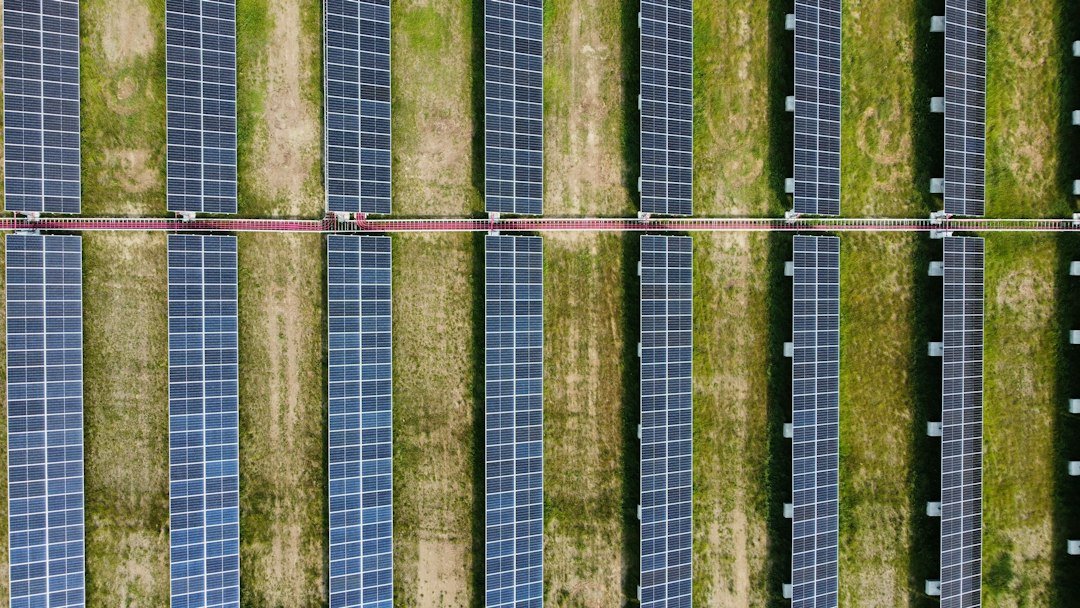
Photo by Daniel Miksha on Unsplash
Dust is the quiet enemy of every solar plant in India. In Rajasthan, Gujarat and the Deccan interior, a layer of fine soil, cement dust and bird droppings can settle on modules within days and cut output noticeably until it is washed off. Whether a plant uses manual crews, tractor-mounted brushes or automated cleaning robots, water has to reach the panels reliably, and that job falls to solar panel cleaning hoses that run from tankers, borewells and header lines out to the arrays.
Hose is a small line item on a solar project budget, yet a burst hose in the middle of a 500-acre site wastes water, stops the cleaning cycle and sends a crew walking. This guide explains the types of solar panel cleaning hoses used at utility-scale plants, rooftop installations and robotic cleaning systems, the pressure and water-quality limits that protect the modules, and how to specify hose that survives years of sun and abrasion on Indian sites.
What Are Solar Panel Cleaning Hoses?
Solar panel cleaning hoses are the flexible water delivery lines used to carry cleaning water from its source to the point of application on a photovoltaic array. At a large ground-mounted plant this includes the suction and discharge hoses on water tankers, the lay-flat or rubber distribution hoses that run along module rows, the feed hoses to water-fed brush systems and semi-automatic cleaning trolleys, and the short flexible connections to sprinkler or spray nozzles on fixed cleaning systems.
These are low to medium pressure water hoses rather than hydraulic hoses. The demands on them are different from a factory hose: long runs across open ground, continuous exposure to sunlight, dragging over gravel and module frames, and frequent coiling and uncoiling. The main constructions in use are:
- Rubber water delivery hose — EPDM or SBR cover and tube with textile reinforcement, the most durable option for daily use and rough handling
- Lay-flat hose — PVC or rubber-coated polyester that packs flat for transport, used for long temporary runs from a tanker
- PVC braided hose — lightweight and economical for rooftop and small plant use, but less resistant to UV and kinking
- Suction and discharge hose — helix-reinforced hose that will not collapse under vacuum when filling tankers from ponds or tanks
Cleaning Methods and the Hose Each One Needs
Solar plants in India use several cleaning approaches, often more than one on the same site. Each places a different demand on the hose.
Manual Cleaning with Tankers
Still the most common method at older plants, a tractor-pulled or truck-mounted tanker moves along the rows while a crew uses hose and soft brushes or mops. The hose is dragged, stepped on and driven over, so a rubber water hose with a thick abrasion-resistant cover lasts far longer than a light PVC hose. Bore sizes of 19 to 25 mm with a working pressure of around 10 bar are typical. A tanker also needs a suction hose to refill from a storage tank or pond.
Tractor-Mounted and Trolley Brush Systems
Semi-automatic systems mount a rotating brush on a tractor arm or a trolley that rides on the module frame. Water is fed to the brush through a hose from the tractor tank. Because the arm moves continuously, the hose must flex without kinking and must be routed clear of the rotating parts. Our guide on how air water and petroleum hose is used for fluid transfer in industrial and agricultural applications covers the general-purpose rubber hose that suits it.
Robotic Cleaning Systems
Autonomous robots that run along a row on rails or on the module edge are now common at large plants in Rajasthan and Gujarat. Many are waterless, using microfibre brushes and air, and need no hose at all. Water-assisted robots take water from a header pipe at the end of each row through a flexible hose to a docking point, or carry a small tank refilled by hose. Here the hose is static and permanently exposed, so UV resistance and a secure fitting matter more than abrasion resistance.
Pressure, Flow and Water Quality Limits
A common mistake is to treat panel cleaning like pressure washing a vehicle. Module manufacturers generally warn against high-pressure jets, because water forced under the frame or at the junction box can cause micro-cracks and moisture ingress and may void the warranty. Cleaning water should be applied as a gentle flow or a low-pressure spray, which in practice means system pressures similar to a domestic supply and well within the 10 bar rating of a standard rubber water hose.
- Working pressure — most cleaning circuits run below 6 bar; specify a hose rated for at least 10 bar to allow for pump surge and hot-weather derating
- Flow rate — a 25 mm bore hose delivers enough flow for a brush system without excessive pressure drop over a 100 metre run
- Water quality — hard or high-TDS borewell water leaves mineral deposits that reduce output; many plants use RO or softened water, which is slightly corrosive to plain steel fittings
- Temperature — water sitting in a hose under direct sun can reach well above 50°C; the hose tube must tolerate this without softening
Water use itself is under increasing scrutiny. The Ministry of New and Renewable Energy publishes guidance and data on India’s solar programme, and large plants in water-stressed districts are moving to robotic dry cleaning partly to reduce consumption. Reducing leakage and losses in the hose network is a direct way to cut water use, a point we also make in our article on energy efficient industrial hose systems. Policy and programme details are available from the Ministry of New and Renewable Energy.
Rubber vs PVC Hose for Solar Sites
Plant operators often start with the cheapest PVC garden-type hose and replace it every season. On a large site this becomes expensive and generates waste. The comparison is worth making carefully:
- UV and ozone — EPDM rubber cover resists sunlight for years; plain PVC becomes brittle and cracks, often within one summer in Rajasthan
- Kinking — rubber hose recovers from a kink; PVC hose tends to hold a kink that restricts flow and becomes a weak point
- Abrasion — a rubber cover tolerates dragging over gravel and sharp module frames far better
- Weight and cost — PVC is lighter and cheaper per metre, which suits rooftop work where the hose is carried up ladders
- Cold and heat — rubber stays flexible in a desert winter night and does not soften excessively in summer heat
For a broader comparison of the two materials see our guide on PVC hoses vs rubber hoses. For small rooftop and garden-scale solar systems, a lighter hose is fine, and the general advice in our guide to selecting hoses for a smart garden applies.
Specification Checklist for Plant Operators
When placing an order for a new plant or a replacement cycle, confirm the following:
- Bore and length — 19 mm for hand cleaning, 25 to 32 mm for tractor brush systems and tanker discharge, 50 to 75 mm for tanker suction
- Working pressure — minimum 10 bar for delivery hose, with a 3:1 burst safety factor
- Cover compound — EPDM or a UV-stabilised blend, in a light colour if the hose stays on the ground to limit heat absorption
- Tube compound — suitable for potable and RO water, with no taste or odour additives that could leave residue on glass
- Fittings — brass or stainless steel camlock or hose-tail couplings with worm-drive clamps; avoid plain steel with softened water
- Marking — printed size, pressure rating and lay line so crews can check hose and avoid twisting during coiling
- Spares — keep repair couplings and short lengths in the O&M store so a damaged hose can be cut and rejoined on site
Choose Solar Panel Cleaning Hoses from Mangla Rubber Industries
Mangla Rubber Industries manufactures rubber air, water and petroleum hoses with UV-resistant covers and textile reinforcement suited to solar plant cleaning, tanker discharge and brush-feed applications. We supply cut lengths and coils with matched couplings to EPC contractors, O&M companies and plant owners across India.
Tell us the cleaning method, hose lengths, bore size and coupling type your site uses, and our team will recommend a construction that lasts through several seasons of sun and dust. To request a quote or a sample, contact Mangla Rubber Industries.
Conclusion
Choosing the right solar panel cleaning hoses is a matter of matching the hose to the cleaning method, keeping pressure low enough to protect the modules, and specifying a UV and abrasion resistant construction that will not need replacing every season. A durable rubber hose with correct fittings costs more per metre than PVC but saves water, labour and downtime over the life of the plant.
Frequently Asked Questions
Can I use a pressure washer to clean solar panels?
Module manufacturers generally advise against high-pressure jets because they can force water into the frame or junction box and cause micro-cracks. Use a gentle flow or low-pressure spray with a soft brush instead.
What size hose is used for solar panel cleaning?
Hand cleaning typically uses 19 mm hose, tractor brush systems and tanker discharge use 25 to 32 mm, and tanker suction lines use 50 to 75 mm helix-reinforced hose.
Do robotic cleaning systems need hoses?
Waterless robots do not. Water-assisted robots take water from a row header through a flexible hose to a docking point, so a UV-stable hose with secure fittings is still needed.
Why does PVC hose fail quickly on solar sites?
Plain PVC becomes brittle under constant sunlight and holds kinks that restrict flow. On desert sites it can crack within a single summer, whereas an EPDM rubber cover lasts for years.
Does water quality affect the hose?
Softened or RO water is slightly corrosive to plain steel fittings, so brass or stainless couplings are preferred. High-TDS water does not harm the hose but leaves deposits on the glass that reduce output.