
Fire Hose vs Fire Extinguisher Hose: Differences and Requirements Under Indian Fire Safety Codes
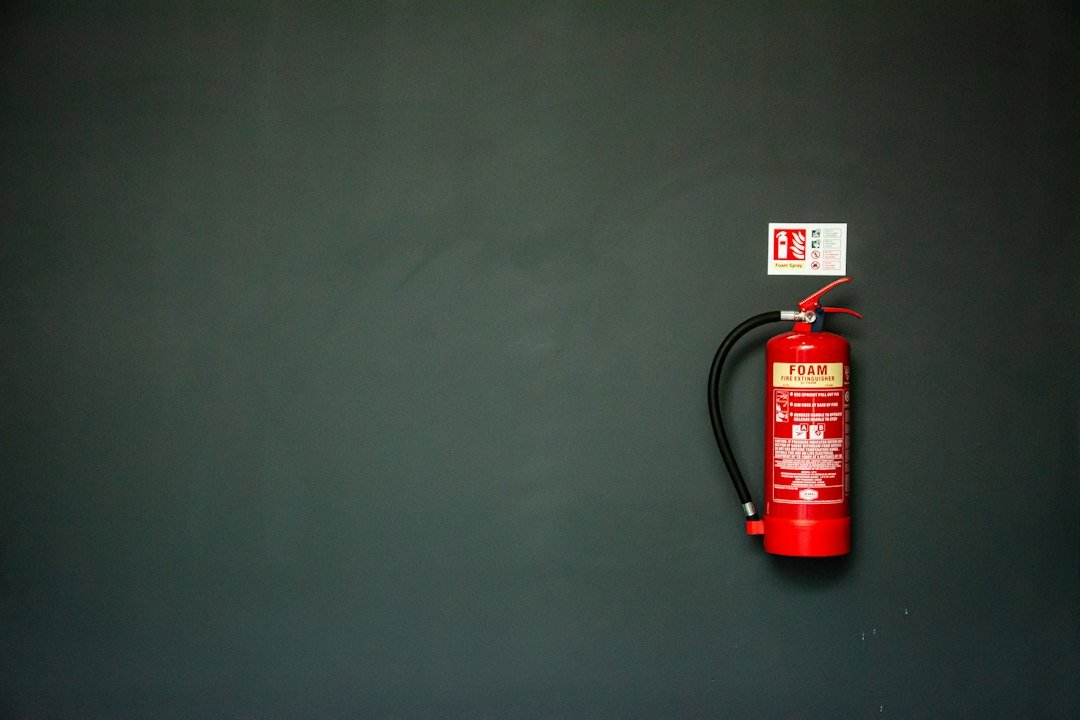
Photo by Tak Kei Wong on Unsplash
Walk through any Indian factory or commercial building and you will see two very different rubber hoses on fire safety duty: a long hose coiled in a red box beside a landing valve, and a short one attached to a portable cylinder on the wall. Buyers often ask for a fire extinguisher hose when they mean a fire hose, or order a delivery hose to replace an extinguisher discharge hose. The two are not interchangeable, and Indian fire safety codes treat them separately.
This guide explains how a fire hose differs from a fire extinguisher hose in construction, pressure, length and purpose, which Indian Standards and code provisions apply to each, and how a plant safety officer or dealer should specify, inspect and replace them.
What Is a Fire Extinguisher Hose?
A fire extinguisher hose is the short, flexible discharge hose fitted between the valve of a portable or trolley-mounted extinguisher and its nozzle or horn. It carries the extinguishing agent, whether dry chemical powder, water, foam solution, clean agent or carbon dioxide, from the cylinder to the point of discharge. Typical lengths on hand-held units are a few hundred millimetres; wheeled trolley extinguishers use hoses of several metres so the operator can stand back from the fire.
Because it must hold the full cylinder pressure the moment the valve opens, the hose is built with a synthetic rubber tube, a textile or wire reinforcement and a weather-resistant cover. Its performance requirements are set out in the extinguisher standards rather than in a separate hose standard:
- IS 15683 — the Indian Standard for portable fire extinguishers, which covers the performance of the complete unit including its discharge hose and nozzle
- IS 16018 — the standard for wheeled (trolley) fire extinguishers with longer discharge hoses
- IS 2190 — the code of practice for selection, installation and maintenance of portable extinguishers, which sets inspection and hydraulic test intervals
Our earlier article on the types of fire extinguisher hose pipes used in industrial safety systems describes the hose constructions used for powder, CO2 and foam units in more detail.
What Is a Fire Hose?
A fire hose, sometimes called a delivery hose or hydrant hose, is the long, lay-flat hose used by fire brigades and building fire teams to carry water or foam from a hydrant, landing valve or pump to a branch pipe and nozzle. It is stored flat, rolled or flaked in hose boxes, and only takes a round shape when charged with water.
In India, fire hose is governed by IS 636, which specifies reinforced rubber-lined (RRL) and controlled percolating hose in standard nominal bores of 38 mm, 45 mm, 63 mm and larger. Type A and Type B RRL hoses differ in their proof and burst pressures, with Type B being the heavier duty grade. Standard lengths are 15 m and 30 m, supplied with instantaneous couplings made to IS 903.
Fire Hose vs Fire Extinguisher Hose: The Key Differences
Both hoses are red and both carry an extinguishing medium, which is why confusion arises. The engineering differences are substantial.
Purpose and Position in the System
A fire hose is part of the fixed fire fighting installation. It connects to the hydrant network, which is fed by dedicated fire pumps and a water storage tank. A fire extinguisher hose is part of a self-contained first-aid appliance. It has no external supply and discharges only what the cylinder holds, typically for a matter of seconds.
Length and Diameter
Fire hose runs are measured in tens of metres and bore sizes in tens of millimetres. Extinguisher hoses are short and small-bore, sized to the extinguisher valve outlet. A 4 kg or 6 kg powder extinguisher uses a hose of roughly 400 to 600 mm; a 50 kg trolley unit may carry 5 to 10 m.
Pressure and Medium
Hydrant systems in India generally operate at several bar at the landing valve, and IS 636 hose is proof tested and burst tested well above that. A stored-pressure powder or water extinguisher is charged to around 15 bar, but a CO2 extinguisher stores liquid gas at much higher pressure and its hose must be specified for that duty. Extinguisher hoses must also resist the agent they carry: powder is abrasive, foam concentrates can attack some rubbers, and CO2 discharge causes rapid cooling and hose stiffening.
Construction
- Fire hose (IS 636) — circular woven polyester or nylon jacket with a rubber or synthetic lining, lay-flat, coupling-bound at each end
- Extinguisher hose — extruded rubber tube with textile braid or wire braid reinforcement, moulded or crimped end fittings, remains round when empty
- Fire-resistant industrial hose — a third category, used for hydraulic and fuel lines near heat sources, discussed in our guide to fire-resistant industrial hoses
Couplings and Nozzles
Fire hose uses instantaneous male and female couplings and branch pipes to IS 903 and IS 8090 so that any brigade appliance can connect. Extinguisher hose fittings are specific to the extinguisher model.
What Indian Fire Safety Codes Require
The National Building Code of India 2016, Part 4 (Fire and Life Safety), published by the Bureau of Indian Standards, sets out the fire protection systems required for each occupancy type. It calls for portable extinguishers conforming to IS 15683 and installed per IS 2190 in nearly all buildings, and for internal and external hydrant systems with hose reels and hose boxes in buildings above certain heights and floor areas. The current code and standards can be consulted through the Bureau of Indian Standards.
State fire services issue no-objection certificates and fire safety certificates based on compliance with the NBC and state fire rules. During inspection, fire officers commonly check:
- Extinguishers — correct type and rating for the hazard, valid hydraulic test date, undamaged discharge hose, clear nozzle, pressure gauge in the green zone
- Hose boxes — two lengths of 63 mm RRL hose with couplings, branch pipe and nozzle, hose free from mildew, cuts and coupling damage
- Hose reels — rubber hose reel of the correct bore, tested and free from kinks, with shut-off nozzle
- Records — a maintenance register showing monthly visual checks and periodic testing by a competent person
The role of the extinguisher hose in passing these inspections is explained further in our article on the importance of fire extinguisher hose in safety systems.
Inspection, Testing and Replacement Intervals
Rubber components are the first part of any fire appliance to deteriorate. Heat, sunlight and ozone age the hose long before the cylinder or coupling shows wear.
Fire Extinguisher Hose
IS 2190 requires a visual inspection at least quarterly and a thorough examination annually, with hydraulic pressure testing of the cylinder at set intervals depending on type. At each examination the discharge hose should be removed, checked for cracks, bulges, hardening and blocked bore, and the fitting threads checked for corrosion. Replace the hose if the cover is cracked when flexed, if the nozzle does not seat properly, or after any discharge of powder, since caked powder inside the hose can block the next discharge.
Fire Hose
Lay-flat fire hose should be inspected quarterly, unrolled, and checked for cuts, abrasion, mildew and coupling security. It should be pressure tested annually to the proof pressure stated in IS 636, dried thoroughly and re-rolled. Hose that has been used on a real fire should be cleaned and tested before it goes back into the box.
Choose Fire Extinguisher Hose from Mangla Rubber Industries
Mangla Rubber Industries manufactures fire extinguisher hoses for powder, water, foam and CO2 extinguishers, along with rubber hose reel hose and specialised industrial hoses for plants across India. Hoses are produced with the correct tube compound for each agent, reinforced to hold the rated cylinder pressure with a safe margin, and supplied in cut lengths or with fitted ends to suit OEMs, refilling stations and maintenance contractors.
If you refill or service extinguishers, or maintain the fire safety installation at an industrial site, send us the extinguisher type, capacity, valve outlet details and the quantity you need. Our team will confirm the correct hose specification. To request samples or a quotation, contact Mangla Rubber Industries.
Conclusion
A fire hose and a fire extinguisher hose serve the same goal but sit at opposite ends of the fire safety installation. The fire hose is a long, lay-flat, coupling-bound hose governed by IS 636 and connected to the hydrant network, while the extinguisher hose is a short, pressure-rated rubber discharge hose that forms part of an IS 15683 appliance. Understanding the difference, specifying each to the correct standard and replacing rubber components on schedule keeps a site compliant with the National Building Code and, more importantly, ready when a fire starts.
Frequently Asked Questions
Can a fire hose be used as a fire extinguisher hose?
No. A fire hose is a large-bore lay-flat hose designed for hydrant water at moderate pressure. An extinguisher discharge hose is a small-bore rubber hose built for the cylinder pressure and the specific extinguishing agent. Neither can be fitted in place of the other.
Which Indian Standard covers fire extinguisher hoses?
There is no stand-alone standard for the hose itself. It is covered as a component of the complete extinguisher under IS 15683 for portable units and IS 16018 for wheeled units, with maintenance requirements in IS 2190.
How often should the hose on a fire extinguisher be replaced?
Replace it whenever inspection shows cracking, hardening, bulging, blocked bore or damaged fittings, and after any discharge of dry powder. Many sites replace extinguisher hoses as a matter of routine at the hydraulic test of the cylinder.
What size fire hose is standard in Indian hose boxes?
The 63 mm RRL hose to IS 636 in 15 m lengths with instantaneous couplings is the standard fitted in most industrial and commercial hose boxes, usually two lengths per box with a branch pipe and nozzle.
Does a CO2 extinguisher need a different hose from a powder extinguisher?
Yes. CO2 is stored at much higher pressure and the discharge causes rapid cooling, so the hose must be rated for high pressure and remain flexible at low temperature. Powder extinguisher hoses are lower pressure but need an abrasion-resistant bore.