
Combine Harvester Hydraulic Hoses: Common Failures and How to Choose Replacements
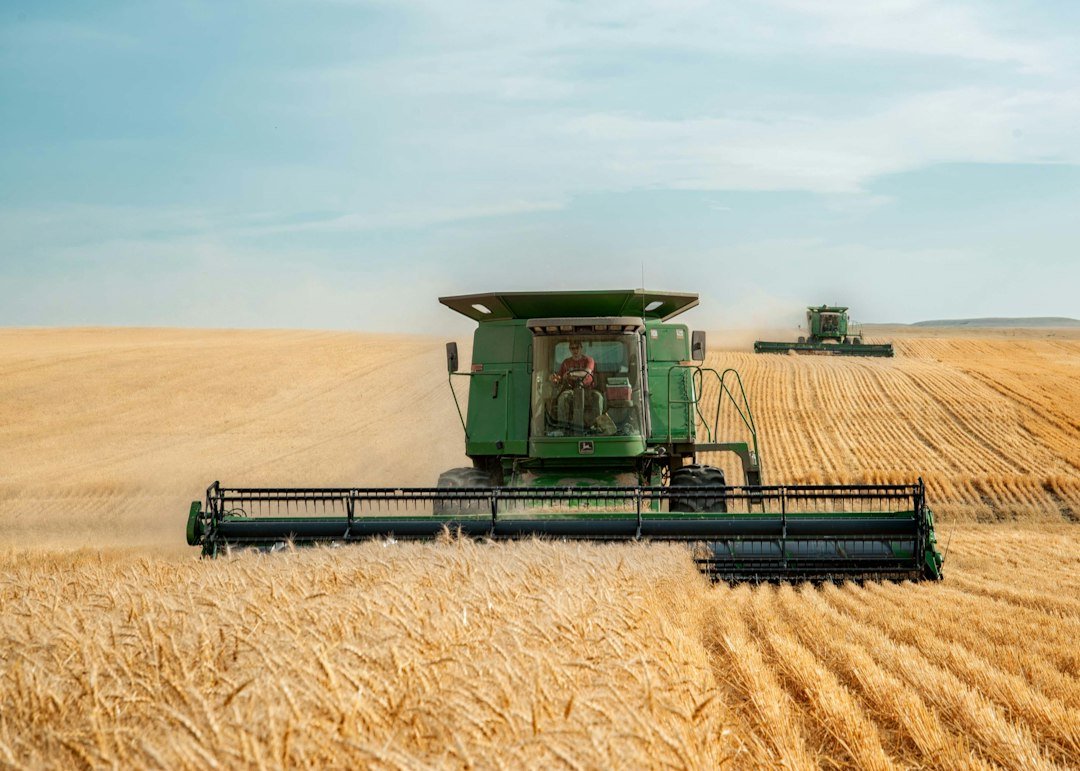
Photo by Darla Hueske on Unsplash
A combine harvester earns its keep in a short window. In Punjab, Haryana and western Uttar Pradesh the wheat harvest runs for a few weeks in April and the paddy harvest for a few weeks in October and November. A machine that stops in the field because of a burst hydraulic line costs the operator a day of custom hiring income. Combine harvester hydraulic hoses are small components, but they carry the header lift, reel, unloading auger and steering circuits that keep the machine cutting.
This guide explains which hydraulic lines a combine uses, why combine harvester hydraulic hoses fail more often than the same hose on a tractor, how to read an old hose before ordering a replacement, and what to check when fitting the new assembly. It is written for combine owners, custom hiring operators, dealers and workshop mechanics in India.
What Are Combine Harvester Hydraulic Hoses?
Combine harvester hydraulic hoses are flexible rubber hose assemblies, reinforced with one or two layers of braided steel wire, that carry hydraulic oil from the pump and control valves to the cylinders and motors around the machine. A typical self-propelled combine in India has between fifteen and forty hose assemblies, ranging from short jumper lines under the cab to long runs out to the header and the unloading auger.
Most of these lines are built to the same SAE 100 R1 and R2 specifications used on tractors and construction equipment. The difference is where they are routed and how they are used:
- Header lift and tilt — two or four cylinders that raise the cutter bar and adjust its angle, cycled hundreds of times a day as the operator follows ground contours
- Reel lift and fore-aft — cylinders on the header that position the reel over the crop
- Hydrostatic drive — high-pressure lines between the variable pump and wheel motor on self-propelled machines, often running above 300 bar
- Steering — power steering lines to the rear-axle cylinder
- Unloading auger swing and grain tank covers — lower-pressure lines cycled a few times per load
- Reel and header drive motors — medium-pressure return and case-drain lines on machines with hydraulic reel drive
Why Do Combine Hoses Fail More Often Than Tractor Hoses?
A hydraulic hose on a tractor trolley might see a few hundred lift cycles in a working day. A header lift line on a combine can see several thousand, because the operator is constantly adjusting cutting height. Add the environment in which a combine works and the failure rate climbs further.
Straw, Chaff and Dust
Fine chaff packs around hoses near the header, feeder house and straw walkers. It holds moisture against the cover and abrades the rubber as the hose flexes. Hoses buried in chaff are rarely inspected until they leak.
Heat
Hydrostatic drive oil on a combine runs hot during a long harvest day in 40°C ambient temperatures. Hoses routed close to the engine, exhaust or hydraulic cooler age quickly: the cover hardens and cracks, and the tube can split from the inside.
Vibration and Flexing
The header is a large mass on the front of the machine, moving up and down over uneven ground. Lines to the header flex at every cycle and rub against the feeder house, the header frame and each other. Braided hose tolerates flexing well, but not when it is also rubbing against sheet metal.
Long Storage and Wrong Field Repairs
Most combines in India work two short seasons and stand idle for the rest of the year, often outdoors, while ozone, sunlight and moisture attack the cover. When a line then bursts mid-harvest, the fastest fix is often the wrong one: a hose of the wrong pressure grade, a length that pulls tight under load, or a fitting crimped without the correct die. Our guide to the warning signs of hydraulic hose failure covers what to look for before the burst happens.
Common Failure Points on a Combine
The same lines tend to fail on most machines, whatever the make. Knowing where to look saves time during pre-season inspection:
- Header lift cylinder lines — abrasion at the point where the hose passes over the feeder house pivot, and cover cracking from constant flexing
- Reel lift lines on the header — cut by crop residue and damaged when the header is dropped onto a trailer for road transport
- Hydrostatic pump to motor lines — weeping at the crimp after years of heat cycling; these are high-pressure lines and must not be patched
- Steering lines — chafing against the rear axle where the hose bends with every steering movement
- Unloading auger lines — kinked where the auger swings out and the hose has been routed too short
- Lines near the exhaust or engine — hardened cover and heat blistering
How to Identify the Right Replacement Hose
The safest way to order a replacement is to read the old hose. Every hose built to SAE or EN standards carries a printed lay line along its length with the information you need.
Read the Lay Line
Look for the standard (for example SAE 100 R2AT or EN 853 2SN), the nominal bore (a dash size such as -8 for 1/2 inch, or the bore in millimetres) and the maximum working pressure. If the lay line has worn off, measure the outside diameter and count the wire layers at a cut end: one braid is R1, two braids is R2. Our comparison of SAE 100 R1 and R2 hydraulic hose gives the pressure chart for each size.
Match the Pressure Grade to the Circuit
Do not replace a two-wire hose with a single-wire hose because it is cheaper or in stock. Hydrostatic drive lines and header lift lines need R2 or higher. Return lines, case drains and auger swing lines are usually R1. When in doubt, fit the higher grade; the small extra cost is nothing against a burst in the field.
Measure Length and Fitting Orientation
Measure the old assembly from fitting face to fitting face, and note the angle between the two fittings if either is an elbow. A hose cut a few centimetres short will pull tight at full header lift and tear at the crimp. Note the thread type as well: most combines sold in India use BSP or metric fittings, with JIC on some imported machines. Our guide on hydraulic hose fittings explains how to tell them apart.
Fitting and Pre-Season Checks
The most reliable time to replace hoses is in the weeks before harvest, not in the field. A pre-season inspection should cover every line, not just the ones that failed last year.
- Clean first — blow out chaff and wash the machine so hoses can be seen and handled
- Inspect the cover — replace any hose with exposed wire, deep cracks, blisters or soft spots
- Check the crimps — wipe each fitting and look for oil weeping or corrosion under the ferrule
- Route correctly — follow the lay line so the hose is not twisted, allow slack for full header travel and keep hoses away from sharp edges
- Add protection — spiral guards or abrasion sleeves on header and steering lines, and heat sleeves near the exhaust
- Clamp properly — loose hoses swing and rub; overtight clamps crush the cover
- Bleed and test — cycle every circuit at idle before working the machine at full load
Guidance on farm machinery selection and safe operation for custom hiring centres is available through the Ministry of Agriculture and Farmers Welfare farm mechanisation portal. For the related lines on tractors that tow trailed combines, see our article on how a tractor trolley hydraulic hose works.
Choose Combine Harvester Hydraulic Hoses from Mangla Rubber Industries
Mangla Rubber Industries manufactures SAE 100 R1 and SAE 100 R2 hydraulic hose in the sizes used on combine harvesters from Indian and international makers, supplied in bulk lengths or as crimped assemblies with BSP, metric and JIC fittings. Heat-resistant compounds and abrasion-resistant covers are available for header, steering and hydrostatic lines.
Send us a photograph of the old hose, its lay-line markings, the measured length and the fitting details, and our technical team will match the correct replacement. Contact Mangla Rubber Industries for a quotation.
Conclusion
Combine harvester hydraulic hoses work harder than almost any other hose on a farm, cycling thousands of times a day in heat, chaff and vibration, then standing idle for months. Most failures are predictable and can be caught in a pre-season inspection. Reading the lay line, matching the pressure grade to the circuit, measuring the length correctly and routing the new assembly with proper protection will keep the machine cutting through the short harvest window when every hour counts.
Frequently Asked Questions
How long do combine harvester hydraulic hoses last?
Under Indian conditions, a well-routed hose on a combine typically gives four to six seasons before the cover shows enough deterioration to justify replacement. Header lift and hydrostatic lines usually need replacing sooner than return or auger lines.
Can I use a tractor trolley hose on a combine?
Only if the pressure grade, bore and fittings match the line being replaced. Many trolley hoses are SAE 100 R1 single-wire hose, which is not suitable for header lift or hydrostatic drive circuits that need R2 or higher.
Why does my header lift hose keep failing at the same spot?
Repeated failure at one point almost always means the hose is rubbing against the feeder house or header frame, or is too short and pulls tight at full lift. Reroute the line, add an abrasion sleeve and check the length before fitting another hose.
Should I replace all hoses at once?
Not necessarily, but hoses of the same age and duty tend to fail around the same time. If one hydrostatic or header line fails from age, inspect the others closely and consider replacing them as a set before the next season.
What should I keep as spares during harvest?
Carry a spare assembly for each header lift line, the steering line and the hydrostatic lines, plus spiral guards and clamps. These are the lines most likely to fail in the field and the hardest to source quickly in a rural area.