How to Prevent Chemical Hose Failure: Compatibility, Inspection and Replacement Guide
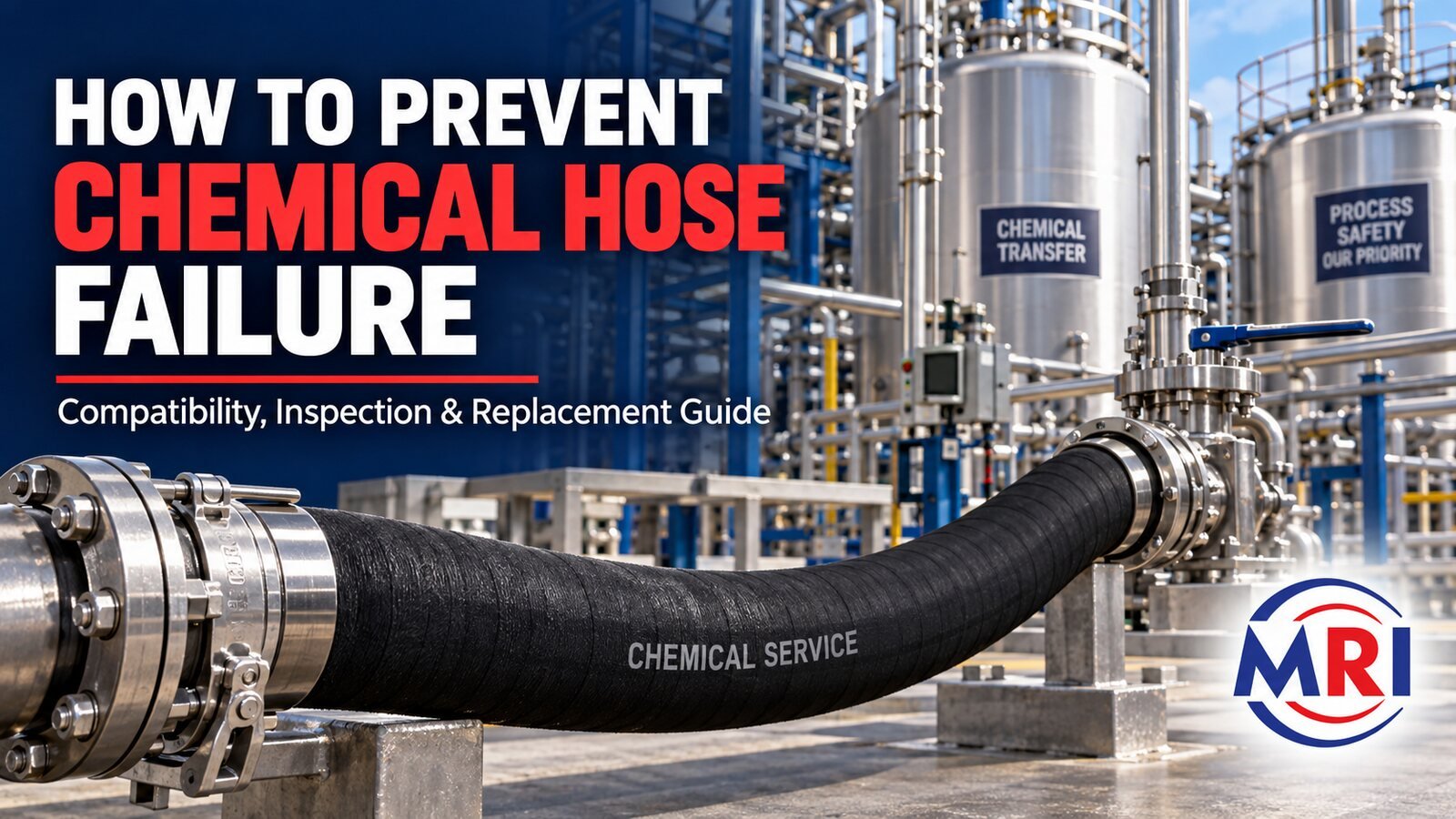
A chemical transfer line may look simple, but its performance depends on more than pressure rating and hose size. The transferred chemical, concentration, temperature, cleaning method, fittings and operating cycle can all affect the tube, reinforcement and cover. When these details are overlooked, chemical hose failure can develop much earlier than expected.
This guide explains how plants, contractors and purchasing teams can reduce avoidable problems by checking chemical compatibility, selecting the correct hose construction, inspecting complete assemblies and setting practical replacement rules.
If you are comparing basic hose categories first, read our guide to chemical hose pipe for industrial liquid transfer.
What Causes Chemical Hose Failure?
Chemical hose failure is rarely caused by one factor alone. A hose may be chemically compatible at room temperature but unsuitable when the fluid is hotter, more concentrated or transferred under vacuum. External abrasion, tight bending and incorrect couplings can make the situation worse.
Common contributors include:
- Incorrect chemical compatibility: The hose tube or fitting seal reacts with the conveyed fluid.
- Temperature outside the approved range: Heat can accelerate chemical attack and reduce pressure capability.
- Wrong concentration: A material that handles a diluted solution may not suit a stronger concentration.
- Pressure surges: Sudden valve operation can create forces above normal working pressure.
- Excessive bending: Routing below the minimum bend radius can damage reinforcement or restrict flow.
- Poor fitting selection: The coupling material, seal and attachment method must suit the chemical and hose construction.
- Mechanical wear: Dragging, crushing, vibration and rubbing can weaken the cover and structure.
- Incompatible cleaning: Cleaning chemicals, steam or temperature may be more severe than normal service.
Start With Chemical Compatibility, Not Hose Colour
A black cover does not identify the tube compound inside a chemical-resistant hose. Hose appearance also cannot confirm compatibility with acids, alkalis, solvents or cleaning agents. Selection should begin with the exact chemical name and the manufacturer’s compatibility information.
Record the concentration, fluid temperature, ambient temperature and whether the material is a mixture. If the formulation contains several chemicals, every important component must be considered. When data is incomplete, request technical guidance before placing the assembly into service.
Gates advises users to reference its chemical resistance information for hose selection. Continental also describes chemical hoses as purpose-built products for reliable chemical, petrochemical and pharmaceutical transfer in its industrial hose portfolio.
Choose the Correct Chemical Hose Construction
Different tube materials are used because no single compound handles every chemical and operating condition. Common chemical transfer hose constructions may include EPDM, XLPE or UHMWPE tube materials, depending on the product design.
- EPDM chemical hose: Often considered for selected acids, alkalis and water-based chemicals, subject to the specific compatibility chart.
- XLPE chemical hose: Used in many demanding transfer applications where broad chemical resistance is required.
- UHMWPE chemical hose: Selected for a wide range of aggressive chemicals in approved applications.
- Special-purpose hose: Some fluids require a dedicated tube, conductive construction or application-specific certification.
These descriptions are general. The exact hose datasheet and chemical-resistance table must control the final decision.
Use the STAMPED Method Before Ordering
A practical way to collect application data is the STAMPED method:
- Size: Inner diameter, outer diameter and required length.
- Temperature: Fluid, ambient and cleaning temperatures.
- Application: Suction, discharge, loading, unloading, fixed installation or mobile transfer.
- Material: Exact chemical, concentration and any mixture details.
- Pressure: Normal pressure, possible surges and vacuum conditions.
- Ends: Coupling type, material, seal and connection standard.
- Delivery: Quantity, testing, documentation and required delivery date.
This information gives the hose supplier a clearer picture than a request based only on diameter and length.
Why Fittings Matter as Much as the Hose
A compatible tube does not make the full assembly compatible. Couplings, ferrules, clamps and seals contact the transferred fluid or carry the mechanical load. Stainless steel, coated steel and other materials each have application limits.
The fitting must match the hose wall, reinforcement and attachment method. Improvised fittings or reusable parts not approved for the selected hose can create leakage, pull-off risk or local damage. For broader selection principles, review our article on choosing industrial hose fittings.
Inspect the Complete Chemical Hose Assembly
Inspection should cover the hose body, fittings and routing. Check the assembly before use and at intervals based on service severity.
- Look for cracks, cuts, soft spots, swelling, blistering or unusual stiffness.
- Check for exposed reinforcement, flattened sections and permanent kinks.
- Inspect fittings for corrosion, movement, damaged threads or seal problems.
- Confirm that identification labels and service records remain readable.
- Check that the hose is supported and protected from sharp edges and vehicle traffic.
- Review any change in chemical, concentration, temperature or cleaning procedure.
A hose that shows suspicious damage should be removed from service and assessed by a qualified person. Do not rely on tape, paint or an improvised sleeve to restore chemical compatibility or structural strength.
Set a Replacement Schedule Based on Service
There is no universal replacement period for every chemical transfer hose. Service life varies with chemical exposure, temperature, pressure cycles, handling, storage and cleaning. A plant should combine manufacturer guidance with its own inspection and service records.
Record installation date, product handled, operating conditions, inspection findings and removal reason. Over time, these records help identify realistic replacement intervals for each application. A hose can also require earlier replacement after abnormal exposure, severe abrasion, crushing or an operating change.
Our guide to common causes of hose failure explains how routing, abrasion and pressure-related issues affect other industrial hose systems.
Store Chemical-Resistant Hose Correctly
Spare hoses should be stored clean, dry and protected from sunlight, heat, ozone and mechanical damage. Avoid sharp bends, heavy loads and contact with oils or chemicals that are not part of the approved service.
Close or protect hose ends where contamination is a concern. Rotate stock so older suitable assemblies are used first, while respecting shelf-life guidance and inspection requirements.
Chemical Hose Selection Checklist
- Identify the exact chemical and concentration.
- Confirm fluid and ambient temperature.
- Record pressure, surge and vacuum requirements.
- Check the manufacturer’s chemical compatibility data.
- Select the correct tube, reinforcement and cover.
- Verify coupling and seal compatibility.
- Confirm bore, length and minimum bend radius.
- Plan inspection, cleaning, storage and replacement.
- Document the assembly and its service history.
Discuss Your Chemical Hose Requirement
Mangla Rubber Industries supplies industrial hose solutions for demanding fluid-transfer applications. When requesting a chemical hose, share the complete STAMPED information, including the exact fluid, concentration, temperature, pressure, size and fitting details.
You can contact Mangla Rubber Industries to discuss chemical-resistant hose sizes, constructions, couplings and bulk requirements.
Conclusion
Reliable Chemical Transfer Begins With Complete Application Data
Preventing chemical hose failure starts before the hose is installed. Compatibility, temperature, pressure, construction, fittings and routing must be evaluated as one system. Regular inspection and documented replacement decisions then help maintain reliable performance.
Never select a chemical transfer hose by colour or appearance alone. Use verified compatibility information and qualified technical guidance for the actual fluid and operating conditions.
FAQs
1. What is the most important factor when selecting a chemical hose?
The exact chemical, concentration and temperature are the starting points. Pressure, vacuum, size, fittings and cleaning conditions must also be checked.
2. Can one chemical-resistant hose carry every chemical?
No. Compatibility varies by tube compound, chemical concentration, temperature and hose design.
3. How often should a chemical hose be inspected?
Inspection frequency should follow manufacturer guidance and reflect the severity of the service. High-use or harsh applications usually need more frequent checks.
4. Can a damaged chemical hose be repaired?
A damaged assembly should be removed from service and evaluated by a qualified hose specialist. Improvised repairs should not be used to restore compatibility or structural performance.
5. What information should I provide when ordering?
Provide size, temperature, application, material, pressure, end connections and delivery requirements, along with any testing or documentation needs.
Looking to buy? See our chemical transfer hose range — UHMWPE, PTFE, EPDM and Viton liners, suction and discharge, supplied with compatible couplings.