
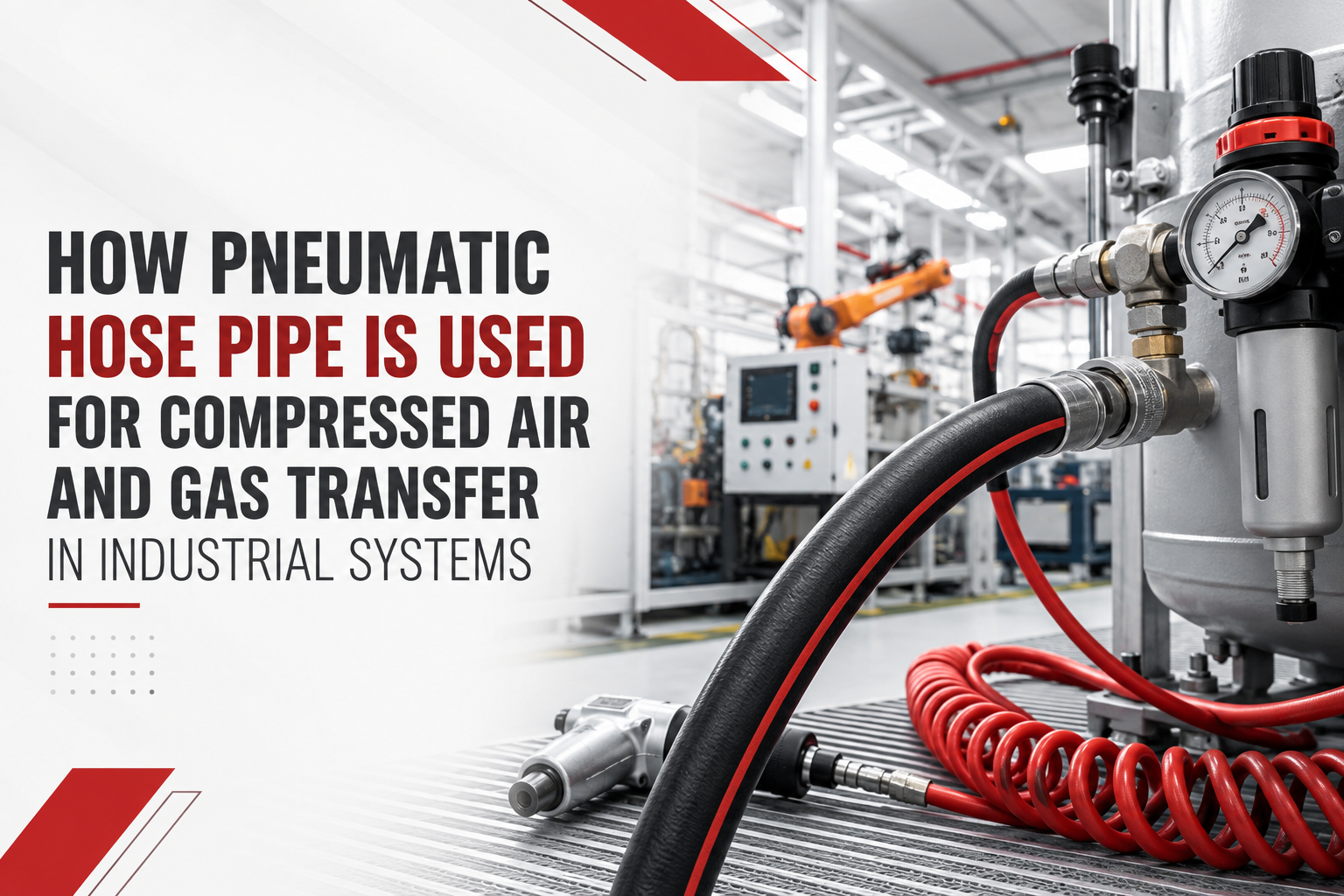
Compressed air and industrial gases play an essential role in manufacturing, automation, packaging, construction, and heavy engineering. Whether it’s powering pneumatic tools, operating machinery, or transporting industrial gases, selecting the right pneumatic hose pipe is critical for maintaining safety, efficiency, and uninterrupted operations.
The performance of any compressed air system depends not only on compressors and fittings but also on the quality of the hose connecting the entire setup. A well-designed pneumatic hose pipe ensures consistent airflow, minimizes pressure loss, and withstands demanding industrial environments.
Businesses that rely on dependable industrial hose solutions can also explore the complete range of rubber and industrial products available from Mangla Rubber Industries to find products suited for different industrial applications.
Understanding a Pneumatic Hose Pipe
A pneumatic hose pipe is a flexible tube designed to transfer compressed air or compatible industrial gases between compressors, pneumatic equipment, valves, and machinery. These hoses are manufactured using materials capable of handling pressure fluctuations, continuous movement, abrasion, and exposure to industrial conditions.
Unlike standard water hoses, pneumatic hoses are engineered specifically for pressurized air systems where flexibility, durability, and pressure resistance are equally important.
Industries often choose hose materials based on operating temperature, working pressure, chemical exposure, and the working environment.
How Pneumatic Hose Pipe Works in Industrial Systems
A pneumatic hose pipe acts as the connection between the compressed air source and the equipment that requires air pressure to operate.
The basic working process includes:
- Air is compressed using an industrial air compressor.
- The compressed air travels through pneumatic hose pipes.
- Regulators control the required pressure.
- Pneumatic equipment receives a continuous supply of compressed air.
- Air-powered tools or machines perform the required operation.
This simple but reliable transfer system allows industries to automate production processes while reducing dependence on electrical actuators in many applications.
Common Industrial Applications of Pneumatic Hose Pipe
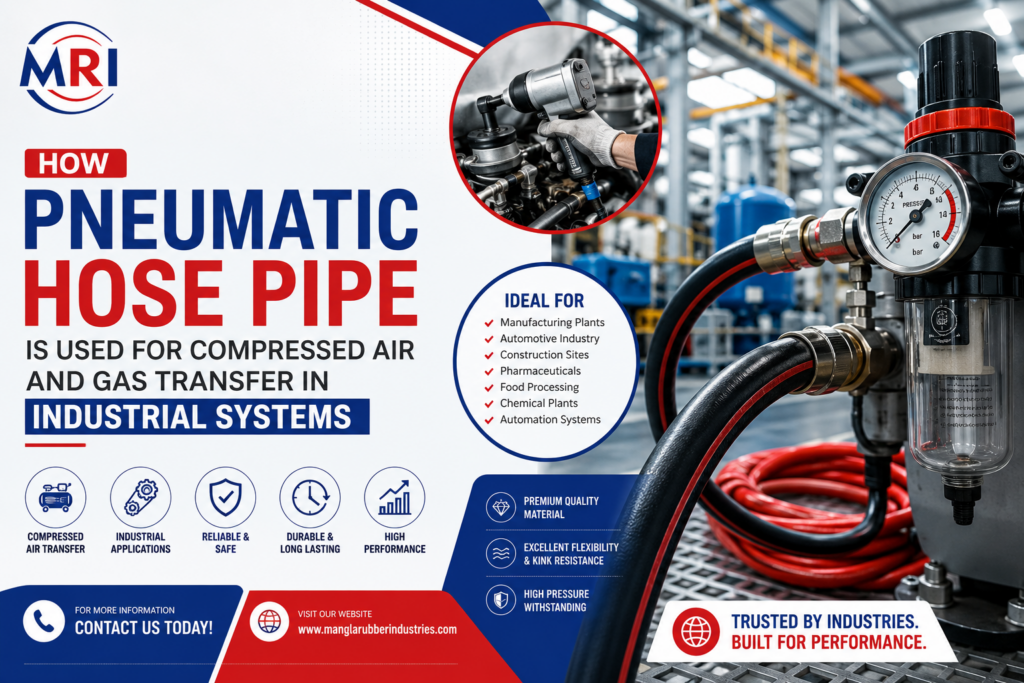
A pneumatic hose pipe is widely used across multiple industries due to its flexibility and reliable performance.
Manufacturing Plants
Production lines use pneumatic hoses for operating automated machinery, robotic arms, assembly equipment, and packaging systems.
Automotive Industry
Automotive workshops and manufacturing facilities depend on pneumatic hose pipes for air tools, spray painting equipment, tyre inflation systems, and assembly operations.
Construction Sites
Portable compressors connected with pneumatic hoses power drilling machines, jackhammers, nail guns, and impact wrenches.
Food Processing Industry
Food-grade pneumatic systems use specially designed hoses for clean compressed air applications where hygiene standards are important.
Pharmaceutical Manufacturing
Compressed air systems operate precision equipment, packaging machines, and automation systems while maintaining controlled environments.
Chemical Processing Plants
Certain industrial gases are safely transferred through compatible pneumatic hose pipes designed to withstand specific operating conditions.
Types of Pneumatic Hose Pipe Materials
Different industries require different hose materials depending on pressure, flexibility, and environmental conditions.
Rubber Pneumatic Hose
Rubber hoses provide excellent flexibility and durability. They perform well in heavy-duty industrial environments where abrasion resistance is important.
PVC Pneumatic Hose
PVC hoses are lightweight, economical, and commonly used for medium-duty compressed air applications.
Polyurethane Pneumatic Hose
Polyurethane hoses offer excellent flexibility, kink resistance, and easy handling, making them suitable for automation and robotics.
Nylon Pneumatic Hose
Nylon hoses are preferred for high-pressure applications where dimensional stability and strength are required.
Selecting the right material depends on the application’s operating pressure, temperature, movement requirements, and exposure to chemicals or oils.
Benefits of Using a High-Quality Pneumatic Hose Pipe
Choosing the correct pneumatic hose pipe offers several operational advantages.
- Reliable compressed air delivery
- Reduced pressure loss
- Improved equipment performance
- Better flexibility during installation
- Resistance to abrasion and wear
- Longer service life
- Reduced maintenance costs
- Enhanced workplace safety
Quality hose pipes also minimize air leakage, helping industries improve energy efficiency and reduce compressor operating costs.
Factors to Consider Before Selecting a Pneumatic Hose Pipe
Not every pneumatic hose is suitable for every industrial application. Several technical factors should be evaluated before purchasing.
Working Pressure
Always select a hose with a working pressure rating higher than the maximum operating pressure.
Hose Diameter
The internal diameter directly affects airflow. A hose that is too small may restrict air supply and reduce equipment efficiency.
Operating Temperature
Industrial environments often involve extreme temperatures. Ensure the hose material matches the expected temperature range.
Flexibility
Applications involving frequent movement require hoses that resist kinking and bending fatigue.
Chemical Compatibility
If industrial gases or chemicals are involved, verify material compatibility before installation.
Length of Hose
Excessively long hoses may increase pressure drop, while shorter hoses improve airflow efficiency.
Maintenance Tips for Longer Service Life
Proper maintenance significantly extends the life of pneumatic hose pipes.
- Inspect hoses regularly for cracks, cuts, or wear.
- Replace damaged fittings immediately.
- Avoid twisting or excessive bending.
- Store hoses away from direct sunlight and chemicals.
- Maintain recommended operating pressure.
- Keep hose connections clean and leak-free.
Routine inspections reduce unexpected downtime and improve overall system reliability.
Why Hose Quality Matters in Industrial Operations
A pneumatic system is only as reliable as its weakest component. Low-quality hoses may develop leaks, burst under pressure, or deteriorate quickly in demanding environments.
Industrial-grade pneumatic hose pipes are manufactured with reinforced construction, ensuring consistent airflow while maintaining safety under continuous operation.
For businesses operating production facilities, warehouses, manufacturing plants, or automation systems, investing in quality pneumatic hoses contributes directly to operational efficiency and equipment longevity.
Businesses looking for reliable pneumatic hose solutions, industrial rubber products, and customized hose assemblies can explore the product range available at Mangla Rubber Industries or get in touch through the contact page to discuss specific industrial requirements.
Final Thoughts
A pneumatic hose pipe is an essential component in compressed air and industrial gas transfer systems. From manufacturing plants and automotive workshops to pharmaceutical facilities and construction projects, these hoses ensure efficient, safe, and reliable operation across a wide range of industrial applications.
Selecting the appropriate hose material, pressure rating, and size not only improves equipment performance but also reduces maintenance costs and increases system reliability. By choosing quality industrial hose solutions that match operational requirements, businesses can build compressed air systems that deliver dependable performance for years.
FAQS
1. What is a pneumatic hose pipe used for?
A pneumatic hose pipe is used to transfer compressed air and compatible gases between compressors, pneumatic tools, machinery, and industrial equipment. It ensures efficient airflow while maintaining the required operating pressure.
2. Which industries commonly use pneumatic hose pipes?
Pneumatic hose pipes are widely used in manufacturing, automotive, construction, food processing, pharmaceutical, chemical processing, packaging, and automation industries where compressed air systems are essential.
3. What materials are pneumatic hose pipes made from?
Pneumatic hose pipes are commonly manufactured from rubber, PVC, polyurethane (PU), and nylon. The choice of material depends on factors such as working pressure, flexibility, temperature, and the operating environment.
4. How do I choose the right pneumatic hose pipe for my application?
When selecting a pneumatic hose pipe, consider the working pressure, hose diameter, operating temperature, flexibility, chemical compatibility, and the type of compressed air or gas being transferred.
5. Can pneumatic hose pipes be used for gas transfer?
Yes, certain pneumatic hose pipes are designed for transferring compatible industrial gases. However, the hose material must be suitable for the specific gas and operating conditions to ensure safe performance.
6. What is the difference between a pneumatic hose and a hydraulic hose?
A pneumatic hose is designed to carry compressed air or gases at relatively lower pressures, while a hydraulic hose is built to transfer hydraulic fluids under much higher pressures in hydraulic systems.
7. How long does a pneumatic hose pipe last?
The service life of a pneumatic hose pipe depends on its material, operating conditions, maintenance practices, and frequency of use. Regular inspection and proper handling can significantly extend its lifespan.
8. What are the signs that a pneumatic hose pipe should be replaced?
A pneumatic hose pipe should be replaced if it shows visible cracks, abrasion, leaks, swelling, kinks, damaged fittings, or a noticeable drop in air pressure during operation.
9. Does hose diameter affect compressed air performance?
Yes. Choosing the correct hose diameter helps maintain proper airflow and reduces pressure loss, allowing pneumatic tools and equipment to operate efficiently.
10. Why is a high-quality pneumatic hose pipe important in industrial systems?
A high-quality pneumatic hose pipe improves safety, reduces air leakage, minimizes maintenance requirements, enhances equipment performance, and provides reliable compressed air transfer in demanding industrial environments.