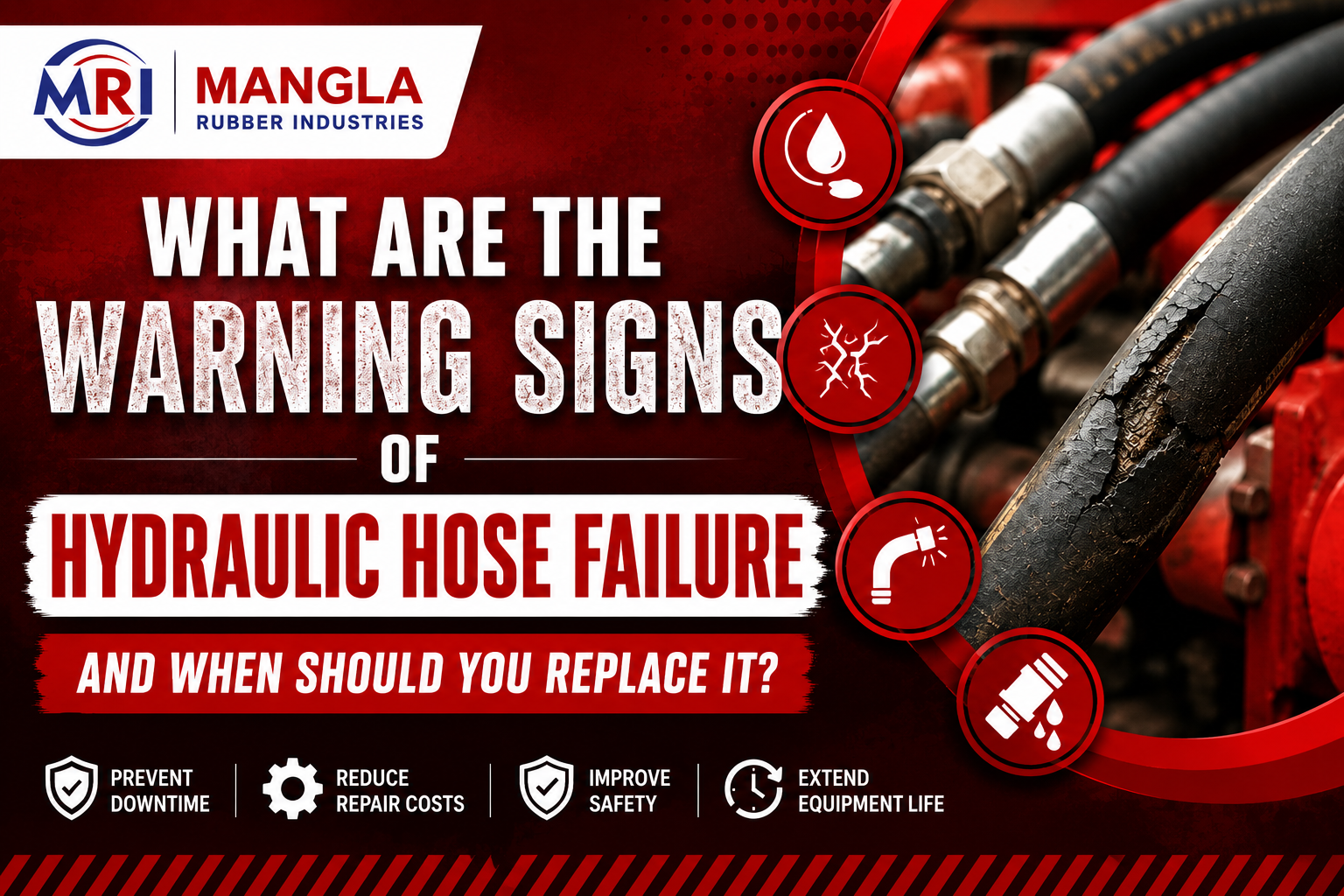
Hydraulic systems are the backbone of modern industries. From construction equipment and agricultural machinery to manufacturing plants and mining operations, these systems rely on hoses to transfer high pressure fluids safely and efficiently. A single damaged hose can interrupt production, increase maintenance costs, and even create serious safety hazards for workers.
Understanding hydraulic hose failure is essential for anyone responsible for maintaining hydraulic equipment. Most hose failures do not happen suddenly without warning. They usually begin with small signs that become more severe if ignored. Identifying these early symptoms can help prevent unexpected downtime, expensive repairs, and workplace accidents.
Have you ever noticed oil leaks, cracked hose covers, or unusual machine performance and wondered whether they indicate hydraulic hose failure?
Many equipment owners continue using damaged hoses because they appear functional from the outside. However, internal wear often develops much earlier than visible damage. Knowing when to inspect and replace a hose is one of the most effective ways to improve equipment reliability and reduce operational risks.
In this guide, we will explain the most common signs of hydraulic hose failure, explore the major hydraulic hose failure reasons, and discuss the right time to replace your hose before it leads to costly breakdowns.
Why Does Hydraulic Hose Failure Matter?
A hydraulic hose works under extremely high pressure while carrying hydraulic fluid throughout the system. Every time machinery operates, the hose experiences pressure fluctuations, heat, vibration, bending, and environmental exposure. Over time, these conditions naturally reduce the hose’s strength.
Ignoring hydraulic hose failure can result in leaking hydraulic oil, sudden pressure loss, damaged pumps, contaminated systems, reduced machine efficiency, and even injuries caused by high pressure fluid injection.
Investing in quality products from an experienced hydraulic hose pipe manufacturer significantly reduces these risks because premium hoses are designed to withstand demanding industrial environments for longer service life.
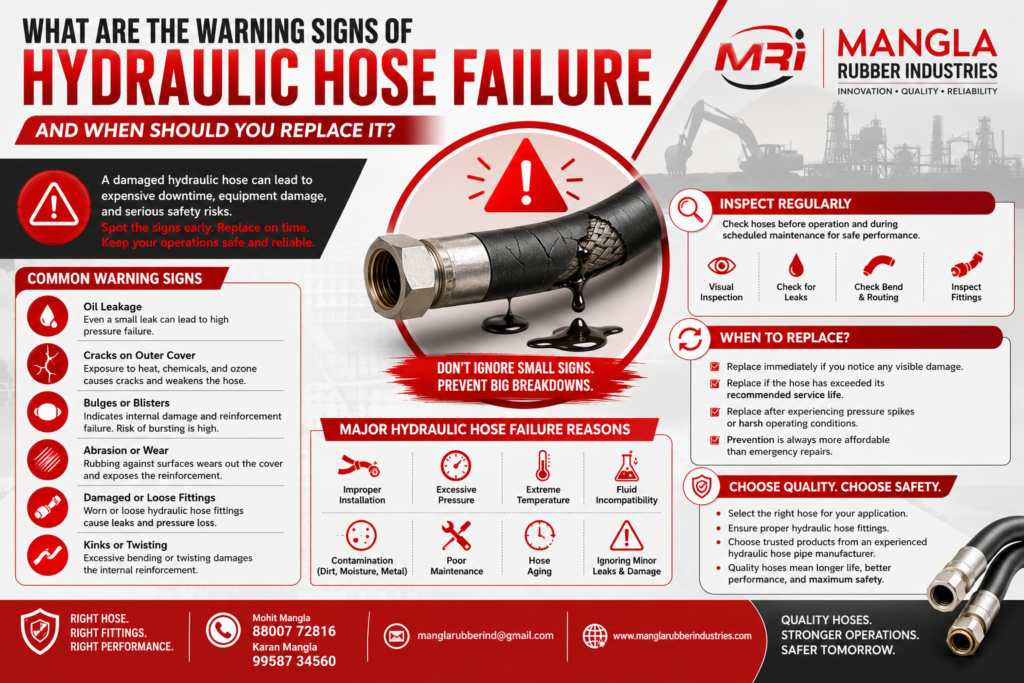
What Are the Common Warning Signs of Hydraulic Hose Failure?
One of the earliest indicators of hydraulic hose failure is visible oil leakage. Even a small amount of hydraulic fluid around the hose or fittings should never be ignored. Minor leaks usually become larger over time and eventually cause complete hose failure.
Another common sign is cracks on the outer cover. Continuous exposure to sunlight, chemicals, ozone, and extreme temperatures causes the rubber surface to harden and crack. Once the protective layer is damaged, the reinforcement inside becomes vulnerable to moisture and corrosion.
Bulges or blisters along the hose surface also indicate serious internal damage. These swollen areas develop when the reinforcement layers begin separating from the rubber tube. A bulging hose is often close to bursting and should be replaced immediately.
Have you checked whether your hydraulic hose pipe shows signs of abrasion, flattening, or exposed reinforcement wires?
Excessive abrasion is another major warning sign. When hoses continuously rub against metal parts or nearby equipment, the protective cover wears away. This weakens the hose structure and accelerates hydraulic hose failure.
Loose or damaged hydraulic hose fittings can also create leakage and pressure loss. Even if the hose itself appears to be in good condition, worn fittings may compromise the entire hydraulic system. Regular inspection of fittings helps maintain safe and reliable performance.
Kinks and twisted hoses are equally concerning. A hose designed to bend within a specific radius may suffer internal reinforcement damage if repeatedly bent beyond its limits. Restricted fluid flow eventually increases internal stress and shortens hose life.
Major Hydraulic Hose Failure Reasons
Understanding the most common hydraulic hose failure reasons helps businesses prevent avoidable breakdowns.
Incorrect installation is one of the leading causes. When hoses are twisted during installation or routed with excessive bending, internal stress develops from the beginning. Over time, this significantly reduces hose durability.
Operating beyond the recommended pressure limit is another major factor. Every hydraulic hose pipe has a specified working pressure. Frequent pressure spikes gradually weaken reinforcement layers until failure occurs.
Temperature also plays an important role. Extremely high temperatures accelerate rubber aging, while freezing conditions reduce flexibility. Both situations contribute to premature hydraulic hose failure.
Fluid incompatibility is often overlooked. Using hydraulic fluids that are not compatible with the hose material causes internal deterioration. Chemical reactions weaken the tube and increase the likelihood of leakage.
Contamination inside hydraulic systems is another common problem. Dirt, moisture, and metal particles circulate with hydraulic fluid, creating internal wear that damages both the hose and connected components.
Poor maintenance practices further increase the risk. Delayed inspections, ignoring minor leaks, and skipping preventive replacement schedules allow small problems to become major failures.
Choosing products from a trusted hydraulic hose pipe manufacturer ensures better material quality, proper reinforcement, and longer service life under demanding operating conditions.
How Often Should Hydraulic Hoses Be Inspected?
Routine inspection is one of the simplest ways to prevent hydraulic hose failure. While inspection intervals vary depending on equipment usage, most industrial hydraulic systems should undergo visual checks before operation and comprehensive inspections during scheduled maintenance.
Operators should examine hoses for oil leakage, surface cracks, abrasions, loose hydraulic hose fittings, swelling, discoloration, and unusual bending. Any abnormal condition should be investigated immediately instead of waiting for complete failure.
High duty applications such as mining, construction, steel plants, and heavy manufacturing often require more frequent inspections because hoses experience greater mechanical stress.
When Should You Replace a Hydraulic Hose?
Many businesses ask whether they should wait until a hose leaks before replacing it. The answer is no.
A hydraulic hose should be replaced whenever visible damage appears, regardless of whether it is still functioning. Surface cracks, exposed reinforcement, severe abrasion, bulges, leakage, damaged hydraulic hose fittings, or excessive aging all indicate that replacement is necessary.
Replacement is also recommended whenever a hose has exceeded the manufacturer’s expected service life, even if external damage is limited. Preventive replacement is considerably less expensive than emergency downtime caused by unexpected hydraulic hose failure.
If your equipment experiences repeated pressure spikes or operates in harsh environments, replacement intervals may need to be shorter.
Choosing the Right Hydraulic Hose
Selecting the correct hose is just as important as replacing it at the right time. The hose should match the application’s working pressure, temperature range, fluid compatibility, bend radius, and environmental conditions.
Businesses should also consider the quality of reinforcement materials, cover compound, and manufacturing standards. Partnering with an experienced hydraulic hose pipe manufacturer ensures consistent product quality and dependable technical support.
If you are searching for a reliable hose pipe manufacturer in India, always evaluate product quality, testing standards, customization capabilities, and after sales assistance instead of comparing prices alone.
High quality hoses manufactured using advanced production techniques generally offer longer service life, better pressure resistance, and improved safety.
Learn More About Hydraulic Hose Pressure Failures
If you want a deeper understanding of how excessive pressure affects hose performance, we recommend reading our detailed guide on hydraulic hose pipe failures caused by pressure. The article explains the reasons behind pressure related damage, common mistakes to avoid, and practical maintenance tips that help extend hose life.
Whether you operate construction equipment, agricultural machinery, or industrial hydraulic systems, understanding pressure related issues can help reduce maintenance costs and prevent unexpected equipment breakdowns. It is an excellent resource for maintenance teams looking to improve hydraulic system reliability.
Learn More About Hydraulic Hose Pressure Failures
Not all hydraulic hoses deliver the same level of performance. Manufacturing quality directly influences durability, pressure handling capability, flexibility, and service life.
A reputable hydraulic hose pipe manufacturer follows strict quality control procedures, tests every production batch, and uses premium reinforcement materials to produce reliable hoses. This reduces the chances of premature hydraulic hose failure while improving overall equipment efficiency.
Similarly, selecting the right hydraulic hose fittings ensures leak free connections and stable hydraulic performance. High quality fittings complement premium hoses by maintaining pressure integrity across the entire hydraulic system.
For industries seeking dependable products from a trusted hose pipe manufacturer in India, choosing an experienced manufacturer provides long term value through improved reliability, reduced maintenance, and enhanced workplace safety.
Stay updated with practical maintenance tips, industrial insights, new product developments, and expert guidance on hydraulic and industrial hose solutions by following Mangla Rubber Industries on LinkedIn.
Conclusion
Recognizing the warning signs of hydraulic hose failure before complete breakdown occurs can save significant time, money, and operational disruption. Oil leaks, cracks, abrasion, bulges, damaged hydraulic hose fittings, and pressure related issues should never be ignored because they usually indicate that the hose has reached the end of its safe operating life.
Understanding the primary hydraulic hose failure reasons allows businesses to improve maintenance practices, schedule timely replacements, and extend the lifespan of hydraulic equipment. Investing in premium products from a reliable hydraulic hose pipe manufacturer and a trusted hose pipe manufacturer in India further enhances system performance while minimizing costly failures.
Regular inspections, preventive maintenance, and proper installation remain the most effective strategies for avoiding unexpected hydraulic hose failure and ensuring safe, efficient industrial operations.
FAQs
1. What is the most common cause of hydraulic hose failure? The most common causes include excessive pressure, improper installation, abrasion, extreme temperatures, aging, contamination, and incompatible hydraulic fluids.
2. How can I identify hydraulic hose failure before it becomes serious? Look for oil leaks, surface cracks, swelling, exposed reinforcement wires, loose hydraulic hose fittings, discoloration, and reduced hydraulic system performance.
3. How often should a hydraulic hose pipe be replaced? Replacement depends on operating conditions, but hoses showing visible damage or reaching the end of their service life should be replaced immediately instead of waiting for failure.
4. Why are hydraulic hose fittings important? Proper hydraulic hose fittings create secure, leak free connections that maintain hydraulic pressure and improve overall system safety and efficiency.
5. How do I choose a reliable hydraulic hose pipe manufacturer? Choose a manufacturer with proven quality standards, rigorous product testing, industry experience, and a strong reputation for supplying durable hydraulic hoses for industrial applications.