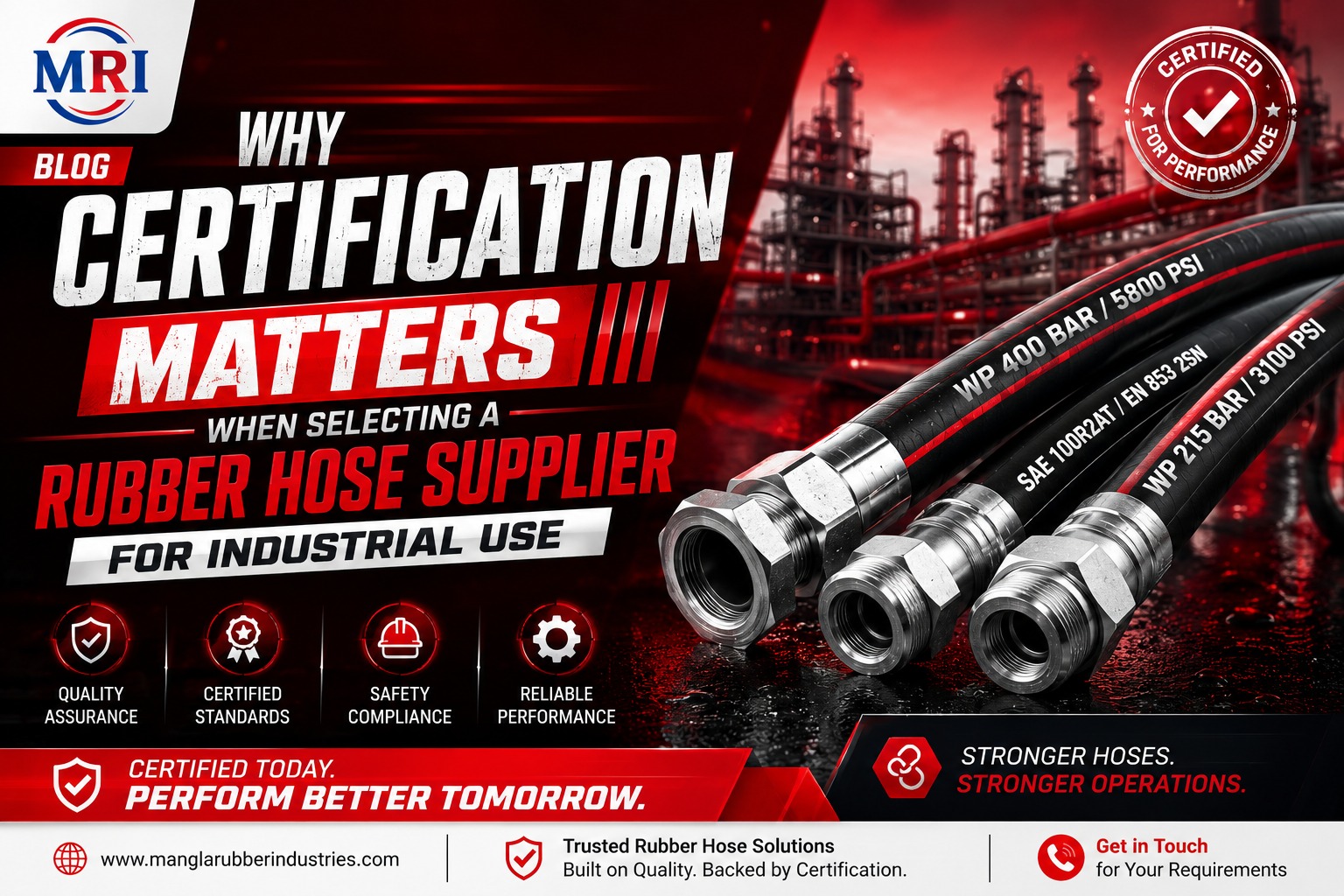
Industrial operations depend on reliable components that can perform consistently under demanding conditions. Among these components, rubber hoses play a critical role in transferring fluids, air, chemicals, and other materials across a wide range of industries. Whether used in manufacturing plants, construction sites, mining operations, or agricultural applications, the quality of a rubber hose directly impacts safety, efficiency, and operational continuity.
When evaluating a rubber hose supplier, pricing and product availability often receive significant attention. However, certification is one factor that should never be overlooked. Working with a certified supplier helps businesses ensure product quality, regulatory compliance, and long-term performance.
For procurement teams, maintenance managers, and industrial buyers, understanding the value of certifications can make a substantial difference in supplier selection and operational reliability.
Understanding Certification in the Rubber Hose Industry
Certification refers to the process through which products, manufacturing systems, or quality management practices are verified against recognized industry standards. These standards are designed to ensure that products consistently meet established performance, safety, and quality requirements.
In the industrial hose sector, certifications help validate manufacturing processes, material quality, testing procedures, and overall compliance with industry expectations. A certified supplier demonstrates a commitment to maintaining consistent standards throughout production rather than relying solely on internal inspections.
Why Certification Is Important for Industrial Applications
Industrial environments place significant demands on rubber hoses. Exposure to pressure fluctuations, temperature changes, chemicals, abrasion, and continuous operation requires products that can perform reliably over extended periods.
Certified products provide additional assurance that hoses have been manufactured and tested according to recognized standards.
Improved Product Reliability
A certified manufacturing process helps reduce inconsistencies that may lead to premature hose failure. This contributes to better durability, improved service life, and predictable performance in demanding industrial environments.
For businesses sourcing products from industrial rubber hose suppliers, reliability remains one of the most important considerations because unexpected failures can disrupt operations and increase maintenance costs.
Why Certification Is Important for Industrial Applications
Industrial environments place significant demands on rubber hoses. Exposure to pressure fluctuations, temperature changes, chemicals, abrasion, and continuous operation requires products that can perform reliably over extended periods.
Certified products provide additional assurance that hoses have been manufactured and tested according to recognized standards.
Improved Product Reliability
A certified manufacturing process helps reduce inconsistencies that may lead to premature hose failure. This contributes to better durability, improved service life, and predictable performance in demanding industrial environments.
For businesses sourcing products from industrial rubber hose suppliers, reliability remains one of the most important considerations because unexpected failures can disrupt operations and increase maintenance costs.
Enhanced Workplace Safety
Industrial hose failures can result in equipment damage, production interruptions, environmental concerns, and safety hazards. Certification often involves rigorous testing procedures that verify a hose’s ability to perform within specified operating conditions.
Choosing a certified rubber hose supplier helps reduce the risks associated with product defects and performance inconsistencies.
Consistent Quality Standards
Large industrial organizations often require uniform product quality across multiple projects and facilities. Certified suppliers typically follow documented quality management systems that support consistency throughout the manufacturing process.
This consistency becomes especially valuable when sourcing products from rubber hose pipe suppliers for long-term industrial applications.
Support for Regulatory Compliance
Many industries operate under strict operational and safety regulations. Purchasing products from certified suppliers can help businesses meet compliance requirements while simplifying procurement and quality assurance processes.
Common Certifications Buyers Should Look For
While certification requirements vary based on industry and application, several standards are widely recognized throughout the industrial manufacturing sector.
ISO 9001 Quality Management Certification
ISO 9001 is one of the most recognized quality management standards worldwide. It focuses on process control, customer satisfaction, documentation, and continuous improvement.
When a supplier operates under an ISO-certified quality management system, buyers gain greater confidence in manufacturing controls and product consistency.
Industry-Specific Testing Standards
Different hose applications require different performance characteristics. Industrial hoses used for hydraulic systems, air transfer, water delivery, petroleum applications, and chemical handling may need to comply with specific testing requirements.
A reliable supplier should be able to provide relevant technical specifications and testing documentation based on the intended application.
Material and Performance Documentation
For specialized industries, suppliers often provide documentation related to material composition, chemical resistance, temperature tolerance, and pressure ratings. These details help buyers verify that the selected hose is suitable for the operating environment.
Risks of Choosing Non-Certified Suppliers
Not every supplier follows the same manufacturing standards. Selecting a supplier without recognized certifications may expose businesses to avoidable operational risks.
One of the most common concerns is increased equipment downtime. Lower-quality hoses are more susceptible to leaks, cracks, bursts, and premature wear. These failures can interrupt production schedules and create additional maintenance requirements.
Another challenge is inconsistent product performance. Without standardized quality controls, specifications may vary between production batches. Such variations can create performance issues across industrial systems and reduce overall efficiency.
Although uncertified products may appear cost-effective initially, long-term expenses associated with replacements, repairs, and production disruptions often outweigh any short-term savings.
In addition, suppliers that lack formal quality systems may not provide the same level of technical documentation or application support that industrial buyers require.
How to Evaluate a Supplier Beyond Certifications
Certification should be viewed as an important evaluation factor, but it should not be the only consideration when selecting a supplier.
Industrial buyers should also assess manufacturing capabilities, product range, technical expertise, customization options, quality control procedures, delivery performance, and customer support.
A strong supplier relationship is built on more than compliance certificates alone. Businesses benefit most from working with suppliers that combine certified manufacturing practices with deep industry knowledge and dependable service.
This is particularly important when evaluating rubber hose suppliers in India, where industrial buyers often require a combination of quality assurance, technical guidance, and consistent product availability.
Why Certifications Support Long-Term Business Performance
Procurement decisions directly influence operational efficiency, maintenance planning, equipment reliability, and workplace safety. Certifications provide independent verification that a supplier follows recognized quality standards and manufacturing practices.
When evaluating rubber hose pipe suppliers, certifications help reduce uncertainty by providing measurable evidence of process control and product quality. This becomes increasingly important in industries where hose performance directly impacts production output and operational safety.
As industrial systems continue to evolve, businesses are placing greater emphasis on quality, compliance, and reliability. Certified industrial rubber hose suppliers are better positioned to meet these expectations while supporting long-term operational objectives.
Explore Reliable Industrial Hose Solutions
Businesses looking for hydraulic hose solutions, industrial rubber products, and dependable hose assemblies can explore the range available at Mangla Rubber Industries. Companies with specific project requirements or technical inquiries can also connect with the team through the contact page to discuss suitable industrial hose solutions for their operations.
Businesses looking to stay updated on industrial hose technologies, product developments, and manufacturing insights can follow Mangla Rubber Industries on LinkedIn for industry updates and company news.
Final Thoughts
Choosing the right rubber hose supplier involves more than comparing pricing and delivery schedules. Certification serves as a valuable indicator of manufacturing quality, process consistency, and commitment to industry standards.
For procurement professionals, plant managers, and maintenance teams, partnering with certified industrial rubber hose suppliers can improve reliability, support compliance objectives, enhance workplace safety, and reduce long-term operational risks. As industries continue to prioritize performance and quality, certification remains one of the strongest indicators of a supplier’s ability to deliver dependable industrial hose solutions.
Frequently Asked Questions
How do I choose the right rubber hose supplier for industrial applications?
When selecting a rubber hose supplier, businesses should evaluate product quality, certifications, manufacturing standards, industry experience, technical support, and the supplier’s ability to provide hoses that meet specific application requirements. Choosing a certified supplier helps ensure reliability, safety, and long-term performance.
Why is certification important when working with industrial rubber hose suppliers?
Certification demonstrates that industrial rubber hose suppliers follow recognized quality management systems and testing procedures. It provides assurance that products meet industry standards, maintain consistent quality, and are suitable for demanding industrial environments.
What should businesses look for in rubber hose pipe suppliers?
Businesses should assess factors such as product specifications, pressure ratings, material quality, manufacturing capabilities, testing procedures, delivery reliability, and technical expertise. Reputable rubber hose pipe suppliers should also be able to provide relevant certifications and product documentation.
Are certified rubber hose suppliers in India suitable for global industrial requirements?
Yes, many certified rubber hose suppliers in India manufacture products that comply with internationally recognized quality standards. Industrial buyers often source hoses from Indian manufacturers due to their manufacturing capabilities, quality assurance processes, and ability to serve diverse industrial sectors.
Can a certified rubber hose supplier help reduce maintenance and downtime?
A certified rubber hose supplier is more likely to provide products that meet strict quality and performance standards. High-quality hoses typically offer better durability, improved operational reliability, and reduced risk of premature failure, helping businesses minimize maintenance costs and unplanned downtime.