
In the fast-evolving landscape of 2026, selecting the right equipment for fluid and material transfer is more critical than ever. As manufacturing pushes toward higher efficiency, the debate of Rubber hose vs Industrial Hose continues to be a top priority for procurement managers and engineers. While the terms are often used interchangeably, understanding the nuances between a standard Rubber hose vs Industrial Hose solutions is the key to operational longevity.
This guide explores the specific strengths of each to help you determine which one is best for your specific application in 2026.
Defining the Contenders: Rubber hose vs Industrial Hose
To make an informed choice, we must first define our terms.
- Rubber Hose:
Primarily made from natural or synthetic elastomers (like EPDM, Nitrile, or Neoprene), these are the traditional workhorses of the industry. They are prized for their extreme flexibility and resilience.
- Industrial Hose:
This is a broader category that includes hoses made from various materials, including PVC, Thermoplastics, PTFE (Teflon), and even composite metals. While a rubber hose is technically a type of industrial hose, the “Industrial Hose” label often refers to specialized, multi-material tubes designed for specific chemical or high-tech environments.
When comparing a Rubber hoses vs Industrial Hose, the “best” choice depends entirely on your environment, the substance being moved, and your 2026 budget goals.
Key Performance Factors in 2026
1. Durability and Environmental Resistance
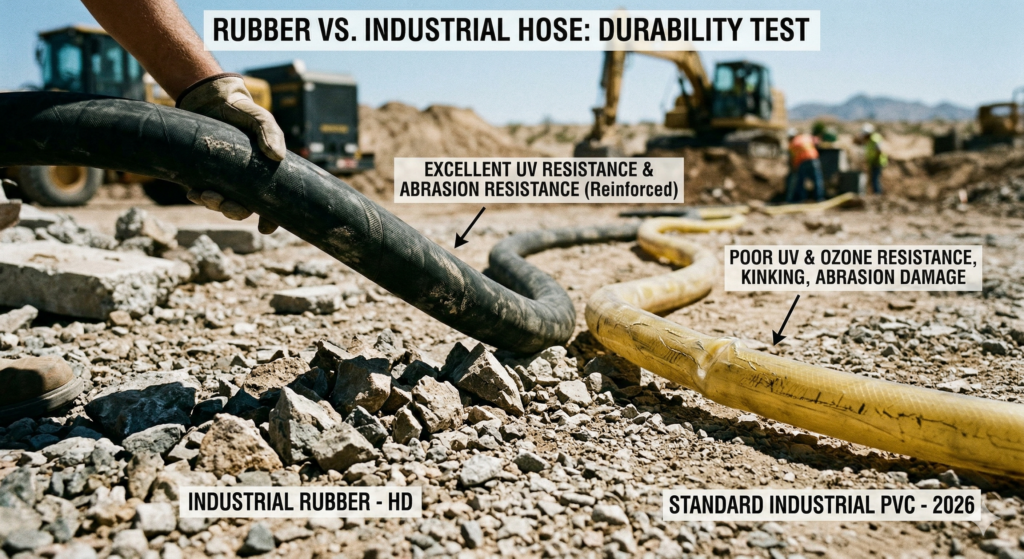
In 2026, environmental sustainability and durability are paramount. Rubber hoses excel in harsh outdoor conditions.Because they are often reinforced with high-tensile yarn or steel wire, a Rubber hose vs Industrial Hose made of PVC will almost always win on UV resistance and ozone protection. If your application involves dragging equipment across a rocky construction site, the abrasion resistance of a heavy-duty Rubber hose vs Industrial Hose made of lighter plastic is unmatched.
2. Temperature and Pressure Handling
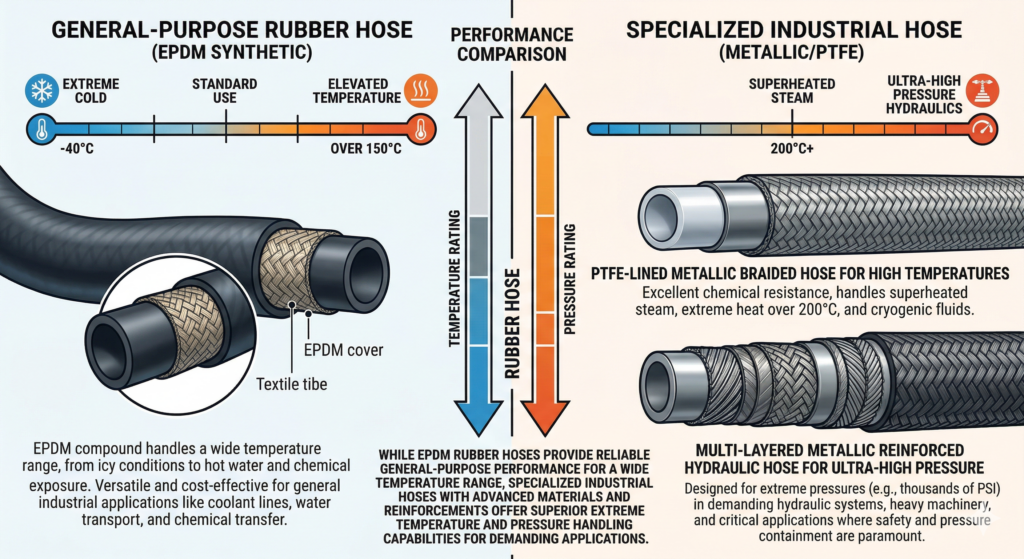
Temperature extremes are where the Rubber hose vs Industrial Hose debate gets technical. Synthetic rubber compounds like EPDM can handle temperatures ranging from −40°C to over 150°C. However, if you are dealing with ultra-high-pressure hydraulic systems or superheated steam, a specialized Industrial Hose with metallic reinforcement or PTFE lining might be the safer, albeit more expensive, bet.
3. Chemical Compatibility
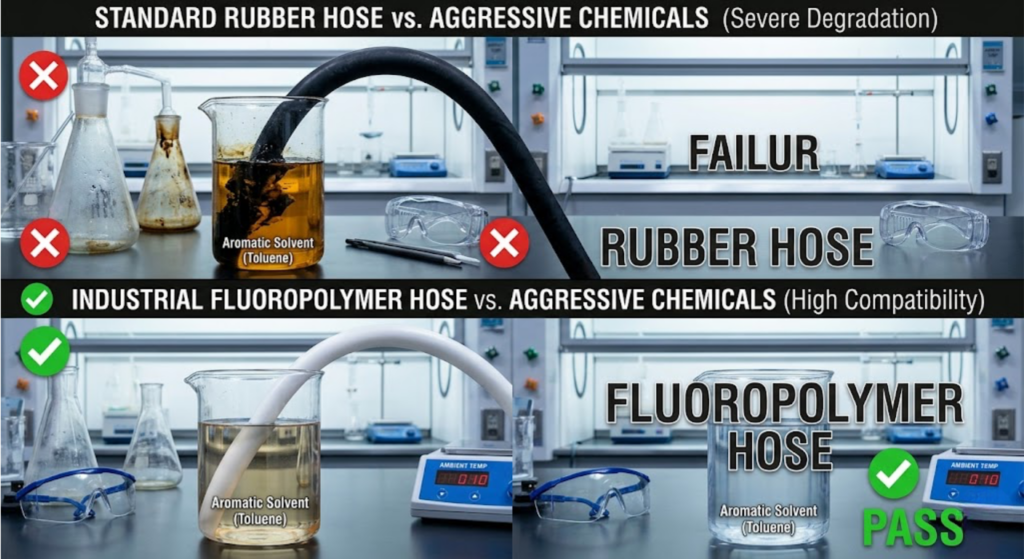
This is the most critical safety factor. A standard Rubber hose vs Industrial Hose comparison often reveals that rubber is susceptible to degradation when exposed to certain oils or aromatics. In contrast, specialized Industrial Hose options made from Fluoropolymers can handle the most aggressive acids and solvents that would melt a standard rubber tube in minutes.
The 2026 Comparison Table
| Feature | Rubber Hose | Specialized Industrial Hose (PVC/TPU/PTFE) |
|---|---|---|
| Flexibility | High (Excellent “memory” and bend radius) | Variable (Can be rigid or highly flexible) |
| Weight | Heavier | Generally Lighter |
| Best For | Construction, Agriculture, Mining | Pharmaceuticals, Food Processing, High-Tech |
| Longevity | High in abrasive/outdoor environments | High in chemically corrosive environments |
| Cost | Mid-to-High (Long-term value) | Low (for PVC) to Very High (for PTFE) |
Making the Choice: Which One Is Best for You?
When choosing between a Rubber hose vs Industrial Hose, ask yourself these three questions:
What is the medium? If it’s air, water, or mild chemicals, a Rubber hose vs Industrial Hose of PVC both work, but rubber lasts longer. If it’s a volatile solvent, go for a specialized industrial chemical hose.
Where will it be used? For 2026’s mobile robotic units and outdoor infrastructure, the flexibility of a Rubber hose vs Industrial Hose made of rigid plastic is a clear winner for the former.
What is the pressure requirement? Always check the Pmax rating. Many 2026 industrial standards require a 4:1 safety factor. Ensure your Rubber hose vs Industrial Hose selection meets these specific local regulations.
Final Thoughts for 2026
The “best” hose isn’t necessarily the most expensive one; it’s the one that matches your system’s STAMPED requirements (Size, Temperature, Application, Media, Pressure, Ends, and Delivery).
In 2026, we see a trend where the Rubber hose vs Industrial Hose gap is closing due to hybrid materials like Thermoplastic Vulcanizates (TPVs). These offer the best of both worlds—the performance of rubber with the processability of plastics. However, for sheer ruggedness and reliability in the trenches, the classic rubber hose remains the king of the industrial sector.
Before you purchase, consult with a certified fluid power specialist to ensure your Rubber hose vs Industrial Hosechoice is optimized for safety and efficiency. Selecting the right Rubber hose vs Industrial Hose today prevents a costly failure tomorrow.