Hydraulic systems power some of the most important machines used in construction, manufacturing, agriculture, mining, and transportation. Whether it is an excavator lifting heavy loads, a tractor operating in the field, or industrial machinery running production lines, the performance of the hydraulic system largely depends on the quality of the hydraulic hose pipe being used.
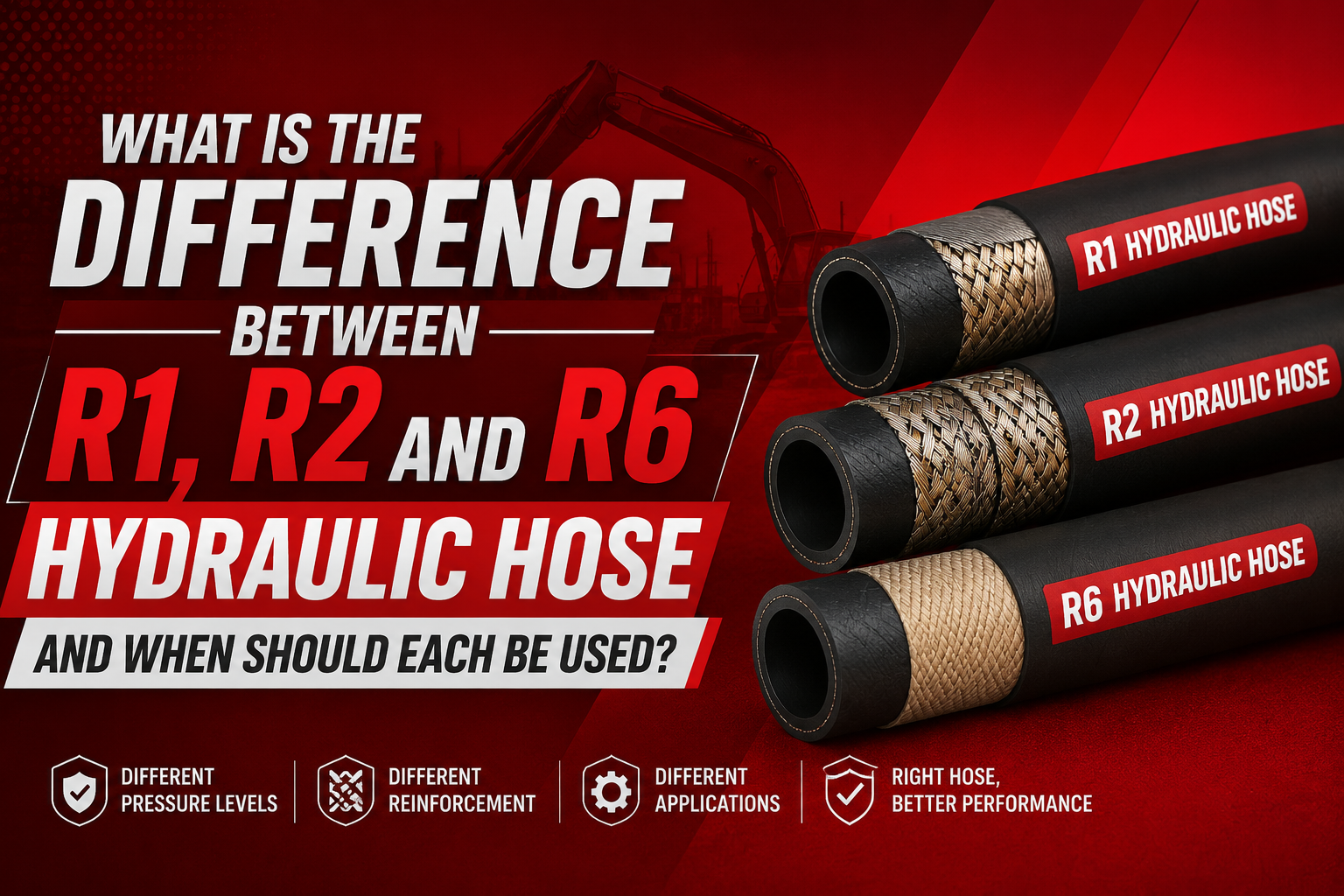
Among the many hydraulic hose classifications available in the market, R1, R2 and R6 Hydraulic Hose are among the most commonly used options. While they may appear similar from the outside, each type is designed for different pressure levels, operating conditions, and applications. Choosing the wrong hose can result in reduced efficiency, premature failure, increased maintenance costs, and even safety risks.
Understanding the differences between R1, R2 and R6 Hydraulic Hoses helps industries select the right solution for their equipment and operating environment. Each hose type offers unique advantages depending on pressure requirements, flexibility needs, and fluid transfer conditions. According to SAE standards, R1 and R2 hoses use steel wire reinforcement for medium and high pressure applications, while R6 uses textile reinforcement and is primarily designed for low pressure hydraulic systems.
Understanding Hydraulic Hose Classifications
A hose pipe used in hydraulic systems must withstand pressure, temperature fluctuations, vibration, and continuous fluid movement. Hydraulic hoses are categorized according to SAE standards, which define their construction, pressure capabilities, and intended applications.
The most common options include R1, R2 and R6 Hydraulic Hose, each serving different industrial requirements.
Before selecting a hose, it is important to ask:
What pressure level will the hydraulic system operate at?
The answer directly affects whether R1, R2, or R6 is the correct choice.
What Is R1 Hydraulic Hose?
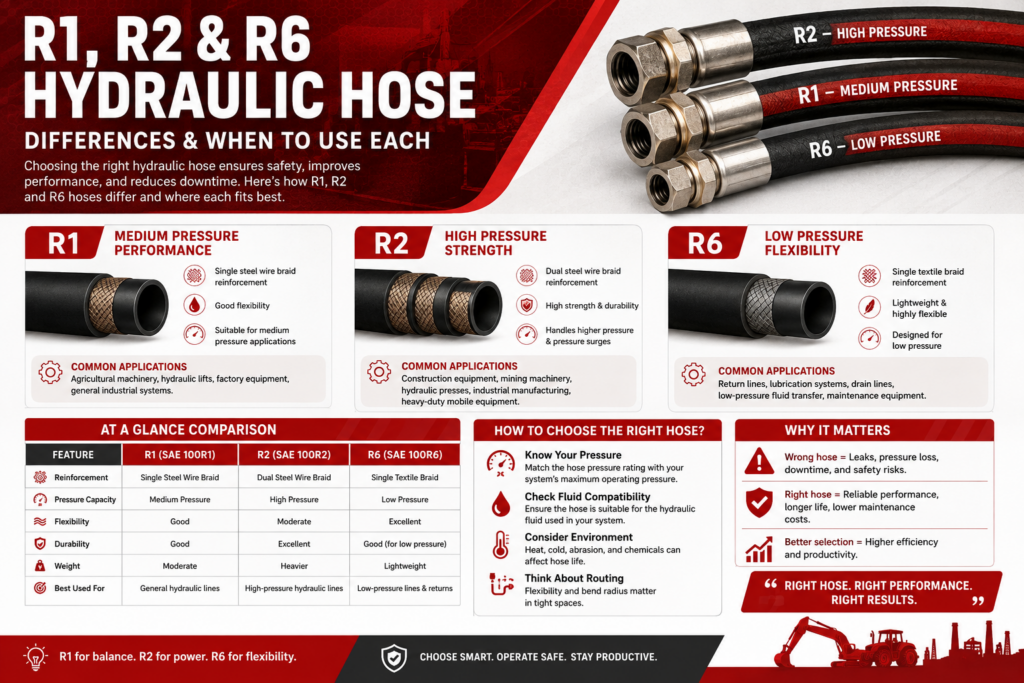
R1 hydraulic hose, also known as SAE 100R1, is a medium-pressure hydraulic hose reinforced with a single layer of high-tensile steel wire braid. It is widely used in industrial and agricultural equipment where moderate hydraulic pressure is required.
The construction of R1 hose includes:
An oil-resistant synthetic rubber inner tube.
A single steel wire braid reinforcement.
An abrasion-resistant outer cover.
Because it contains only one steel wire braid, this flexible hose offers excellent flexibility while still providing sufficient strength for medium-pressure hydraulic applications.
Common applications include agricultural machinery, factory equipment, hydraulic lifts, and general industrial systems. R1 hoses are also suitable for transferring petroleum-based and water-based hydraulic fluids.
What Is R2 Hydraulic Hose?
R2 hydraulic hose, or SAE 100R2, is designed for higher-pressure hydraulic systems. Unlike R1, it contains two layers of steel wire braid reinforcement, making it significantly stronger and more durable.
Its construction includes:
An oil-resistant inner tube.
Dual steel wire braid reinforcement.
A weather-resistant outer cover.
The additional reinforcement allows R2 hoses to handle higher working pressures and pressure surges. This makes them suitable for demanding industrial environments where equipment operates continuously under heavy loads.
Typical applications include:
Construction equipment
Mining machinery
Hydraulic presses
Industrial manufacturing systems
Heavy-duty mobile hydraulic equipment
Because of its stronger construction, R2 is slightly less flexible than R1 but offers superior durability and pressure resistance.
What Is R6 Hydraulic Hose?
R6 hydraulic hose differs significantly from both R1 and R2. Instead of steel wire reinforcement, it uses a single textile braid reinforcement layer. This makes it lightweight, highly flexible, and suitable for low-pressure hydraulic applications.
The hose structure includes:
Oil-resistant synthetic rubber tube.
Single textile braid reinforcement.
Protective synthetic rubber cover.
R6 hoses are commonly used in return lines, lubrication systems, drain lines, and low-pressure fluid transfer applications where high pressure resistance is not required.
Its flexibility often makes it an excellent choice where routing space is limited and ease of installation is important.
How Do R1, R2 and R6 Hydraulic Hose Compare?
When comparing R1, R2 and R6 Hydraulic Hose, the biggest differences are reinforcement type, pressure capacity, durability, and flexibility.
R1 uses a single steel wire braid and is suitable for medium-pressure applications. R2 uses two steel wire braids and is designed for high-pressure systems. R6 uses textile reinforcement and is intended for low-pressure hydraulic circuits.
Another important question many equipment operators ask is:
Can a higher-rated hydraulic hose replace a lower-rated hose?
In many cases, an R2 hose can replace an R1 hose if flexibility and routing requirements allow. However, replacing R2 with R1 or R6 may create safety and performance issues because the hose may not withstand the required operating pressure.
When Should R1 Hydraulic Hose Be Used?
R1 is the ideal choice when a balance between flexibility and pressure capability is required.
Industries commonly use R1 hoses in agricultural machinery, mobile hydraulic equipment, hydraulic lifts, and manufacturing systems that operate under moderate pressure conditions. Because of its single wire braid construction, it is easier to route through compact equipment compared to heavier reinforced hoses.
For businesses seeking cost-effective hydraulic solutions, R1 often provides the best combination of performance and affordability.
When Should R2 Hydraulic Hose Be Used?
R2 should be selected whenever hydraulic systems operate under higher pressure or experience frequent pressure spikes.
Heavy-duty construction equipment, mining machinery, and industrial hydraulic systems often rely on R2 hoses because they offer improved durability and resistance to demanding operating conditions. The double wire braid construction allows these hoses to maintain performance even in harsh industrial environments.
Choosing R2 helps reduce the risk of hose failure, especially in critical hydraulic applications where downtime can be costly.
If you want to learn how the right hydraulic hose selection improves operational efficiency, read our detailed guide on hydraulic hose pipe.
When Should R6 Hydraulic Hose Be Used?
R6 hoses are most suitable for low-pressure applications where flexibility is more important than pressure handling capability.
These hoses are commonly installed in hydraulic return lines, lubrication systems, low-pressure transfer systems, and maintenance equipment. Their lightweight construction simplifies installation and reduces routing challenges.
Because R6 lacks steel wire reinforcement, it should never be used in applications that require medium or high hydraulic pressure.
Why Choosing the Right Hydraulic Hose Matters
The performance of any hydraulic system depends heavily on selecting the proper hose for the application.
Using an underspecified hose can lead to fluid leaks, pressure loss, equipment damage, and unexpected downtime. On the other hand, selecting a hose with the correct pressure rating, flexibility, and durability helps maximize productivity and extend service life. Industry experts consistently emphasize that hose selection should be based on operating pressure, fluid compatibility, temperature range, and installation requirements.
Although products like a water hose or fire hose are designed for fluid transfer, hydraulic systems require specially engineered hoses capable of handling hydraulic pressure safely and efficiently.
For additional insights into hydraulic system reliability and hose performance, explore our previous blog discussing hydraulic hose failures and pressure-related issues. Understanding these challenges can help businesses avoid costly equipment breakdowns and improve long-term system performance.
Stay updated with the latest insights on hydraulic hoses, industrial fluid transfer systems, and rubber hose technologies. Follow Mangla Rubber Industries on LinkedIn for industry knowledge, product updates, and expert guidance that helps businesses improve performance and reliability.
Conclusion
Understanding the differences between is essential for selecting the right solution for industrial and agricultural applications.
R1 is ideal for medium-pressure systems requiring flexibility and affordability. R2 is designed for high-pressure applications that demand superior strength and durability. R6 is best suited for low-pressure hydraulic circuits where lightweight construction and flexibility are priorities.
By carefully evaluating pressure requirements, operating conditions, and equipment specifications, businesses can choose the most effective hydraulic hose pipe for their systems and ensure long-term reliability.
Conclusion
The primary difference is reinforcement type and pressure capacity. R1 has one steel wire braid, R2 has two steel wire braids, and R6 uses textile reinforcement for low-pressure applications.
R2 hydraulic hose is best suited for high-pressure applications because of its double steel wire braid reinforcement.
No. R6 is designed for low-pressure systems and should not replace R1 or R2 in medium or high-pressure applications.
R1 hoses are commonly used in agricultural equipment, industrial machinery, hydraulic lifts, and medium-pressure hydraulic systems.
Proper hose selection improves safety, efficiency, equipment performance, and overall system reliability while reducing maintenance costs.