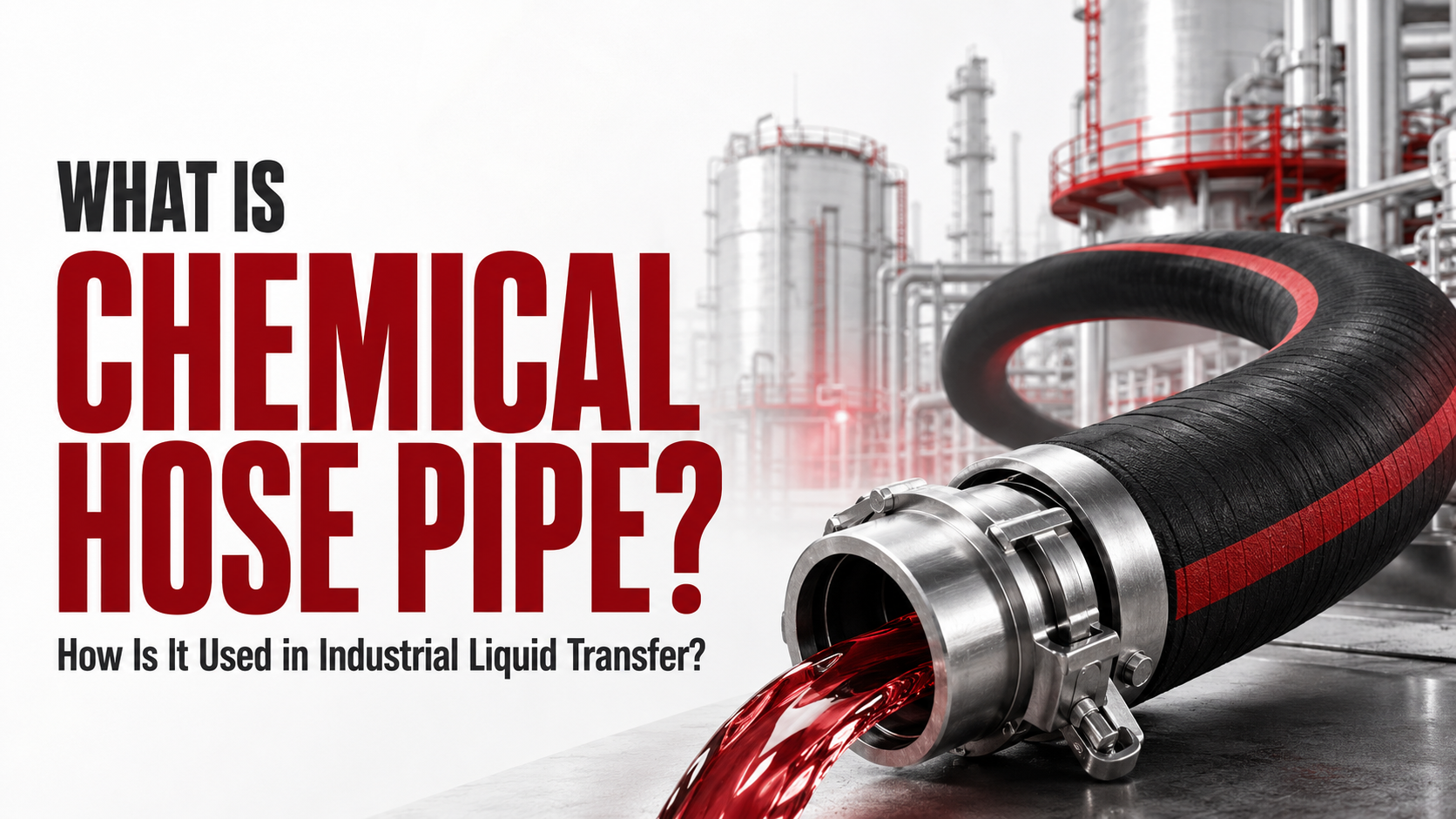
Moving liquid between a storage tank, reactor, tanker, and filling point requires reliable containment under pressure, temperature, movement, and chemical exposure. A Chemical Hose Pipe provides a flexible route for acids, alkalis, solvents, dyes, cleaning agents, and other process fluids that a standard water or air hose cannot safely handle.
The right Chemical Hose Pipe helps protect the product, equipment, and workers. Its tube, reinforcement, cover, and end connections must work as one assembly. Understanding these parts helps buyers avoid premature replacement.
Plant managers and procurement teams can follow Mangla Rubber Industries on LinkedIn for practical updates on industrial hose applications, selection, and maintenance.
What Is a Chemical Hose Pipe?
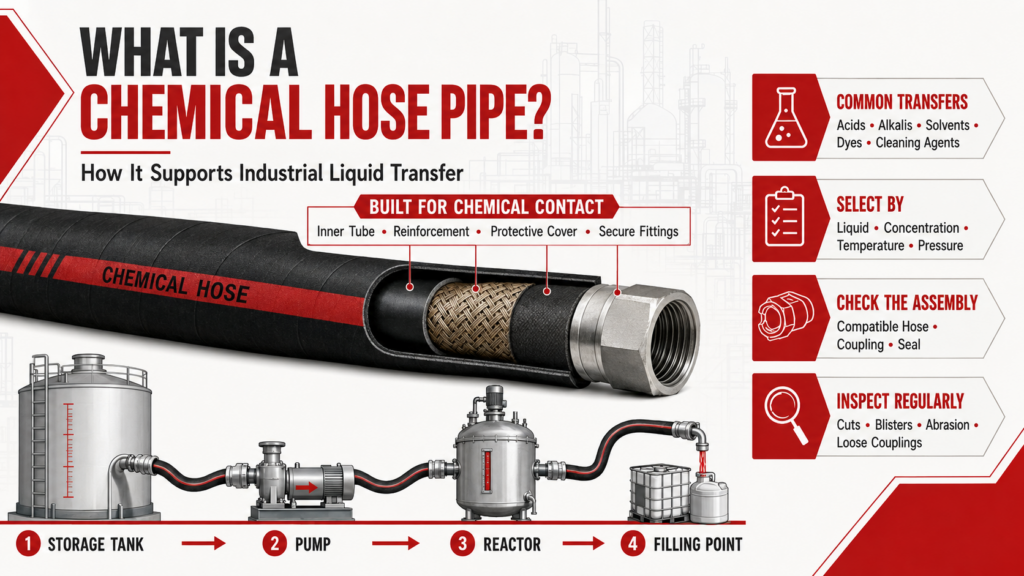
A Chemical Hose Pipe carries liquids that may attack, swell, crack, or contaminate common rubber. Its inner tube contacts the product directly, so compatibility guides material choice. Depending on the duty, it may use EPDM, nitrile rubber, UHMWPE, PTFE, or another compound.
Textile or wire reinforcement helps the Chemical Hose Pipe retain shape under pressure. Its cover resists abrasion, weather, splashes, and handling. This construction separates a purpose-built chemical hose from a utility line.
Products in the same broad category do not offer identical resistance. A Chemical Hose Pipe used for diluted cleaner may not suit concentrated acid or aromatic solvent. Selection must begin with the actual liquid, not hose colour, appearance, or diameter alone.
Why Can a General-Purpose Hose Fail During Chemical Transfer?
An ordinary hose can look sound while its tube deteriorates. Incompatible liquid may cause swelling, hardening, blistering, or layer separation. The Chemical Hose Pipe may then lose strength, contaminate material, or leak.
Temperature and concentration can alter performance significantly. A compound that handles a weak solution at room temperature may fail sooner with a hotter or stronger solution. Experienced chemical hose manufacturers therefore ask for complete service details before recommending a construction.
How a Chemical Hose Pipe Is Built for Industrial Service
The inner tube determines safe liquid contact. EPDM suits selected acid, alkali, and hot-water duties, while nitrile is generally associated with oil-based media. UHMWPE and PTFE offer broad resistance in many demanding transfers. These materials are not interchangeable, so selection needs a current compatibility chart and manufacturer confirmation.
Reinforcement controls pressure and stability. Textile plies suit many duties, while wire may provide higher pressure or vacuum resistance. Under pump suction, the Chemical Hose Pipe needs a suitable rating to avoid collapse.
The cover faces abrasion, sunlight, weather, and chemical splash. It protects the structure but cannot replace a compatible tube. Together, these layers let the Chemical Hose Pipe flex while retaining strength.
Industrial Uses of Chemical Hose Pipe
Plants use a Chemical Hose Pipe between storage vessels, pumps, tanks, reactors, and packaging lines. Its flexibility accommodates movement and temporary connections. Media may include acids, alkalis, solvents, inks, paints, and cleaners, subject to compatibility.
Tankers and loading bays use suction and discharge assemblies. Here, a Chemical Hose Pipe faces repeated bending, outdoor exposure, handling, and pressure changes. Its length and bend radius must suit the layout without pulling on couplings.
Pharmaceutical, cosmetic, and water-treatment plants may value purity as much as resistance. A smooth tube can reduce residue and aid approved cleaning. A chemical resistant hose is not automatically food grade, pharmaceutical grade, or steam-cleanable. Verify each requirement separately.
The Chemical Hose Pipe also serves drum transfer, waste handling, dosing skids, and mobile pumping. Each duty has different needs for flexibility, electrical continuity, vacuum resistance, and cleaning.
Selecting the Right Chemical Hose Pipe
Begin with the liquid’s full name, concentration, and composition. Safety data sheets and process specifications provide a better compatibility basis than trade names. Charts help with screening, but temperature, pressure, and exposure time still need review. Parker’s guide also treats compatibility ratings as general guidance because service conditions affect performance.
Confirm maximum pressure, surges, vacuum, and temperature range. The Chemical Hose Pipe should meet the most demanding credible condition. An undersized hose increases velocity and pressure loss, while an oversized one becomes harder to handle.
Route the Chemical Hose Pipe without twisting, kinking, edge contact, or tension at the ends. Minimum bend radius is a limit, not a routing target. Pump vibration may require added support.
Confirm any need for conductivity, special cleaning, colour coding, or testing. Reliable chemical hose manufacturersshould review these factors. A suitable Chemical Hose Pipe comes from operating data, not price per metre alone.
Why Chemical Hose Fittings Matter
The hose body and ends form one assembly. Incorrect chemical hose fittings may corrode, leak, or damage the tube. Coupling metals, gaskets, and seals must suit the product and temperature.
Matched chemical hoses and fittings support secure flow. Coupling choice depends on pressure, connection standard, handling, and release risk. Specify the Chemical Hose Pipe, coupling, seal, and attachment method together.
Inspection and Maintenance of a Chemical Hose Pipe
Check for cuts, abrasion, soft spots, blisters, exposed reinforcement, flattening, loose couplings, and leaks. A Chemical Hose Pipe with damage or changed stiffness should leave service for assessment before a defect becomes a spill.
Cleaning must follow manufacturer and plant procedures. After cleaning, the Chemical Hose Pipe should be drained and stored without residue, tight bends, or crushing loads.
Age alone does not set service life. Chemical severity, temperature, pressure cycles, storage, and wear also matter. Inspection records can reveal recurring routing or handling problems.
Related Reading for Industrial Fluid Systems
Chemical and hydraulic systems carry different media, but both need hoses selected for actual conditions. In oil-powered machinery, routing, pressure rating, fitting condition, and inspection directly influence uptime.
Our previous guide explains how a hydraulic hose pipe supports efficient fluid movement and helps prevent avoidable interruptions. Read it when reviewing production, maintenance, construction, or material-handling equipment.
Discuss Your Industrial Hose Requirement
Businesses sourcing a Chemical Hose Pipe should share the liquid, concentration, temperature, pressure, size, length, and connection details. Clear data supports a more suitable hose and coupling recommendation.
Mangla Rubber Industries supplies industrial hose solutions for chemical, hydraulic, steam, air, water, petroleum, and other duties. Buyers can contact Mangla Rubber Industries to discuss specifications, custom lengths, chemical hoses and fittings, and bulk requirements.
Conclusion
Final Thoughts on Chemical Hose Pipe Selection
A Chemical Hose Pipe is safety-critical. Performance depends on compatibility between the liquid, tube, reinforcement, cover, seals, and couplings. Pressure, temperature, concentration, suction, cleaning, and storage all matter.
Selecting the right Chemical Hose Pipe supports controlled flow, product quality, and planned maintenance. A specification based on fluid data and operating conditions provides the soundest basis for dependable service.
Frequently Asked Questions
1. Can one Chemical Hose Pipe transfer every type of chemical?
No. A Chemical Hose Pipe is compatible only with liquids and conditions approved for its tube, fittings, and seals. Concentration and temperature can change suitability, so every application needs separate review.
2. How is a chemical resistant hose different from an ordinary rubber hose?
A chemical resistant hose has an inner tube selected for specified aggressive fluids. Ordinary rubber may swell, soften, crack, or contaminate the product when exposed beyond its intended service.
3. How should the correct size of Chemical Hose Pipe be chosen?
Size depends on required flow, pressure loss, pump conditions, connection diameter, length, and handling. The Chemical Hose Pipe must remain within its pressure, vacuum, and bend-radius limits.
4. Can damaged chemical hose fittings be reused?
Do not reuse fittings showing corrosion, deformation, thread damage, worn seals, or movement at the hose end. The complete Chemical Hose Pipe assembly should be assessed before returning to service.
5. How often should a Chemical Hose Pipe be inspected?
Frequency depends on chemical severity, pressure, transfer frequency, handling, and site risk. A Chemical Hose Pipe in demanding service normally needs pre-use checks and documented periodic inspection.