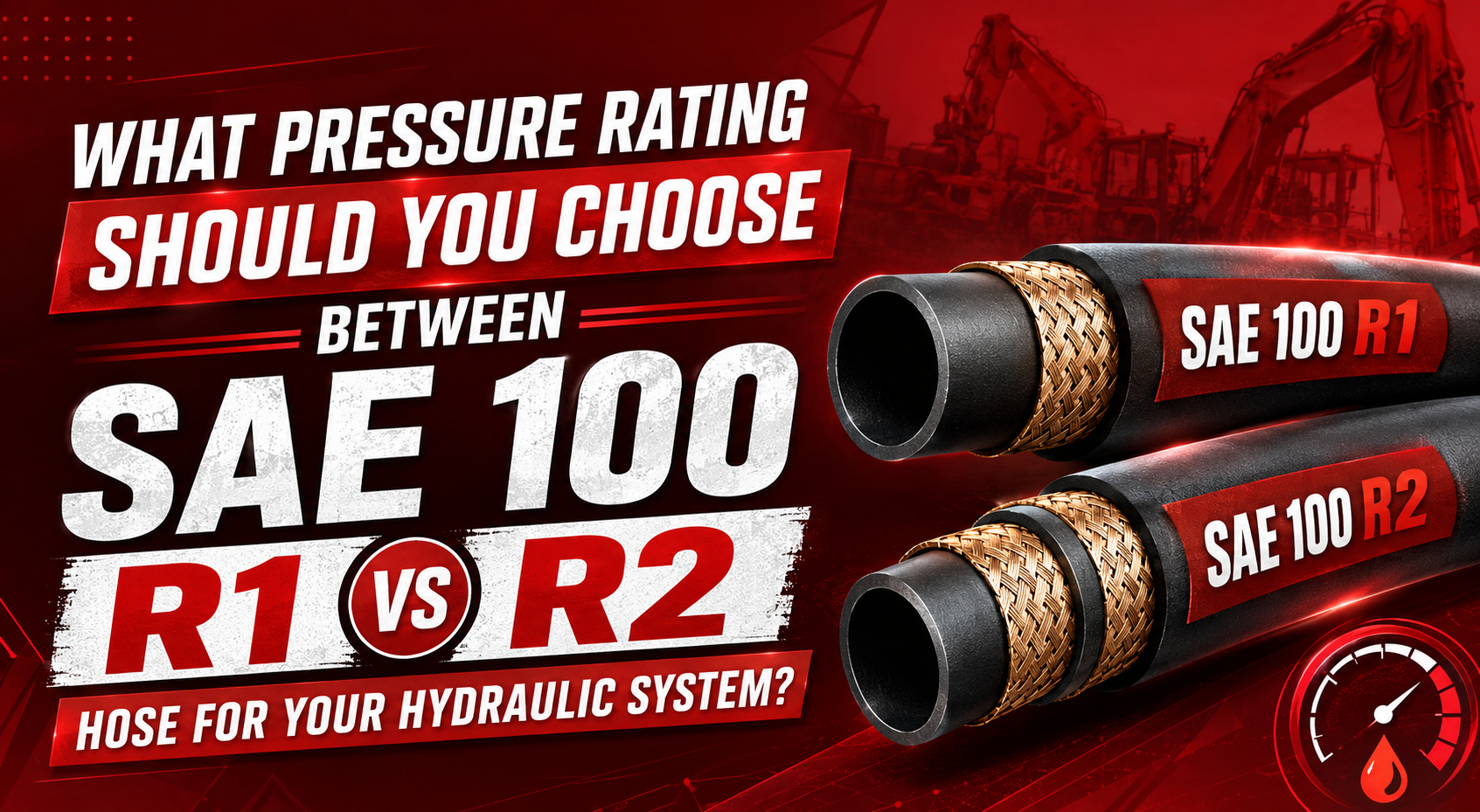
Hydraulic systems operate under demanding conditions where every component must perform reliably. Among these components, the hydraulic hose plays a crucial role in carrying pressurized fluid safely from one point to another. Selecting the wrong hose can result in reduced efficiency, unexpected failures, and costly downtime. This is why understanding the pressure rating of SAE 100 R1 and R2 Hose is essential before making a purchase.
Many industries including construction, agriculture, manufacturing, mining, and material handling depend on hydraulic hoses that can withstand different operating pressures. While both R1 and R2 hoses are widely used across these sectors, they are designed for different pressure requirements and applications.
If you are planning to invest in a SAE 100 R1 and R2 Hose, this guide will help you understand their pressure ratings, construction, applications, and how to select the right option for your hydraulic system.
Why Does Pressure Rating Matter in Hydraulic Hoses?
Pressure rating is one of the most important factors when selecting a hydraulic hose. It determines the maximum working pressure that the hose can safely handle during operation. Choosing a hose with an inadequate pressure rating increases the risk of leakage, hose bursts, equipment damage, and workplace accidents.
A properly selected SAE 100 R1 and R2 Hose not only improves operational safety but also extends the service life of your hydraulic equipment.
But how do you know whether your hydraulic system requires an R1 hose or an R2 hose?
The answer depends on the operating pressure, application, flexibility requirements, and environmental conditions.
Understanding SAE 100 R1 and R2 Hose
The SAE 100 R1 and R2 Hose standards are established to ensure consistent quality, performance, and pressure handling for hydraulic hoses used across industrial applications.
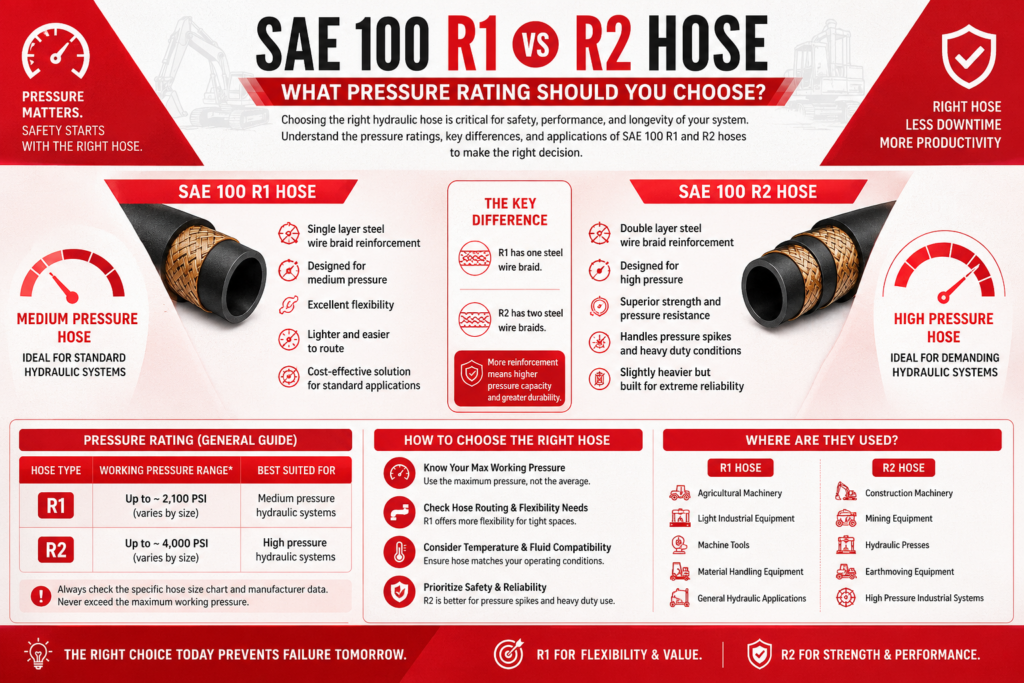
The r1 hose is manufactured with a single layer of high tensile steel wire braid reinforcement. It is suitable for medium pressure hydraulic systems where flexibility is equally important.
The r2 hose features two layers of braided steel wire reinforcement. This additional reinforcement enables it to withstand significantly higher working pressures, making it ideal for heavy duty hydraulic systems operating under demanding conditions.
Although both hoses may appear similar from the outside, their internal construction makes a considerable difference in pressure handling capability.
What is the difference between r1 and r2 hose?
One of the most common questions asked by equipment owners is about the difference between r1 and r2 hose.
The primary distinction lies in the reinforcement structure. An R1 hose contains one steel wire braid, while an R2 hose contains two steel wire braids. This additional reinforcement allows the R2 hose to operate safely at higher working pressures.
The difference between r1 and r2 hydraulic hose also affects durability. R2 hoses generally provide greater resistance against pressure spikes and heavy duty operating conditions. R1 hoses, on the other hand, offer better flexibility and are often easier to install in applications where space is limited.
Another difference is the overall weight. Since R2 hoses have double reinforcement, they are slightly heavier than R1 hoses. However, the added strength makes them the preferred choice for demanding industrial environments.
Understanding the difference between r1 and r2 hydraulic hose helps engineers and maintenance professionals choose the correct hose based on operating conditions rather than price alone.
Pressure Ratings of SAE 100 R1 and R2 Hose
Pressure ratings vary depending on the hose diameter, but one general rule remains consistent.
The r1 hose is designed for medium pressure hydraulic systems. It performs exceptionally well in equipment where pressure demands remain within standard operating limits.
The hydraulic high pressure hose sae 100 r2 is specifically designed for higher pressure applications. Its double wire braid reinforcement allows it to handle greater working pressure while maintaining structural integrity under continuous operation.
For industries where hydraulic systems frequently experience pressure fluctuations or shock loads, the hydraulic high pressure hose sae 100 r2 offers a safer and more dependable solution.
Rather than selecting a hose solely based on its maximum pressure rating, always consider your system’s normal operating pressure, surge pressure, temperature, and fluid compatibility.
Which Industries Prefer R1 and Which Prefer R2?
Different industries have different hydraulic requirements.
The r1 hose is commonly used in agricultural machinery, light industrial equipment, machine tools, mobile hydraulic equipment, and general hydraulic applications where operating pressure remains moderate.
The r2 hose is more suitable for construction machinery, mining equipment, heavy manufacturing plants, earthmoving equipment, hydraulic presses, and high pressure industrial machinery.
When selecting a hydraulic hose pipe r2, businesses often prioritize safety, reliability, and long service life over initial purchase cost because unexpected hose failure can be significantly more expensive than investing in the correct hose.
How to Choose the Right SAE 100 R1 and R2 Hose
Selecting the right SAE 100 R1 and R2 Hose starts with understanding your hydraulic system.
First, determine your system’s maximum working pressure instead of relying only on average operating pressure. Hydraulic systems often experience sudden pressure spikes that can exceed normal operating conditions.
Second, consider the routing of the hose. If your installation requires tighter bends and greater flexibility, the r1 hose may be more suitable.
Third, evaluate environmental conditions including temperature, exposure to oil, abrasion, chemicals, and outdoor weather.
Finally, always choose a hose that meets recognized quality standards and is manufactured by an experienced supplier.
Making the correct choice today can significantly reduce maintenance costs and improve equipment reliability over the long term.
Explore Our SAE 100 R1 and R2 Hydraulic Hose Range
If you are looking for reliable industrial hydraulic hose solutions, explore our premium SAE 100 R1 and R2 Hydraulic Hose collection here:
Our range is manufactured using high quality raw materials and designed to deliver dependable performance across demanding industrial applications.
Common Mistakes While Selecting Hydraulic Hoses
Many businesses unknowingly select hydraulic hoses based only on size or price. Unfortunately, this approach often results in premature hose failures.
Ignoring the required pressure rating, selecting an undersized hose, overlooking fluid compatibility, or failing to consider operating temperature can all reduce hose life.
Another common mistake is replacing a damaged r2 hose with an R1 hose simply because it appears similar. While both hoses may fit the equipment, using a hose with insufficient pressure capacity can create serious safety risks.
Likewise, installing a hydraulic hose pipe r2 in an application that only requires an R1 hose may unnecessarily increase costs without providing meaningful operational benefits.
Proper hose selection always begins with understanding your hydraulic system rather than simply matching hose dimensions.
Conclusion
Selecting the correct SAE 100 R1 and R2 Hose depends on the operating pressure and demands of your hydraulic system. While the r1 hose is an excellent choice for medium pressure applications that require flexibility, the r2 hoseprovides greater strength for high pressure and heavy duty environments.
Understanding the difference between r1 and r2 hose and the difference between r1 and r2 hydraulic hose enables businesses to make informed purchasing decisions that improve equipment performance, reduce maintenance costs, and increase workplace safety.
Whether you need a flexible hose for standard hydraulic equipment or a hydraulic high pressure hose sae 100 r2 for demanding industrial operations, selecting the right pressure rating will always contribute to longer service life and more reliable performance.
Stay updated with the latest industrial insights, hydraulic hose innovations, product launches, and engineering knowledge by following Mangla Rubber Industries on LinkedIn.
SAE 100 R1 and R2 Hose SAE 100 R1 and R2 Hose SAE 100 R1 and R2 Hose SAE 100 R1 and R2 Hose SAE 100 R1 and R2 Hose SAE 100 R1 and R2 Hose SAE 100 R1 and R2 Hose SAE 100 R1 and R2 Hose SAE 100 R1 and R2 Hose
FAQs
1. What is the main difference between SAE 100 R1 and R2 Hose? The main difference is the reinforcement. The r1 hose has one steel wire braid, while the r2 hose has two steel wire braids, allowing it to handle higher working pressure.
2. Where is the hydraulic high pressure hose sae 100 r2 commonly used? It is widely used in construction equipment, mining machinery, heavy industrial hydraulic systems, hydraulic presses, and other applications requiring high pressure performance.
3. Can I replace an R2 hose with an R1 hose? Replacement should only be done if the operating pressure falls within the working limits of the R1 hose. Always follow the equipment manufacturer’s specifications.
4. How do I identify the correct hydraulic hose pipe r2 for my machine? Check the required pressure rating, hose size, temperature range, and fluid compatibility before selecting a hydraulic hose pipe r2.
5. Why is understanding the difference between r1 and r2 hydraulic hose important? Knowing the difference between r1 and r2 hydraulic hose helps ensure safe operation, improves equipment reliability, and prevents costly hydraulic system failures.