In industrial operations, fluid transfer systems are responsible for maintaining smooth equipment performance, pressure management, and operational efficiency. From manufacturing facilities and construction equipment to mining operations and agricultural machinery, every industrial setup depends on reliable hose systems for safe material transfer.
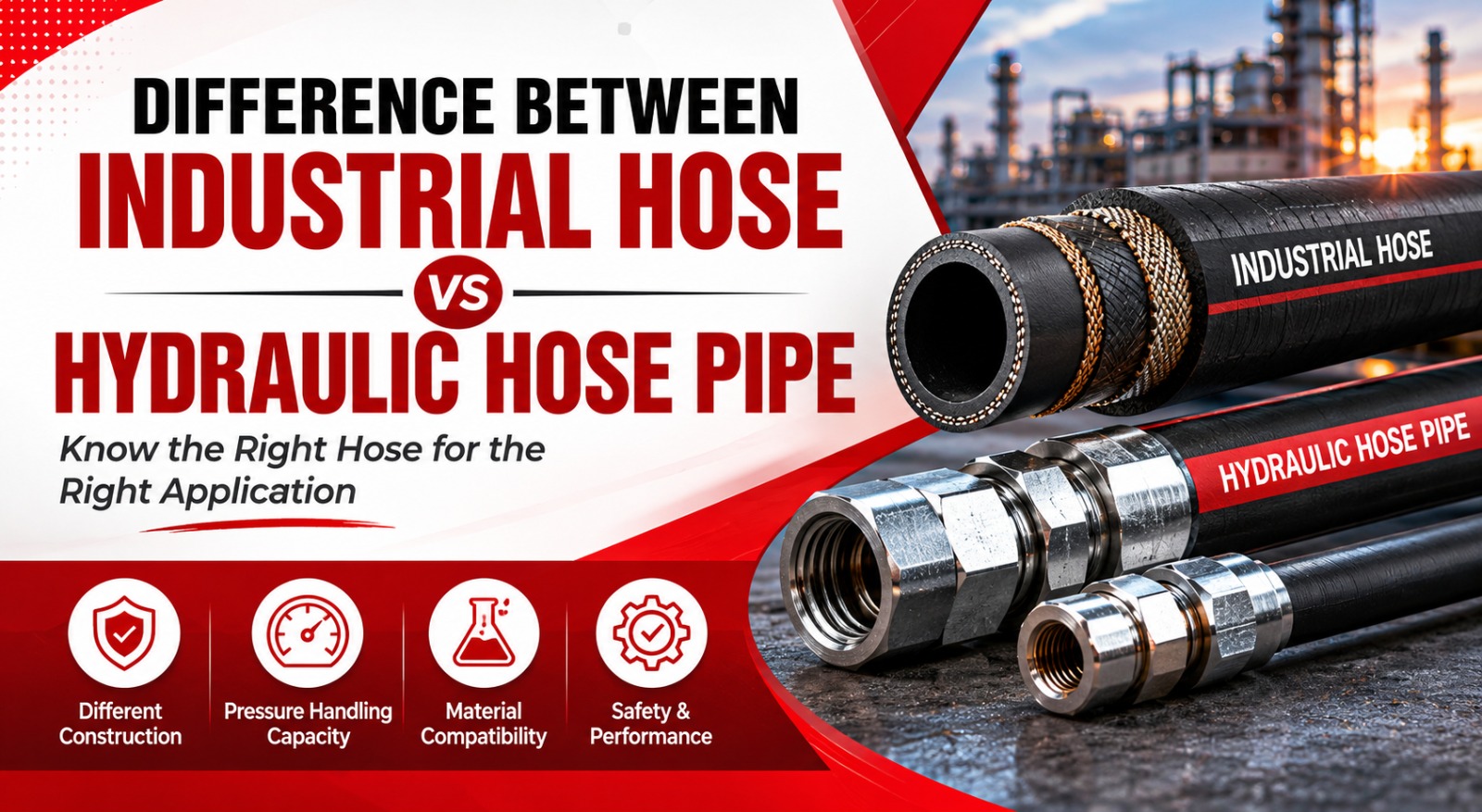
Many businesses often assume that Industrial Hose and Hydraulic Hose Pipe systems are the same because both are used for transferring fluids across industrial environments. However, their design, functionality, pressure capacity, and applications are completely different. Understanding these differences is important because selecting the wrong hose can affect machine performance, increase downtime, and create safety risks.
A Hose may look simple from the outside, but its internal construction determines where and how it should be used. Some hoses are designed for chemical transfer and water movement, while others are built specifically for handling high hydraulic pressure inside industrial machinery.
Understanding the Purpose of Industrial Hose and Hydraulic Hose Pipe
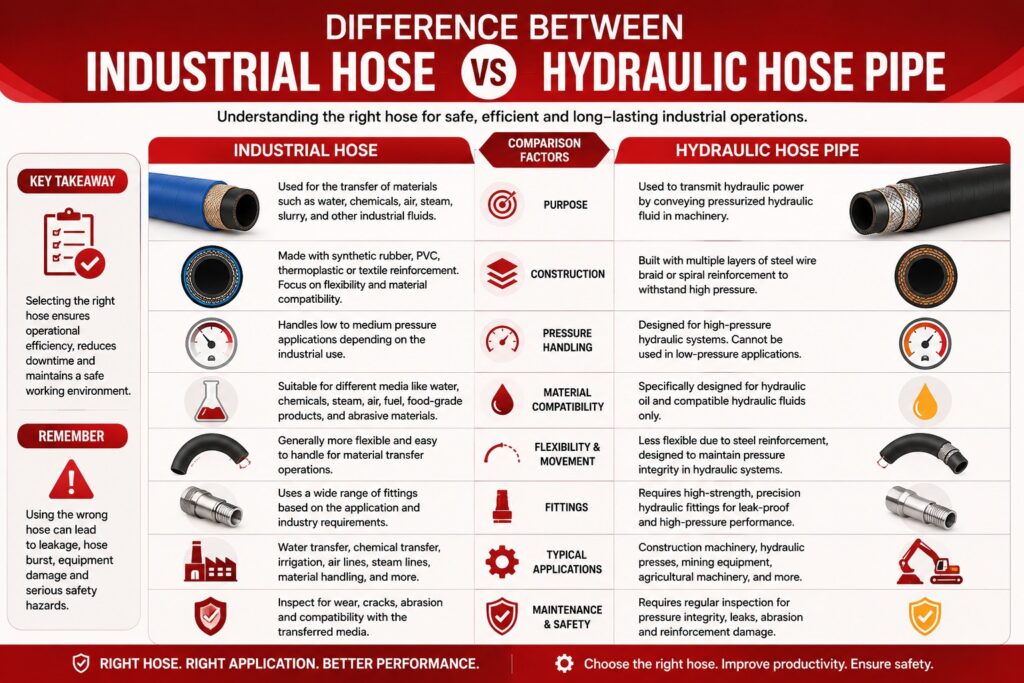
An Industrial hose is commonly used in industries where liquids, gases, steam, chemicals, slurry, or dry materials need to be transferred from one location to another. These hoses are built to handle environmental conditions, abrasion, flexibility requirements, and different industrial materials.
A hydraulic hose, however, serves a different purpose. Hydraulic systems rely on pressurized fluid to generate movement and power inside machinery. Because of this, hydraulic hoses are designed to withstand extreme pressure conditions while maintaining operational stability.
Although both systems are involved in industrial fluid transfer, their working principles are different. An industrial hose focuses on transporting materials efficiently, while a hydraulic hose is responsible for transferring hydraulic power within mechanical systems.
Construction Difference Between Industrial Hose and Hydraulic Hose Pipe
One of the biggest differences between these hose systems lies in their construction.
An Industrial hose is usually manufactured using synthetic rubber compounds, thermoplastic materials, PVC, or textile reinforcement layers depending on the industrial application. The focus remains on flexibility, abrasion resistance, and compatibility with transferred materials.
A standard Rubber hose used for industrial applications is often lightweight and easier to handle. It may include textile reinforcement for moderate pressure handling, but it is not engineered for continuous hydraulic pressure.
A hydraulic hose is built differently because it must operate under significantly higher pressure conditions. These hoses contain multiple reinforcement layers made from braided steel wire or spiral wire reinforcement. The inner tube carries hydraulic fluid, while the reinforcement layers provide strength against pressure loads.
The outer protective layer of a hydraulic hose is designed to resist abrasion, oil exposure, weather conditions, and mechanical stress. Without these reinforcement layers, hydraulic systems would not be able to maintain stable pressure during operation.
This construction difference is the reason hydraulic hoses are commonly used in heavy machinery and industrial hydraulic systems instead of standard industrial hoses.
Pressure Handling Capacity
Pressure handling is one of the most important factors separating Industrial Hose and Hydraulic Hose Pipe systems.
An Industrial hose generally works in low to medium pressure environments. These hoses are suitable for transferring water, chemicals, compressed air, petroleum products, or dry bulk materials where pressure requirements are relatively controlled.
In comparison, a hydraulic hose is specifically designed for high-pressure hydraulic circuits. Hydraulic machinery depends on pressurized fluid to create movement, lifting force, and mechanical operation. As a result, hydraulic hoses must tolerate continuous pressure fluctuations without failure.
Industries using construction machinery, hydraulic presses, mining equipment, and agricultural systems require reinforced hydraulic hoses because ordinary industrial hoses cannot survive under such pressure conditions.
Using an industrial hose inside a hydraulic application can result in bursting, leakage, or sudden operational failure. This is why pressure rating plays a major role in hose selection.
Material Compatibility and Industrial Usage
Another important difference between Industrial Hose and Hydraulic Hose Pipe systems is material compatibility.
An Industrial hose is selected according to the material being transferred. Some hoses are designed for water transfer, while others are used for chemicals, fuel, steam, food-grade products, or abrasive materials. Industrial environments often demand hoses that can resist heat, corrosion, and external wear.
A durable Rubber hose is widely preferred in industrial operations because it provides flexibility along with resistance against environmental damage.
A hydraulic hose, however, is mainly designed for hydraulic fluid transfer. Hydraulic oil systems require controlled pressure movement and leak-free operation for machinery to function properly. Hydraulic hoses are not selected only for flexibility but also for their ability to maintain pressure integrity during machine operation.
This difference in application makes both hose categories important for separate industrial purposes.
Flexibility and Operational Movement
Flexibility requirements also differ between industrial and hydraulic systems.
An Industrial hose is usually more flexible because many industrial applications involve regular movement, bending, or repositioning. Industries using tanker systems, pneumatic operations, or fluid discharge setups often require hoses that can move easily across operational areas.
A hydraulic hose is comparatively more rigid because of its steel reinforcement layers. Although hydraulic hoses are designed to allow movement within machinery, their structure focuses more on pressure resistance than lightweight flexibility.
This is especially important in heavy industrial machinery where hydraulic systems operate continuously under mechanical stress.
Importance of Proper hydraulic hose fittings
Hydraulic systems do not depend only on the hose itself. The performance of the system also depends heavily on the quality of hydraulic hose fittings.
Hydraulic systems require leak-proof connections because even a minor pressure leak can affect machine performance and operational safety. Proper hydraulic fittings help maintain stable pressure levels and ensure smooth hydraulic fluid movement.
Different hydraulic systems use different fitting types depending on pressure rating, machinery design, thread standards, and industrial requirements. Poor-quality fittings or incorrect installation can lead to pressure loss, fluid leakage, or equipment damage.
Because of this, industries operating hydraulic machinery usually prefer professionally assembled hydraulic hose systems instead of individual hose components.
Durability and Maintenance Requirements
Both hose systems are designed for industrial use, but their maintenance requirements are different.
An Industrial hose typically faces external environmental exposure such as abrasion, weather conditions, chemical contact, and operational wear. The durability of the hose depends on the transferred material and the surrounding industrial environment.
A Rubber hose used in manufacturing or fluid transfer operations is generally inspected for cracking, abrasion, or flexibility loss over time.
A hydraulic hose experiences additional stress because hydraulic systems operate under constant pressure cycles. These hoses are exposed to heat generation, vibration, and internal pressure pulsation during operation.
For this reason, hydraulic hoses require regular inspection and preventive maintenance to avoid sudden failure. Replacing damaged hoses before operational breakdown is important for maintaining industrial safety.
Safety Considerations in Industrial Applications
Selecting the correct hose system is not only important for efficiency but also for workplace safety.
Using an Industrial hose in a hydraulic pressure system can create dangerous operating conditions because the hose may not tolerate the required pressure level. Similarly, using a hydraulic hose for incompatible chemical transfer may damage the internal tube and reduce hose life.
Industrial operations should always evaluate pressure conditions, temperature exposure, transferred material, and flexibility requirements before selecting a hose system.
Choosing the right hose improves operational reliability, reduces maintenance costs, and supports long-term equipment performance.
Businesses looking for reliable Industrial hose, hydraulic hose, Rubber hose, and industrial fluid transfer solutions can explore the industrial product range available at Mangla Rubber Industries. The company provides industrial hose systems, hydraulic solutions, and industrial rubber products suitable for demanding industrial applications.
Selecting the Right Hose for Industrial Operations
Businesses should never choose a hose system based only on appearance or general usage assumptions. A proper understanding of industrial requirements is necessary before selecting between Industrial Hose and Hydraulic Hose Pipe systems.
An Industrial hose is suitable for material transfer operations involving air, chemicals, water, steam, and industrial fluids. A hydraulic hose is specifically designed for hydraulic machinery where pressure transmission is essential for machine movement and industrial operation.
Factors such as operating pressure, material compatibility, temperature conditions, reinforcement requirements, and fitting compatibility should always be considered during selection.
Working with experienced industrial hose suppliers can help businesses identify the right hose assemblies for their operational requirements.
Growing Demand for Industrial Hose and Hydraulic Hose Pipe Systems
In modern manufacturing and heavy equipment industries, the discussion around Industrial Hose and Hydraulic Hose Pipe systems has become increasingly important because both play a direct role in industrial performance and operational safety. Businesses operating in sectors such as construction, mining, automotive manufacturing, agriculture, chemical processing, and infrastructure development often evaluate Industrial Hose and Hydraulic Hose Pipe solutions together before selecting a suitable system for their operations.
The comparison between Industrial Hose and Hydraulic Hose Pipe products usually depends on pressure requirements, operational conditions, and fluid transfer applications. While an Industrial Hose and Hydraulic Hose Pipe may appear similar externally, their internal construction and working capabilities are designed for completely different industrial environments.
Importance of Choosing the Right Industrial Hose and Hydraulic Hose Pipe
As industrial machinery becomes more advanced, the demand for reliable Industrial Hose and Hydraulic Hose Pipe systems continues to grow across multiple sectors. Selecting the correct Industrial Hose and Hydraulic Hose Pipe setup helps industries maintain equipment efficiency, reduce maintenance downtime, and improve operational consistency. Many industrial buyers now focus on long-term durability, fitting compatibility, and application-specific performance when investing in Industrial Hose and Hydraulic Hose Pipe solutions for industrial operations.
Companies handling material transfer systems generally rely on industrial hose assemblies, whereas machinery using hydraulic power depends heavily on hydraulic hose pipe systems for stable pressure transmission. Understanding these operational differences allows businesses to make better decisions while selecting industrial fluid transfer solutions.
Conclusion
Understanding the difference between Industrial Hose and Hydraulic Hose Pipe systems is essential for safe and efficient industrial operations.
An Industrial hose is designed mainly for transferring materials such as chemicals, water, steam, air, and industrial fluids across different industries. A hydraulic hose is specifically engineered for high-pressure hydraulic systems where fluid power controls machine operation.
Their construction, pressure handling capacity, reinforcement layers, and industrial applications are entirely different. Selecting the correct hose system helps industries improve productivity, reduce downtime, and maintain long-term equipment performance.
Businesses should always evaluate pressure requirements, transferred materials, and fitting compatibility before choosing hose assemblies for industrial use.
For industrial updates, hose industry insights, and hydraulic application information, businesses can also connect with Mangla Rubber Industries on LinkedIn to stay informed about industrial rubber and hose system developments.
Industrial Hose and Hydraulic Hose PipeIndustrial Hose and Hydraulic Hose Pipe
Industrial Hose and Hydraulic Hose Pipe
Industrial Hose and Hydraulic Hose Pipe
Industrial Hose and Hydraulic Hose Pipe
FAQs
The major difference is their application and pressure handling capability. An Industrial hose is used for transferring materials like chemicals, water, steam, and air, while a hydraulic hose is designed for high-pressure hydraulic fluid transmission inside machinery.
A standard Rubber hose designed for industrial use should not be used in hydraulic systems unless it is specifically manufactured as a hydraulic hose. Hydraulic systems require reinforced hose construction for pressure handling
Hydraulic hose fittings create secure and leak-resistant connections within hydraulic systems. Proper fittings help maintain pressure stability and improve machinery performance.
Hydraulic hoses are commonly used in construction equipment, agricultural machinery, hydraulic presses, mining systems, and industrial automation equipment.
Industries usually select a Hose system based on operating pressure, fluid compatibility, temperature conditions, flexibility requirements, and industrial application needs.