In industrial operations, hoses are often treated as a routine component until they begin affecting machine performance. Leakage, pressure loss, fitting failures, and unexpected downtime are commonly linked to poor hose quality or incorrect product selection. That is why choosing the right Rubber Hose Manufacturer is not simply about procurement. It directly affects operational reliability, maintenance efficiency, and long-term equipment performance.
Industries such as manufacturing, construction, agriculture, mining, transportation, and heavy engineering rely heavily on dependable hose systems for fluid transfer and hydraulic applications. A hose operating under continuous pressure or harsh environmental conditions must maintain durability, flexibility, and structural strength for extended periods.
The challenge for industrial buyers is that many hoses appear similar at first glance. The actual difference usually becomes visible only after the product enters real operating conditions. Material quality, reinforcement strength, manufacturing consistency, and technical support ultimately determine how well the hose performs over time.
Industrial Applications Require Different Hose Configurations
One of the most common mistakes businesses make while sourcing hoses is focusing only on dimensions or pricing. Industrial applications vary significantly depending on operating pressure, temperature, fluid compatibility, and environmental exposure.
For example, a hose used in hydraulic machinery works under entirely different conditions compared to one handling compressed air or water transfer. Even within hydraulic systems, operational requirements can vary from one machine to another. Pressure fluctuations, oil temperature, movement range, and bend radius all influence hose selection.
Experienced hydraulic rubber hose manufacturers usually evaluate these conditions before recommending a product. A hose that performs well in one application may fail quickly in another if the material or reinforcement structure is not suitable.
This is why industrial buyers should work with manufacturers that understand application-based requirements instead of suppliers focused only on standard inventory movement.
Manufacturing Quality Becomes Noticeable After Continuous Usage
Industrial hoses are expected to operate under demanding conditions for long periods. While many products may look acceptable externally, actual performance depends on internal construction quality.
Low-quality hoses often begin showing problems after continuous use. Surface cracks, reinforcement separation, leakage near fittings, and reduced flexibility are common signs of poor manufacturing standards. These issues not only increase maintenance requirements but can also interrupt operations.
Reliable rubber hose manufacturers in India generally maintain better control over reinforcement layering, curing methods, and dimensional accuracy. The quality of bonding between the inner tube, reinforcement layers, and outer cover directly affects durability and pressure handling capability.
The overall rubber hose manufacturing process also plays a major role in determining performance consistency. Proper vulcanization, controlled temperature management, and accurate reinforcement application help improve hose reliability under industrial working conditions.
For businesses operating machinery continuously, consistency across production batches becomes just as important as the initial product quality.
Material Quality Has a Direct Impact on Service Life
Different industrial environments require different rubber compounds. A hose exposed to hydraulic oil behaves differently from one handling chemicals, abrasive materials, or outdoor applications.
This is why experienced industrial rubber hose manufacturers focus heavily on material selection. Oil resistance, heat resistance, weather durability, and abrasion tolerance all depend on the quality of the rubber compound used during production.
In many industrial environments, the outer layer of the hose experiences constant friction, vibration, and movement. A poor-quality outer cover can wear out quickly even if the internal reinforcement remains intact. Similarly, inadequate oil resistance can weaken hoses used in hydraulic systems over time.
Manufacturers with technical expertise generally ask detailed questions about operating conditions before recommending products. That process itself often indicates whether the supplier understands industrial requirements properly.
Hydraulic Systems Demand Higher Reliability
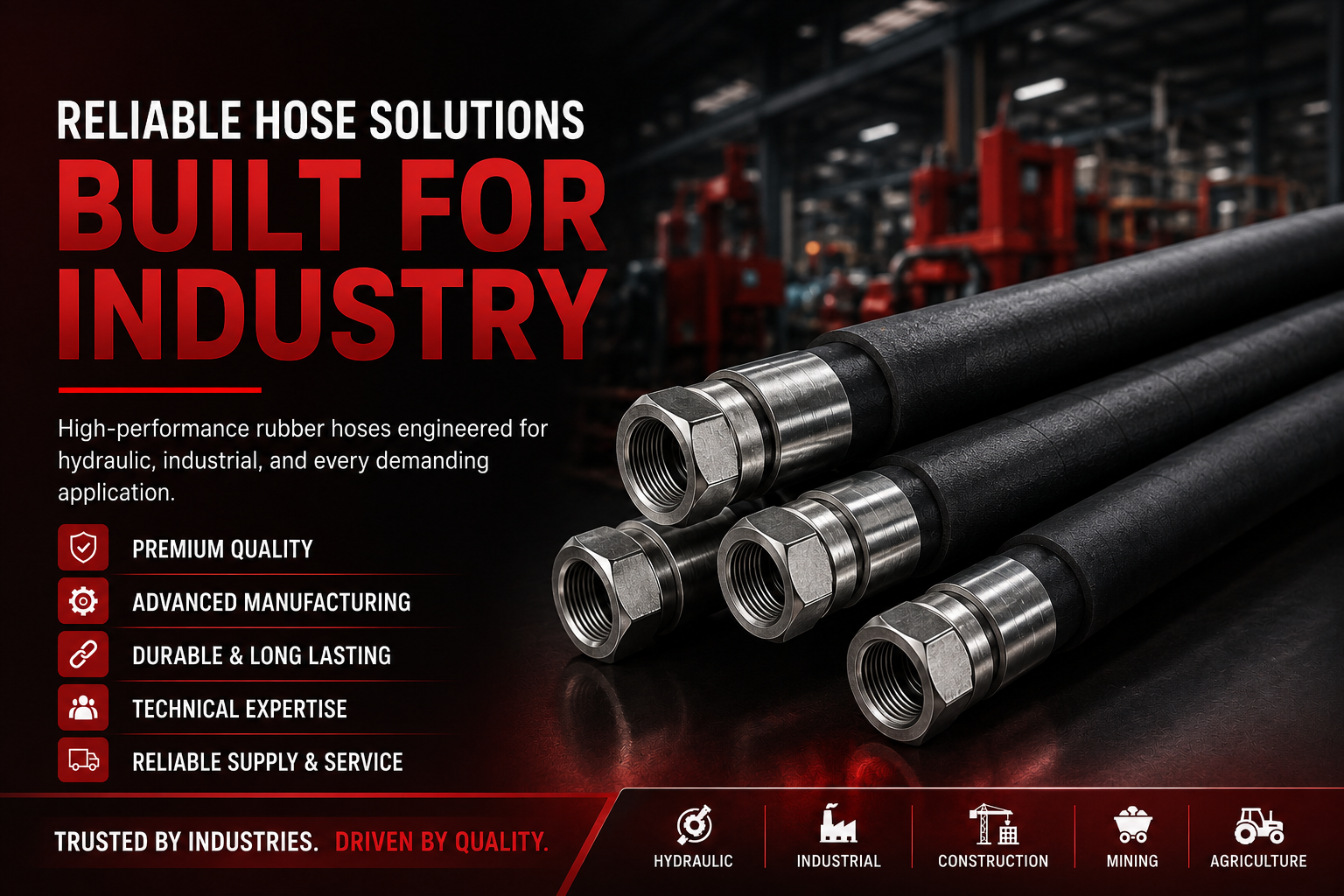
Hydraulic applications place significantly more stress on hoses compared to standard industrial transfer systems. Continuous pressure fluctuations and high operating loads require hoses capable of maintaining both flexibility and structural stability.
A failure inside a hydraulic system can stop production immediately and increase maintenance costs. In some industrial environments, it may also create safety concerns.
This makes it important to work with a reliable hydraulic rubber hose pipe manufacturer in India that understands pressure ratings, fitting compatibility, and reinforcement requirements correctly.
Well-manufactured hydraulic hoses should perform consistently under demanding operating conditions without losing flexibility or pressure handling capability. Businesses working with hydraulic machinery often require customized hose assemblies rather than standard ready-made products. Technical support from the manufacturer becomes valuable in such situations.
Industrial buyers searching for hydraulic hose systems and industrial solutions can also explore the services available through the best rubber hose manufacturers in India.
Supply Consistency Matters in Industrial Procurement
Industrial operations depend heavily on timely availability of components. Delays in hose supply or inconsistent production quality can affect maintenance schedules and operational continuity.
This is particularly important for OEM manufacturers, maintenance contractors, and industries operating heavy equipment regularly. Many rubber hose pipe manufacturers focus mainly on quantity supply, but consistency across batches is equally important.
Variations in reinforcement quality, wall thickness, or fitting dimensions can create installation problems and affect overall performance. Businesses sourcing industrial hose systems regularly should evaluate whether the manufacturer has stable production capability and the infrastructure required for long-term supply.
In industrial procurement, dependable supply relationships often become more valuable than short-term pricing advantages.
Technical Support Separates Manufacturers from Traders
There is a major difference between companies that manufacture industrial hoses and suppliers that simply distribute products. Manufacturers with technical knowledge are generally better equipped to recommend application-specific solutions.
This becomes especially important in projects involving hydraulic hose assemblies, industrial fluid transfer systems, high-pressure operations, and industrial sealing solutions.
Industrial buyers often underestimate how valuable technical guidance can be during product selection. Choosing the correct pressure rating, reinforcement structure, and fitting compatibility can significantly improve operational performance and reduce future maintenance issues.
Manufacturers experienced in industrial applications are usually better positioned to support customized requirements and specialized installations.
Understanding the Production Process Helps Buyers Make Better Decisions
The rubber hose pipe manufacturing process directly affects product durability and operational reliability. Poor control during production stages can reduce flexibility, weaken reinforcement bonding, and shorten service life.
Industrial buyers may not always inspect manufacturing facilities directly, but understanding the importance of controlled production standards helps in evaluating suppliers more effectively.
Established manufacturers generally invest more in testing procedures, reinforcement quality, and curing consistency because industrial applications demand reliable performance under pressure.
Businesses working with hydraulic and industrial systems should always prioritize manufacturers that focus on long-term product quality rather than low-cost production alone.
Experience and Industry Knowledge Still Matter
Industrial procurement is heavily based on reliability and consistency. Manufacturers with long-term market experience usually understand how operational requirements differ across industries.
Experienced hydraulic rubber hose manufacturers and established rubber hose pipe manufacturers in India often develop better technical understanding through years of working with industrial clients. This helps them recommend more suitable products for different applications and operating conditions.
Industry experience also improves quality control practices and after-sales support. Manufacturers supplying industrial rubber products for years are generally more aware of performance expectations within demanding industrial environments.
Choosing Long-Term Reliability Over Short-Term Cost
Price will always remain an important factor in industrial purchasing decisions, but focusing only on the lowest-cost option often increases long-term operational expenses.
Poor-quality hoses may require frequent replacement, increase maintenance downtime, and reduce equipment efficiency. In hydraulic systems, product failure can create much larger operational and financial consequences than the initial cost difference.
A dependable Rubber Hose Manufacturer focuses on product durability, manufacturing consistency, and technical reliability rather than competing only on pricing.
Businesses looking for industrial hose supply, hydraulic hose solutions, and industrial rubber products can explore the range offered by Mangla Rubber Industries.
Conclusion
Choosing the right Rubber Hose Manufacturer requires careful evaluation of manufacturing quality, material standards, technical support, and industrial experience. Industrial hose systems operate under demanding conditions where even small inconsistencies can affect operational performance and maintenance costs.
Whether the requirement involves hydraulic machinery, industrial fluid transfer systems, or high-pressure industrial applications, businesses should prioritize manufacturers capable of delivering long-term reliability and application-specific support.