Fire-Resistant Industrial Hoses
When did you last genuinely think about your hoses? Not the heavy machinery, not the control panels — the hoses. If you manage a refinery, a steel plant, or any high-heat manufacturing facility, that question carries more weight than most people realize. We are well into 2026, and the landscape of industrial fire safety has shifted dramatically. Hydrogen fuel processing, ultra-high-temperature manufacturing, and large-scale energy storage have all raised the stakes. What was once a routine maintenance concern has become a frontline safety priority. And just like search engine marketing has fundamentally changed how businesses reach and protect their customer base, modern fire-resistant hose technology is changing how industrial facilities protect their people, assets, and operations.
A hose failure in a high-heat environment is not simply a leak. It can become a fuel source for a “jet fire” — a high-pressure flame that cuts through steel structures in seconds. The good news: 2026’s newest generation of fire-resistant hoses is engineered specifically to stop that chain of events before it starts.
At a Glance: 2026's Leading Fire-Resistant Hose Technologies
Before getting into the details, here is a side-by-side look at the five technologies currently reshaping safety standards across heavy industry:
| Technology | Materials | Thermal Range | Key Advantage |
|---|---|---|---|
| Intumescent Armor | Graphite-based expanding polymers | Forms insulating char at 200°C+; protects for 30 min | Buys evacuation time and enables automated shutdowns |
| Aero-Ceramic Braid | Nano-spun ceramic micro-fibers | Continuous use to 1,200°C; melts at ~1,800°C | Lightweight, flexible protection ideal for robotics |
| IS:10655 Type-2 (2026) | Heat-aged EPDM with dual-wire braiding | Superheated steam at 210°C and 18 Bar | Prevents popcorning and sudden boiler bursts |
| Viton-GFX Hybrid | Fluoroelastomer core, glass-fiber jacket | Chemical resistance + Class A fire retardancy | Designed for hazardous chemical transfer |
| Silicone-Polymer Shield | Iron-oxide silicone over high-density fiberglass | Withstands 1,650°C molten metal splashes | Standard for steel mills, foundries, smelting ops |
1. Intumescent Shielding: The Hose That Fights Back
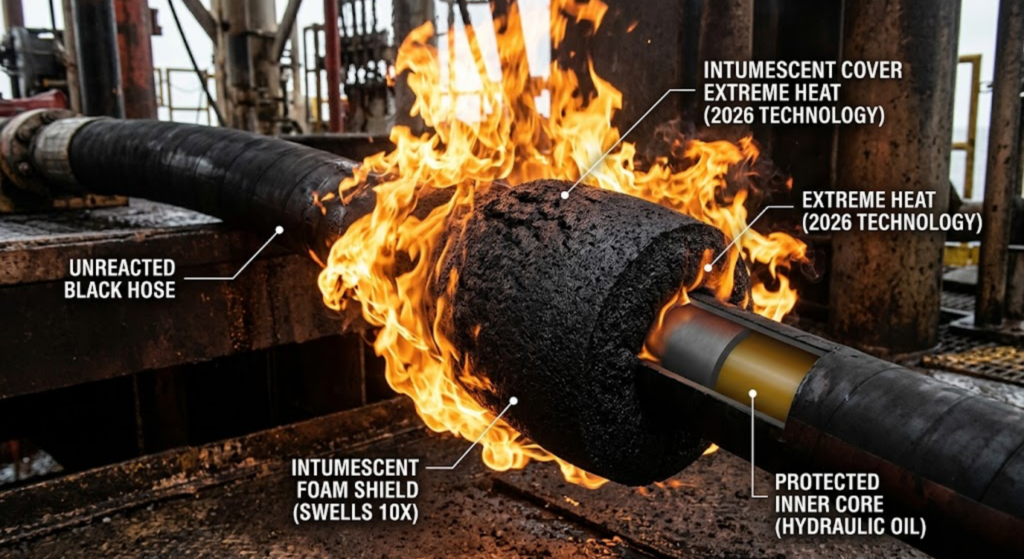
Most people do not realize that traditional hose insulation is entirely passive — it just sits there and absorbs heat until it fails. The intumescent cover works very differently. When exposed to open flame, the outer layer chemically expands, swelling up to ten times its original thickness and forming a dense carbon foam around the hose core. That foam acts as a thermal barrier, keeping internal temperatures below the flash point of whatever fluid is flowing through — whether that is hydraulic oil, fuel, or reactive chemicals.
The analogy to search engine marketing is apt here. A well-built SEM campaign does not just sit idle waiting for customers to show up — it actively identifies the right trigger (a search query) and responds with a precisely timed action (a targeted ad). Intumescent technology operates on the same principle: it detects the thermal trigger and responds immediately with protection. For offshore drilling rigs and high-density urban manufacturing facilities, that instant, automatic response is not optional — it is essential.
2. Steam Safety Gets a Long-Overdue Upgrade
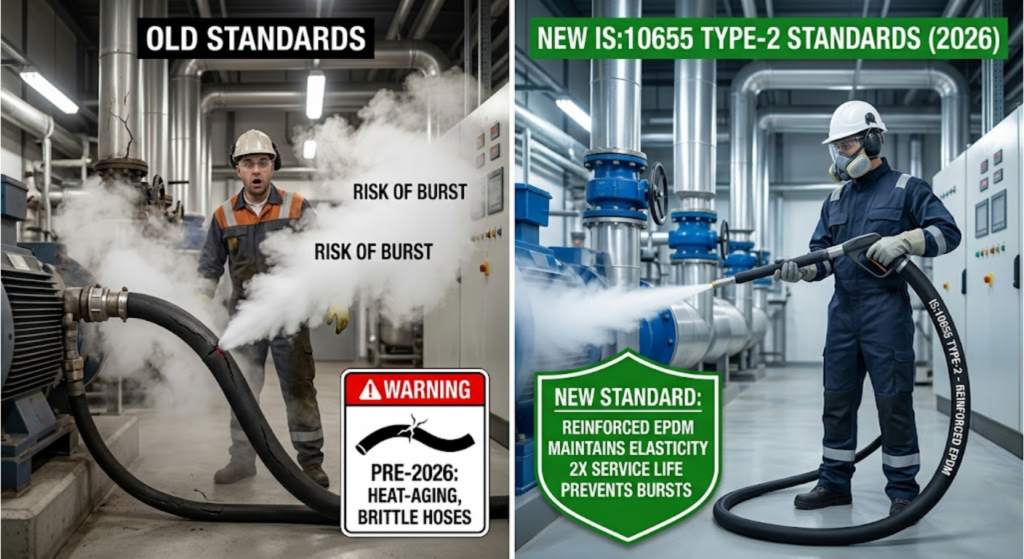
Steam is one of the most underestimated hazards in industrial settings. It is colorless, fast-moving, and carries enough thermal energy to cause severe burns in a fraction of a second. A steam-hammer burst — that sudden violent pressure spike when hot steam meets a cooler surface — can send shrapnel flying and injure workers standing several feet away.
The updated IS:10655 Type-2 standard directly addresses this. These 2026-spec hoses use a heat-aged EPDM compound that maintains elasticity far longer than older materials, which tend to become brittle and crack after repeated thermal cycling. The practical result: a longer service life, fewer unplanned replacements, and a dramatically lower risk of sudden burst failures in textile mills, food processing operations, and chemical boiler systems.
3. Ceramic Weaves: Fire Protection Built for Automation
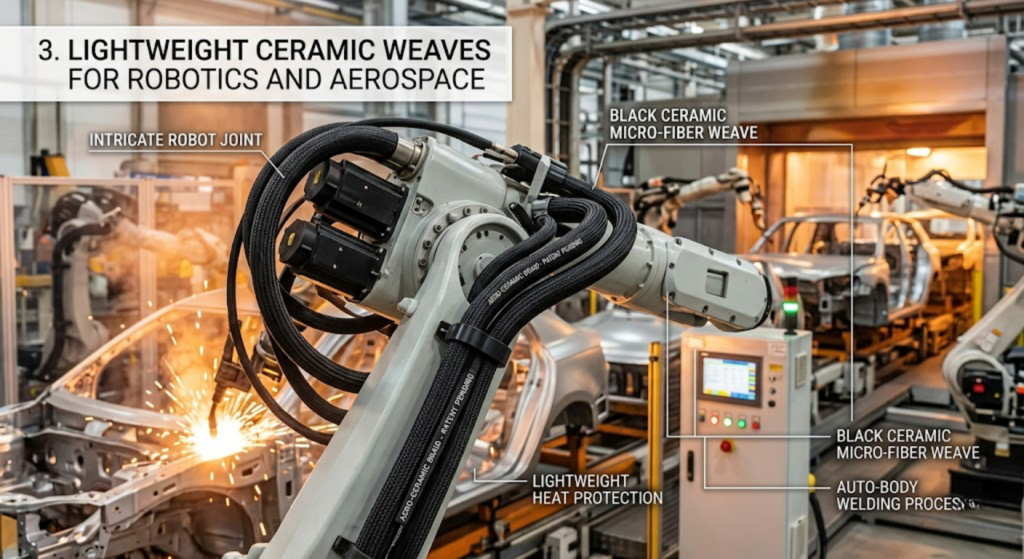
Factory automation is accelerating fast, and hoses are increasingly being routed through complex robotic joints, articulating arms, and tight mechanical assemblies where traditional fire sleeves simply do not fit. The Aero-Ceramic Braid was developed with exactly these environments in mind. Using nano-spun ceramic micro-fibers, these hoses offer better thermal protection than steel-reinforced alternatives at a fraction of the weight and with significantly greater flexibility.
In automotive painting ovens and welding cells, a hydraulic fire that shuts down an automated assembly line can cost hundreds of thousands of dollars per hour. Ceramic-braid hoses make that scenario far less likely. It mirrors what effective search engine marketing does for businesses — preventing costly gaps in visibility and continuity at the moments that matter most. Whether that is a robot failing mid-production or a brand disappearing from search results at peak buying intent, protection at critical moments is what separates resilient operations from vulnerable ones.
4. Molten Splash Protection for the Heaviest Environments
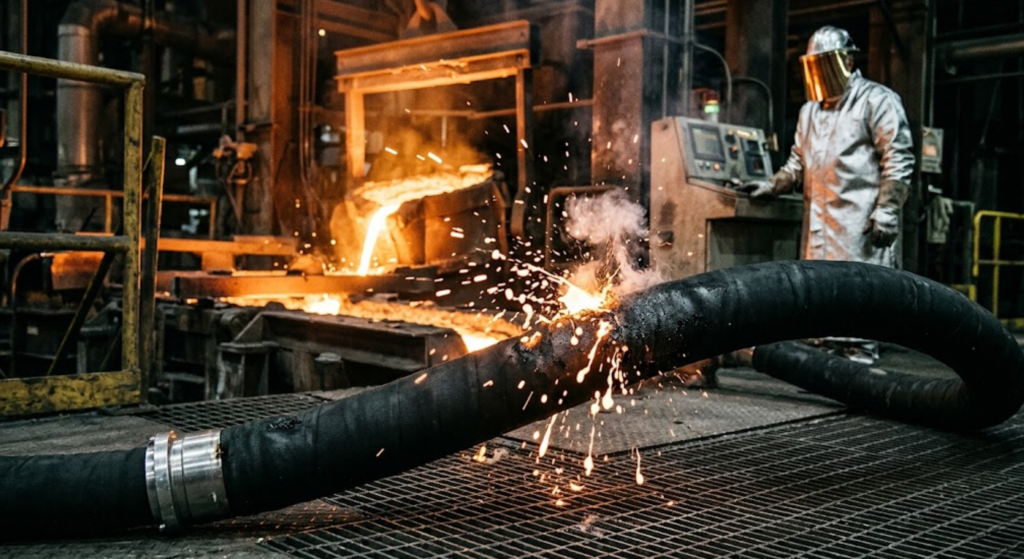
Steel mills and glass plants deal with a hazard that most facilities never encounter: molten material. A splash of liquid aluminum or molten glass at 1,600°C does not leave time to react. The red iron-oxide silicone coating found on 2026-spec heavy-industry hoses is designed for exactly this threat. Rather than absorbing the splash, the coating deflects it on contact — the molten material literally bounces away before it can penetrate to the reinforcement layers beneath.
This coating has become the industry benchmark for foundries and smelting operations. It is the difference between a minor incident and a catastrophic production shutdown — and increasingly, it is the difference between passing and failing a safety inspection.
Why 2026 Is the Year to Audit Your Hoses
Upgrading to fire-resistant hoses is not just a safety decision — it is a smart business decision. Companies that invest in solid search engine marketing infrastructure understand that the right tools compound in value over time and protect you from costly exposure. The same logic holds here. Three reasons to act this year:
- Regulatory Compliance: Updated 2026 safety codes mean non-compliant hoses can result in significant fines and immediate suspension of your operating license. Staying ahead of compliance is far less expensive than reacting to enforcement after the fact.
- Insurance Incentives: Many industrial insurers now offer documented Safety Credits — genuine premium reductions for facilities that transition fully to fire-retardant fluid lines. Your next safety audit could directly reduce your operating costs.
- Asset Protection: A $500 hose upgrade can protect a $5,000,000 machine from destruction in a localized fire. That return on investment requires no complex calculation.
Zero Tolerance for Preventable Failures
In 2026, “it has not failed yet” is not a safety strategy. The industrial world has broadly adopted a zero-tolerance stance toward preventable accidents, and fire-resistant hoses sit at the center of that shift. Whether your facility needs intumescent technology, aero-ceramic braiding, updated steam-rated EPDM hoses, or molten-splash silicone coatings, the right solution exists — and the investment pays for itself many times over.
The parallel to search engine marketing is worth stating plainly: just as SEM protects your business from losing ground to competitors at the moments customers are searching, the right fire-resistant hose infrastructure protects your facility from losing ground to the unexpected. The technology is ready. The standards are clear. The only question remaining is whether your operation is prepared to meet them.
At Mangla Rubber Industries, we build industrial hose solutions designed for real-world conditions — not just compliance checklists. If you are unsure whether your current setup meets 2026 standards, reach out to our team. A conversation today could prevent a crisis tomorrow.
fire-resistant-industrial-hoses
fire-resistant-industrial-hoses
fire-resistant-industrial-hoses
fire-resistant-industrial-hoses
fire-resistant-industrial-hoses
fire-resistant-industrial-hoses
fire-resistant-industrial-hoses
fire-resistant-industrial-hoses
fire-resistant-industrial-hoses
fire-resistant-industrial-hoses
fire-resistant-industrial-hoses
fire-resistant-industrial-hoses
fire-resistant-industrial-hoses
fire-resistant-industrial-hoses