
hy hose
The industrial hose industry is undergoing a massive transformation. As global regulations tighten around chemical runoff and plastic waste, manufacturers are pivoting toward materials that offer high performance without the environmental footprint of traditional petroleum-based rubber.
In 2026, “green” is no longer just a buzzword; it is a technical requirement. From hydraulic systems to chemical transfer, the shift toward bio-based polymers and recyclable elastomers is reshaping how we move fluids and gases.
Why the Shift to Sustainable Materials?
Traditional hose manufacturing often relies on synthetic rubbers like NBR or SBR, which are energy-intensive to produce and difficult to recycle. The new generation of hoses focuses on:
Reduced Carbon Footprint: Utilizing plant-based feedstocks.
Recyclability: Moving toward thermoplastic materials that can be melted and reformed.
Longevity: Enhancing durability to reduce the frequency of replacements.
Comparison of Eco-Friendly Hose Materials in 2026
The following table outlines the leading sustainable materials currently dominating the market, their primary applications, and their environmental benefits.
| Bio-Based TPE | Thermoplastic Elastomers derived from sugarcane or corn starch. | Food & beverage, air lines, and light-duty water suction. | 100% Recyclable. Eliminates the need for toxic vulcanizing agents like sulfur. |
| Bio-TPU | High-performance Polyurethane utilizing bio-polyols. | Hydraulic systems, fuel transfer, and abrasive material handling. | 30% Carbon Reduction. High durability leads to a longer product lifecycle, reducing waste. |
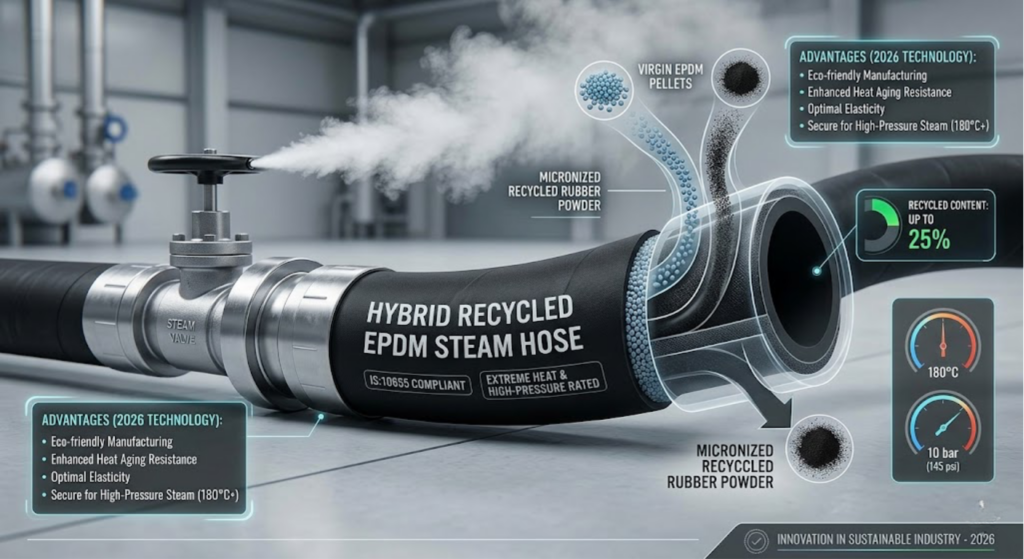
| Recycled EPDM | Ethylene Propylene Diene Monomer blended with post-industrial waste. | Steam hoses (up to 180°C), cooling systems, and automotive seals. | Waste Diversion. Utilizes scrap rubber that would otherwise be discarded in landfills. |
| Bio-Polyamide (Nylon 11/610) | Polymers sourced from Castor Bean oil (Ricinus communis). | High-pressure gas lines, chemical processing, and robotics. | Carbon Neutral Potential. Castor plants grow in arid regions and don’t compete with food crops. |
| FSC-Certified Natural Rubber | Sustainably harvested latex from Hevea brasiliensis. | Heavy-duty mining suction, dredging, and slurry transfer. | Biodegradable. Sourced from forests that protect biodiversity and local ecosystems. |
A Closer Look at the 2026 Market Leaders
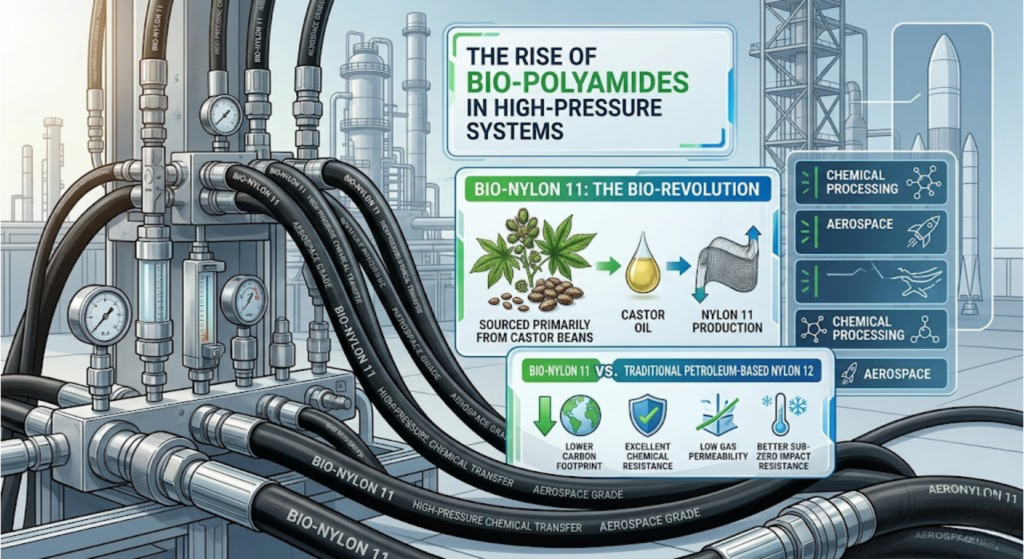
1. The Rise of Bio-Polyamides in High-Pressure Systems
In sectors like chemical processing and aerospace, the “Bio-Nylon” revolution is in full swing. Sourced primarily from castor beans, these materials offer incredible chemical resistance and low gas permeability. Unlike traditional Nylon 12, which is petroleum-based, Bio-Nylon 11 provides a lower carbon footprint while actually offering better impact resistance at sub-zero temperatures.
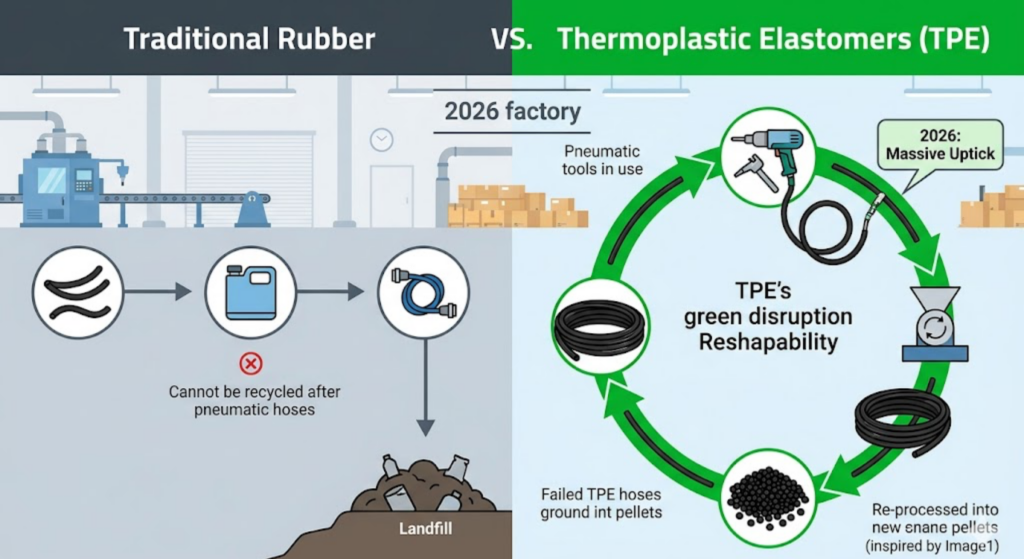
2. Thermoplastic Elastomers (TPE) vs. Traditional Rubber
In sectors like chemical processing and aerospace, the “Bio-Nylon” revolution is in full swing. Sourced primarily from castor beans, these materials offer incredible chemical resistance and low gas permeability. Unlike traditional Nylon 12, which is petroleum-based, Bio-Nylon 11 provides a lower carbon footprint while actually offering better impact resistance at sub-zero temperatures.
3. Hybrid Recycled EPDM for Steam and Heat
In sectors like chemical processing and aerospace, the “Bio-Nylon” revolution is in full swing. Sourced primarily from castor beans, these materials offer incredible chemical resistance and low gas permeability. Unlike traditional Nylon 12, which is petroleum-based, Bio-Nylon 11 provides a lower carbon footprint while actually offering better impact resistance at sub-zero temperatures.
The Economic Advantage of Going Green
Beyond ethics, there is a clear financial incentive. Eco-friendly hoses in 2026 are often lighter, reducing shipping costs and fuel consumption in mobile machinery like JCBs or tractors. Furthermore, as “Carbon Taxes” become more prevalent in industrial manufacturing, using bio-based materials allows companies to avoid heavy penalties, making sustainable hoses the more cost-effective choice in the long run.
Conclusion: Engineering a Sustainable Future
The transition to eco-friendly hose materials is no longer a niche trend—it is the industrial standard. By adopting Bio-TPUs, recyclable TPEs, and sustainably sourced natural rubbers, the industry is proving that high-performance fluid transfer and environmental stewardship can go hand-in-hand. As we move further into 2026, the focus remains clear: durability, recyclability, and a significantly smaller carbon footprint.
hy hosehy hosehy hosehy hosehy hosehy hosehy hosehy hosehy hosehy hosehy hosehy hosehy hosehy hose