In the industrial landscape of 2026, the humble hydraulic fittings has undergone a high-tech revolution. As global manufacturing shifts toward “Industry 5.0” and smart infrastructure, the demand for high-performance, leak-free fluid power connections is at an all-time high. A modern hydraulic fitting is no longer just a metal connector; it is a precision-engineered component critical to the efficiency of automated factories, construction robotics, and sustainable energy systems.
Whether you are maintaining a mobile excavator or designing a high-pressure manufacturing line, choosing the right hydraulic fitting is the difference between a high-efficiency operation and costly environmental liability.
The Rise of Smart Hydraulic Fitting Technology
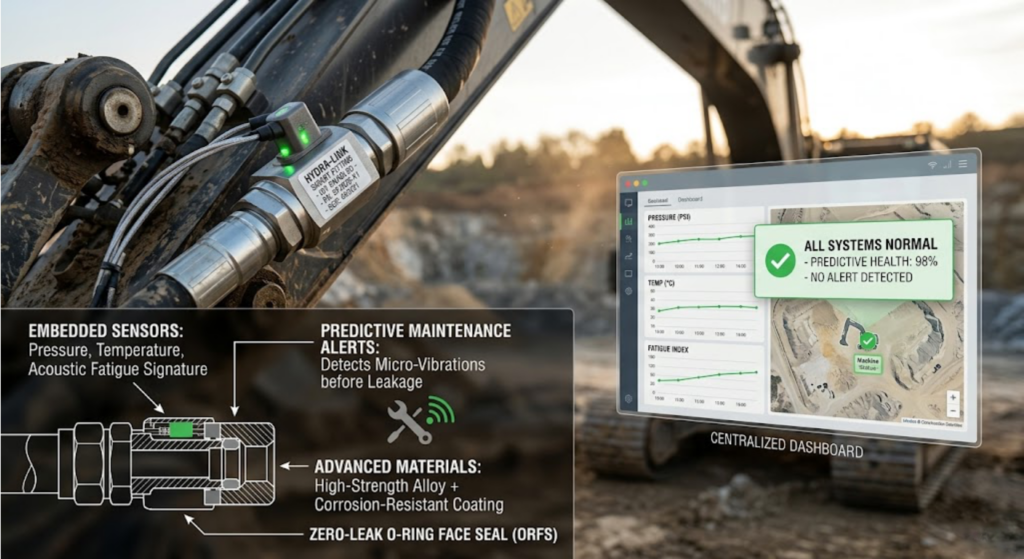
By 2026, the most significant trend in the fluid power industry is the integration of the Internet of Things (IoT) directly into the hydraulic fitt. “Smart” fittings now feature embedded sensors that monitor pressure, temperature, and even acoustic signatures of early-stage fatigue.
Predictive Maintenance: A smart hydraulic fitting can detect micro-vibrations that signal an impending leak, sending real-time alerts to a centralized dashboard.
Zero-Leak Performance: New 2026 international standards for hydraulic fitting design prioritize O-ring face seals (ORFS) and bite-type connectors that eliminate the environmental impact of fluid loss.
Advanced Materials: We are seeing a move toward lightweight, high-strength alloys and corrosion-resistant coatings that extend the life of a hydraulic fitting in harsh offshore or mining environments.
The Rise of Smart Hydraulic Fitting Technology
With the 2026 focus on standardization and high-pressure safety, selecting the correct hydraulic requires understanding the specific strengths of each connection type.
| Fitting Type | Pressure Rating (2026 Std) | Sealing Method | Best Application |
| ORFS (O-Ring Face Seal) | Up to 6,000 PSI | Elastomeric Seal | High-Vibration Machinery |
| JIC 37° Flare | Up to 3,000 PSI | Metal-to-Metal | Low-Pressure Fuel & Oil |
| DIN 24° Cone (Bite Type) | Up to 8,000 PSI | Compression Ring | Heavy Industrial & Marine |
| SAE Code 61/62 Flange | Up to 6,000 PSI | Bolted Gasket | High-Flow Earthmoving |
| Quick-Connect Smart Fitting | Varies | IoT-Monitored Seal | Modular Robotics & Ag-Tech |
Key Drivers for Hydraulic Fitting Demand in 2026
The global hydraulic fitting market is projected to reach record highs this year, driven by several key industrial shifts:
Infrastructure Booms: Massive renewable energy projects—from wind turbine hydraulics to hydrogen storage—rely on a specialized hydraulic fitting to handle extreme gas and fluid pressures.
Automation & Robotics: As factories become more modular, the need for a “Plug-and-Play” hydraulic fitting that allows for rapid reconfiguration without system draining is paramount.
Sustainability Regulations: In 2026, many jurisdictions have implemented strict “Zero-Leak” mandates. This has led to a mass retrofit of older machinery with modern, high-integrity hydraulic fitting solutions.
The Importance of Compatibility: ISO and SAE Standards
One of the biggest challenges in 2026 remains the “fitting mismatch.” A hydraulic fitting might look like it fits, but even a fractional difference in thread pitch or seat angle can lead to catastrophic failure.
To ensure safety, always verify that your hydraulic meets current international standards such as ISO 12151 or SAE J514. In the modern era, many manufacturers now laser-etch QR codes onto each hydraulic, allowing technicians to instantly scan the part to verify its torque specs, material composition, and pressure limits.
Best Practices for Hydraulic Fitting Installation
Proper installation is the only way to guarantee the longevity of your hydraulic. Follow these 2026 industry best practices:
- Avoid Over-Torquing: Over-tightening a hydraulic is the #1 cause of cracked seats and damaged threads. Use a calibrated torque wrench.
- Inspect Before Use: Check for “nicks” in the sealing surface. A single scratch on a high-pressure hydraulic fittingcan lead to a high-velocity injection injury.
- Monitor Bend Radii: Ensure that the hose attached to the hydraulic has enough slack. Tension on the fitting leads to premature fatigue and eventual separation.
Conclusion: Future-Proofing Your Systems
As we look ahead through 2026, the hydraulic will continue to be the unsung hero of industrial progress. By investing in high-quality, IoT-ready, and standardized hydraulic components, businesses can significantly reduce their maintenance overhead and environmental footprint.
Don’t settle for “just a connector.” Choose a hydraulic fitting that offers the durability, precision, and intelligence required for the next generation of industrial excellence. In a world where every drop of fluid counts, the right hydraulic fitting is your best defense against downtime.