
In today’s rapidly evolving industrial landscape, efficiency and precision are no longer optional—they are essential. One area that has seen remarkable transformation is the development of the hose manufacturing machine. From automation to smart technologies, manufacturers are embracing innovation to meet rising global demand while maintaining high-quality standards.
A modern hose manufacturing machine is no longer just a mechanical setup; it has become a sophisticated system integrating advanced software, robotics, and real-time monitoring. These advancements are helping industries such as automotive, construction, agriculture, and oil & gas achieve faster production cycles and better product consistency.
Automation and Smart Control Systems
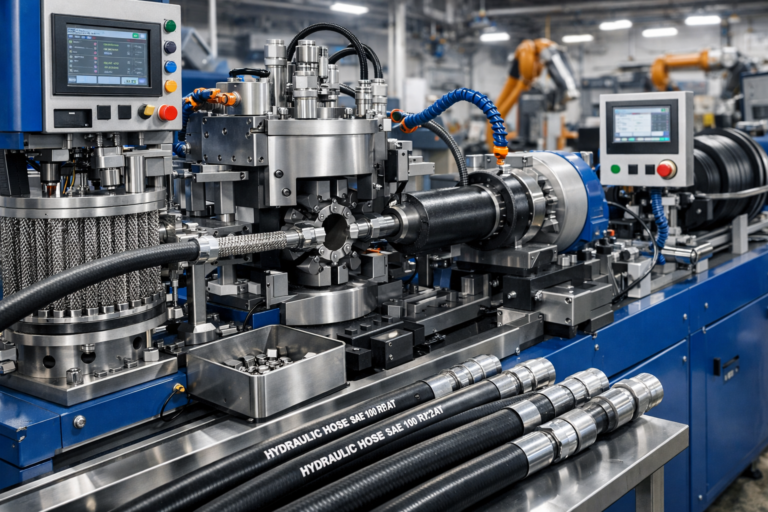
One of the most significant innovations in hose manufacturing machine technology is automation. Earlier, production relied heavily on manual intervention, which often led to inconsistencies and higher labor costs. Today, automated systems equipped with programmable logic controllers (PLCs) ensure that every step of the process is precise and repeatable.
Smart control systems allow operators to monitor parameters such as temperature, pressure, and extrusion speed in real time. This not only reduces errors but also enhances productivity. With the integration of IoT (Internet of Things), a hose manufacturing machine can now send alerts, generate performance reports, and even predict maintenance needs before breakdowns occur.
Advanced Material Handling
Another exciting development in hose manufacturing machine technology is the ability to work with a wider range of materials. Modern machines are designed to handle complex polymers, reinforced fibers, and hybrid materials that improve the durability and flexibility of hoses.
These machines can automatically adjust settings based on the material being used, ensuring optimal processing conditions. This adaptability makes the hose manufacturing machine more versatile, allowing manufacturers to cater to diverse market needs without investing in multiple systems.
Precision Extrusion Technology
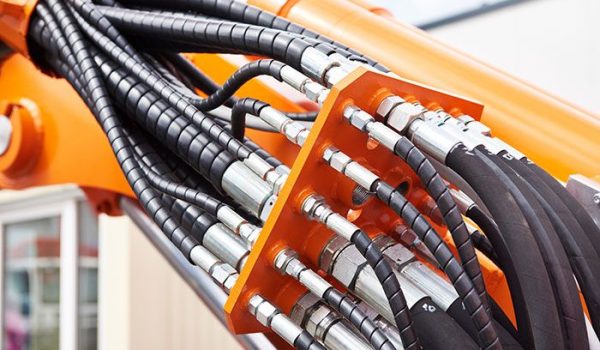
Extrusion is at the heart of hose production, and recent advancements have taken it to a new level. High-precision extrusion systems ensure uniform wall thickness and smooth surface finishes. This is crucial for applications where performance and safety are critical.
With improved die design and temperature control, the hose manufacturing machine can produce hoses with consistent dimensions, reducing material wastage and improving overall efficiency. Manufacturers can now achieve tighter tolerances, which was difficult with older equipment.
Energy Efficiency and Sustainability
Sustainability is becoming a key focus across industries, and hose manufacturing machine technology is no exception. Modern machines are designed to consume less energy while delivering higher output. Features such as energy-efficient motors, optimized heating systems, and regenerative drives help reduce the carbon footprint.
In addition, many manufacturers are incorporating recycling systems into their hose manufacturing machine setups. Scrap materials can be reprocessed and reused, minimizing waste and lowering production costs. This shift towards eco-friendly manufacturing is not just good for the environment but also for business profitability.
Integration of Robotics
Robotics is playing an increasingly important role in hose production. Robotic arms are now used for tasks such as cutting, coiling, and packaging. This reduces manual labor and ensures consistent quality.
When integrated with a hose manufacturing machine, robotics can significantly speed up production while maintaining accuracy. These systems are particularly useful in high-volume manufacturing environments where efficiency is critical.
Real-Time Quality Monitoring
Quality control has always been a challenge in manufacturing, but innovations in sensor technology are changing that. Modern hose manufacturing machine systems are equipped with advanced sensors that continuously monitor product quality during production.
These sensors can detect defects such as uneven thickness, air bubbles, or surface irregularities. If an issue is identified, the machine can automatically adjust parameters or stop production to prevent further defects. This level of control ensures that only high-quality products reach the market.
Customization and Flexibility
Today’s customers demand customized solutions, and manufacturers are responding by investing in flexible production systems. A modern hose manufacturing machine can be easily reconfigured to produce different hose sizes, shapes, and specifications.
This flexibility allows businesses to quickly adapt to changing market demands without significant downtime. Whether it’s a small batch of specialized hoses or large-scale production, the machine can handle it efficiently.
Digital Twin Technology
One of the most cutting-edge innovations in hose manufacturing machine technology is the use of digital twins. A digital twin is a virtual replica of the physical machine, allowing manufacturers to simulate and optimize production processes.
By using digital twin technology, operators can test different configurations and identify potential issues before implementing changes in the real system. This reduces risks and improves overall efficiency, making the hose manufacturing machine smarter and more reliable.
The Future of Hose Manufacturing Machines
Looking ahead, the future of the hose manufacturing machine is incredibly promising. Artificial intelligence (AI) and machine learning are expected to play a larger role, enabling machines to learn from data and continuously improve their performance.
Fully autonomous production lines, where minimal human intervention is required, are becoming a reality. These advancements will not only increase productivity but also set new standards for quality and efficiency.
Conclusion
The evolution of the hose manufacturing machine reflects the broader trend of digital transformation in manufacturing. From automation and robotics to sustainability and smart technologies, these innovations are reshaping how hoses are produced.
For businesses looking to stay competitive, investing in advanced hose manufacturing machine technology is no longer a luxury—it’s a necessity. By embracing these innovations, manufacturers can achieve higher efficiency, better quality, and long-term growth in an increasingly demanding market.