
How to Choose TAFE Tipping Hoses for Tractor Trailers and Hydraulic Lifting Systems
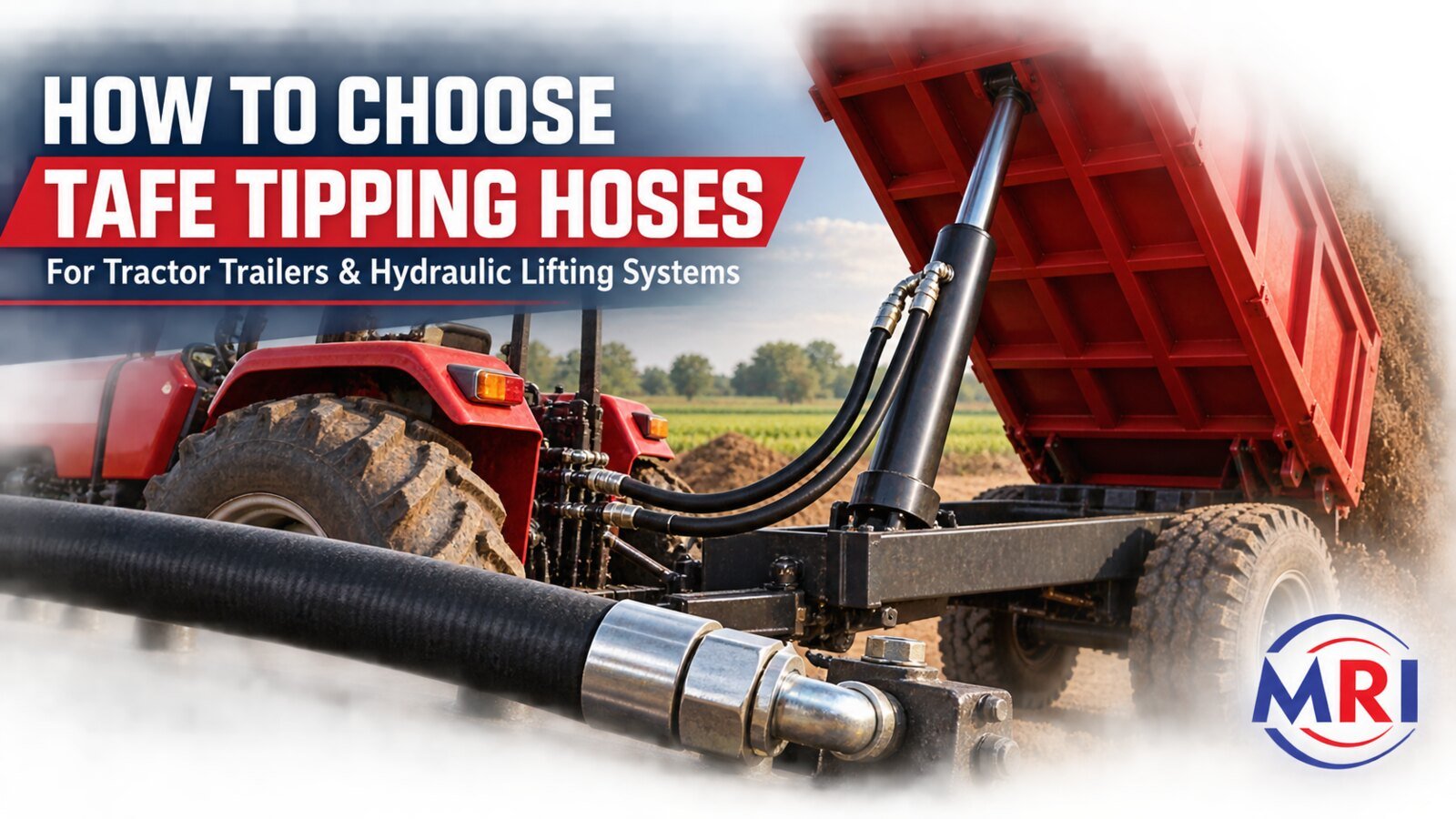
A tractor trailer depends on hydraulic power to raise and unload crops, soil, fertiliser, sand and other materials. The flexible line carrying pressurised oil to the lifting cylinder must handle repeated movement, outdoor conditions and changing loads. For TAFE tractors and compatible trailer systems, correctly selected TAFE tipping hoses help the lift operate smoothly and reduce avoidable leakage or downtime.
A replacement should never be chosen only because its fittings appear to match the old assembly. Pressure rating, internal diameter, length, bend radius, hydraulic oil, temperature and fitting orientation all affect performance. This guide explains the practical checks buyers, farmers and equipment workshops should make before ordering a TAFE tipping hose.
What Are TAFE Tipping Hoses?
TAFE tipping hoses are hydraulic hose assemblies used with tractor trailers and tipping systems. They transfer hydraulic oil between the tractor connection, control circuit and trailer lifting cylinder. When pressure reaches the cylinder, the piston extends and raises the trailer body. Controlled return flow allows it to lower.
A typical assembly includes an oil-resistant inner tube, pressure reinforcement, an abrasion-resistant outer cover and compatible end fittings. The reinforcement may use wire braid or another construction selected for the required pressure and impulse conditions.
For a wider explanation of the lifting circuit, read how a tractor trolley hydraulic hose works. You can also review the role of a tractor trolley jack hose pipe in tipping and lifting.
Why Does the Correct Tipping Hose Matter?
A tipping hose is part of a pressurised hydraulic circuit. If its bore is too small, oil flow may be restricted and the trolley can lift slowly. If the working-pressure rating is insufficient, repeated pressure cycles may damage the reinforcement. Incorrect length or routing can create sharp bends, rubbing or tension near the fitting.
The correct assembly supports predictable lifting, secure connections and easier maintenance. It also helps workshops avoid repeat replacements caused by matching only the thread size while overlooking the hose specification.
How to Choose TAFE Tipping Hoses
Confirm the Working Pressure
Check the tractor and tipping-system requirements before selecting a hose. The assembly must suit the normal working pressure and the temporary peaks produced when lifting a heavy trailer. Do not estimate pressure capacity from the outside diameter or appearance of an old hose.
Select the Correct Internal Diameter
The internal diameter affects oil velocity and flow. An undersized tractor tipping hose can restrict the circuit, create additional heat and slow cylinder movement. An unnecessarily large hose may be difficult to route and may require different fittings. Match the bore to the original equipment requirement and actual flow demand.
Measure the Required Length Properly
Measure the complete installed route, not simply the straight distance between connections. The hose needs enough length to move naturally while the trailer rises and lowers, but it should not form loose loops that can snag, rub or become trapped.
Identify Both End Fittings
Record the thread type, fitting size, sealing method and angle at both ends. A fitting that screws into place may still use the wrong sealing surface. Clear photographs and measurements help a hose supplier prepare a compatible assembly.
Check Hydraulic Oil and Temperature Compatibility
The inner tube must suit the hydraulic fluid used in the tractor. The complete hose should also tolerate the expected oil and ambient temperature. Heat from the hydraulic system, engine or exhaust can shorten the life of an unsuitable rubber compound.
Respect the Minimum Bend Radius
A hose should follow a smooth curve and should not bend sharply behind a coupling. Tight bending concentrates stress and can damage the reinforcement. Suitable adapters may provide a cleaner route where a straight fitting forces the hose into an unnatural turn.
Common Installation Problems
- Twisting the hose while tightening a connection
- Routing it against a bracket, bolt or sharp trailer edge
- Leaving too little length for full cylinder movement
- Allowing an excessive loop to contact the tyre or linkage
- Using mismatched hose and fitting components
- Installing the assembly close to an unprotected heat source
- Clamping the hose so tightly that normal movement is restricted
The printed lay line can help identify twisting. During installation, the line should remain reasonably straight rather than spiralling around the assembly. Observe the route through the complete lift and lower cycle before returning the equipment to regular service.
Warning Signs That a Tipping Hose Needs Replacement
Inspect the hose and connections regularly. Warning signs include oil around a fitting, cuts, cracks, bubbles, exposed wire, flattened sections, hardening, corrosion and a hose that rubs during movement. Changes in lifting speed or jerky cylinder motion also justify checking the full hydraulic system.
Never search for a pressurised leak with a bare hand. Lower and secure the trailer, isolate the equipment according to the manufacturer’s procedure and use a trained technician for inspection. The UK Health and Safety Executive provides additional agricultural machinery safety guidance.
What Information Should You Give the Hose Supplier?
Provide accurate application details instead of relying only on the removed part. Useful information includes:
- Tractor and trailer model
- Hose internal diameter and overall length
- Working pressure requirement
- Thread, fitting size and fitting angle at each end
- Hydraulic fluid and expected temperature
- Installed route and movement during tipping
- Clear photographs of both connections
If the earlier hose failed, also share the location and type of damage. A repeated leak near a coupling, for example, may point to excessive bending or movement rather than a simple product defect. Our guide to tractor trolley hose leaks and bursts explains these patterns in more detail.
Choose a Suitable TAFE Tractor Hose Assembly
Mangla Rubber Industries manufactures hydraulic and industrial hose solutions for agricultural machinery, trailers and lifting systems. Businesses and equipment workshops can request assemblies based on pressure, bore, length, fittings and application conditions.
For help with TAFE hose pipes, trailer hoses or custom tipping-hose requirements, contact Mangla Rubber Industries and share the technical details of your system.
Conclusion
Reliable TAFE tipping hoses are selected by specification, not appearance alone. Pressure capacity, internal diameter, length, fluid compatibility, temperature, fittings and routing must work together. Correct selection and regular inspection support smooth lifting, reduce leakage and help prevent premature hose damage.
Frequently Asked Questions
Which hose is suitable for a TAFE tractor trailer?
The correct hose depends on the trailer’s hydraulic pressure, oil flow, bore, connection type, temperature and routing. Confirm these details from the equipment specification or a qualified technician.
Why does a tractor trailer lift slowly after hose replacement?
A small internal diameter, restricted fitting, crushed route or sharp bend may reduce flow. Low oil, filter, pump, valve and cylinder problems can also cause slow lifting.
Can a damaged TAFE tipping hose be repaired with tape?
No. Tape does not restore the reinforcement or pressure capacity of a hydraulic hose. Replace a leaking or structurally damaged assembly with the correct specification.
How should a trailer lift hose be measured?
Measure the installed route and account for movement through the full tipping cycle. Also record the internal diameter and the exact fittings at both ends.
What causes leakage near a tipping-hose fitting?
Possible causes include a damaged seal, wrong thread, loose connection, incorrect crimp, twisting or excessive bending close to the coupling.
Looking to buy? See our tractor trolley hydraulic hose range — single and double wire braided, 3/8" to 1", supplied with fittings in bulk or custom lengths.