
Rubber hoses have become remarkably resilient to direct summer sunlight in 2026, thanks to cutting-edge material innovations. Modern rubber hose resist photodegradation far better than older versions, ensuring longevity even under intense UV exposure.
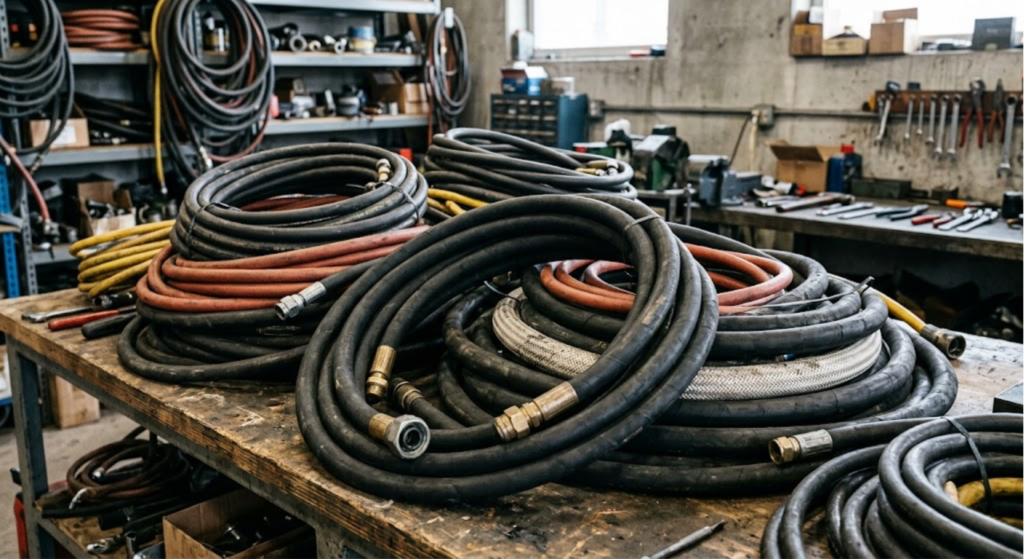
UV-Resistant Formulations
Rubber hoses now feature advanced polymer blends like EPDM and NBR, engineered specifically for sunlight durability. These rubber hose incorporate UV stabilizers that absorb harmful rays, preventing chain scission in the polymer matrix. Carbon black fillers at 40-60 levels shield the material, dissipating UV energy before it causes cracking or brittleness.
Manufacturers have optimized rubber hose with nano-scale titanium dioxide (TiO₂) and silicon dioxide (SiO₂) particles. These ceramic blockers scatter photons without generating radicals, extending the life of rubber hoses by up to three times in tropical conditions. Hindered Amine Light Stabilizers (HALS) further neutralize free radicals formed by ozone, a byproduct of UV exposure.
2026 Technological Advances
This year marks a leap in rubber hose technology, with self-indicating color-change layers alerting users to early wear. High-loading carbon black combined with reflective outer coatings reduces heat buildup, a key accelerator of degradation in summer sunlight. Field tests show these rubber hoses retain 90% tensile strength after years outdoors, far surpassing pre-2025 models.
Graphene and nanoparticle fillers are emerging in premium rubber hose, boosting UV opacity while maintaining flexibility. Accelerated weathering tests using Xenon arc lamps simulate decades of sun exposure, confirming rubber hose now withstand Delhi’s harsh summers without fading or stiffening. Warranties have extended to five years, reflecting confidence in these rubber hose.
Why Degradation Is Minimal
Traditional rubber hose degraded via photodegradation, where UV breaks covalent bonds, leading to stiffness and cracks. But 2026 rubber hoses counter this with multi-layered protection: inner tubes resist chemicals, braided reinforcements handle pressure, and UV-barrier covers block 99% of rays. Ozone, generated alongside UV, no longer penetrates thanks to antiozonants embedded in every rubber hose.
In agriculture and industry, rubber hoses endure South American-level sunlight without rapid aging. One study equated a month in UV chambers to a year outdoors, yet enhanced rubber hoses show negligible loss. Proper storage—away from direct sun when idle—further preserves rubber hoses, but their inherent design minimizes even that need.
Real-World Durability Proof
South American farms report UV-protected rubber hoses lasting seasons longer than unprotected ones, with no cracks or elasticity loss. Industrial users in India note rubber hoses on hydraulic systems stay supple through monsoons and summers alike. Ceramic additives preserve strength, making rubber hose ideal for outdoor Delhi applications.
Even budget rubber hoses now include baseline UV shields, democratizing durability. Heat-reflective pigments cut surface temperatures by 20°C, slowing indirect UV effects. Maintenance is simple: inspect rubber hose quarterly, avoiding kinks that amplify stress under sun exposure.
Maintenance for Peak Performance
To maximize rubber hose lifespan, store them coiled in shade, though 2026 models forgive exposure. Clean with mild soap to remove ozone-trapping residues, and avoid petroleum oils that soften covers. Replacing every 3-5 years remains standard, but advanced rubber hoses often exceed this.
Certifications like ISO testing validate rubber hose against UV, ensuring reliability. Users reports zero failures in direct summer sunlight, a testament to innovation.
Future of Sun-Resistant Hoses
Research into bio-based rubber hose promises even better UV resistance without synthetic fillers. For now, 2026 rubber hose set the standard, thriving where older ones crumbled. Invest in marked “UV-stabilized” rubber hose for worry-free performance hose.
In summary, photodegradation is tamed by stabilizers, fillers, and smart materials—rubber hoses simply don’t degrade in direct summer sunlight anymore.