What is an IoT-Enabled Hose Pipe Industrial System?
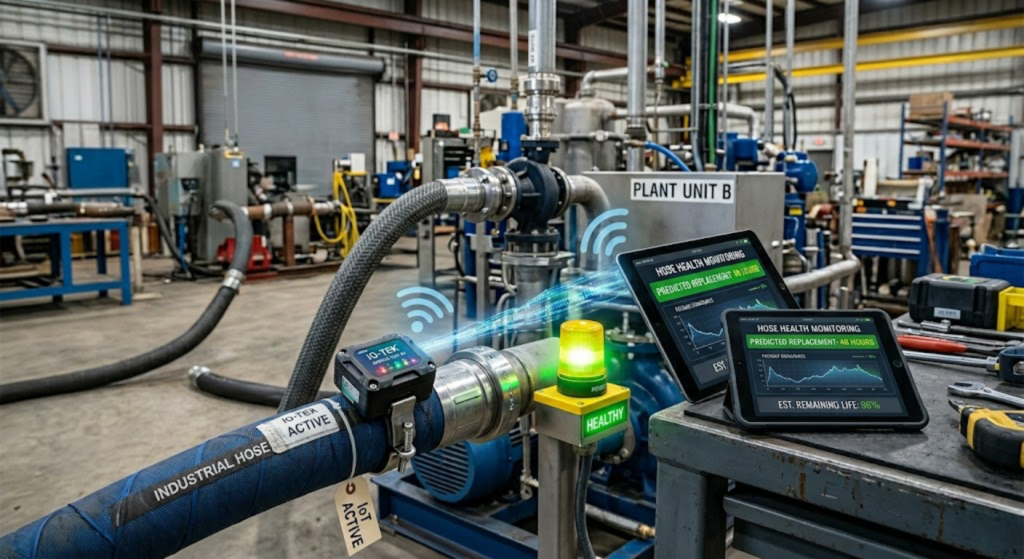
At its core, an IoT-Enabled hose pipe industrial assembly consists of a high-grade industrial hose integrated with a network of sensors and communication modules. These sensors track critical variables in real-time, such as:
Internal Pressure: Monitoring for spikes that could lead to catastrophic failure.
Temperature: Ensuring the fluid remains within its functional thermal range.
Flow Rate: Tracking the volume of media moving through the system.
Abrasive Wear: Measuring the thinning of the inner tube over time.
By connecting these hoses to a cloud-based platform, plant managers can move from reactive repairs to a proactive operational model.

The Core Benefits of Smart Hoses
1. Predictive Maintenance and Reduced Downtime
The most significant advantage of an IoT-Enabled hose pipe industrial system is the ability to predict failure before it happens. Traditional maintenance schedules are based on averages—replacing a hose every six months regardless of its actual condition. IoT sensors detect “fatigue signatures,” alerting teams to replace a hose only when it is truly nearing the end of its life, preventing unplanned downtime.
2. Enhanced Workplace Safety
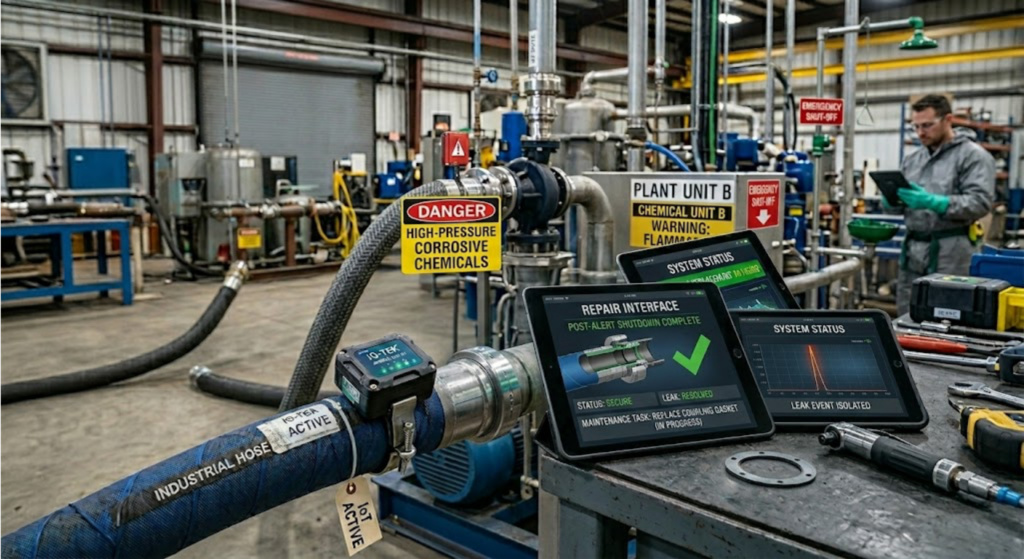
In industries dealing with high-pressure steam, corrosive chemicals, or flammable liquids, a hose failure isn’t just an equipment issue—it’s a life-safety risk. An IoT-Enabled hose pipe industrial setup provides an early warning system. If a sensor detects a micro-leak or an abnormal pressure drop, the system can automatically trigger an emergency shut-off valve, protecting workers from exposure.
3. Precision Fluid Management
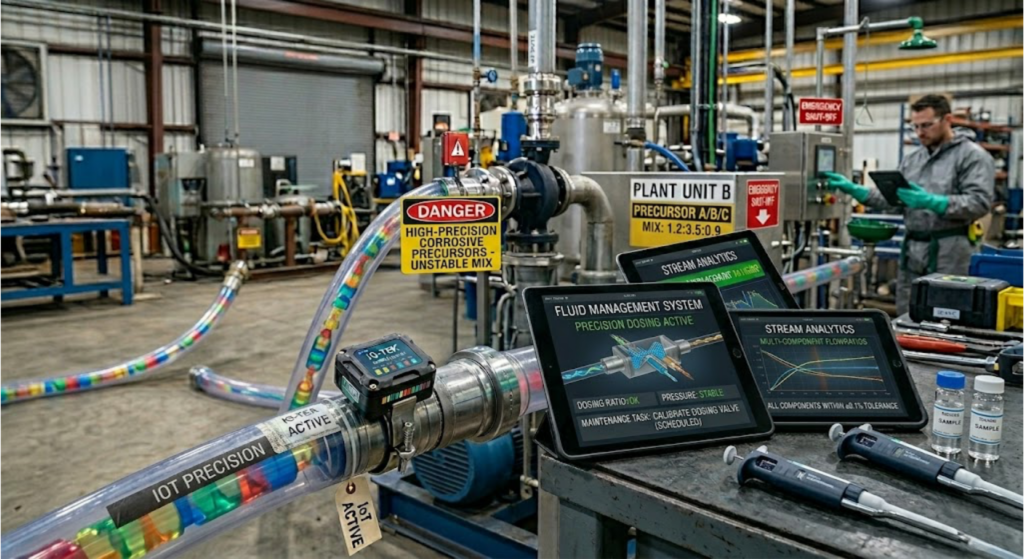
Consistency is key in chemical processing and food manufacturing. The IoT-enabled hose pipe industrial technology ensures that flow rates remain constant. If a hose begins to clog or kink, the real-time data allows for immediate adjustments, ensuring the final product meets strict quality standards.
Applications Across Industries
The versatility of the IoT-Enabled hose pipe industrial model makes it applicable across various demanding sectors:
-
Oil & Gas: Monitoring high-pressure transfer lines in offshore environments where manual inspection is difficult.
-
Pharmaceuticals: Ensuring ultra-pure fluids are moved at exact temperatures to maintain chemical stability.
-
Construction: Tracking the flow of abrasive materials like concrete to prevent blockages in heavy-duty pumping equipment.
-
Mining: Managing dust suppression and slurry transport in remote locations via long-range IoT signals.
Conclusion: The Future of Fluid Transfer
The “dumb” hose is a relic of the past. As factories become more interconnected, the IoT-Enabled hose pipe industrial system stands out as a vital link in the digital supply chain. By providing real-time visibility into the veins and arteries of the industrial world, these smart components empower businesses to operate faster, safer, and more sustainably.
Investing in an IoT enabled hose pipe industrial strategy today is not just about upgrading equipment; it’s about future-proofing your entire operation against the unexpected. Stay ahead of the curve, minimize your risks, and let your data flow as smoothly as your fluids.