In industrial systems, even a small connection can affect the performance of the entire setup. Hydraulic hose fittings are one of those components that often go unnoticed but play an important role in maintaining pressure, fluid flow, and system reliability.
These fittings are used to connect hydraulic hoses with machinery, valves, cylinders, and other hydraulic parts. A proper connection helps maintain smooth operation and reduces the chances of leakage or pressure loss.
Different industries use different hydraulic fitting types depending on the working environment, pressure level, and machine design. Understanding these fittings helps in selecting the right connection for industrial applications.
What Are Hydraulic Hose Fittings?
Hydraulic hose fittings are connectors attached to hydraulic hoses to create secure fluid transfer between hydraulic components. Since hydraulic systems usually work under high pressure, fittings need to be strong, durable, and properly matched with the hose and equipment. The choice of fitting depends on factors such as:
- Hose size
- Pressure capacity
- Fluid type
- Temperature conditions
- Industrial application
Incorrect fittings can lead to leakage, reduced efficiency, and damage to hydraulic systems over time.
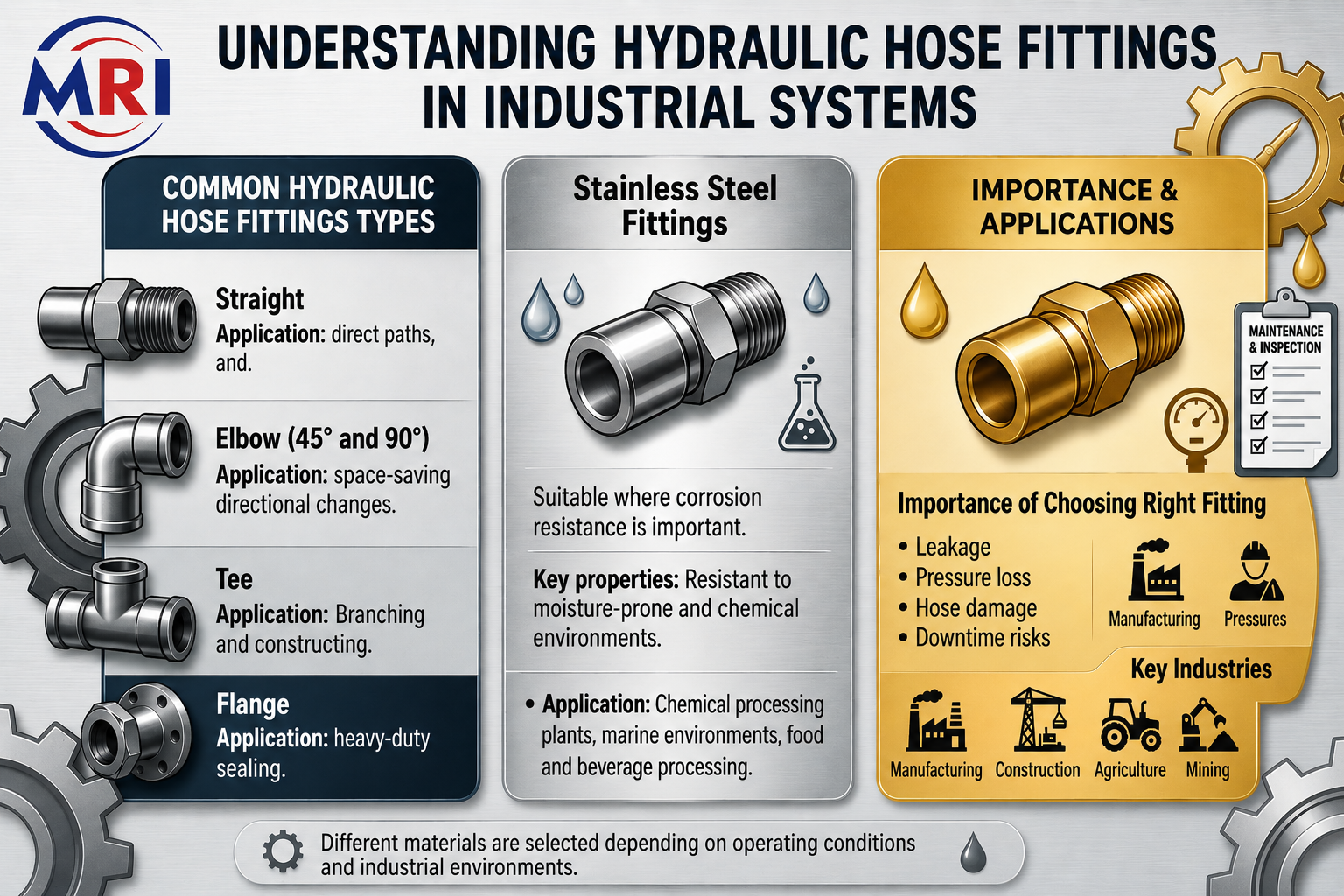
Common Hydraulic Hose Fittings Types
There are several hose fitting types used in industrial operations. Each serves a different purpose based on the system layout and application.
Straight Fittings
Straight fittings are commonly used where the hose connection follows a direct path. These fittings are simple and widely used in industrial hydraulic systems.
Elbow Fittings
Elbow fittings are used when the direction of the hose needs to change. They are generally available in 45-degree and 90-degree designs and help reduce hose bending in compact spaces.
Tee Fittings
Tee fittings are used when hydraulic flow needs to be divided into multiple directions. These are commonly used in systems with multiple hydraulic lines.
Flange Fittings
Flange fittings are mainly used in heavy-duty and high-pressure applications. They provide strong sealing and are commonly found in industrial machinery and construction equipment.
Choosing the right industrial hose is important for performance, safety, and long-term durability. Whether you need hoses for hydraulic systems, manufacturing units, fluid transfer, or heavy-duty industrial applications, getting the right solution matters.
Explore industrial hose solutions from Mangla Rubber Industries and connect with a team experienced in industrial rubber and hose products.
Industrial Hose Supply by Mangla Rubber Industries
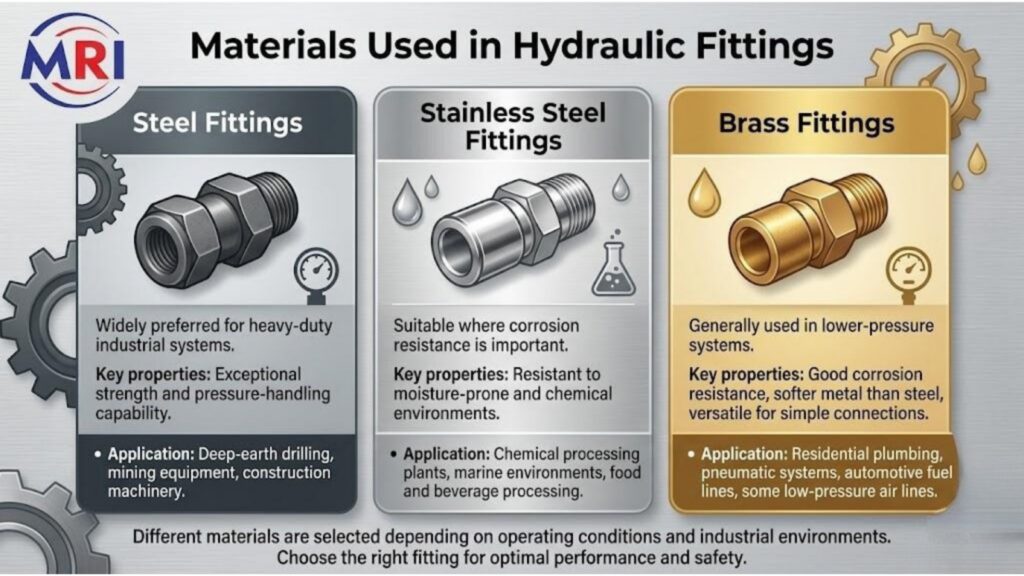
Materials Used in Hydraulic Fittings
Different materials are used depending on the operating conditions and industrial environment.
Steel Fittings
Steel fittings are widely preferred for heavy-duty industrial systems because of their strength and pressure-handling capability.
Stainless Steel Fittings
Stainless steel fittings are suitable for applications where corrosion resistance is important, especially in moisture-prone or chemical environments.
Brass Fittings
Brass fittings are generally used in lower-pressure systems and applications where corrosion resistance is required.
Importance of Choosing the Right Fitting
Properly selected fittings help maintain hydraulic pressure and improve system reliability. Poor fitting selection can create issues such as:
- Fluid leakage
- Pressure loss
- Hose damage
- Increased maintenance
- Equipment downtime
Using the correct hydraulic fitting types also helps improve safety and long-term equipment performance.
Industries That Use Hydraulic Hose Fittings
Hydraulic systems are used across multiple industries, making hose fittings an important industrial component.
Manufacturing
Hydraulic systems are widely used in production machinery and industrial automation equipment.
Construction
Heavy machinery such as excavators, cranes, and loaders rely on hydraulic connections for daily operation.
Agriculture
Agricultural equipment uses hydraulic systems for lifting, steering, and machine control.
Mining and Industrial Plants
Mining and processing industries use hydraulic systems in demanding operating conditions where durable fittings are necessary.
Maintenance and Inspection
Regular inspection of hydraulic fittings helps prevent system failures. Businesses should check for leakage, wear, corrosion, or loose connections during maintenance. Basic maintenance practices include:
- Regular inspection
- Replacing damaged fittings
- Checking pressure compatibility
- Proper installation
Timely maintenance helps improve the lifespan of hydraulic systems and connected components. For industrial hose and hydraulic product inquiries contact here: Mangla Rubber Industries
Final Thoughts
Hydraulic hose fittings are an essential part of industrial hydraulic systems. From maintaining fluid flow to handling pressure safely, these components support smooth machine operation across different industries.
Understanding different hose fitting types and selecting suitable fittings according to application requirements can help improve performance and reduce maintenance issues over time.