
Hose factory operations in March 2026 are facing a “perfect storm” that is fundamentally altering the cost structure and material science of industrial fluid transfer.. What began as a regional conflict has evolved into what the International Energy Agency calls the “greatest global energy security challenge in history.” For the manufacturing sector—specifically the industrial hose industry—the impact is twofold: a vertical spike in energy costs and a horizontal collapse in the chemical supply chain.
The Catalyst: The 2026 LNG Blockade
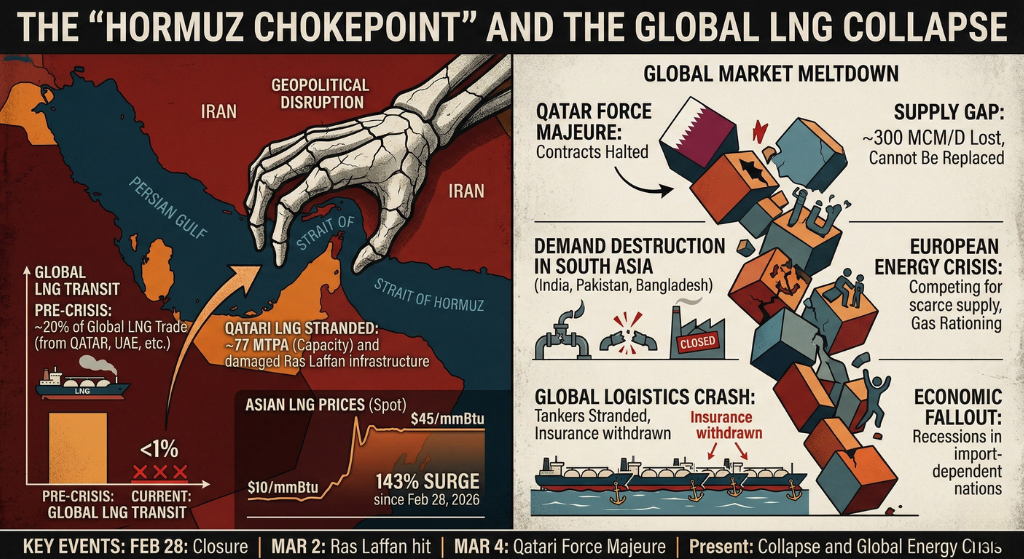
The current crisis was triggered by the disruption of the Strait of Hormuz, through which nearly a quarter of the world’s liquefied natural gas (LNG) passes. Following the targeted strikes on the Ras Laffan terminal and the subsequent maritime “no-go zones,” global gas spot prices have defied historical models, climbing over 180% in the last month alone.
Unlike previous energy crunches, this 2026 crisis is defined by a total lack of “swing capacity.” With Iranian production offline and regional exports crippled, the manufacturing world is competing for a finite, shrinking supply of fuel.
1. The "Hormuz Chokepoint" and the LNG Collapse
The primary driver of this crisis is the closure of the Strait of Hormuz in early March. This maritime corridor is the artery for 20% of the world’s liquefied natural gas (LNG).
Following drone strikes on Qatar’s Ras Laffan industrial complex—the world’s largest LNG export facility—production has effectively halted. This has sent Asian LNG spot prices up by over 140%, forcing European and American manufacturers to compete for a rapidly shrinking pool of available gas.
2. The Impact on Hose Manufacturing: From Feedstock to Factory
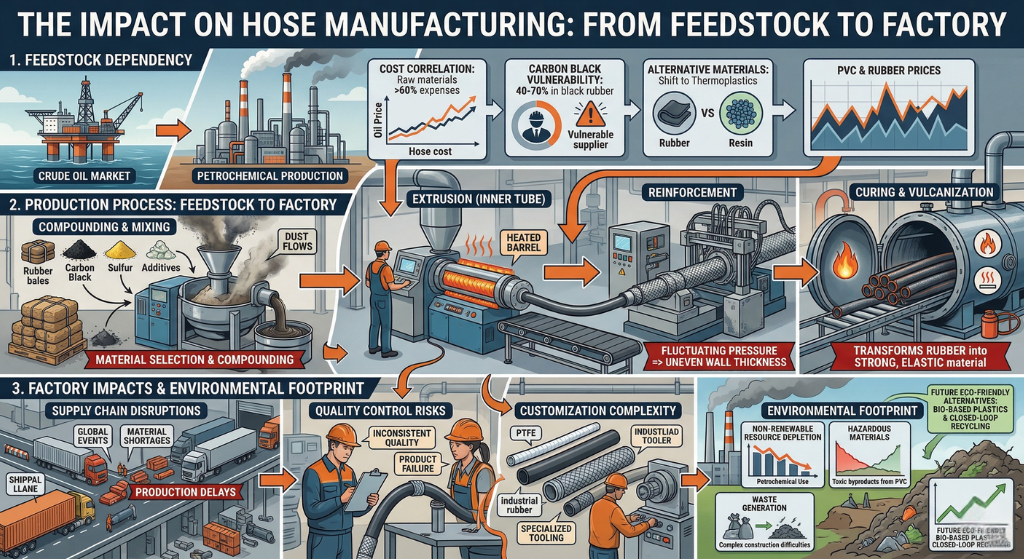
Hose production is an energy-intensive process that relies heavily on natural gas, not just for power, but as a chemical foundation.
The Polymer Problem: Most industrial hoses are made from synthetic rubbers and plastics like Polyethylene (PE)and Polyurethane (PU). These are derived from ethane, a byproduct of natural gas. As gas supplies vanish, the cost of resin and raw polymers has skyrocketed, leading to “Force Majeure” declarations from major chemical suppliers.
The Vulcanization Heat Gap: To transform raw rubber into a durable, high-pressure hose, it must undergo vulcanization. This process requires massive amounts of consistent thermal energy, traditionally provided by gas-fired industrial boilers. With gas prices at record highs, the “cost per meter” of hose production is reaching unsustainable levels.
Logistics Surcharges: Because gas is also used to produce the diesel and jet fuel needed for shipping, the cost of transporting heavy coils of hose to international markets has doubled in less than 30 days.
3. What This Means for the Global Market
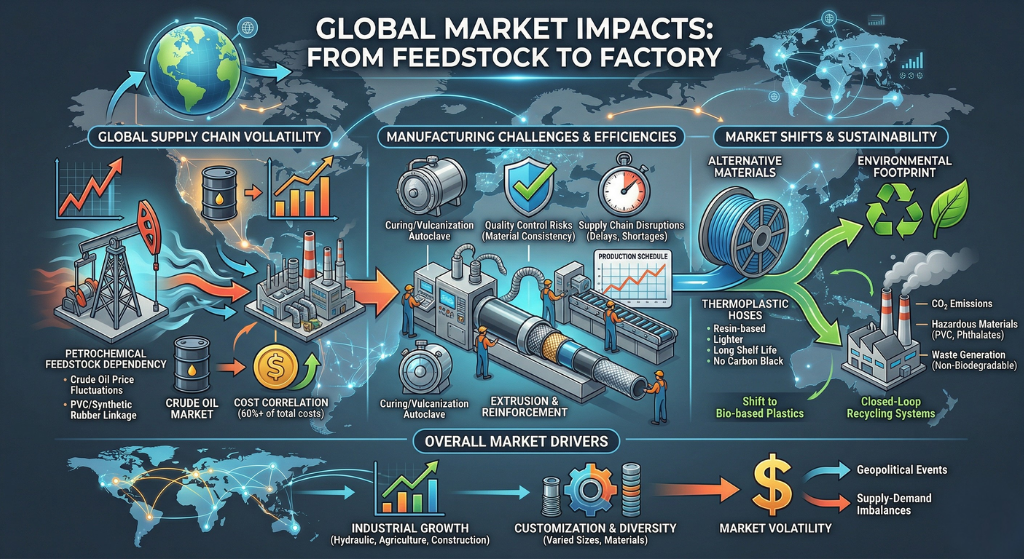
We are seeing a “de-industrialization” risk in regions heavily dependent on imported LNG. Factory owners are now facing hard choices:
Production Quotas: Many plants are shifting to 4-day work weeks to conserve energy during peak pricing hours.
Material Substitution: Engineers are frantically testing alternative polymers that may be less reliant on the specific gas-byproducts currently under blockade.
The Shift to Renewables: While the crisis is painful, it is accelerating the transition to electric-powered induction heating for rubber curing, though this infrastructure takes years to install.
Looking Ahead: Survival and Strategy
In this environment, “business as usual” is a recipe for failure. Forward-thinking factories are pivoting to survive:
Induction Heating Upgrades: Accelerating the move from gas-fired ovens to electric induction systems to bypass gas volatility.
Material Auditing: Exploring bio-based polymers that are less reliant on natural gas feedstocks.
Inventory Resilience: Moving away from “Just-in-Time” to “Just-in-Case” stocking of critical resins and wires.
Conclusion
The 2026 Iran War has proven that the global hose industry is the “circulatory system” of global trade—and right now, that system is under immense pressure. We are committed to transparency as we navigate these unprecedented costs and supply shortages.