Choosing the right chemical hose in 2026 is crucial for safety and efficiency in industries like manufacturing, agriculture, and pharmaceuticals. With advancements in materials and regulations, a chemical hose must withstand harsh substances without leaking or degrading.
Factor 1: Chemical Compatibility
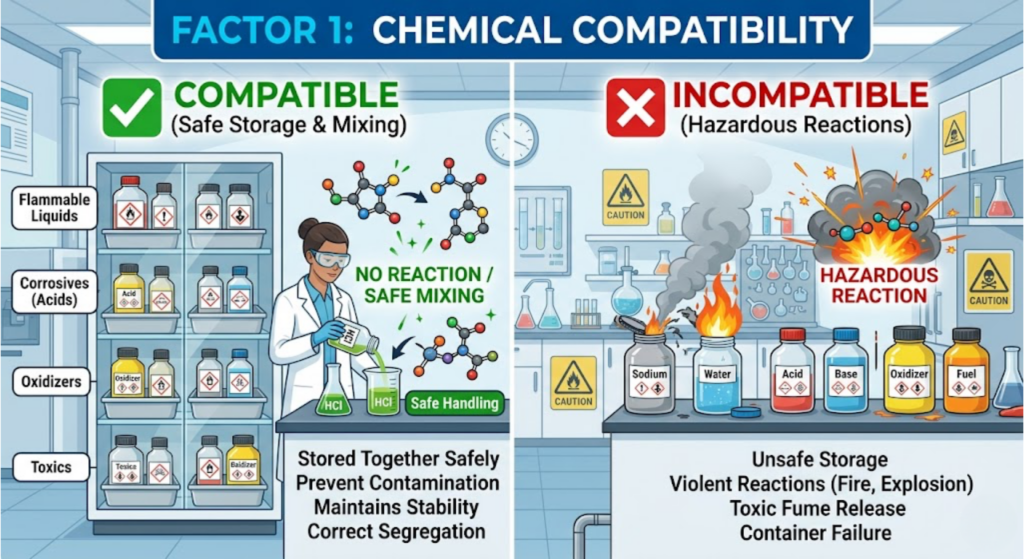
The primary concern for any transfer line is how well its inner lining interacts with the media it carries. In 2026, modern systems utilize advanced inner linings like PTFE (Polytetrafluoroethylene) or UHMWPE (Ultra-High Molecular Weight Polyethylene). These materials are engineered to resist acids, solvents, and alkalis without swelling or corroding.
Always consult updated compatibility charts from standards like Cole-Parmer. Choosing an incompatible lining leads to permeation, where vapors seep through the walls, compromising the structural integrity of the entire assembly.
Factor 2: Pressure Rating
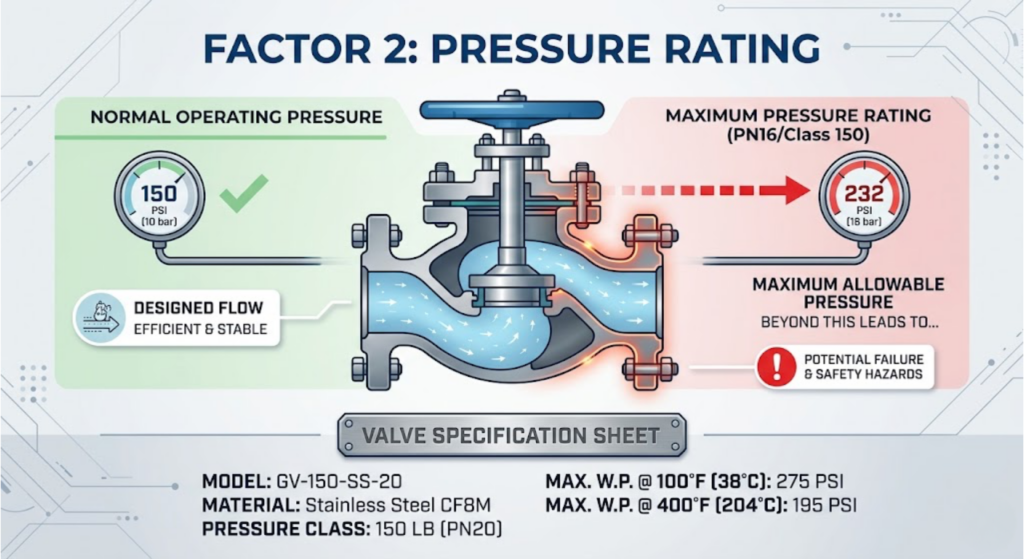
Every industrial line must be rated for specific operating and burst pressures. Current technology offers ratings ranging from 200 psi to well over 1000 psi, often reinforced with high-tensile textile braids or stainless steel wire spirals.
Safety Factor: Always select an assembly with a safety margin—typically a 4:1 burst-to-working pressure ratio.
Vacuum Resistance: For suction applications, ensure the design includes a helix wire to prevent collapse under negative pressure.
Factor 3: Temperature Range
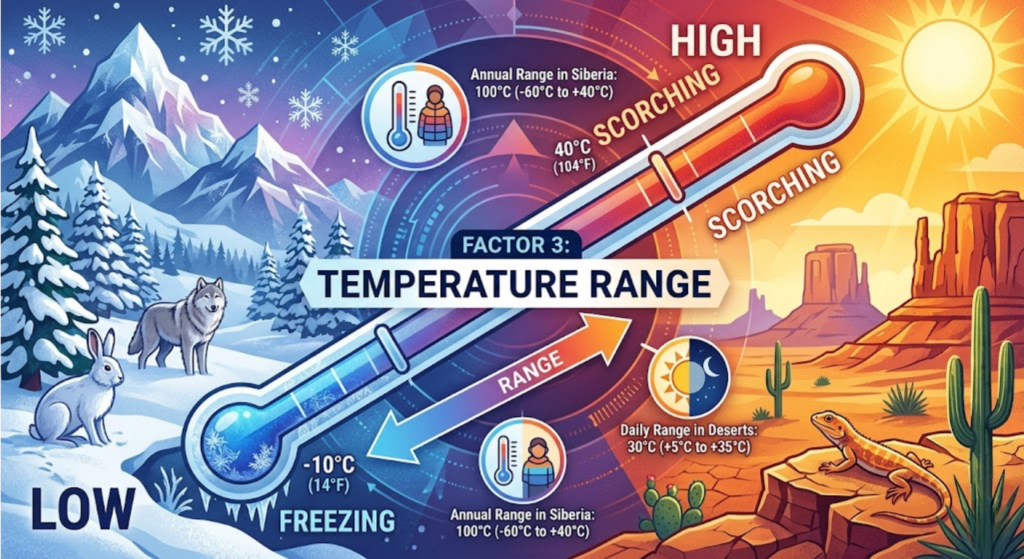
Fluid transfer lines often face brutal thermal conditions, ranging from cryogenic liquids to boiling slurries. By 2026, fluoropolymer tubes have become the standard for enduring temperatures from -50°C to 250°C without softening or becoming brittle.
In regions with intense ambient heat, such as Delhi, it is equally important to choose outer covers equipped with UV inhibitors to prevent environmental cracking.
Factor 4: Size and Length
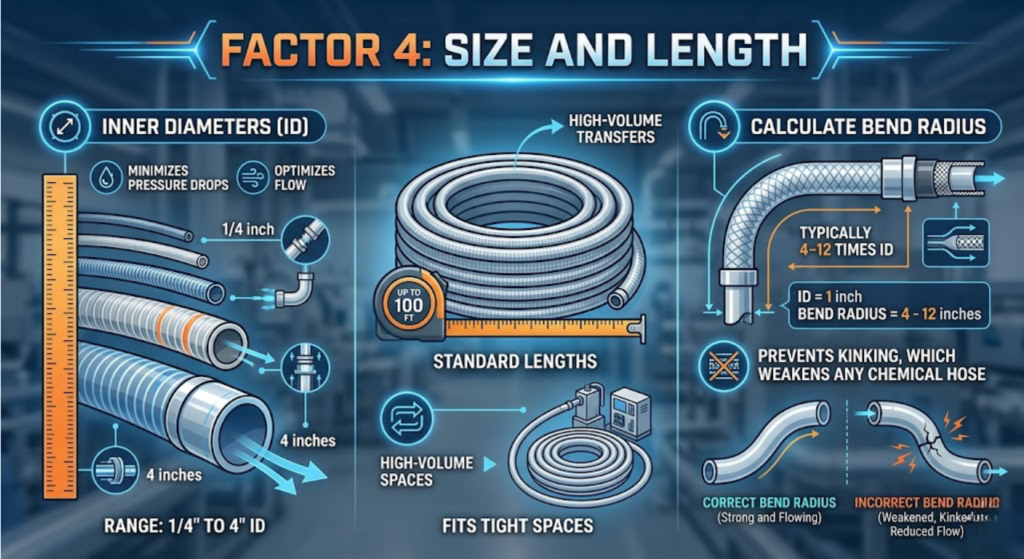
Proper sizing is essential to optimize flow rates and minimize pressure drops. Standard inner diameters (ID) typically range from 1/4” for precision dosing to 4” for bulk transfers.
Beyond diameter, you must calculate the bend radius. A general rule of thumb is a radius 4 to 12 times the ID. Forcing a tight bend beyond these limits causes kinking, which creates flow turbulence and permanent mechanical weakness.
Factor 5: Material Construction
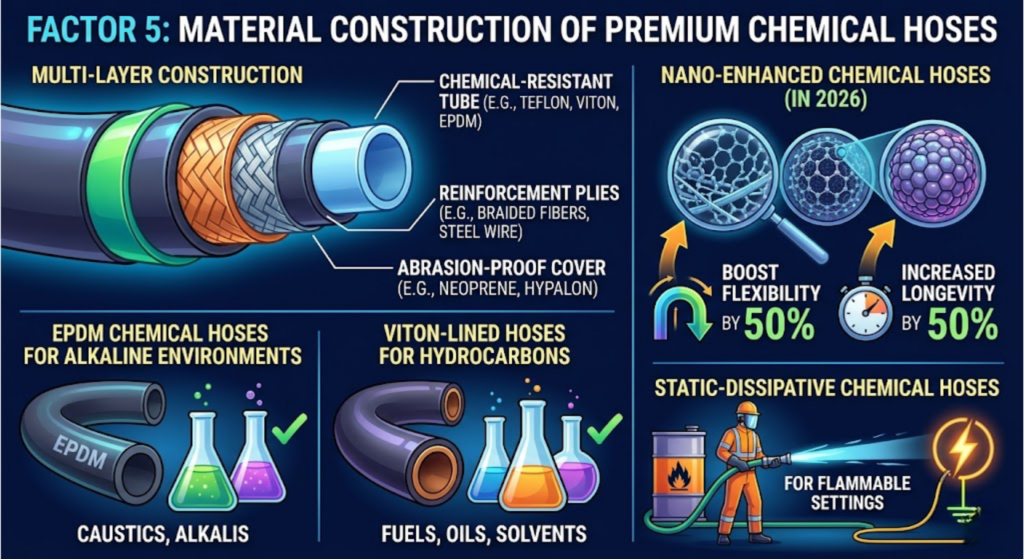
Premium industrial lines feature sophisticated multi-layer architectures. This usually includes a chemical-resistant tube, reinforcement plies for strength, and an abrasion-proof outer cover made of Neoprene or Hypalon.
EPDM: Ideal for alkaline environments.
Viton: The go-to for hydrocarbon-based fluids.
Nano-enhancements: In 2026, nano-infused materials have boosted flexibility and lifespan by up to 50%.
Conductivity: In flammable environments, always opt for static-dissipative designs to prevent spark discharge.
Factor 6: End Fittings and Assemblies
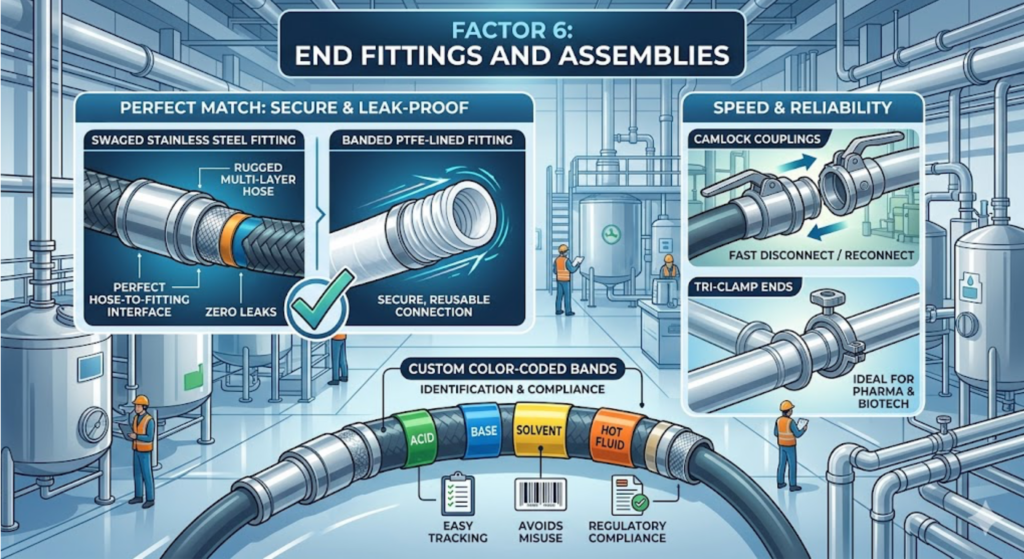
Fittings must match the chemical hose perfectly to avoid leaks. Swaged stainless steel or banded PTFE-lined chemical hose fittings ensure secure, reusable connections. Camlock or Tri-Clamp ends speed assembly in pharma plants. Custom chemical hose assemblies with color-coded bands simplify identification and compliance.
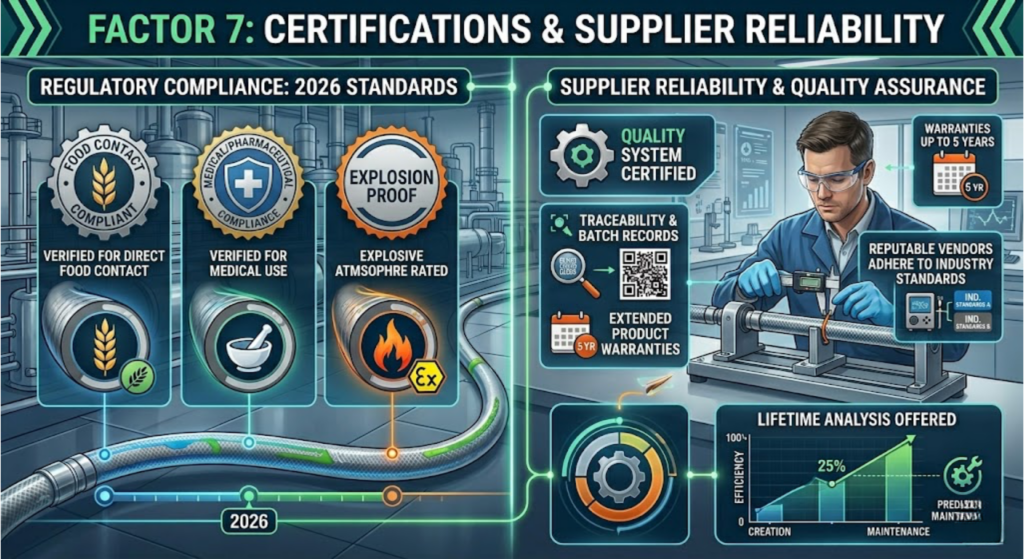
Factor 7: Certifications and Supplier Reliability
In the regulatory landscape of 2026, certifications are non-negotiable. For specialized industries, look for FDA, USP Class VI, or ATEX ratings. Partnering with ISO 9001-certified suppliers ensures that every component has a paper trail for quality control. Reputable vendors now offer lifetime analysis and test their products against rigorous SAE or RMA standards to guarantee a 5-year service window.
Application-Specific Tips
For Delhi’s chemical plants, prioritize chemical hoses with ozone and UV resistance against monsoons and heat. Transfer hoses for batch processes need static grounding; suction chemical hoses require anti-collapse designs. Conduct pressure tests post-installation.
Maintenance Best Practices
Inspect chemical hoses quarterly for blisters, kinks, or cover damage. Store chemical hoses coiled in shade, away from sunlight. Replace after 2-5 years or 80% rated life, tracking via RFID tags in smart chemical hoses.
Investing in the right chemical hose prevents downtime and hazards. These seven factors—compatibility, pressure, temperature, size, construction, fittings, and certifications—ensure optimal performance in 2026 operations. Choose wisely for durable, compliant chemical hoses tailored to your needs.