
How to Select an Industrial Rubber Component Supplier
Selecting an industrial rubber components manufacturer is not simply a price comparison. The supplier becomes part of your quality, engineering and delivery system. A weak choice can create leakage, premature wear, assembly delays and repeated inspection work. A strong partner helps convert application requirements into consistent custom rubber parts that perform reliably in production.
Before requesting a quotation, define the application, operating environment, mating parts, expected volumes and acceptance criteria. If the requirement is still developing, Mangla Rubber Industries can help review the brief and identify the information needed for a practical manufacturing discussion.
Start with the application, not the catalogue
A capable supplier should ask what the component must do, not only what dimensions appear on the drawing. Explain the fluid or media, temperature exposure, movement, pressure, abrasion, outdoor conditions and expected service cycle. These factors influence material selection, reinforcement, tolerances and production controls.
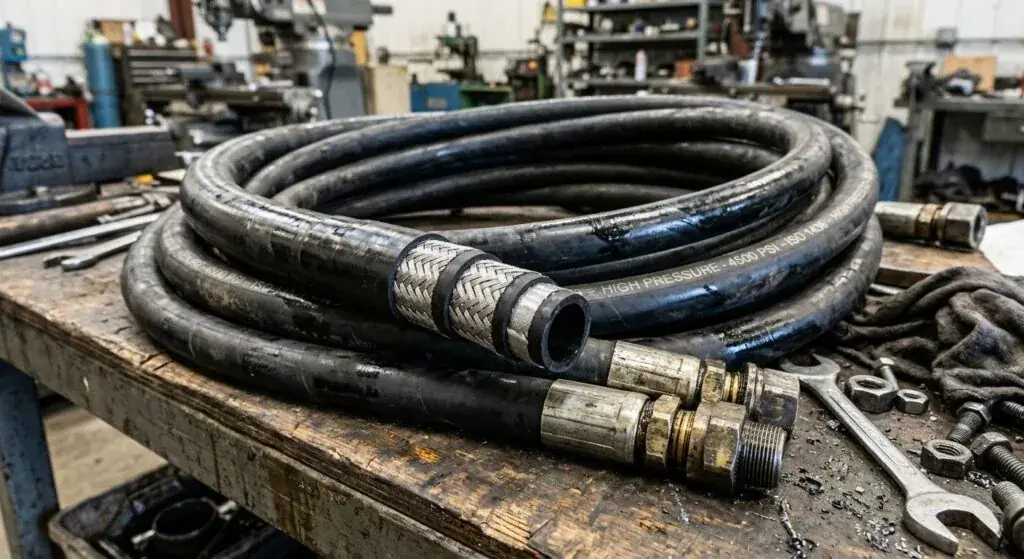
For hose-related applications, the operating medium and environment are especially important. This overview of EPDM, nitrile and silicone hose materials shows why material choice should follow application requirements rather than a generic preference.
Evaluate engineering and material-selection support
Ask how the supplier reviews drawings, samples and performance requirements. A useful technical discussion should cover material family, hardness, dimensional tolerance, parting lines, flash limits, surface finish and critical-to-quality dimensions. The supplier should also identify missing information and flag unrealistic requirements before tooling begins.
Avoid relying on vague claims such as premium quality or universal compatibility. Request evidence that is relevant to your part and application. When certificates, test reports or inspection records are required, include them in the quotation and purchase specification.
Review manufacturing capability and process control
The correct production method depends on geometry, material and volume. Moulded components may require compression, transfer or injection processes. Extruded profiles and hose assemblies require different equipment and control plans. Ask whether important operations are completed in-house, which activities are outsourced and how external processes are verified.
Process control should be visible in the supplier’s answers. Look for documented material identification, batch traceability, controlled mixing or compound sourcing, tool maintenance, first-piece approval, in-process inspection and final verification. A reliable rubber moulded components supplier should be able to explain how it maintains repeatability from one batch to the next.
Check tooling, sampling and change management
Tooling terms can materially affect cost and lead time. Confirm ownership, storage, maintenance responsibility, expected tool life and the process for engineering changes. Before production approval, agree on sample quantity, measurement report, functional tests and the response required if a sample does not meet the drawing.
Change control is equally important. Material substitutions, process changes and tooling repairs should not be made silently when they can affect fit or performance. Establish who can approve a change and how revised drawings or specifications will be controlled.
Assess quality evidence, not only certifications
A certificate can support supplier evaluation, but it does not replace part-specific controls. Ask for a sample inspection plan or a description of the checks applied to your component. Critical dimensions may need gauges, fixtures or documented measurement methods. Visual defects should have clear acceptance standards so both teams judge parts consistently.
For assemblies and fluid-transfer products, consider how the supplier handles fitting selection, assembly consistency and leak prevention. The range of industrial hose and pipe fitting applications illustrates why component compatibility matters across different operating environments.
Compare total supply risk, not just unit price
The lowest quotation can become expensive when it creates rejected batches, urgent freight, downtime or frequent supplier follow-up. Compare tooling cost, minimum order quantity, sample lead time, production lead time, packaging, inspection documentation and delivery reliability. Also ask how the supplier manages raw-material availability and demand changes.
For recurring production, agree on forecast communication and realistic safety-stock expectations. A clear escalation contact and corrective-action process can reduce response time when a problem occurs.
Use a structured supplier checklist
- Provide a controlled drawing, sample or written application brief.
- Confirm the operating medium, environment and performance expectations.
- Review material-selection reasoning and any required evidence.
- Confirm the manufacturing process and outsourced operations.
- Define tooling ownership, sampling and approval requirements.
- Agree on critical dimensions, inspection records and traceability.
- Compare total cost, lead time, capacity and continuity plans.
- Document packaging, labelling and delivery expectations.
Questions to ask before placing an order
What information should I provide for a quotation?
Share the drawing or sample, application, operating media, environmental conditions, quantity, material preference if known, critical dimensions and required documentation.
How should I compare rubber component suppliers?
Compare engineering support, process control, inspection capability, traceability, tooling terms, delivery performance and total supply risk alongside price.
When should a sample be approved?
Approve a sample only after the agreed dimensional, visual and functional checks are complete and any deviations are documented.
Why is material selection important?
Rubber families respond differently to oils, weather, heat and other operating conditions. The material must be matched to the actual application.
What should be included in the purchase specification?
Include the current drawing revision, material requirement, acceptance criteria, documentation, packaging, quantity, delivery terms and approved change process.
Choose a supplier that supports repeatable production
The best supplier is the one that understands the application, communicates constraints early and controls the process after approval. A disciplined evaluation helps procurement teams and OEM engineers reduce risk while building a dependable source for custom rubber parts. To discuss a component brief, contact the Mangla Rubber Industries team.