
How Pneumatic Hose Pipe Specifications Affect Performance in Industrial Air Tools
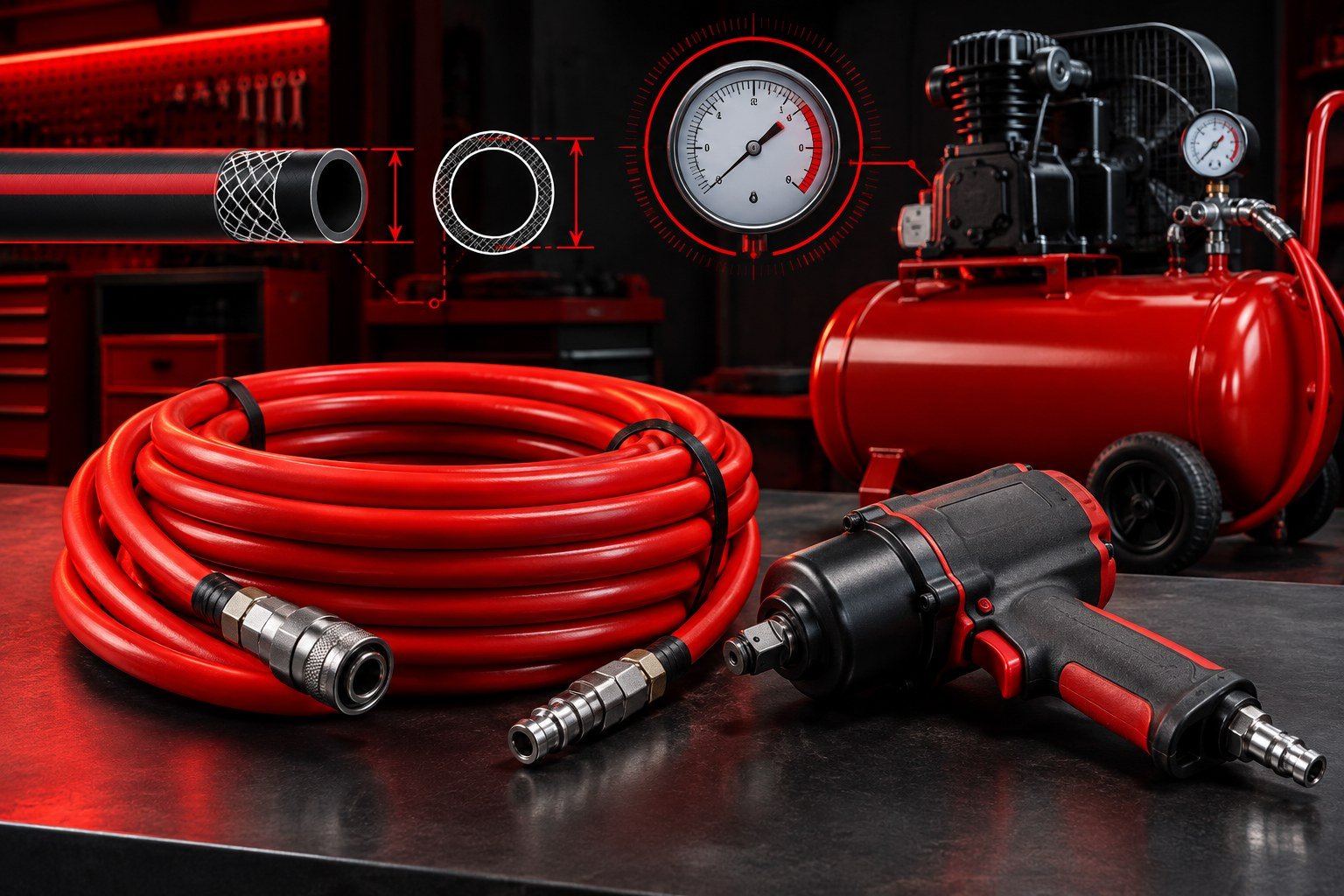
Compressed air tools only perform as well as the hose that feeds them. A hose with the wrong bore, the wrong pressure rating, or the wrong material can quietly rob an impact wrench or grinder of the power it needs, even when the compressor itself is working fine. Correct pneumatic hose pipe specifications are what keep air flow, pressure, and tool output consistent across a shift.
Buyers often assume one air hose works for every job. In practice, bore size, working pressure, temperature range, and fitting compatibility all change depending on the tool, the run length, and the working environment. Getting these pneumatic hose pipe specifications right the first time prevents pressure drop, premature wear, and avoidable downtime on the shop floor.
Plant engineers and procurement teams can follow Mangla Rubber Industries on LinkedIn for regular updates on industrial hose selection, specifications, and maintenance practices.
What Do Pneumatic Hose Pipe Specifications Actually Cover?
Pneumatic hose pipe specifications describe the measurable properties that determine how a hose performs under compressed air, including inner bore diameter, outer diameter, working pressure, burst pressure, temperature range, bend radius, and reinforcement type. Every one of these figures affects airflow, tool response, and service life.
A hose that looks similar to another on the outside can behave very differently once air is running through it. Two hoses with the same outer diameter but different bore sizes will deliver different volumes of air to the same tool, and that difference shows up directly as lost torque or slower cycle times at the point of use.
Why Bore Size Determines Tool Performance
Bore size, or inner diameter, controls how much compressed air can travel through the hose in a given time. A narrow bore restricts flow, which is fine for light-duty tools but becomes a problem for higher-demand equipment.
Smaller bores in the 6 to 8 mm range generally suit handheld tools such as spray guns and tyre inflators, where air demand is modest. A 10 mm bore is the more common choice for industrial air tools like impact wrenches, grinders, and sanders that need steadier, higher-volume airflow. Larger bores, closer to 13 mm, are reserved for high-output compressors and heavy air demand equipment.
Choosing a bore that is too small for the tool is one of the most common reasons operators complain about weak or inconsistent air tool performance, even when the compressor itself is rated correctly for the job.
Working Pressure and Burst Pressure Explained
Working pressure is the pressure a pneumatic hose pipe can handle continuously during normal operation. Burst pressure is the point at which the hose fails under test conditions, and it exists purely as a safety margin, never as an operating target.
Most industrial-grade hoses are built with a safety factor of roughly three to one between working pressure and burst pressure. A hose rated for 20 bar working pressure, for example, is typically tested well beyond that figure before failure. This margin protects against pressure surges, but it does not mean the hose should ever be run near its rated limit as standard practice.
Selecting a hose whose working pressure comfortably exceeds the compressor’s maximum output, plus any surge pressure in the line, is a basic but frequently overlooked step in pneumatic hose pipe specifications.
Temperature Range and Material Selection
Compressed air lines are often routed near machinery, outdoor compressor yards, or areas with fluctuating ambient temperature, and the hose material has to tolerate all of it without losing flexibility or strength.
EPDM rubber hoses handle a wide temperature range and stay flexible in colder conditions, which makes them a common choice for general-purpose compressed air work in India’s varied industrial settings. PU and PVC hoses are lighter and easier to coil, but they can stiffen in cold weather and are more sensitive to prolonged sun exposure outdoors. Reviewing the expected temperature range at the installation site, not just the room where the compressor sits, avoids premature cracking or hardening.
Reinforcement, Fittings, and Assembly Compatibility
The reinforcement layer inside a hose, whether braided textile, wire, or synthetic yarn, controls how well it resists kinking, holds its shape under pressure, and survives repeated coiling and uncoiling on a job site.
Fittings matter just as much as the hose itself. Mismatched thread sizes or incompatible coupler styles are a frequent source of leaks and pressure loss at the connection point rather than along the hose length. Buyers sourcing a complete pneumatic hose pipe assembly should confirm hose bore, fitting thread type, and coupler style together, rather than purchasing each component separately and hoping they align.
How Hose Length Affects Pressure Drop
Longer hose runs and smaller bores both increase pressure drop between the compressor and the tool, which is why a hose rated correctly for pressure can still leave a tool underpowered if it is undersized for the length of the run.
A practical approach many industrial buyers follow is to run a larger-bore mainline hose from the compressor to the general work area, then use a shorter, more flexible hose at the tool end. This limits pressure loss over distance while keeping the section nearest the operator light and manageable.
Common Signs of Incorrect Hose Specification
Air tools that feel noticeably weaker than their rated output, hoses that stiffen or crack earlier than expected, and recurring leaks at fittings are all signs that the installed hose does not match its pneumatic hose pipe specifications requirement.
Reviewing tool air consumption, actual compressor output, hose run length, and ambient conditions together, rather than in isolation, is the most reliable way to catch a mismatch before it turns into a maintenance issue.
Related Reading for Industrial Air Systems
Compressed air and hydraulic systems serve different purposes, but both depend on hoses matched correctly to pressure, bore, and duty cycle. Our earlier guide looks at how a pneumatic hose pipe controls compressed air flow across automation and industrial machinery, and is worth reviewing alongside hose specification planning.
For a broader look at how industrial teams select the right air hose material and bore size, GlobalSpec’s air hose selection guide is a useful independent reference point.
Discuss Your Industrial Hose Requirement
Businesses sourcing a pneumatic hose pipe for compressed air tools should share tool air consumption, compressor output, run length, and working environment details. Clear specifications lead to a hose recommendation that performs consistently instead of one chosen on price alone.
Mangla Rubber Industries manufactures industrial hose solutions for pneumatic, hydraulic, chemical, steam, and water transfer applications, including a dedicated pneumatic hose range built for Indian industrial and workshop conditions. Buyers can contact Mangla Rubber Industries to discuss bore size, pressure rating, fittings, and bulk requirements.
Conclusion
Final Thoughts on Pneumatic Hose Pipe Specifications
Getting pneumatic hose pipe specifications right is less about picking the most expensive hose and more about matching bore size, pressure rating, temperature tolerance, and fittings to the actual tool and working conditions. A hose that fits the application prevents pressure drop, avoids premature wear, and keeps industrial air tools performing at their rated output.
Reviewing these specifications before purchase, rather than after a tool starts underperforming, gives industrial buyers a more dependable compressed air system and fewer unplanned interruptions on the floor.
Frequently Asked Questions
1. What bore size is best for industrial air tools?
Most industrial air tools such as impact wrenches, grinders, and sanders perform well with a 10 mm bore. Lighter tools can use a 6 to 8 mm bore, while high-output equipment may need a 13 mm bore for adequate airflow.
2. Can a longer hose reduce air tool performance?
Yes. Longer hose runs increase pressure drop, especially when combined with a narrow bore. A larger-bore mainline with a shorter hose at the tool end helps maintain consistent pressure.
3. How is working pressure different from burst pressure?
Working pressure is the pressure a hose is designed to handle continuously. Burst pressure is the failure point during testing and exists only as a safety margin, not an operating limit.
4. Does temperature affect pneumatic hose performance?
Yes. Extreme heat or cold can reduce a hose’s flexibility and working pressure rating. Reviewing the material’s rated temperature range against actual site conditions helps prevent early failure.
5. Why do fittings matter as much as the hose itself?
Mismatched thread sizes or incompatible couplers are a common source of leaks and pressure loss, even when the hose itself is correctly specified. Hose and fittings should always be confirmed together.