
In the industrial landscape of 2026, the flexible chemical has evolved from a basic utility into a precision-engineered asset. As global manufacturing pivots toward Industry 5.0—where human-centric design meets hyper-efficient automation—the role of fluid transfer systems has never been more critical. Managing hazardous substances requires more than just a tube; it requires a sophisticated flexible chemical hoses system capable of withstanding extreme thermal fluctuations, corrosive environments, and high-pressure cycles.
This year, we are seeing a massive shift in how procurement managers and engineers view the flexible chemical hoses. It is no longer just about “making the connection”; it is about optimizing the entire lifecycle of chemical transport to ensure zero-contamination and maximum worker safety.
The Evolution of Flexible Chemical Hose Technology in 2026
The flexible chemical hoses of today is vastly superior to the models of a decade ago. Material science has reached a point where we can now bond disparate materials at the molecular level, creating a flexible chemical hose that offers the chemical inertness of glass with the flexibility of high-grade rubber.
1. Smart Sensing and Integrated IoT
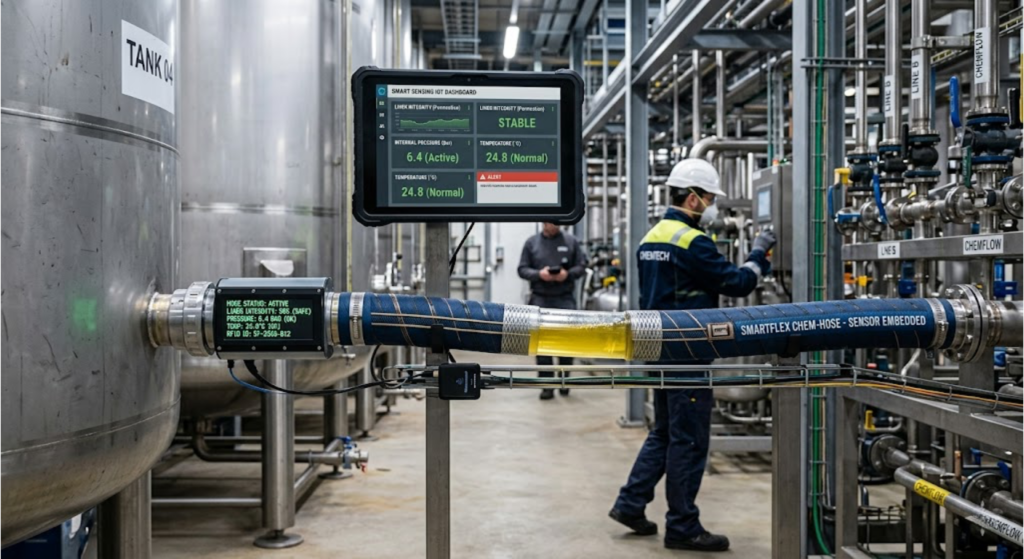
Perhaps the most significant trend in 2026 is the “Smart flexible chemical hoses.” These assemblies are embedded with conductive filaments or RFID sensors that provide real-time data on:
Liner Integrity: Detecting early signs of chemical permeation.
Internal Pressure: Monitoring for surges that could lead to a catastrophic flexible chemical hose failure.
Temperature Spikes: Ensuring that volatile chemicals remain within their safe operational windows.
2. Advanced Fluoropolymers and Bio-Liner Materials
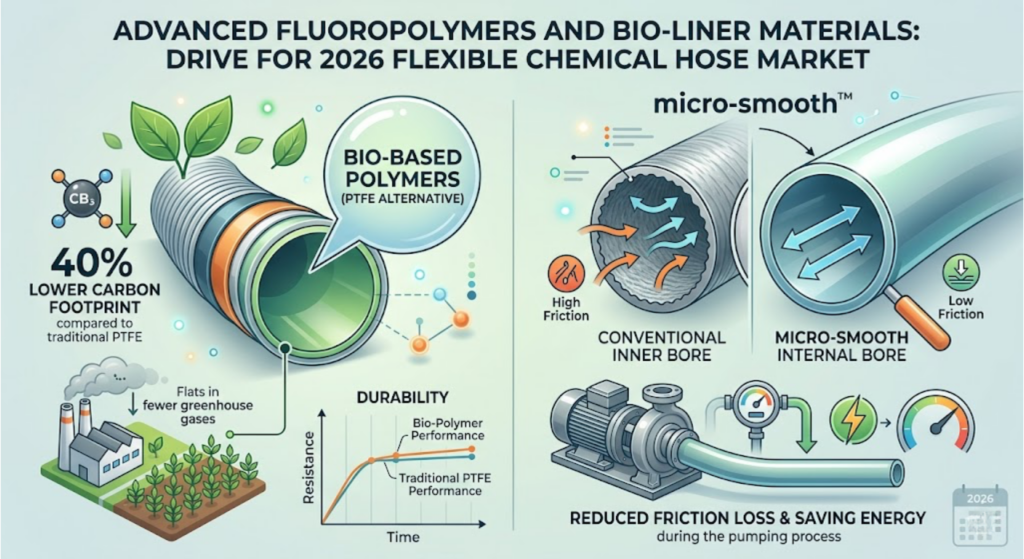
Environmental sustainability is the driving force behind the 2026 flexible chemical hose market. Manufacturers are now utilizing bio-based polymers that offer the same resistance as traditional PTFE but with a 40% lower carbon footprint. Furthermore, the modern flexible chemical hose often features “micro-smooth” internal bores, reducing friction loss and saving energy during the pumping process.
The Evolution of Flexible Chemical Hose Technology in 2026
Choosing a flexible chemical hose is a high-stakes decision. A failure doesn’t just result in downtime; it can lead to environmental disasters and severe legal liabilities. To optimize your selection, you must evaluate the flexible chemical hose based on the following 2026 industry benchmarks:
Chemical Compatibility and Permeation
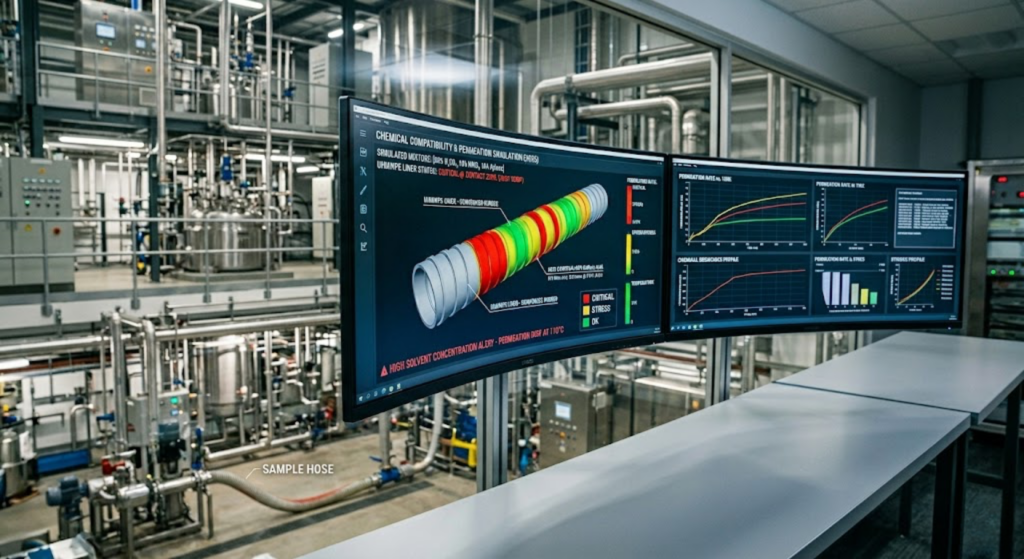
Not all liners are created equal. While a flexible chemical hoses with a UHMWPE liner is excellent for most industrial acids, it may fail when exposed to certain concentrated solvents at high temperatures. In 2026, engineers use digital twin simulations to predict how a flexible chemical hose will react to specific chemical “cocktails” before they ever hit the factory floor.
Mechanical Stress and Bend Radius
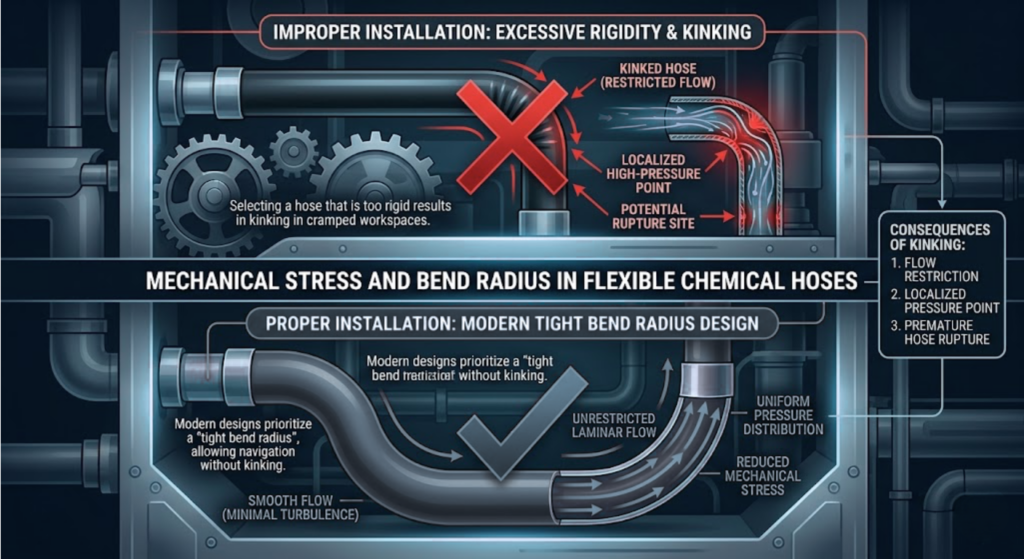
A common mistake is selecting a flexible chemical hose that is too rigid for the workspace. Modern designs prioritize a “tight bend radius,” allowing the flexible chemical hose to navigate cramped machinery without kinking. A kinked flexible chemical hose creates a flow restriction and a localized pressure point, which is a leading cause of premature hose rupture.
Technical Specification Comparison Table (2026 Standards)
The following table compares the top-performing flexible chemical hose variants currently dominating the 2026 market.
| Hose Category | Primary Material | Max Working Pressure | Temp Range (°C) | Industry Focus |
|---|---|---|---|---|
| Ultra-Flex PTFE | Fluoropolymer | 500 PSI | -70 to +260 | Pharma & Fine Chem |
| High-Impact UHMWPE | Polyethylene | 250 PSI | -40 to +100 | Bulk Acid Transfer |
| Multi-Layer Composite | Polypropylene/Films | 200 PSI | -30 to +80 | Marine & Tanker |
| Advanced Viton (FKM) | Fluoroelastomer | 300 PSI | -20 to +200 | Petrochemical |
| Eco-EPDM | Bio-Rubber | 150 PSI | -40 to +150 | Water Treatment |
Maintenance and Lifespan Management
In 2026, the philosophy regarding the flexible chemical hose has shifted from “reactive replacement” to “predictive maintenance.”
Visual Inspections: Regularly check the outer cover of the flexible chemical for signs of “wicking” (where chemicals seep into the reinforcement layer) or exposed braiding.
Hydrostatic Testing: Yearly pressure testing of every flexible chemical in service is now a standard requirement for ISO 2026 compliance.
Proper Storage: When not in use, a flexible chemical hose should be stored away from direct UV light and ozone-generating motors, both of which can cause the outer cover to crack and degrade.
The Role of Couplings in Hose Performance
A flexible chemical is only as strong as its weakest link—the fittings. In 2026, “encapsulated” fittings are the gold standard. These fittings ensure that the chemical media only touches the inert liner of the flexible chemical and the fitting face, preventing the metal housing from corroding over time. Whether you use Camlocks, Flanges, or Tri-Clamps, ensuring a seamless transition from the flexible chemical to the fitting is paramount for hygiene and safety.
Conclusion: Investing in Quality
The flexible chemical is the lifeblood of the modern chemical plant. As we navigate the complexities of 2026, the focus must remain on quality, traceability, and technological integration. While a cheaper flexible chemical might save money in the short term, the long-term costs of failure, cleanup, and lost production far outweigh the initial investment in a premium flexible chemical hose.
Stay ahead of the curve by upgrading to IoT-enabled, high-durability flexible chemical solutions that meet the rigorous demands of tomorrow’s industrial world. By prioritizing the right flexible chemical hose, you aren’t just buying equipment; you are buying peace of mind.