When it comes to selecting the right rubber hose, the sheer number of options can be overwhelming. Each material has unique properties that make it suitable for specific applications, and choosing the wrong rubber hose can lead to premature failure and costly downtime. Here, we break down three of the most common rubber hose materials: EPDM, Nitrile, and Silicone, helping you make an informed decision for your 2026 needs.
Understanding the Contenders
Let’s dive into the specifics of each material, comparing how each hose performs across essential industrial categories.
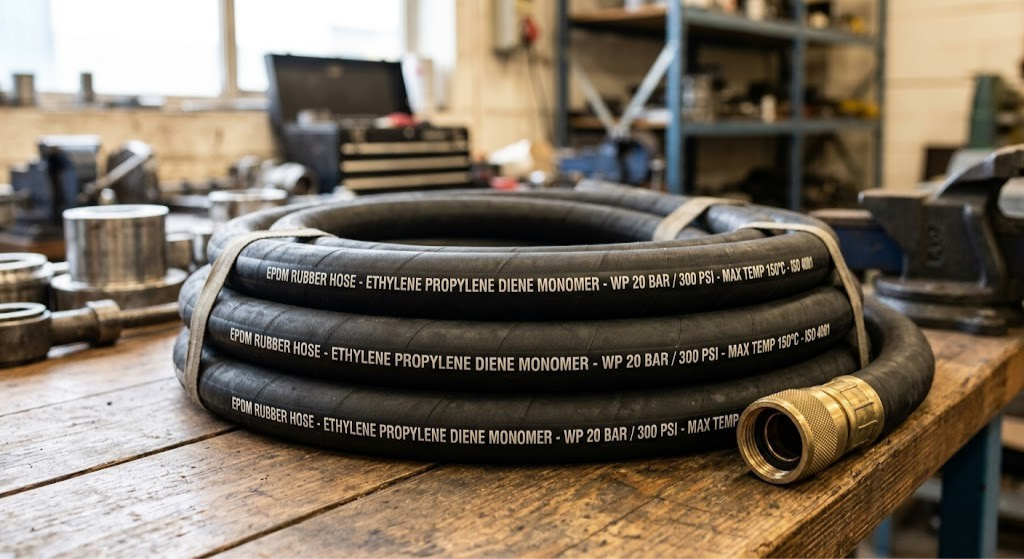
1. EPDM Rubber Hose (Ethylene Propylene Diene Monomer)
The EPDM rubber hose is a highly versatile synthetic option known for its exceptional resistance to environmental factors.
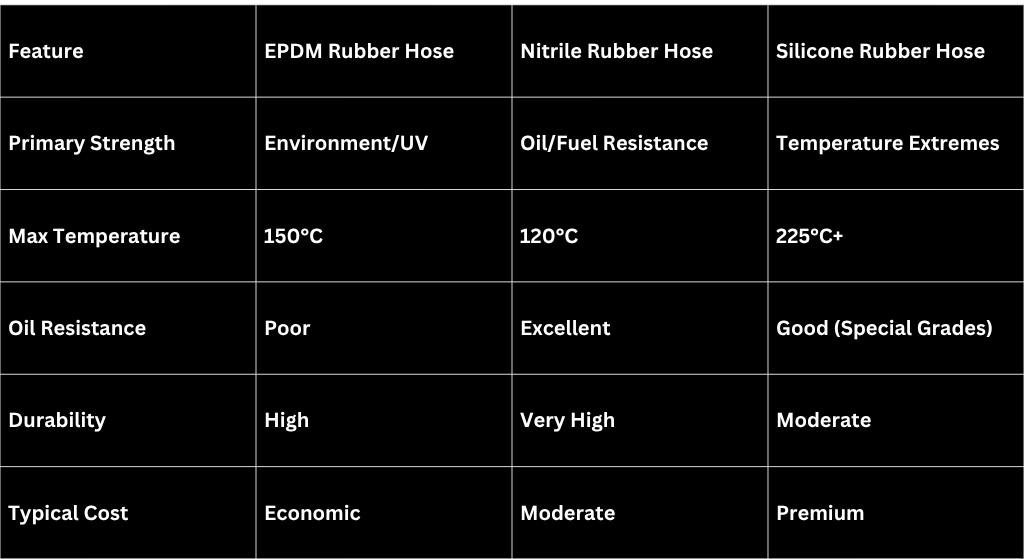
Weather & UV Resistance: An EPDM hose boasts outstanding resistance to ozone and sunlight, making it the gold standard for outdoor use.
Heat Resistance: It performs well in high temperatures, withstanding continuous exposure up to 150°C.
Chemical Resistance: This hose variety shows excellent resistance to polar solvents, hot water, and steam.
Best For: Radiator systems, garden use, and agricultural irrigation.
2. Nitrile Rubber Hose (NBR - Buna-N)
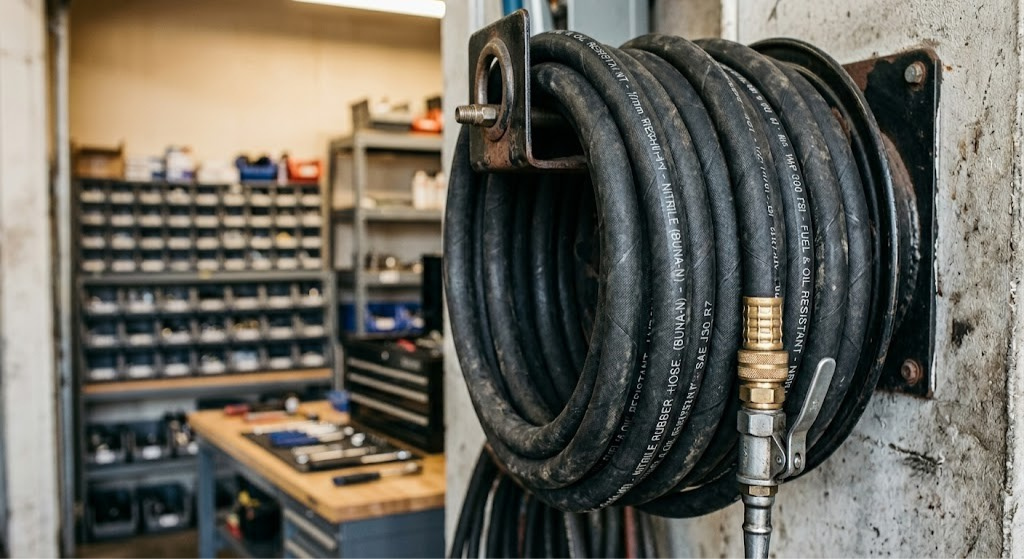
Nitrile is a robust synthetic material famous for its resistance to petroleum-based fluids. If you are transporting fuel, a Nitrile rubber hose is essentially mandatory.
Oil and Fuel Resistance: The Nitrile hose is the go-to for handling petroleum, diesel, gasoline, and mineral oils.
Abrasion Resistance: This rubber hose exhibits high tensile strength and is exceptionally durable against physical tears and cuts.
Best For: Fuel lines, oil transfer, and high-pressure hydraulic systems.
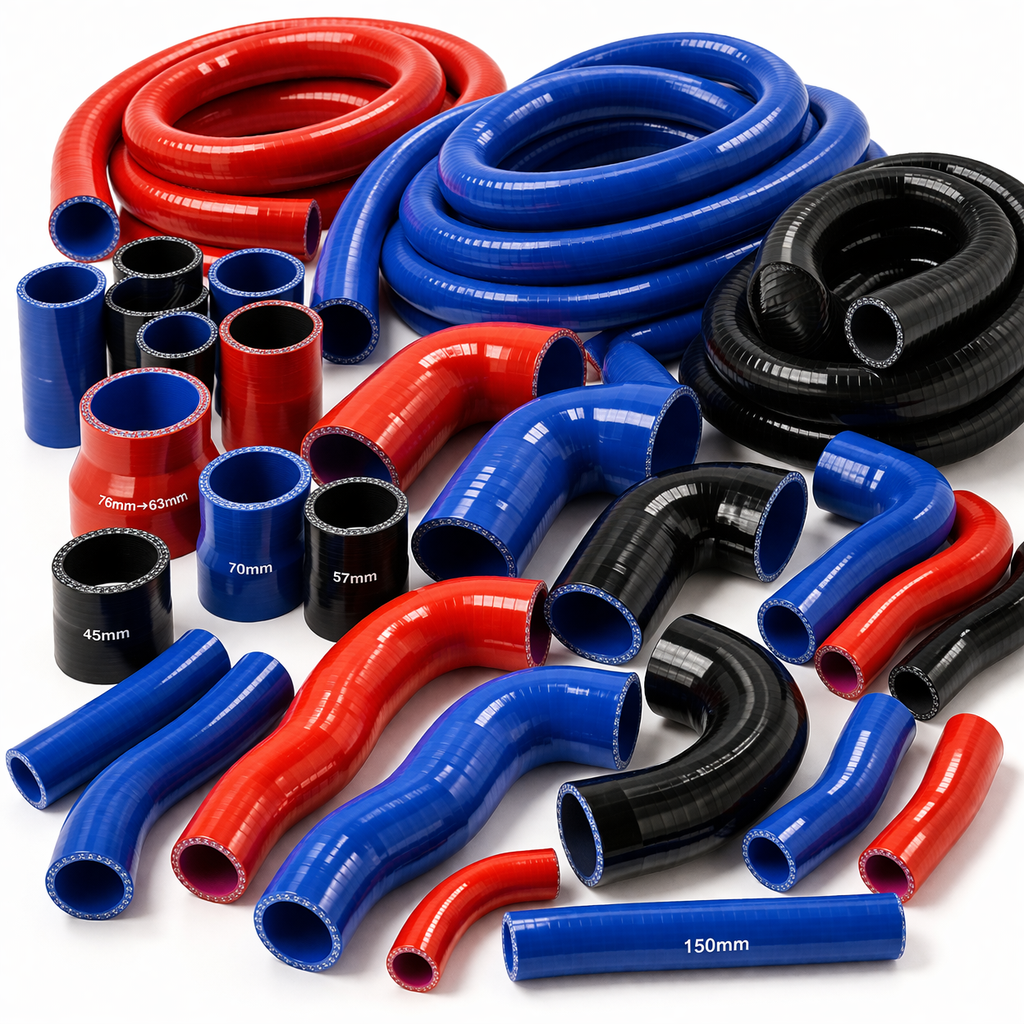
3. Silicone Rubber Hose
Silicone is a premium synthetic elastomer known for extreme temperature flexibility and excellent dielectric properties.
Extreme Temperature Range: A silicone hose can operate in extreme cold (-60°C) and extreme heat (over 200°C) without losing its physical shape.
Flexibility: It remains soft and pliable across its entire range, unlike a standard organic hose.
Cleanliness/Purity: Often FDA-compliant, this rubber hose is ideal for medical and food-grade environments.
Best For: Turbocharger CAC systems, food processing, and high-performance racing cooling.
Determining the "Best" Rubber Hose for 2026
The “best” hose is the one that meets the demands of your specific application efficiently. In 2026, sustainability and longevity are the priorities.
Check the Medium: If you’re moving oil or fuel, the Nitrile hose wins. For water or steam, EPDM is the most cost-effective choice.
Consider the Environment: For engine bays or extreme climates, the thermal stability of a silicone hose is worth the investment.
Analyze the Budget: While silicone is the “high-end” choice, an EPDM hose often provides the best ROI for general outdoor industrial use.
Conclusion
By understanding these key differences, you can confidently choose the right hose material for any project. Whether you need the ruggedness of Nitrile or the heat resistance of Silicone, selecting the correct hose ensures safety and efficiency.