
How to Choose Tractor Fuel Line Hoses and Tractor Diesel Pipe Hoses
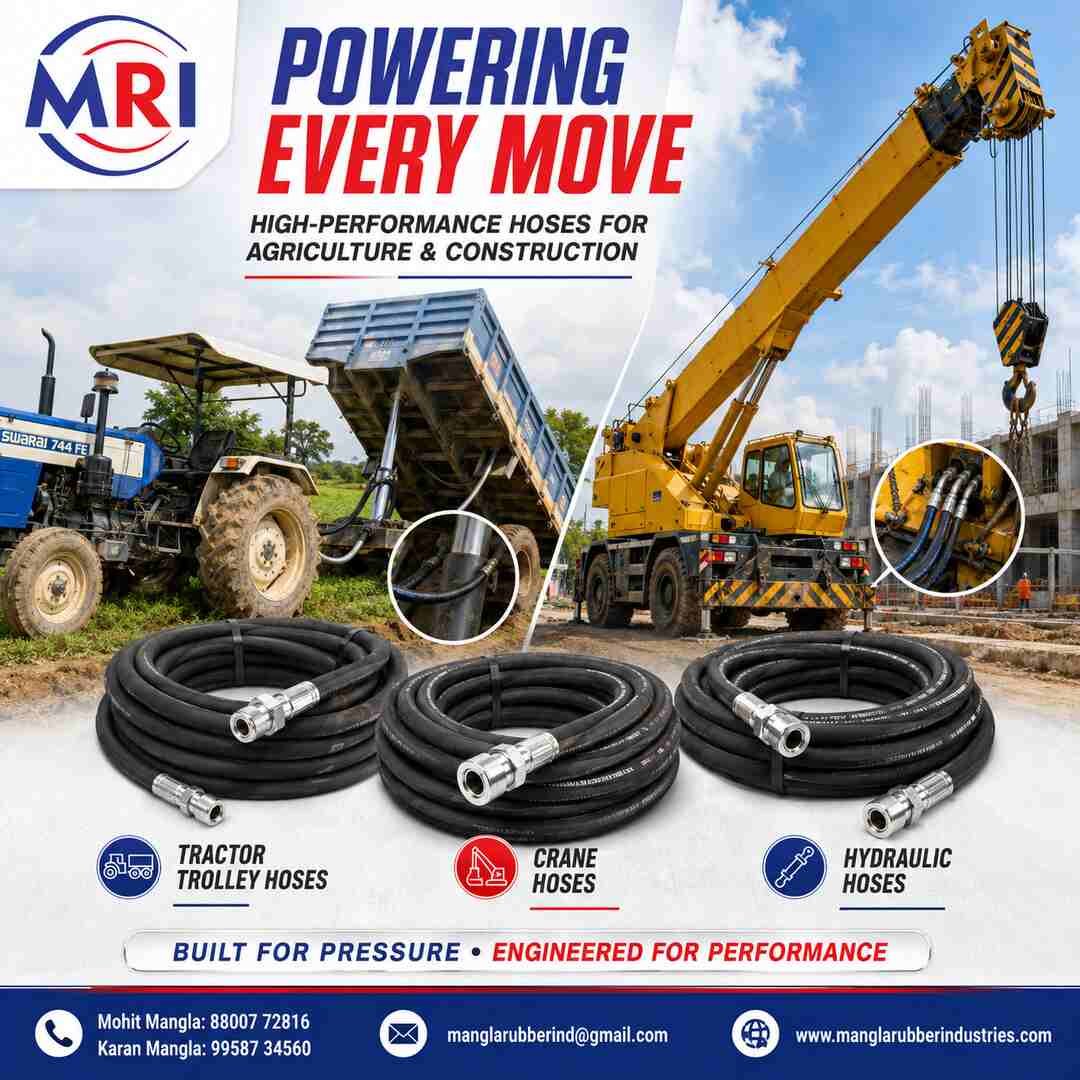
A tractor fuel system depends on clean and controlled diesel flow from the tank to the filter, pump and engine. Flexible Tractor Fuel Line Hoses connect components where vibration, movement or limited space makes rigid tubing unsuitable. Although these hoses often operate at lower pressure than hydraulic lines, material compatibility and secure connections remain essential.
Buyers may also use terms such as tractor diesel pipe hoses, diesel supply hose, fuel return hose and tractor fuel pipe. These names describe different parts of the fuel circuit. A hose selected only by diameter or appearance may soften, crack, leak or restrict fuel flow if it is not designed for the correct diesel service.
Dealers and maintenance teams can follow Mangla Rubber Industries on LinkedIn for practical information on tractor hoses, industrial rubber products and equipment maintenance.
What Are Tractor Fuel Line Hoses?
Tractor Fuel Line Hoses are flexible tubes designed to carry diesel or another approved fuel between components in a tractor fuel system. Depending on the machine, flexible sections may be used between the tank and filter, filter and pump, injector return circuit or other low-pressure connections.
A typical fuel-resistant rubber hose uses an inner tube formulated for the intended fuel, textile reinforcement where required and an outer cover that resists heat, oil, weather and abrasion. The construction must remain stable when exposed to diesel for long periods.
Hydraulic hose, coolant hose and general air hose are not automatic substitutes. Each hose family is designed around different fluids, temperatures and operating conditions.
How Tractor Diesel Pipe Hoses Work in the Fuel Circuit
The fuel supply line carries diesel toward the filtration and injection system. A return line carries unused fuel back through the circuit according to the engine design. These lines may experience different temperatures, flow rates and pressure conditions.
A Tractor Diesel Pipe Hose must keep its shape without collapsing under suction or kinking around a bend. It also needs to prevent air from entering the system. Even a small leak on the suction side may introduce air without producing an obvious external fuel leak.
The exact routing and connection layout varies between tractor models. Always identify whether the hose is a supply, return or other fuel-system line before selecting a replacement.
Important Specifications for Tractor Fuel Line Hoses
Reliable selection begins with the tractor manufacturer’s information and the markings on the original assembly. Record the following details:
- Fuel compatibility: Confirm that the tube material is approved for the diesel or fuel blend used by the equipment.
- Internal diameter: The bore must support required flow without restriction and fit the intended connection.
- Working pressure: Supply, injection and return circuits can have very different pressure requirements.
- Temperature range: Consider both fuel temperature and heat from nearby engine parts.
- Hose length: The line should reach without tension, sharp bends or unnecessary loops.
- Connection type: Barbed ends, clamps, threaded fittings and formed connections must match the original design.
- Permeation resistance: The construction should limit fuel vapour and liquid movement through the hose wall as required by the application.
- Cover durability: Agricultural equipment may expose hoses to oil, dust, mud, sunlight and vibration.
SAE publishes the SAE J30 fuel and oil hose standard, which covers multiple hose types and performance requirements. The correct category still depends on the vehicle and fuel-system design.
Why Material Compatibility Matters
Diesel can gradually affect rubber compounds that were not formulated for fuel service. An unsuitable hose may become soft, swollen, brittle or cracked. Internal deterioration may release particles into the fuel system even before external damage is obvious.
Nitrile-based constructions are commonly associated with oil and fuel resistance, but the full compound and hose specification matter more than the material name alone. Modern fuel blends, biodiesel content and operating temperature can change compatibility requirements.
Manufacturers such as Parker provide dedicated fuel hose ranges for specific operating conditions. Buyers should compare the published data with the tractor manufacturer’s requirements rather than assuming every fuel hose is interchangeable.
How Bore Size and Routing Affect Diesel Flow
A hose that is too narrow may restrict fuel supply, particularly under load. A hose that is too large may not seal correctly on the original connection. The correct inner diameter supports flow while allowing the clamp or fitting to secure the hose properly.
Route Tractor Fuel Line Hoses away from exhaust components, sharp edges, moving linkages and areas where mud can build up. Use the original clips and supports where they remain serviceable. The line should not be twisted, crushed or pulled tight.
A bend that is too sharp can reduce the internal passage. If a replacement hose repeatedly kinks at the same point, review its length, material and routing rather than installing the same arrangement again.
Choosing Clamps and End Connections
A fuel-resistant hose still needs the correct connection. Clamps should provide even sealing pressure without cutting the cover or deforming the connection. Reusing a damaged, corroded or distorted clamp can create an unreliable joint.
Threaded or crimped assemblies require matching fittings, sealing faces and attachment procedures. Avoid improvised adaptors unless their material, thread and fuel compatibility have been verified.
After replacement, inspect the connection under the operating conditions specified by the tractor manufacturer. Keep ignition sources away from fuel-system work and clean any spill using the site’s approved procedure.
Warning Signs of a Damaged Tractor Diesel Pipe Hose
Routine inspection can identify deterioration before it affects engine operation. Common warning signs include:
- Visible wetness or diesel staining around the hose and fittings
- Cracks, cuts, hardening or swelling
- A flattened or kinked section
- Loose, damaged or corroded clamps
- Rubbing marks near brackets or engine components
- Air entering a suction line
- Unstable fuel supply after other causes have been checked
Replace a damaged hose with a correctly specified fuel-line assembly. Tape, general sealant or an unsuitable spare hose does not restore fuel compatibility or dependable sealing.
Related Reading About Tractor Hoses
Fuel lines work alongside other flexible hoses used on agricultural equipment. Read how to select tractor brake hoses and tractor steering hoses when reviewing safety-critical tractor circuits.
For tipping trailers, the guide to the tractor trolley jack hose pipe explains how pressure, length, bore and fittings support lifting applications.
You can also review how tractor trolley hydraulic hoses work to understand the difference between fuel transfer and hydraulic power lines.
Discuss Your Tractor Fuel Hose Requirement
When requesting Tractor Fuel Line Hoses, provide the tractor make and model, hose location, fuel type, bore, length, connection details, temperature exposure and original hose markings. Clear information helps distinguish a supply hose from a diesel return hose or another tractor fuel pipe.
Mangla Rubber Industries supplies industrial and hydraulic hose solutions for agricultural machinery and demanding equipment applications. Buyers can contact Mangla Rubber Industries to discuss tractor hoses, custom sizes, fittings and bulk requirements.
Conclusion
Selecting Fuel Hoses for the Actual Tractor System
Tractor Fuel Line Hoses must be selected for the specific fuel circuit rather than by appearance alone. Fuel compatibility, bore, pressure, temperature, length, routing and connection type all influence performance.
Using a verified fuel-resistant hose and following the tractor manufacturer’s requirements helps protect fuel flow and reduce premature deterioration. Regular inspection and timely replacement support reliable operation throughout agricultural work.
FAQs
1. Can a general rubber hose be used as a tractor diesel pipe hose?
No. Use a hose specifically approved for the fuel, temperature, pressure and tractor application.
2. What material is commonly used for Tractor Fuel Line Hoses?
Fuel-resistant synthetic rubber constructions are common, including nitrile-based options. The complete hose specification and fuel compatibility must still be confirmed.
3. What is the difference between a diesel supply hose and return hose?
The supply hose carries fuel toward the filtration and injection system, while the return hose carries unused fuel through the return circuit. Their operating conditions may differ.
4. How do I measure a tractor fuel hose?
Record the inner diameter, overall routing length, connection size and hose function. Confirm these measurements against the tractor documentation.
5. When should a tractor fuel line hose be replaced?
Replace it when cracks, swelling, hardening, wetness, kinking, abrasion or damaged connections are found, or when required by the equipment manufacturer.